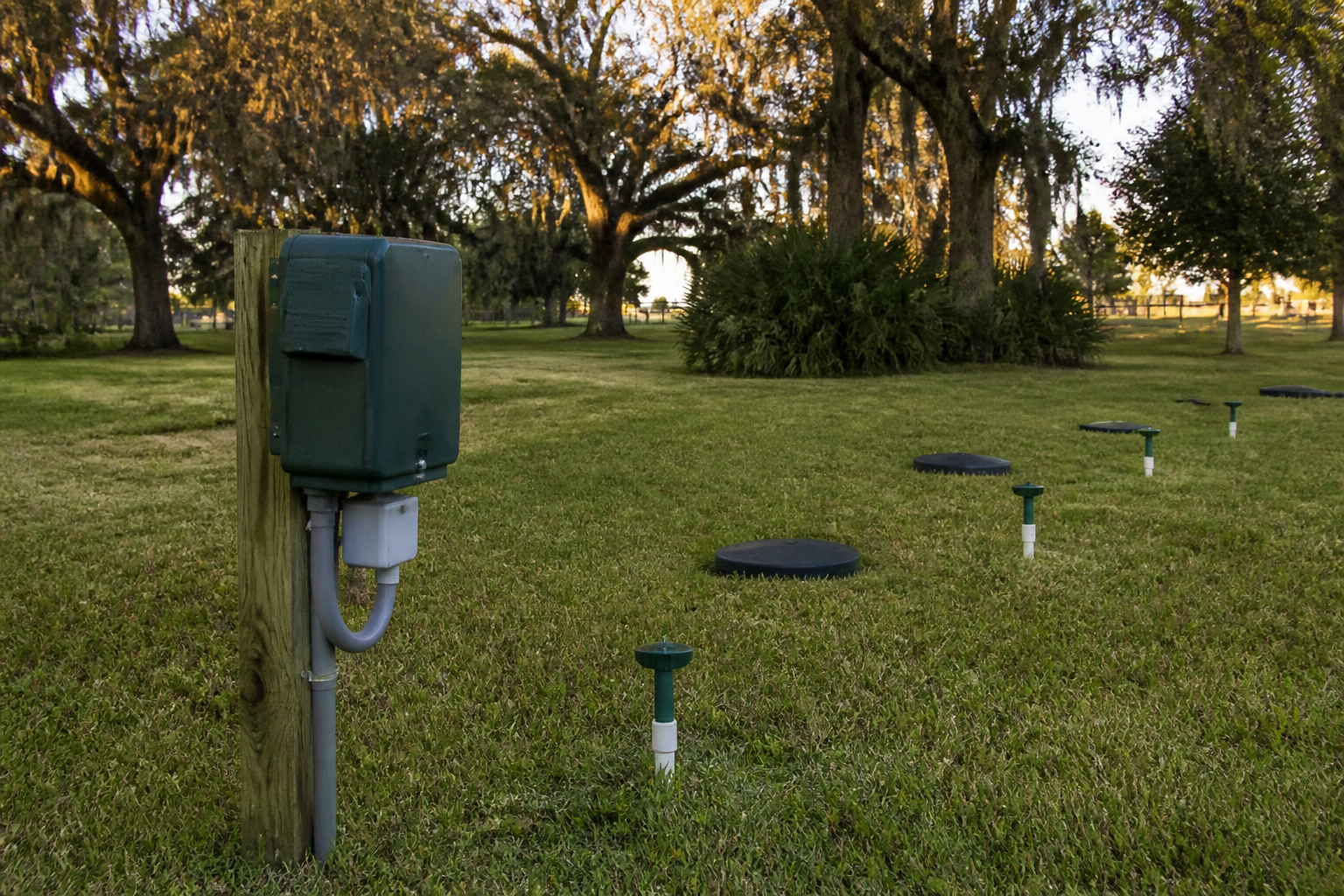
A homeowner outside Atlanta faced a $40,000 excavation bill when his conventional septic system failed for the second time. The drain field was waterlogged. His lot size ruled out replacement. The health department had already rejected his permit twice. Losing the property’s utility was becoming real. That’s when I introduced him to his actual solution: an aerobic treatment unit, or ATU. Eight weeks later, he had a permitted, operational system. The weight lifted off his shoulders was obvious.
That conversation sparked the thinking behind this piece. Over 15 years of installing, repairing, and diagnosing septic systems throughout the rural Southeast, I’ve watched homeowner questions shift dramatically. More people are now asking: what exactly is an aerobic septic system? They should be. For properties with marginal soil, limited space, or a track record of conventional system failure, understanding aerobic treatment could mean the difference between keeping your property functional and walking away from it.
Aerobic treatment isn’t witchcraft, though it often feels that way to people accustomed to gravity-fed conventional systems. Think of it as a miniature wastewater processing facility operating right underneath your yard, powered by oxygen-dependent bacteria colonies. I’ll break down the mechanics, walk you through the major manufacturers I actually specify, explain the true cost picture, and show you exactly when your health department will force your hand and require one regardless of your preference.
What Is an Aerobic Septic System? Understanding the Fundamentals
The starting point is understanding what separates aerobic and conventional treatment. In a conventional septic tank, anaerobic microbes—organisms that function without oxygen—do the work. They’re sluggish. They generate biosolids. They reduce wastewater contamination to roughly 130 mg/L BOD5 (biological oxygen demand). That’s barely adequate for drain fields with decent percolation rates, but it’s cutting it thin.
An aerobic system inverts this equation. It uses mechanical aeration to force oxygen into a treatment chamber where oxygen-dependent bacteria flourish. These organisms work with intensity and speed. They disintegrate organic material faster and more thoroughly. The result is treated water exiting the ATU at roughly 20–30 mg/L BOD5. That’s somewhere between one-fourth and one-sixth of what conventional systems produce.
What’s the practical significance? Purer water translates to longer drain field integrity, fewer failures, and the ability to function in soils where conventional treatment would become dysfunctional within a few years. On clay, tight sandy loam, or land with a shallow water table, an aerobic system moves from being optional to being absolutely necessary if you want a functioning septic installation.
How an Aerobic Treatment Unit Functions: Breaking Down the Four Stages
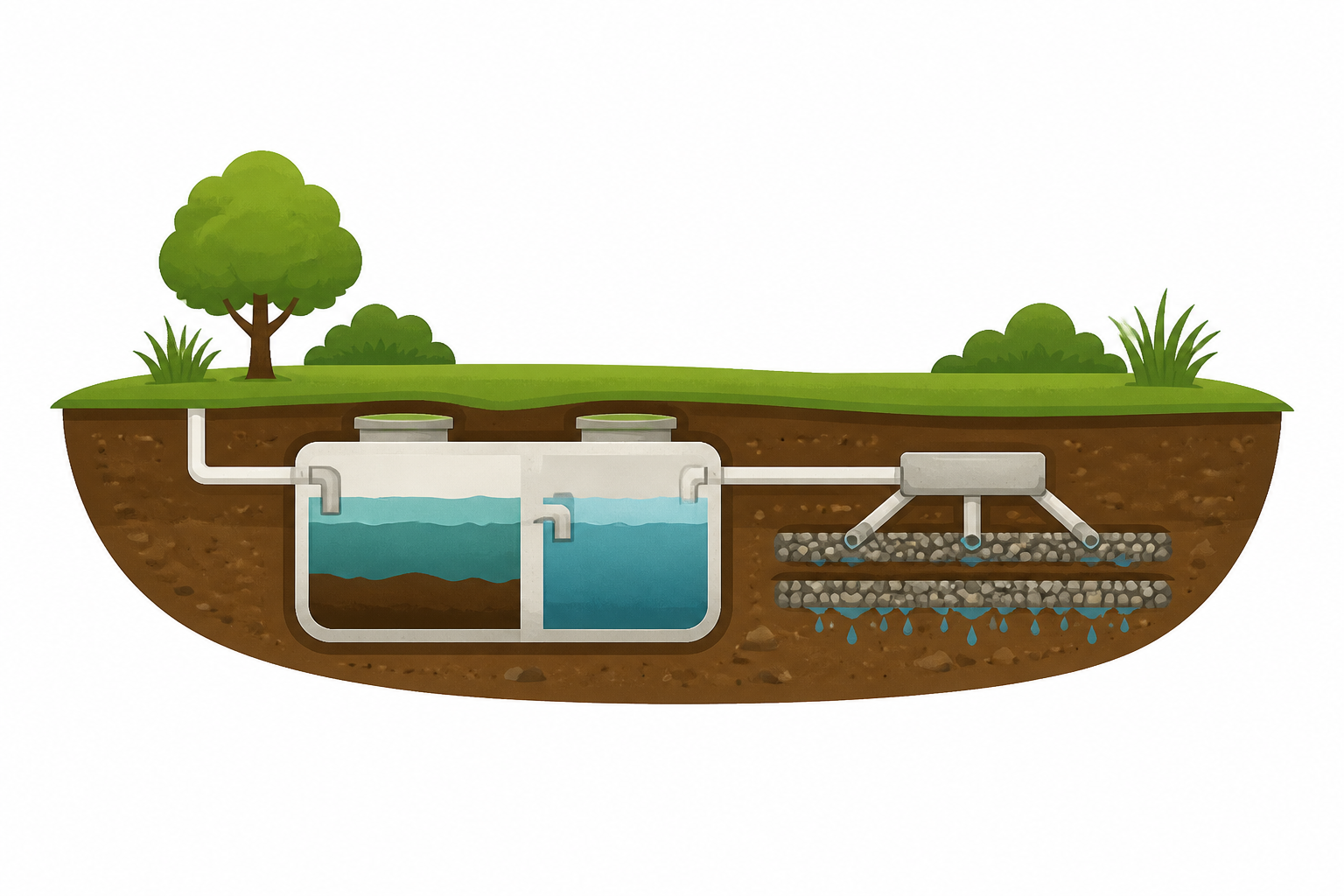
I usually explain an ATU like this: it’s four distinct tanks, each handling a specific phase of treatment. Grasping how each section operates helps you understand what you’re really buying.
Stage One: The Trash Tank (Primary Anaerobic Phase)
When sewage arrives from your residence, it enters the trash tank first—fundamentally a collection chamber where larger debris settles and initial bacterial degradation happens without oxygen. Heavier particles fall to the bottom. Fats and oils rise to the surface. The microbe population in this chamber starts breaking down organic compounds anaerobically. This tank serves a protective function: it keeps downstream mechanical components—particularly the aeration nozzles—from getting clogged with toilet tissue fragments and hair.
I’ve observed that when installers undersize the trash tank section, system clogging accelerates. From my field experience, insufficient trash tank capacity translates directly to plugged aeration diffusers and reduced system longevity. Most Southeast health department standards call for no less than 500 gallons in the trash tank for a three-bedroom residence. I typically recommend 750 gallons as a safety buffer.
Stage Two: The Aeration Chamber (Primary Treatment Zone)
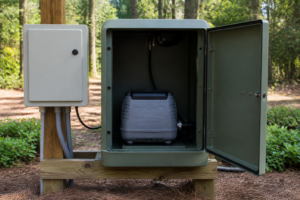
Partially treated water moves from the trash tank into the aeration chamber—this is where the system’s real transformation occurs. Oxygen-dependent bacterial populations thrive here. An air pump—typically sized between 0.5 and 1.5 horsepower—delivers pressurized air into the tank via diffuser nozzles or bubble tubes. The oxygen-saturated environment drives intense microbial activity. Organic compounds get oxidized. Nitrogenous wastes transform. Fine particles clump together into larger, settleable matter.
This represents the biological engine of your entire system. The aeration chamber usually comprises 40–60% of the ATU’s total interior volume. Detention duration in this phase typically spans 6–8 hours. This is also why electrical reliability becomes critical—if that air pump fails to operate, bacterial colonies begin to suffocate within hours. I’ll circle back to this critical point when I discuss the control panel system.
Stage Three: The Clarifier or Settling Tank
Once aeration treatment is complete, the water transitions to the clarifier—essentially a quiescent settling basin where heavier, agglomerated particles drop out. Clarified, treated liquid rises toward the top and flows out into a discharge vault. Settled biological sludge—accumulated bacterial biomass—either recirculates back into the aeration chamber or accumulates at the bottom for periodic pumping.
This settling chamber provides an additional 2–4 hour detention period. This slow-flow phase is absolutely essential. If treated water rushes toward the drain field while it still contains suspended solids, the biomat layer clogs, and premature drain field failure follows. That delayed retention here is what prevents expensive replacement costs later.
Stage Four: The Disinfection Vault (Final Polish)
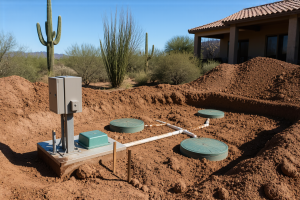
The final stop is the disinfection vault, where pathogenic organisms get neutralized. Chlorine—either in tablet form or liquid configuration—is added to the clarified effluent to eliminate disease-causing bacteria and viruses. Chlorinated, treated water then either sprays across the ground via irrigation or infiltrates through subsurface drip emitters. In my Southeast practice, subsurface drip systems dominate—they’re safer for the homeowners and carry less environmental risk. The spray pump vault additionally houses the sensor that triggers high-water alerts. More detail on that later.
That complete four-phase progression—settling, aeration, clarification, disinfection—is precisely what generates effluent of such superior purity. That purity is the reason these systems succeed in soil conditions where anaerobic treatment inevitably collapses.
Primary ATU Manufacturers Available in the Southeast Market
I base my brand selection on regional health department licensing, local supplier inventory, and the specific demands of each installation site. Below are the four manufacturers I encounter most frequently across the Southeast region:
Jet Inc. (Iowa Manufacturing, Dominant Southeastern Presence)
Jet Inc. equipment appears throughout the Southeast—Georgia, Tennessee, North Carolina neighborhoods especially. Though manufactured in Iowa, they’ve established themselves as the trusted standard in our region. Their designs prioritize backup systems: redundant air pump capacity, robust clarifier construction, and uncomplicated service protocols. I’ve excavated Jet systems that have been operating for two decades without significant complications. They won’t win any aesthetic awards, yet they deliver dependable performance. Regional health departments routinely approve them without delays.
Norweco Singulair (Ohio-Based, Concrete Shell Variant)
Norweco produces dependable equipment. The Singulair product line incorporates concrete rather than fiberglass for the outer shell. This structural decision proves valuable in regions experiencing water table elevation or soil corrosiveness. I’ve selected Norweco systems for low-lying property locations where I needed that supplementary structural robustness. Health departments view them as equivalent to Jet in performance, though pricing typically runs somewhat higher.
Aerob-It (Texas/Oklahoma Manufacturing, Economical Alternative)
Aerob-It products dominate the Texas and Oklahoma marketplace but show less prevalence in the Southeast. They still represent sound engineering—straightforward construction, extended service life, and competitive pricing. I’ve specified them on price-sensitive projects where the regional health department grants approval. They deliver identical performance to Jet for standard 500 GPD single-family residential applications.
Fuji Clean (Florida Coastline Standard, High-Performance Focus)
Fuji Clean has established strong market position in Florida, particularly in seaside communities where regulatory demands exceed standard requirements. Their equipment features a compact design footprint, high efficiency ratings, and produces exceptionally refined treated effluent. I’ll occasionally integrate them into Southeast projects where treatment performance exceeds typical standards or where property constraints demand minimal equipment dimensions. They command premium pricing but satisfy demanding performance specifications.
My typical recommendation: Jet Inc. or Norweco for the majority of projects. Both brands offer demonstrated dependability, local service infrastructure, and universal regulatory approval. The actual brand selection hinges on site parameters and the contractor’s established regional supplier partnerships. Don’t fixate on brand preference—all four manufacturers maintain NSF/ANSI 245 certification, confirming they meet EPA-established performance and safety criteria.
Understanding the Financial Picture: ATU Premium Cost Breakdown
Money questions surface almost immediately when homeowners start comparing system quotes.
In the Southeast, a conventional septic installation typically carries a price tag of $4,000–$8,000. A standard 500 GPD aerobic treatment unit typically runs $8,000–$15,000 installed. That represents an incremental cost of $4,000–$7,000, occasionally exceeding that figure if additional drip-field piping or site complexities apply.
Where does this price differential originate? First, structural sophistication. An ATU demands electrical infrastructure—an air pump motor, a discharge pump, electronic control panels, automatic alerts. A conventional system operates passively, gravity-powered, with minimal mechanical hardware. Second, the equipment itself contains more sophisticated components: segregated treatment chambers, internal baffle systems, air diffusion equipment. Third, the absorption field requires different construction: subsurface drip irrigation or sand filtration beds—both demand more labor and additional materials versus standard gravel-based drain field installation. Fourth, and this deserves emphasis: that upfront premium price frequently turns out to be less expensive than the only available alternative.
I consulted on a rural South Carolina property last year where soil testing showed percolation rates of 90 minutes per inch—unsuitable for standard gravity septic treatment. The homeowner’s conventional system option? A $40,000 engineered sand filter construction or a $35,000 mound system installation. The aerobic solution? $11,500 installed. The decision took mere minutes once the numbers were presented. Simple arithmetic determines the choice.
Here’s where your investment dollars actually go:
- Equipment package: $3,500–$6,000 (treatment unit itself, pump assembly, control panel, disinfection cartridges)
- Installation effort: $1,500–$3,000 (ground preparation, equipment placement, piping connections)
- Absorption field: $2,500–$5,000 (drip lines, manifolds, sand bedding, or spray system installation)
- Electrical infrastructure: $500–$1,500 (power delivery to site, breaker installation, weatherproof junction box)
- Health department processing: $200–$500
That allocation clarifies where the $8,000–$15,000 is spent. When contractor quotes fall substantially below that range, investigate further. Underpricing typically means skipped steps. When quotes substantially exceed it, probe for unnecessary upgrades or add-ons.
Regulatory Mandates: When Your Health Department Requires Aerobic Treatment
The reality check: in many Southeast counties, you don’t decide whether to install an ATU. Your health inspector does. I’ve watched homeowners pursue costly permit appeals they ultimately lose. Conserve that energy. Three specific conditions trigger mandatory aerobic system requirements:
Condition One: Poor Soil Drainage (Percolation Beyond 60 Minutes Per Inch)
When your soil requires more than 60 minutes to absorb one inch of standing water, conventional drain field absorption becomes impractical. The ground simply cannot accept treated effluent at the rate it leaves your residence. You’ll confront either an engineered replacement solution (expensive) or aerobic treatment (more economical). Health departments mandate aerobic systems in these situations because it’s the realistic path forward. The refined effluent from an aerobic treatment unit performs adequately in slow-absorbing soils.
Condition Two: Limited Property Space and Required Separation Distances
Many Southeast jurisdictions mandate 100-foot separation from water supply wells, 50-foot clearance from property boundaries, and 25-foot buffers from streams, swamps, or protected wetlands. These separation requirements consume usable property quickly. On a quarter-acre parcel, you might discover you have zero location options for a 1,500 square-foot conventional drain field. Aerobic systems operating with subsurface drip consume 40–50% less surface area. Health departments authorize ATUs in constrained situations because superior treatment quality and reduced footprint diminish environmental vulnerability.
Condition Three: System Replacement Following Prior Failure in Environmentally Vulnerable Zones
When you’re replacing a defunct septic installation—particularly in ecologically sensitive territories like coastal watersheds, pristine aquifer recharge regions, or elevated water-table areas—your health department frequently mandates upgrading to aerobic treatment for the replacement. In Georgia, Rule 511-3-1-.29 specifically addresses mandated improvements for system failures in protected regions. I’ve witnessed this enforcement consistently across North Carolina and Florida jurisdictions equally.
Practical guidance: telephone your regional health department office before designing your system. A quick conversation prevents a two-week permit rejection afterward.
The Control Panel and Alert System: Interpreting Your System’s Warning Signals
Every aerobic system incorporates two separate alert mechanisms you must understand. This is where my hard-earned education comes in, and it’s genuinely important.
High-Water Level Alert
A sensor positioned in the discharge vault (pump chamber) tracks water accumulation. When water exceeds standard operating height—signaling the absorption field isn’t accepting treated water or the discharge pump has failed—an alert activates. Depending on your control panel type, you’ll observe a red indicator light, hear an audible alarm, or receive an electronic notification. This constitutes a critical signal. Elevated water means your system cannot move treated effluent downstream adequately. Probable causes include absorption field saturation, discharge pump malfunction, or piping obstruction. Engage a licensed technician without delay. Disregarding this alert leads to system failure.
Aeration Motor Failure Alert
Contemporary ATU control panels typically supervise air pump functionality. When the pump stops—whether from motor burnout, check valve failure, or air line congestion—the control system perceives the pressure loss. The alarm engages. This equally demands rapid intervention. Without operating aeration, the bacterial ecosystem begins to collapse within hours. After 24–48 hours of no aeration, your system becomes non-functional. You require service intervention within the same calendar day.
A Specific Lesson from Field Experience
Years ago, I installed a Jet Inc. system for a property owner near rural Georgia. The installation was flawless, all inspections passed without complications, system performed perfectly upon startup. Months progressed. Oddly, the homeowner never contacted me, which surprised me given my explicit maintenance guidance during commissioning.
When I drove out for scheduled maintenance, the problem became obvious immediately: the control panel electrical breaker had been switched to the off position. The homeowner had deactivated it intending to reduce electricity consumption—three weeks prior. The alarm system possessed no electricity, so alerts never triggered. The air pump remained inactive throughout that three-week span. The aeration tank became completely anaerobic and chemically acidified. Bacterial populations perished. The system’s treatment capacity fell below conventional system standards. The chlorine cartridge in the disinfection vault sat depleted.
Recovery required six hours of intensive intervention: restoring electrical power to the control panel, operating the air pump continuously for 12 hours to reintroduce oxygen into the tank, tracking chemical parameters, introducing supplemental bacteria colonies, and flushing the spray system to restore chlorine circulation. Essentially, I had to restart the entire biological treatment system from dormancy.
The homeowner absorbed an expensive and stressful education: do not discontinue electrical supply to an aerobic system control panel. That electrical circuit isn’t expendable. It delivers life support to your bacterial colonies. Should electricity expenses concern you, communicate with your installer. A typical ATU consumes approximately 8–12 kWh every 24 hours. At average regional utility pricing, expect roughly $80–$120 monthly. Electrical costs cannot be negotiated away. If power consumption represents an unacceptable expense, a conventional septic installation might suit your situation better—but if you required an aerobic system in the first place, the conventional option wasn’t viable.
Mandatory Service Agreements and Regulatory Oversight
Listen carefully: most Southeast states legally mandate annual service agreements for aerobic systems. This isn’t guidance or suggestion—it’s a legal condition of system approval.
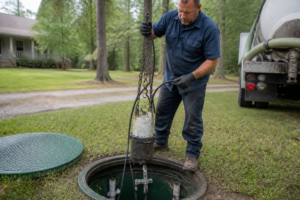
Georgia’s Rule 511-3-1-.29 requires annual professional evaluation of all ATUs. Your health department files the contract documentation. The contractor performs an annual visit, evaluates all internal chambers, samples and analyzes effluent, documents operational parameters, and provides official performance documentation. Annual service expenditure typically ranges from $200–$400 depending on your locality.
Why this stringent requirement? Because system treatment effectiveness depends entirely on living bacterial colonies and mechanical reliability. Annual inspections detect emerging complications before they become expensive crises. I’ve identified failing pump impellers, deteriorating check valves, and depleted chlorine levels during routine maintenance visits. Addressing these issues during scheduled service costs modest amounts. Repairing them after failure costs substantially more.
Your health department supplies contractor contact information meeting their certification standards. Most areas furnish 2–5 qualified options. Evaluate candidates closely. Confirm they have local presence. A service provider two hours away provides inadequate response if your system alarms during weekend hours. I still keep an eye on systems I helped put in 15+ years ago. That continuity and accessibility matter—it’s why they haven’t experienced major emergencies.
Treatment Performance Metrics: Understanding Water Quality Outcomes
Let me translate the treatment quality differences into concrete numbers, because this is precisely why aerobic systems survive where anaerobic treatment collapses.
A conventional septic tank discharges effluent measuring approximately 130 mg/L BOD5 (biological oxygen demand) and 130 mg/L TSS (total suspended solids). For every liter of treated discharge, you’re introducing 130 milligrams of decomposable pollutants and floating particles into your absorption field. Over an average 1,000 GPD household consumption rate, that calculates to 130 grams of BOD and TSS every single day.
An aerobic system discharges water measuring approximately 20–30 mg/L BOD5 and 20–30 mg/L TSS. That’s somewhere between four-fold and six-fold reduction. The identical 1,000 GPD household now delivers just 20–30 grams of BOD and TSS every day. The consequences for conventional systems on marginal soil become clear through mathematics alone. That relentless organic deposition saturates the absorption field biomat within 3–7 years.
Aerobic treatment sustains absorption field viability for 15–25 years, often longer still. That’s the underlying economic argument. Certainly, the equipment costs more initially. But the absorption field replacement expense—$5,000–$10,000 for conventional systems every 5–7 years—doesn’t reoccur as frequently or severely with aerobic treatment. Comparing 30-year system costs, aerobic installations usually prove more economical.
Homeowner Responsibilities: Managing Your System Between Professional Service Visits
The annual service agreement is mandatory, yet you carry responsibilities too.
Never flush non-degradable solids. Paper towels, baby wipes (even “flushable” ones), hair, cigarette butts, and feminine hygiene products will clog your system. I’ve had to excavate and clean trash tanks because homeowners flushed kitchen waste. Your septic system—conventional or aerobic—is designed for human waste and toilet paper only. Treat it that way and you’ll avoid costly repairs.
Sources and further reading
About This Article

Written by Joel Grayson. Rural property owner who learned septic systems the hard way after my own failed 15 years ago. I created Backyard Septic to give homeowners honest, practical guidance on septic installation, maintenance, and troubleshooting. More about this site.
Scope and limits. Joel is an experienced rural property owner, not a licensed septic inspector. Have a licensed septic professional handle pumping, permits, and any diagnosis you plan to act on — and never enter a tank.
Verify this against a primary source
Specifics change, and your situation may differ from the one described here. These are the authorities worth checking directly:
- EPA SepticSmart — septic system care, inspection intervals and failure signs
- NSF International — treatment unit and tank certification standards