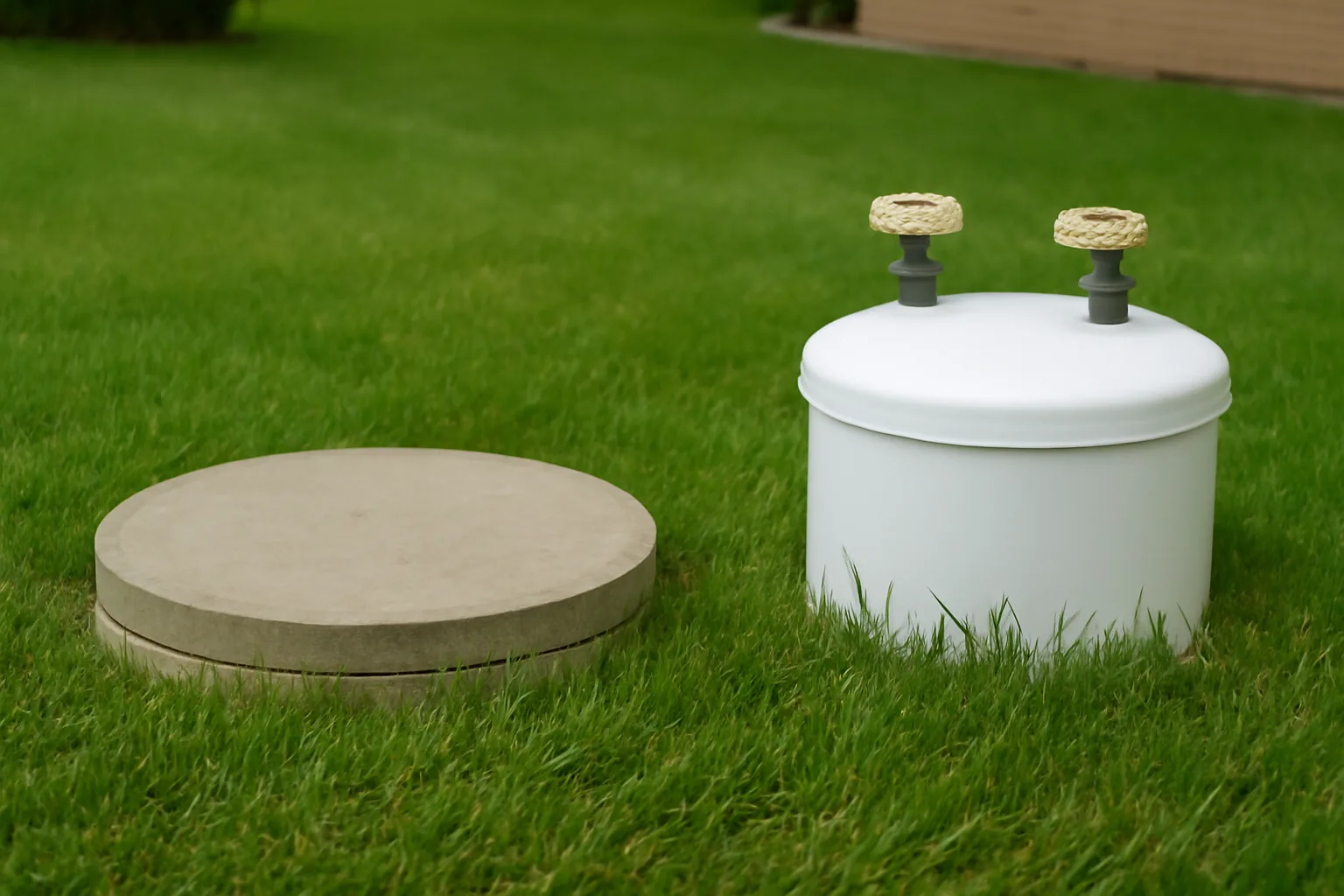

The paperwork you receive at closing rarely mentions what’s actually buried beneath your yard. A property description might note “septic system present,” but it won’t tell you whether you’re looking at a passive gravity-fed tank feeding a drain field or an active treatment unit with an air pump humming 24 hours a day. I discovered this gap firsthand last spring when an East Texas homeowner contacted me after purchase — she’d inherited an aerobic system requiring monthly maintenance contracts, chlorine tablets, and continuous electrical service. The real estate agent’s disclosure had simply said “septic.” Knowing the difference between aerobic and conventional systems shapes everything about your maintenance rhythm, your annual budget, and how you respond when something malfunctions at midnight on a holiday weekend.
Over my 15 years inspecting and evaluating septic infrastructure across the rural Southeast, I’ve encountered more than 2,000 tank installations where property owners had no clear picture of what lay beneath their soil. That’s not criticism—these systems are invisible by design, paperwork gets misfiled, and county records aren’t always easy to navigate. What I can do is walk you through identifying your system type and explaining what each choice actually costs you over time.
What a Conventional Septic Tank Does
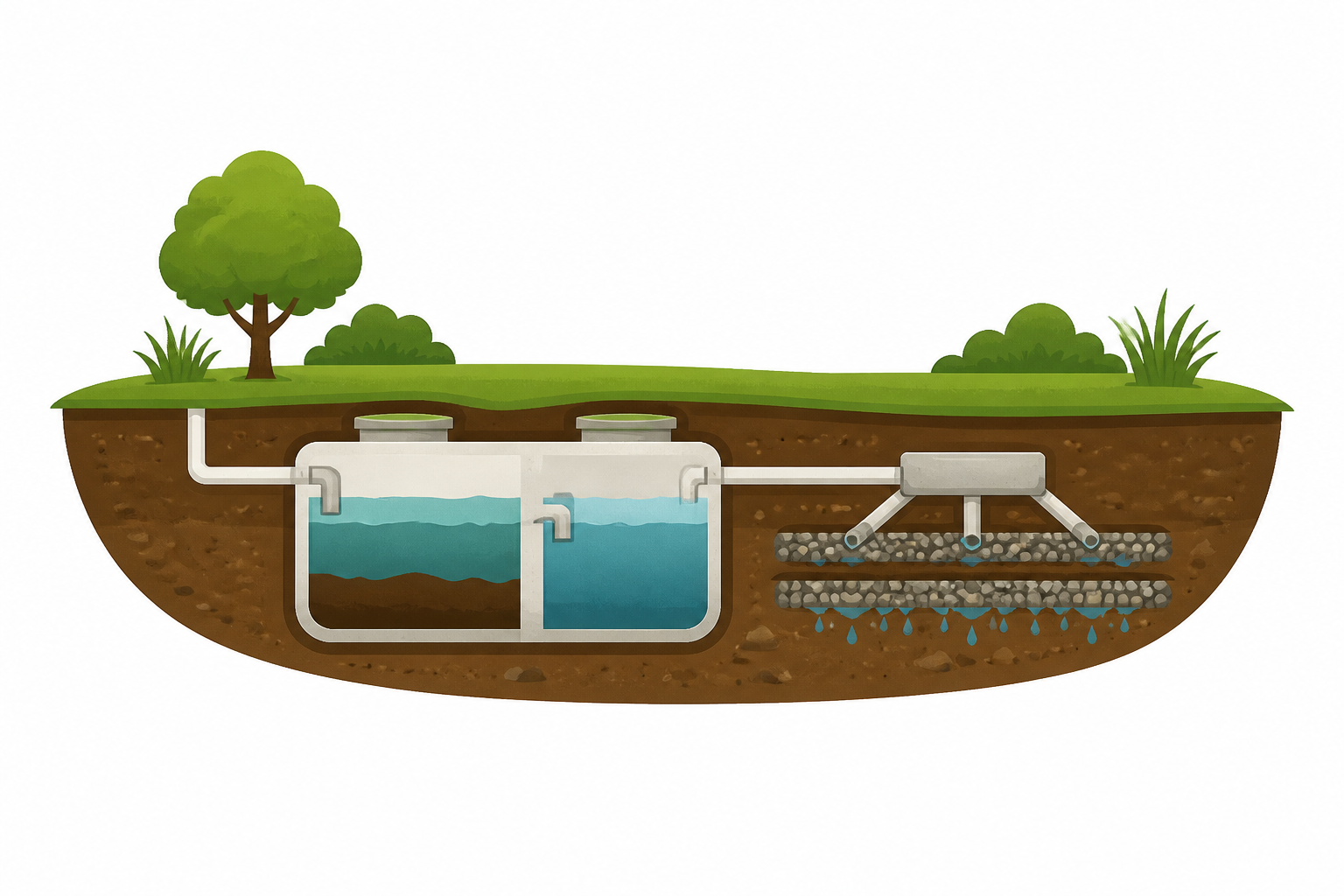
The conventional model operates on straightforward physics and naturally occurring biology. Wastewater exits your home into a buried concrete or fiberglass tank—typically sized between 1,000 and 1,500 gallons for a standard three-bedroom residence. Inside, gravity separates the waste stream: heavier solids drop to the bottom layer as sludge, lighter materials including fats and oils rise upward as scum, and the middle layer of partially treated liquid—termed effluent—transitions into the drain field.
The drain field, sometimes called a leach field, consists of perforated distribution lines placed in gravel-filled trenches beneath the yard surface. From there, effluent seeps gradually downward through soil layers, where resident bacteria populations consume remaining organic matter and pathogens. No pump runs. No buried equipment has moving parts. No additives get introduced. The entire mechanism depends on downhill flow and the soil’s inherent capacity to filter and biologically process waste.
Under my inspection experience, properly designed conventional installations in appropriate soil types remain functional for 25 to 40 years with routine care. The solitary scheduled maintenance task is tank pumping—typically due every 3 to 5 years, costing between $250 and $450 per service depending on regional pricing. After that, the system essentially manages itself. This reliability explains why conventional systems remain the standard choice wherever soil characteristics and groundwater depth support them.
Understanding How an Aerobic Treatment Unit Functions
An aerobic treatment unit diverges fundamentally from the conventional approach. Rather than allowing waste to decompose in an oxygen-starved environment, an ATU forces compressed air directly into the treatment chamber continuously. This oxygen-enriched condition enables aerobic bacterial colonies—far more efficient decomposers than their anaerobic counterparts—to rapidly consume organic load and reduce contaminant levels.
The typical aerobic unit layout spans three or four distinct processing zones. An initial compartment traps heavy solids before they enter the treatment stages. Following that, the aeration chamber receives continuous air injection where active bacterial breakdown occurs. A subsequent settling or clarification zone allows treated material to separate from any remaining particulates. Many installations incorporate a final disinfection barrier—usually chlorine cartridges or ultraviolet light—prior to surface or subsurface discharge through spray irrigation or drip dispersal.
The water quality leaving an active ATU substantially exceeds typical conventional tank discharge. That enhanced performance enables installation in scenarios where conventional drain fields can’t function—areas with restrictive clay, minimal vertical separation from bedrock, or elevated seasonal water tables. Yet this performance premium carries tangible expenses. Monthly maintenance contracts typically range from $30 to $60 in most regulatory jurisdictions. Factor in chlorine replenishment, electrical consumption for the air pump, and mandated service inspections, and the annual burden accumulates considerably.
Comparing Aerobic Systems and Conventional Systems: Side-by-Side Breakdown
This comparison comes up repeatedly during site consultations. Here’s how I walk through the practical distinctions with homeowners.
- Electrical demand: Conventional installations draw zero power. Aerobic installations require continuous air pump operation spanning the entire calendar year.
- Annual upkeep expense: Conventional maintenance bills arrive every 36 to 60 months at roughly $250–$450 per occurrence. Aerobic maintenance contracts, supply refills, and inspections typically reach $400–$700+ yearly.
- Upfront capital cost: Conventional installation typically spans $3,000–$7,000. Aerobic equipment and installation generally falls within the $10,000–$20,000 range based on tank capacity and surface application approach.
- Effluent quality produced: ATUs produce markedly superior treated effluent, approaching secondary municipal treatment standards.
- Typical failure pattern: Conventional drain fields degrade progressively with observable warning signs. Aerobic air pumps frequently malfunction abruptly without advance notice.
- Legal and permitting requirements: States including Texas mandate licensed contractor oversight for aerobic systems per environmental quality departments. Comparable rules apply across numerous other jurisdictions.
One system isn’t inherently superior to the other. The appropriate choice depends on your soil composition, available property space, and local regulatory framework. When circumstances allow a genuine option, conventional typically delivers lower long-term ownership expense and simpler day-to-day operation.
Identifying Your Specific System Type
This is where most guidance materials abandon you. Below is precisely how I determine system classification during a property walkthrough.
Step 1: Search for Visible Electrical Infrastructure
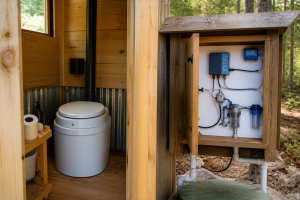
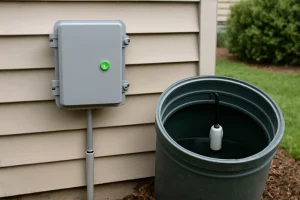
Scan the property perimeter near your tank location or building exterior for a weatherproof electrical enclosure or command console. Conventional systems carry no electrical equipment whatsoever. Spotting a protected electrical housing—typically rectangular, gray or natural color, roughly the dimensions of a document storage box—signals an aerobic installation. This panel supplies current to the air pump system and frequently houses alarm circuitry.
Step 2: Survey Your Yard for Dispersal Hardware
Aerobic systems discharge their processed output across the property using visible sprinkler-style nozzles or buried drip delivery lines positioned near the surface. Inspect your property boundaries and landscaped zones for small spray nozzles—they frequently hide under grass or plantings. Conventional installations push all effluent downward underground through subsurface trenches. You’ll observe zero surface-level dispersal apparatus.
Step 3: Observe Tank Interior Conditions and Audio Cues
If tank access is safe and feasible—exercise appropriate caution during inspection—a conventional tank interior will be soundless. An aerobic tank generates an audible motor hum and visible or audible aeration activity within the treatment compartment. Different aerobic manufacturers—Norweco Singulair, Infiltrator Delta Tank, Jet models—display recognizable multi-stage tank configurations that become familiar after exposure to multiple installations.
Step 4: Access Your County’s Permit Documentation
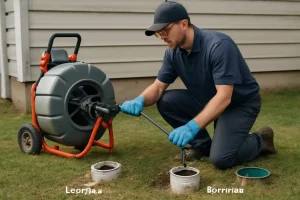
Contact your county’s health office or environmental protection agency. Septic installation permits constitute publicly accessible documentation in nearly all jurisdictions. Your permit details specify the system category, tank volume, and engineering standards. This approach beats all others for accuracy. I’ve resolved countless system misidentifications through straightforward records investigation. The process requires minimal effort and carries no expense.
Why the Air Pump in Your Aerobic System Deserves Your Attention
Once you confirm aerobic ownership, that continuously operating air pump transitions from background component to your central maintenance responsibility—because the moment it stops, your treatment capacity vanishes within hours. My experience taught me that anticipating pump failure scenarios and maintaining spare equipment availability separates routine maintenance from costly emergency intervention.
What performs reliably
- Operates quietly enough to avoid constant background noise, yet dependably enough that overnight failures feel unlikely
- Built specifically for aerobic septic applications, delivering appropriate air volume without excessive tank pressurization
- Physically compact so it fits comfortably within typical equipment shelters, especially important when installation space sits adjacent to structures or beneath protective covers
What doesn’t work
- Still demands consistent upkeep and replacement cycles—aerobic pumps never achieve true “install and ignore” status
- Expenses multiply rapidly without planning; this represents ongoing investment, not the one-time purchase model of underground drain field infrastructure
I almost waited too long to order a replacement pump when my first one started making a grinding sound, nearly landing me with a backed-up system right before selling my rental property. That’s when I started keeping the HIBLOW HP-80 Linear Air Pump on my shelf as a spare.
This post contains affiliate links. As an Amazon Associate, I earn from qualifying purchases at no extra cost to you.
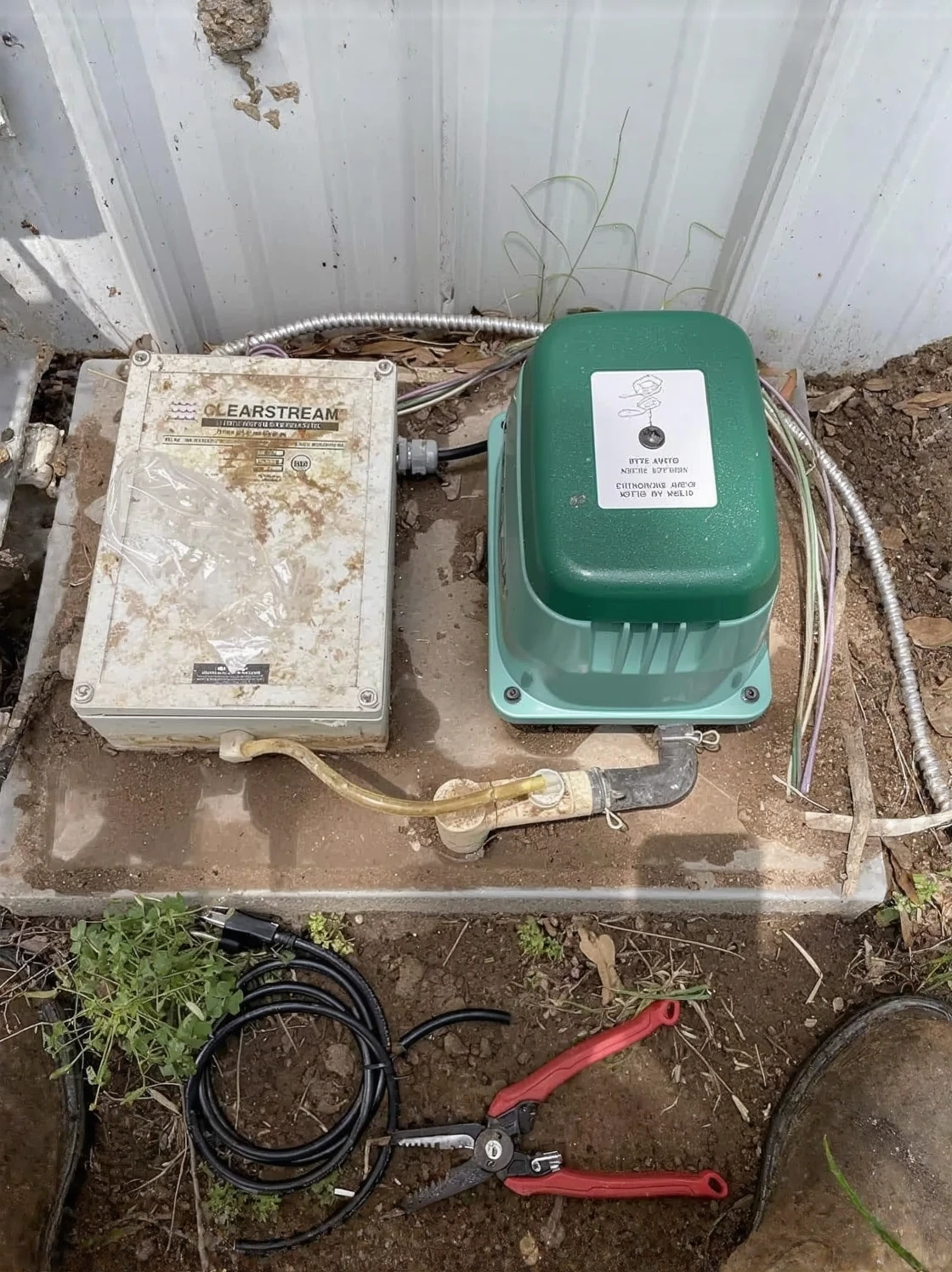
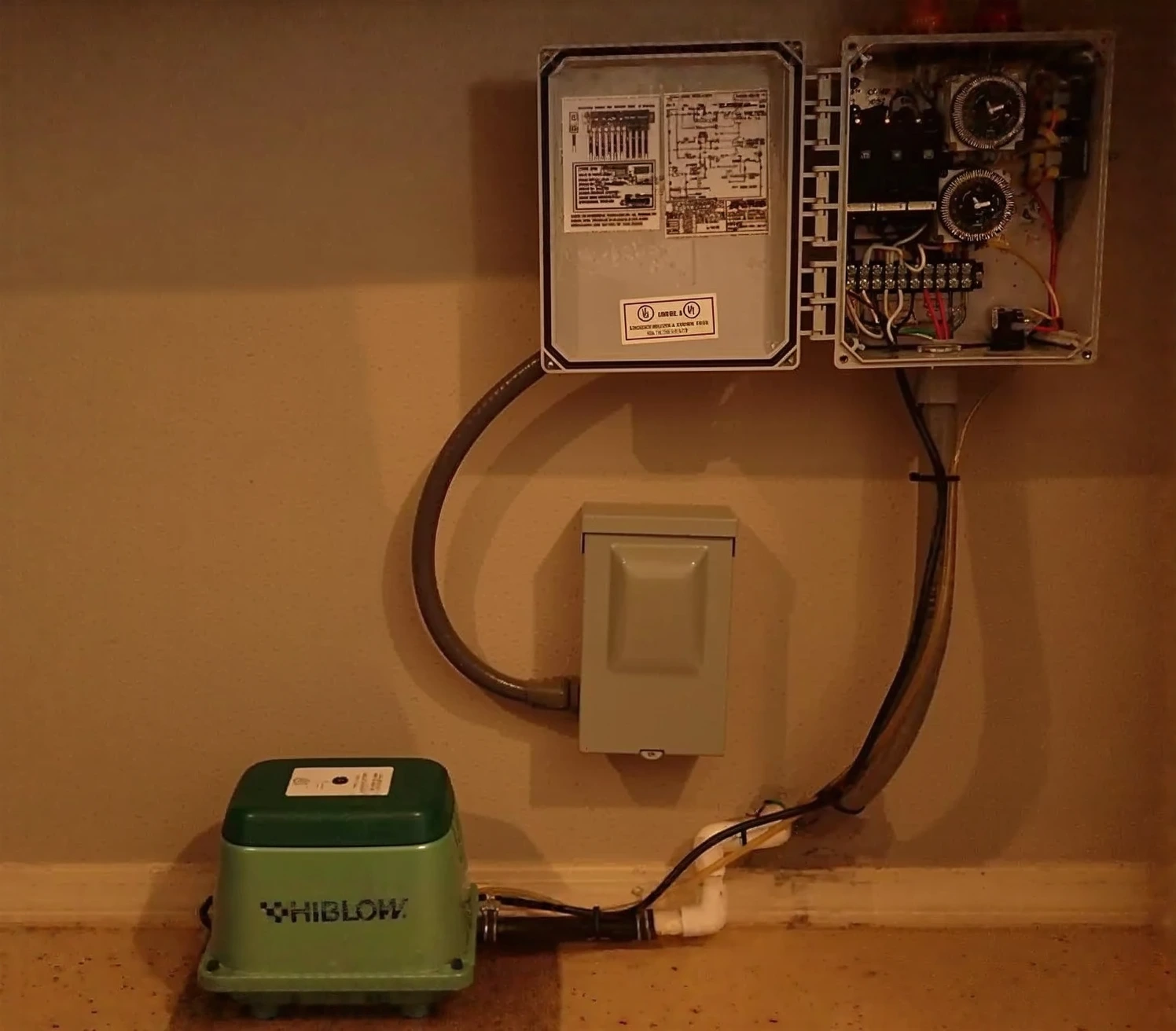
HIBLOW HP-80 Linear Air Pump
I’ve stopped replacing pumps every few years since switching to this one for my aerobic tank.
Check Price on Amazon →