
Chlorination edges out UV disinfection on upfront cost and simplicity, but UV wins if you’re willing to pay more to eliminate monthly tablet maintenance and chemical handling from your property.
Over my eighteen years working with aerobic treatment units throughout the rural Southeast, I’ve installed and evaluated both disinfection pathways on hundreds of systems. I’ve watched homeowners wrestle with monthly chlorine tablet schedules, deal with storage headaches, and second-guess whether they’re maintaining their contact chambers correctly. I’ve also seen UV installations that run flawlessly for years with nothing more than an annual lamp swap and periodic chamber inspection. This breakdown covers how each technology actually performs, what your local health department probably requires, and the honest financial calculus of upgrading.
The Two Main Disinfection Methods for ATU Systems
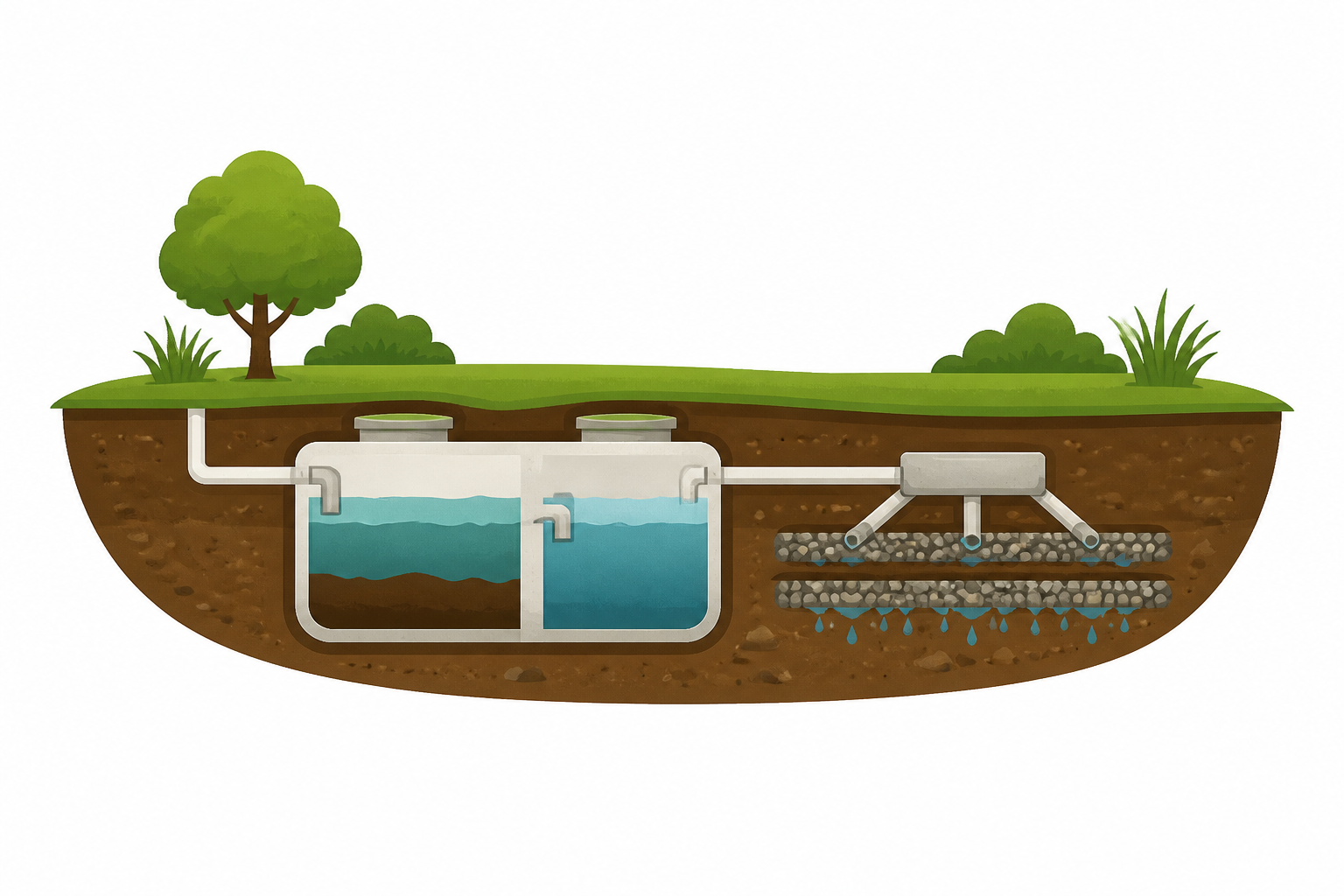
Once your aerobic treatment unit has processed the bulk of organic waste and reduced nutrient loads, you’re left with cleaner water—but it still harbors pathogens. Before that effluent can safely exit your property through spray irrigation or drip lines, it needs a kill step. Standard health department approval covers exactly two disinfection approaches:
Your options boil down to chemistry or physics:
- Chlorination – Calcium hypochlorite tablets dissolve in a contact chamber. Passing effluent absorbs chlorine residual, which neutralizes bacteria and viruses on contact.
- UV Disinfection – Treated water flows past a UV lamp inside a transparent enclosure. The UV radiation damages pathogen genetic material, rendering organisms unable to replicate.
Both work. Both are legal in most of the Southeast. The choice comes down to what your health department approves, your tolerance for ongoing maintenance, and how much you want to spend.
How UV Disinfection Works in Your Septic System
The mechanism is straightforward and effective:
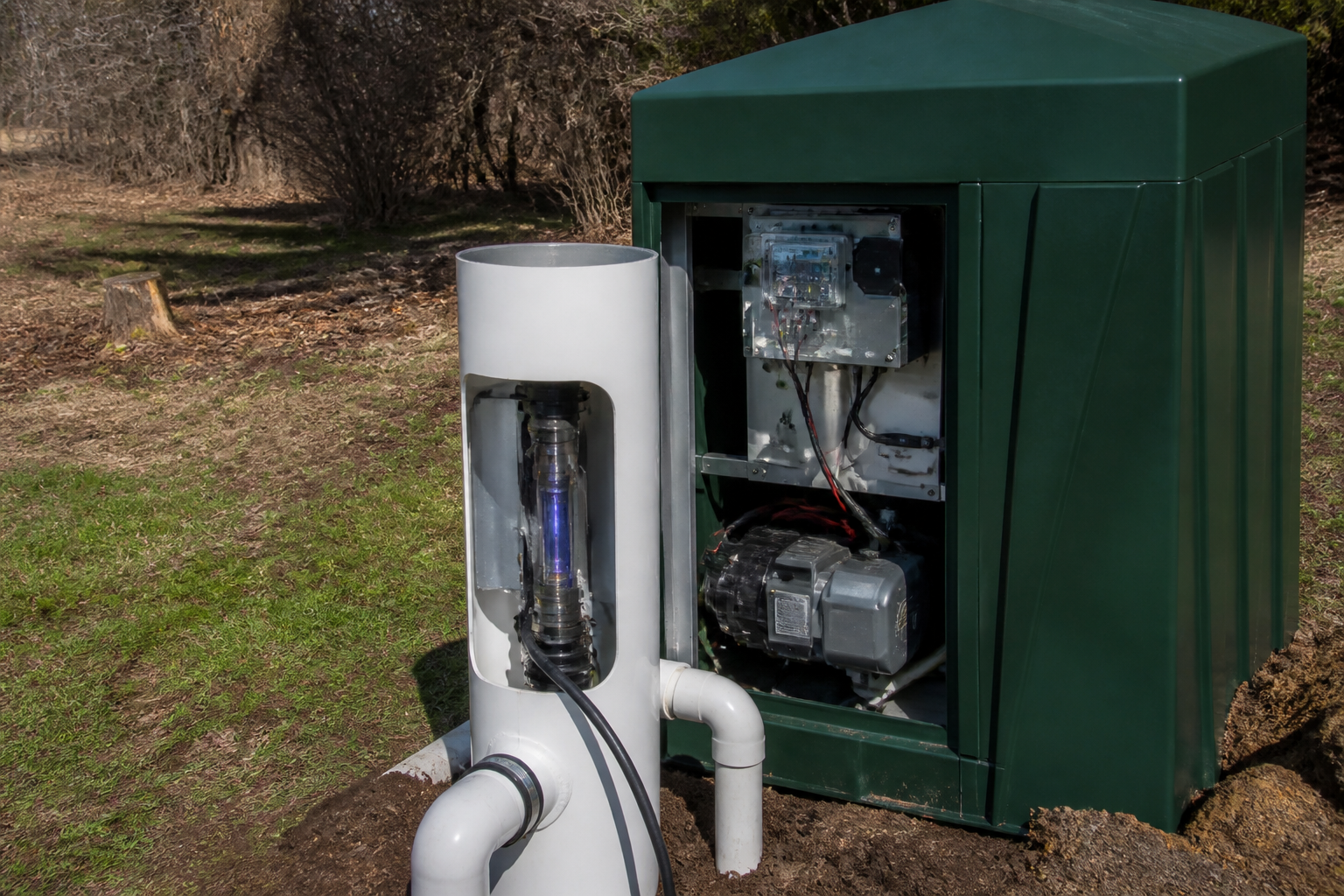
Your treated wastewater moves into a chamber—typically a polycarbonate or quartz tube—that encloses a UV lamp. That lamp radiates ultraviolet light at precisely 254 nanometers, which is the UV-C band. This wavelength penetrates cell membranes of bacteria, viruses, and protozoa, fracturing their nucleic acids. Once their DNA and RNA structures are compromised, the organisms lose the ability to divide and infect. The water continues downstream, biologically clean, with no trace of the disinfectant itself.
The critical distinction: UV leaves no chemical signature in your effluent. After the water exits the UV chamber, it’s simply clean—no lingering chlorine odor, no disinfection byproducts, no oxidizers being sent into your soil or nearby water features.
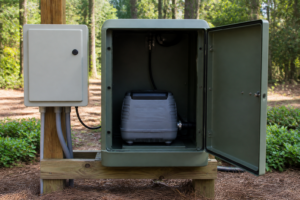
Common residential UV units come from brands like Sanitron (manufactured by Atlantic Ultraviolet), Viqua (based in Canada but distributed throughout North America), and Trojan Technologies (serves both residential and larger-scale applications). Most fit inside a pump tank or modest standalone enclosure, making retrofit installation feasible on existing systems.
UV vs. Chlorination: Advantages and Disadvantages
Advantages of UV Disinfection
- Zero consumable tablets: Chlorine tablets demand monthly inspection and replacement at $25–$60 per container. I’ve encountered countless system owners who fall behind on this schedule, leaving their disinfection compromised. UV requires no ongoing chemical purchases after installation.
- Chemical-free property: Calcium hypochlorite is an oxidizer—improper storage creates genuine fire risk. You eliminate the liability of keeping reactive chemicals near your home, and you don’t worry about accidental exposure for kids or animals.
- Clean discharge water: UV produces zero chlorine residuals or secondary disinfection byproducts in your outflow. This matters significantly on properties situated above productive aquifers, adjacent to surface water, or in areas with vulnerable soil.
- Growing regulatory acceptance: An increasing number of southeastern health departments now permit UV as a legitimate alternative, and some jurisdictions actively encourage it over chlorination.
Disadvantages of UV Disinfection
- Lamp replacement expense: UV bulbs deteriorate within 12–24 months and run $50–$120 when you replace them. You’re budgeting for annual or biennial service calls and parts purchases.
- Chamber fouling and scaling: Mineral buildup, biofilm accumulation, and sediment can cloud the quartz or polycarbonate chamber. A fouled sleeve reduces light transmission, cutting disinfection effectiveness. The chamber requires periodic removal and cleaning.
- Constant electrical draw: Chlorination works passively without power. UV needs electricity running continuously. Any power interruption halts disinfection. Prudent installers recommend battery backup or a generator hookup.
- Substantial initial investment: Installing a UV disinfection unit runs $400–$900, whereas a basic chlorine chamber comes in at $100–$200.
Cost Comparison at a Glance
- Chlorination: ~$100–$200 to install; $25–$60 monthly for tablets; negligible power usage
- UV: ~$400–$900 to install; $50–$120 yearly for lamp replacement; approximately $5–$15 monthly for electricity
Across a five-year span, chlorine tablet expenses alone total $1,500–$3,600. UV costs more at the beginning but erases the monthly consumable drain. Whether UV breaks even financially hinges on your local electricity pricing and whether you stay consistent with chlorine tablet rotation.
What Your Health Department Requires
Here’s the hard constraint: your county or district health department has final say on which disinfection method you can legally use.
Across most rural parts of the Southeast—from East Texas through Louisiana, Alabama, Mississippi, Georgia, and the Carolinas—chlorine tablet disinfection remains the entrenched standard. Decades of regulatory approval and field experience have made it the default expectation. Health department staff understand it thoroughly, and it requires minimal oversight.
That said, the regulatory landscape is shifting. Florida’s environmental agency now explicitly authorizes UV disinfection alongside chlorination. Forward-thinking departments in pockets of North Carolina, Virginia, and other states have begun approving UV installations, particularly where groundwater sensitivity or proximity to surface water creates environmental justification.
What I recommend: Contact your county health department directly and ask which disinfection technologies they permit on aerobic systems. Inquire whether UV specifically appears on their approval list. Try to get written confirmation of what your site is eligible for. This single conversation prevents wasted money on an installation that doesn’t satisfy local code.
Can You Retrofit Your Existing ATU to UV Disinfection?
Absolutely—I’ve performed dozens of these conversions.
Two standard retrofit strategies exist:
- Series configuration: The UV chamber gets plumbed in line after your existing chlorine contact tank. Chlorine remains as a redundant safeguard; UV functions as your main disinfectant. This preserves redundancy and doesn’t require decommissioning anything. Labor and equipment: roughly $500–$800.
- Full replacement: Decommission the chlorine chamber and swap in a UV unit as your sole disinfection step. This only works if your health department certifies UV as an independent method. Labor and equipment: approximately $800–$1,200.
The series approach is more commonly chosen because it’s conservative—you’re hedging your bets with dual safeguards. Should the UV lamp burn out or you lose power, chlorine still provides disinfection coverage.
When UV Disinfection Is Worth the Upgrade
UV isn’t mandatory for every property. But consider upgrading if your situation matches any of these:
- You’re situated above or near productive groundwater: Whether the well belongs to you or your neighbor, UV discharge eliminates any chlorine residual hazard to aquifer quality.
- Kids or animals use the spray zone: Absence of chemical residual reduces risk if someone accidentally contacts discharged water (though they shouldn’t be playing there anyway).
- Monthly chlorine maintenance frustrates you: Plain truth: if you dread the routine of checking and refreshing chlorine tablets every month, UV eliminates that chore entirely. You only deal with lamp replacement—roughly once every one to two years.
This post contains affiliate links. As an Amazon Associate, I earn from qualifying purchases.