A homeowner outside Walton County phoned in early November complaining about a rotten egg stench backing up through her bathroom fixtures whenever rain came through. Not a subtle odor — the kind that fills a room in seconds. She’d gone through two containers of spray air freshener before deciding to call for professional help. My site visit and initial tank inspection took roughly twenty minutes, and the solution ended up costing just under $40. Here’s what matters: she’d tolerated this problem through two full wet seasons, convinced her entire system was collapsing. The tank was perfectly fine.
This exact scenario repeats across my territory in the rural Southeast, where I’ve spent close to two decades diagnosing, installing, and fixing septic systems across hundreds of properties. Homeowners understandably freak out when sewage odor floods their bathrooms during storms — the automatic assumption is that something catastrophic is happening below ground. Sometimes that’s accurate. In the majority of cases, however, the underlying cause proves far more straightforward and manageable than initially feared. Throughout this article, I’ll walk you through the specific mechanics of what occurs underground and in your drain pipes when rainfall triggers these smells, and I’ll outline the most practical solutions for the problems I encounter most frequently.
The Physics Behind Rainfall-Triggered Indoor Septic Odor
Your septic system generates gases without interruption — including hydrogen sulfide, methane, and carbon dioxide. Under typical operation, those gases travel upward through your vent piping, exit via the roof stack, and scatter safely into the atmosphere. This upward movement is fundamental to how the system functions. But when a heavy storm arrives, barometric pressure drops sharply. This pressure shift fundamentally alters how air moves through your plumbing infrastructure.
The lower air pressure above your roof starts pulling those gases downward rather than allowing them to escape — or it forces them sideways back into your living areas through drains, fixtures, and toilet bowls. Experts call this negative pressure backdrafting, and it’s a thoroughly studied phenomenon in plumbing science. The U.S. Environmental Protection Agency’s septic design specifications and the state health regulations across the Southeast — take Georgia’s On-Site Sewage Management regulations as one example — mandate properly dimensioned vent stacks explicitly to combat this behavior. When your stack has the wrong diameter, contains partial obstruction, or lacks proper covering, rain events magnify the problem exponentially.
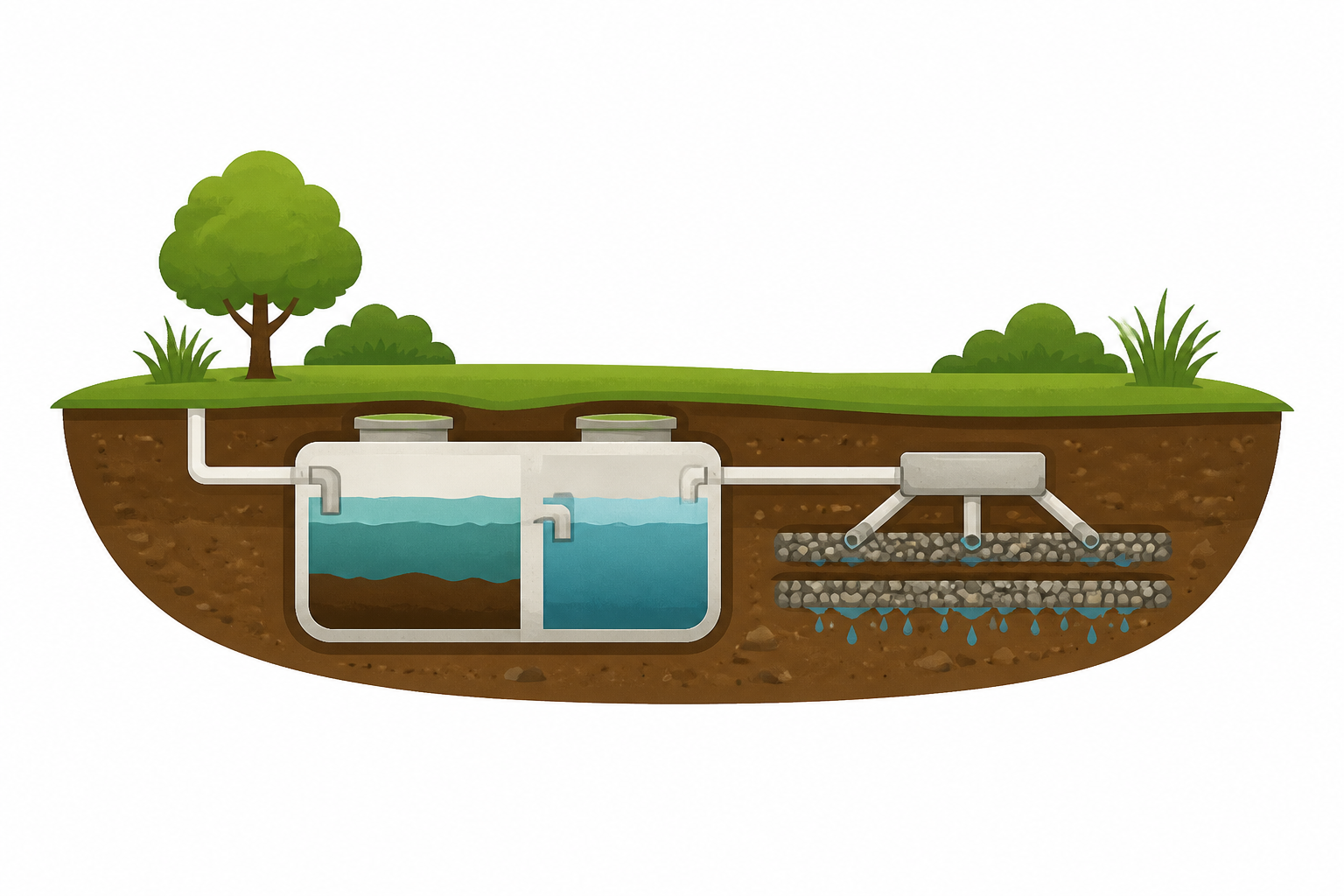
Additionally, rain soaks the earth surrounding your drainfield laterals. Waterlogged soil loses the ability to absorb fresh effluent at normal rates, which triggers pressure accumulation inside the tank and distribution lines. This excess pressure requires an outlet. In many systems I’ve looked at over the years — notably those constructed prior to the 2000s without modern tank baffles — the pressure reverses through the primary inlet line and straight into your home’s plumbing. Although this represents a distinct mechanism, rainfall remains the trigger event.
Four Primary Sources of Rain-Related Odor Problems
1. Evaporated or Absent P-Trap Water Seals
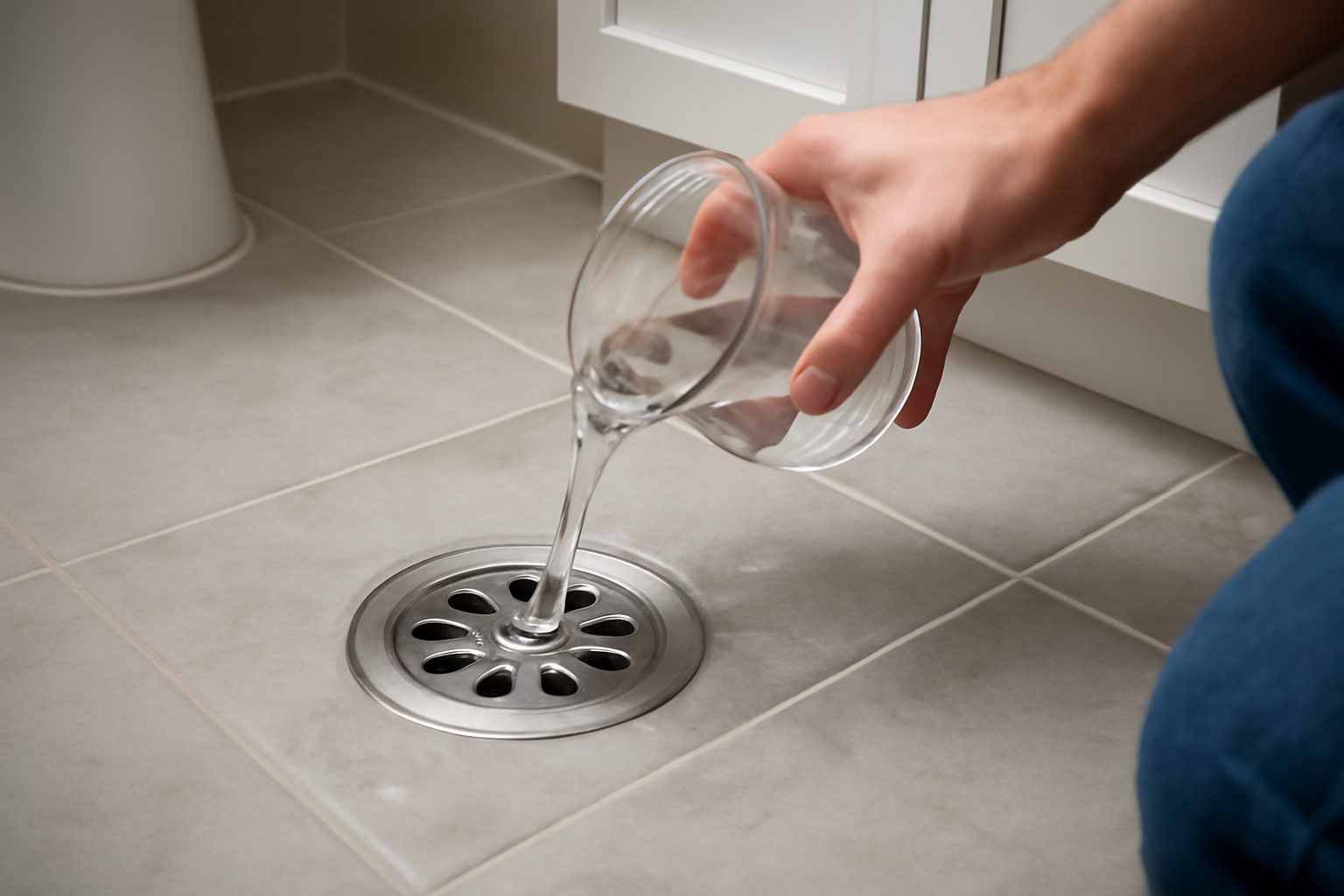
This ranks as my most frequent discovery on inspections. Each drain throughout your residence — whether bathroom sink, shower, or floor drain — contains a P-trap, that S-shaped bend holding a column of water. This standing liquid functions as an airlock preventing sewer gases from rising back through the pipe. When a drain sits unused for several weeks, that protective water column gradually evaporates, eliminating the seal. During a rain event when barometric conditions shift downward, gases flow upward unimpeded, carrying directly into your living space. I encounter this pattern regularly with basement floor drains, little-used guest bathrooms, and utility room drains.
The solution couldn’t be simpler — pour approximately a quart of water into each dormant drain roughly every 30 to 60 days. For drains that never get regular use, add a cup of vegetable oil atop the water after you pour it in — the oil sits above the water surface and substantially slows evaporation rates. Some licensed plumbers suggest installing trap primer units for recurrent problems, available from plumbing retailers for $25 to $60 each.
2. Obstructed or Under-Sized Vent Stack Opening
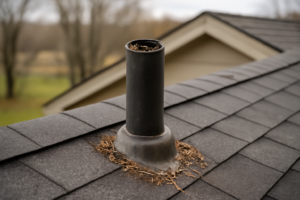
Consider your roof vent stack the respiratory system of your whole plumbing network. Birds construct nests inside them. Autumn leaves accumulate and compact. During one Putnam County inspection, I extracted a deceased rodent from inside a 3-inch diameter vent — the property owner had endured indoor odors for a full quarter-year. When a vent becomes obstructed, exhaust gases become trapped with no path to escape. Under pressure-dropping rainfall, those gases have only one direction left to travel: downward and into your house.
The typical residential vent stack has a 3 or 4 inch diameter. Current plumbing codes (including International Plumbing Code standards and Southeast regional regulations) establish 3 inches as the absolute minimum for a residential dwelling. Older residences occasionally contain 1.5-inch or 2-inch stacks — these put your property at a disadvantage during every rainstorm. Removing an obstruction using a standard garden hose or a mechanical auger from rooftop level is manageable as a do-it-yourself task if you have roofwork experience. Always ensure a spotter stays on ground level when you’re working aloft.
3. Waterlogged Drainfield Soil and Hydraulic Backup
Precipitation doesn’t merely shift air pressure; it thoroughly saturates the subsurface environment around your drainfield distribution pipes. Once soil reaches saturation, effluent cannot percolate downward at normal rates. This creates a pressure situation — backup pressure accumulating inside your tank and laterals. Most systems with proper tank baffles manage this pressure surge temporarily. However, a system already operating under stress — aging lateral pipes, accumulated biomat layer, an overdue tank pumping — can’t handle the load. During intense rainfall, pressure reverses and forces gases (or worse, sewage) back toward your house.
Sluggish drains appearing during and persisting after rainstorms — beyond odor alone — indicates your drainfield has reached its limits. A tank ignored for more than three to five years and positioned in the clay-rich soil typical of the Southeast represents high risk. Tank pumping expenses range from $350 to $550 across rural Georgia and Alabama where I operate. It’s routine upkeep, not an emergency measure, and it provides your system with recovery capacity.
4. Fractured or Compromised Tank Lid Sealing
Early experience taught me this lesson directly. A Morgan County property owner had a persistent indoor odor, and I spent two-plus hours investigating the roof-mounted vent. Eventually I returned downslope, studied the yard, and spotted a concrete access riser with a fine crack traversing its surface. Rainwater was trickling into the fracture, disturbing the tank and releasing a spike of hydrogen sulfide gas. This gas was ascending the inlet line straight into the residence’s plumbing network.
Concrete lids deteriorate gradually, particularly across regions experiencing freeze-thaw cycles or where machinery passes overhead. Plastic access lids can shift upward from their seating. After a heavy downpour, inspect the ground surrounding your tank access point for water accumulation sitting directly above the lid — this symptom signals infiltration. Replacement concrete lids cost between $40 and $80. A new plastic riser lid ranges from $25 to $60 based on the pipe diameter. Both are straightforward replacements, provided you’re able to locate your tank initially.
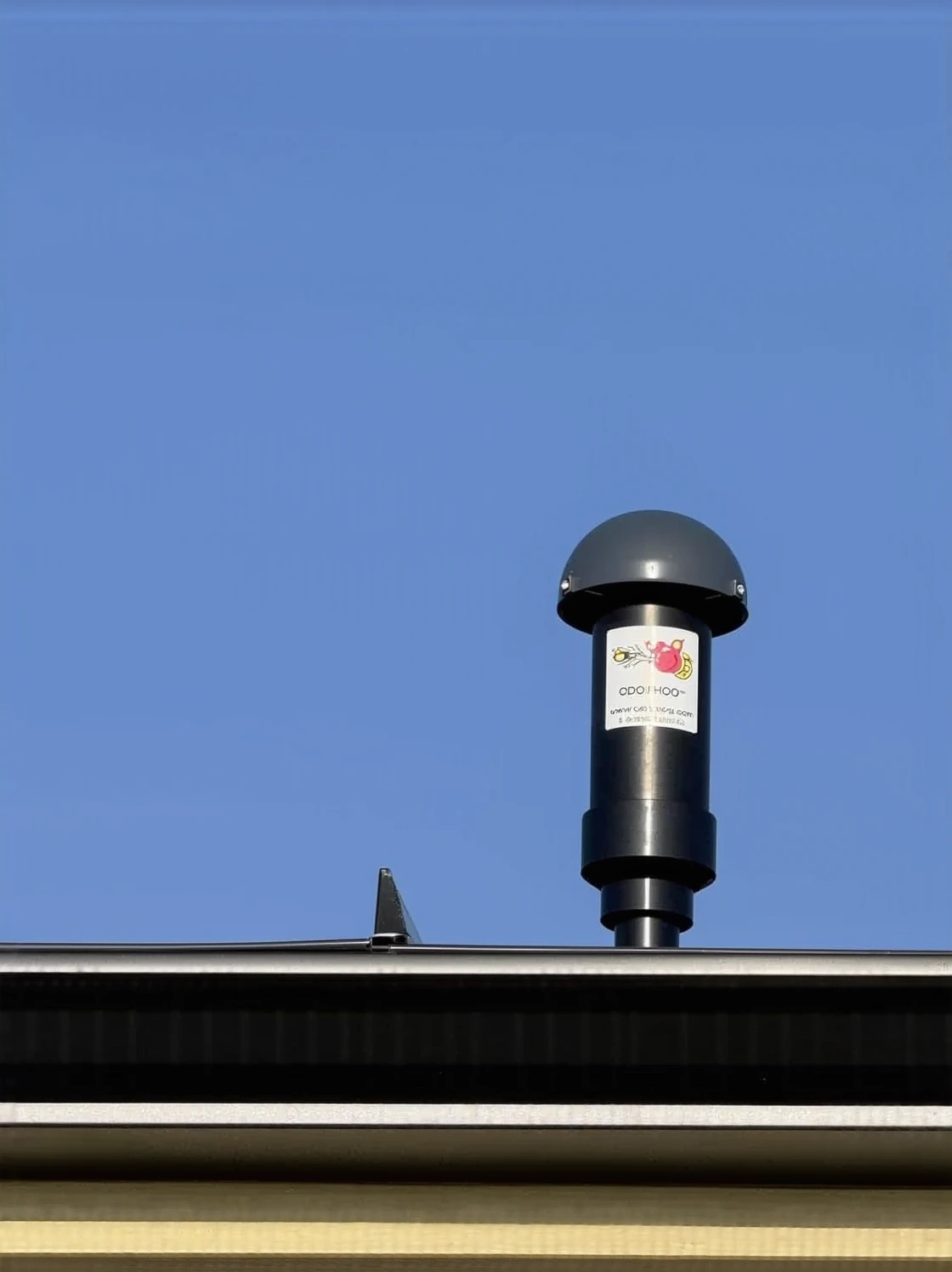
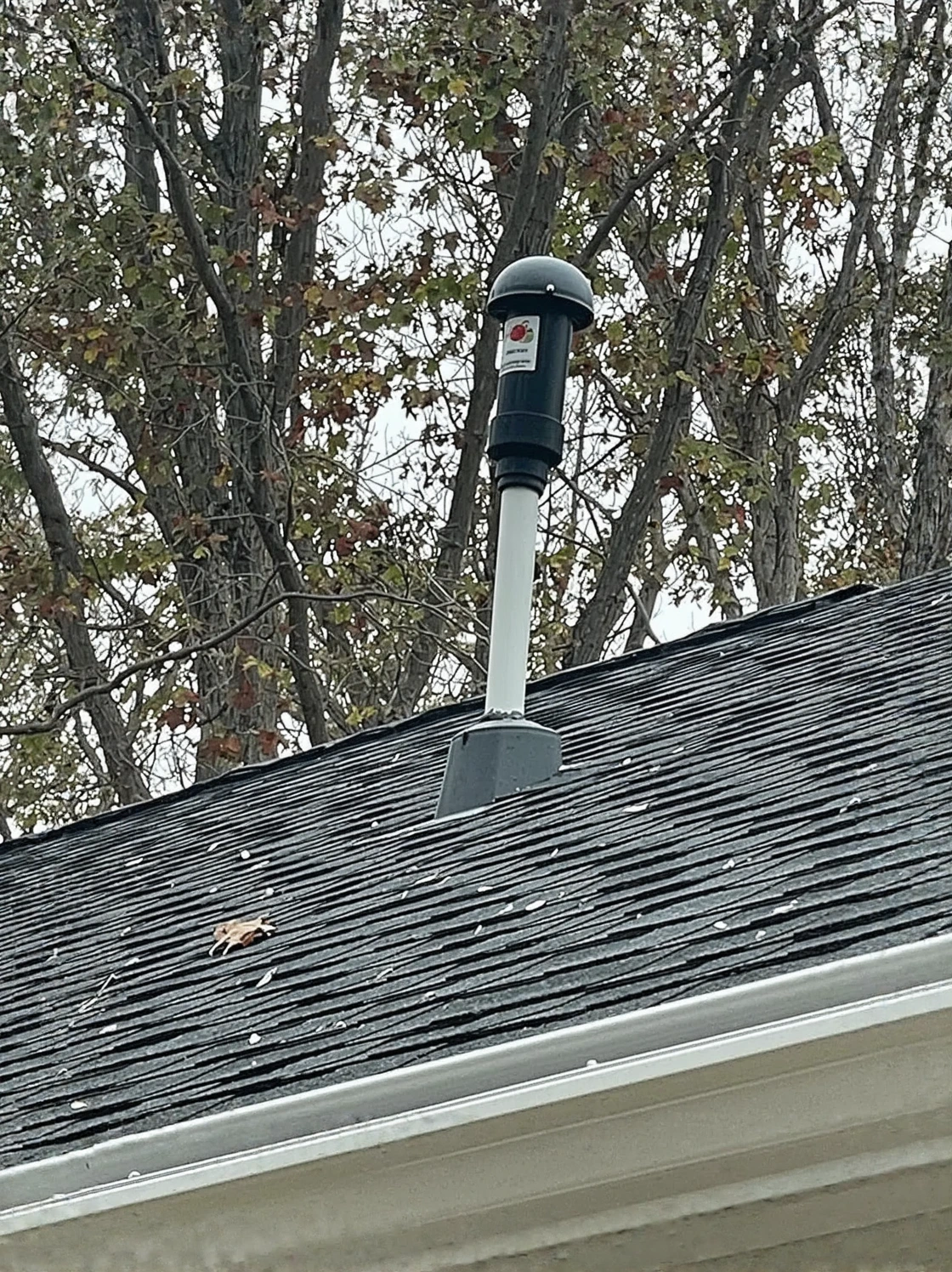
The Vent Filter That Stopped Rain From Pushing Septic Gas Back Into My Bathroom
When you’re detecting sewage odor seeping indoors after a downpour, your roof vent stack is typically the weak point — falling water and pressure are shoving gases back down your pipe rather than permitting atmospheric discharge. A reliable vent filter works at that exact point — trapping odors before they migrate back into your drain system.
What works
- The cap configuration slopes downward so rainwater runs off sideways — I’ve observed heavy rainfall pass through without any odor returning indoors.
- Activated carbon material captures hydrogen sulfide directly (that unmistakable rotten egg aroma), rather than simply masking the odor — your residence stops radiating septic smell across the neighborhood.
- Attachment requires approximately 10 minutes directly atop your current vent opening; no excavation, no tank access, no contractor dispatch necessary.
What doesn’t
- The activated carbon medium requires replacement every 12–18 months depending on system usage frequency — this represents an ongoing maintenance cycle.
- When your vent stack has insufficient diameter or blockage below the filter location, odor goes away but drainage complications stemming from root causes remain unaddressed.
I’ll admit I was skeptical the first time I ordered one — I thought a simple filter cap couldn’t really stop that kind of stench. It did, and now it’s the first thing I recommend to anyone fighting post-rain indoor odor. Grab an OdorHog Vent Stack Pipe Filter (3-inch, Black ABS with Mushroom Cap) and see the difference for yourself.


Sources and further reading
About This Article

Written by Joel Grayson. Rural property owner who learned septic systems the hard way after my own failed 15 years ago. I created Backyard Septic to give homeowners honest, practical guidance on septic installation, maintenance, and troubleshooting. More about this site.
Scope and limits. Joel is an experienced rural property owner, not a licensed septic inspector. Have a licensed septic professional handle pumping, permits, and any diagnosis you plan to act on — and never enter a tank.
Verify this against a primary source
Specifics change, and your situation may differ from the one described here. These are the authorities worth checking directly:
- EPA SepticSmart — septic system care, inspection intervals and failure signs
- NSF International — treatment unit and tank certification standards