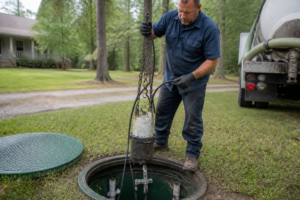
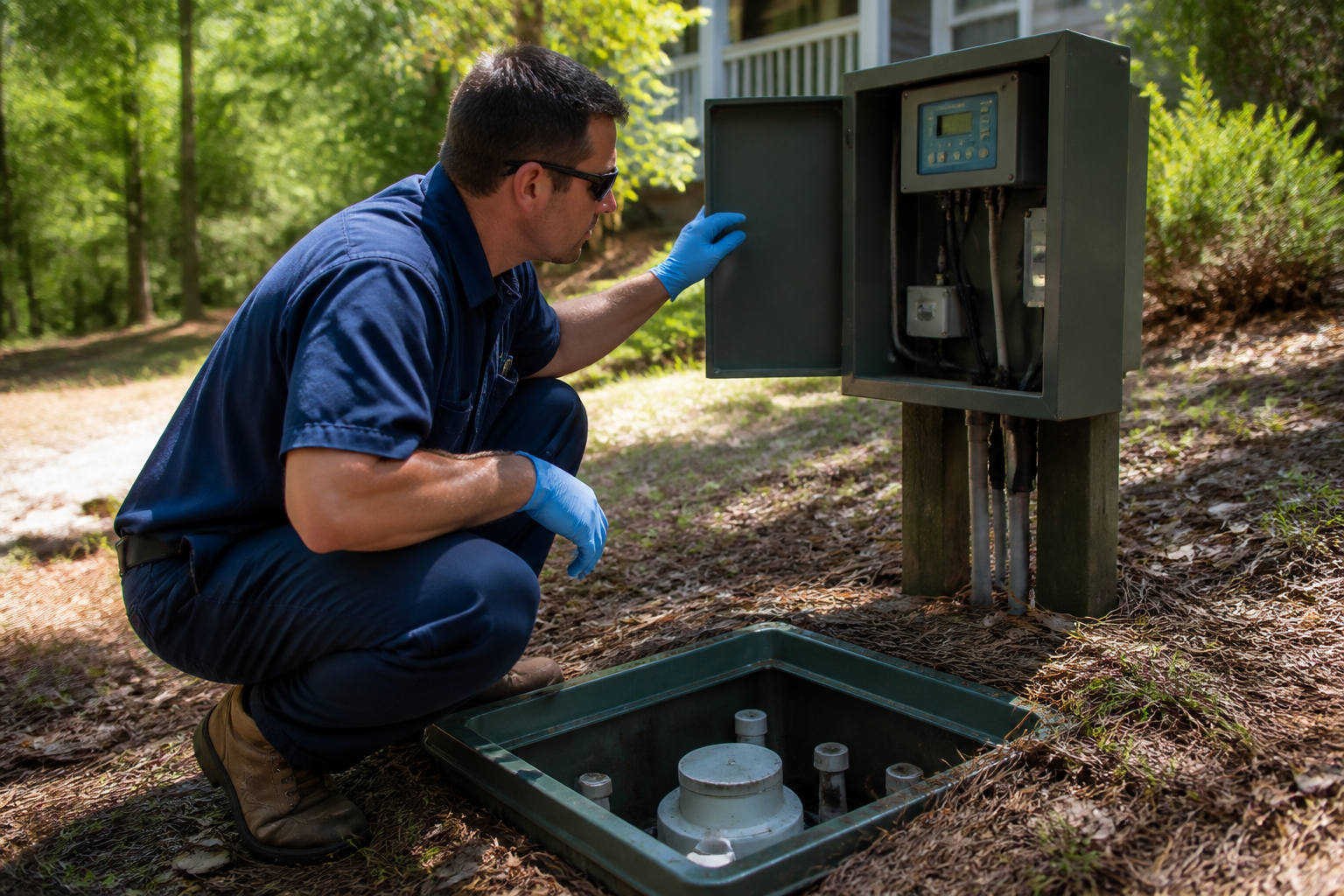
The smell of stagnant water hits you before anything else when I crack open an aeration chamber that’s been neglected. Last spring, I was standing over a tank in rural Georgia where the homeowner had gone three years without scheduling service to avoid the $350 annual bill. Solids had backed up so far into the treatment zone that they were bypassing the entire system. Black biofilm coated every inch of the diffuser. One spray head had calcified shut. The repair invoice came to $1,800—that’s nearly six years’ worth of preventive maintenance spending.
This situation isn’t exceptional. It’s what inevitably happens when people treat aerobic treatment unit upkeep as discretionary. Across my 15 years installing, servicing, and troubleshooting ATUs throughout the rural Southeast, the pattern is always identical: owners with a disciplined maintenance routine keep systems running for two decades. Owners without one face catastrophic failures and bills exceeding $2,000 before they’ve had time to plan for them.
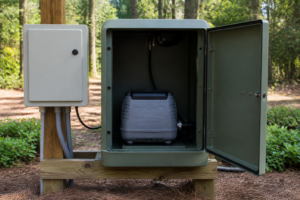
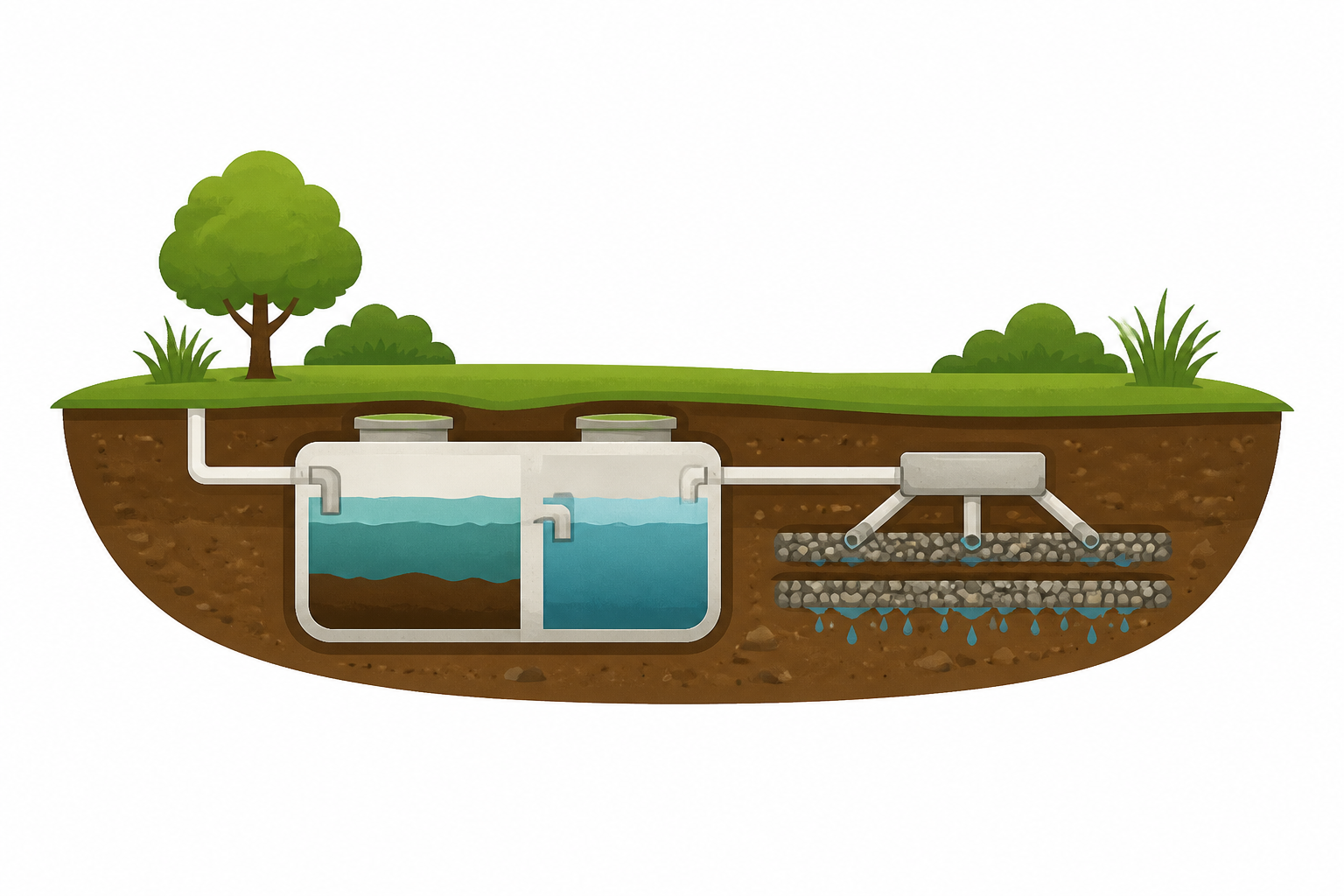
An ATU isn’t like the gravity-fed tank buried under most older homes. It’s more intricate. You’ve got an air pump, diffusers, spray heads, and a chlorination system—each component expects regular attention. But here’s what I’ve learned: aerobic treatment unit maintenance becomes manageable and actually affordable the moment you lock into a straightforward schedule and stick to it.
What follows is the exact maintenance roadmap I give neighbors. Implement it faithfully, and your system will deliver reliable performance for 15–20 years or longer.
Why Aerobic Treatment Unit Maintenance Matters More Than You Think
Traditional septic systems run on simplicity. Gravity moves wastewater. Microbes break it down naturally. Solids accumulate on the tank bottom. You arrange a pump-out every three to five years and forget about it in between.
ATUs operate under a completely different premise. They require continuous mechanical action. When an air pump quits, nobody notices until the system stops treating waste. A single blocked spray nozzle can waterlog your drainfield in weeks if left untreated. Let your chlorine feeder run empty and you’re introducing untreated effluent directly into your soil. These problems don’t announce themselves with warnings—I’ve watched them destroy systems in matter of months.
Regulatory reality matters too. In Georgia, the law mandates that every ATU operate under a service agreement with a licensed technician. That professional is obligated to file annual compliance reports with the Environmental Protection Division. Walking away from the agreement and cutting corners on care can result in penalties, mandatory system abandonment, and forced installation of replacement infrastructure. This isn’t scare-mongering—it’s how the state actually enforces environmental protection. Similar statutes apply throughout Alabama and across most Southeastern jurisdictions.
There’s also your home’s resale value at stake. Prospective buyers demand copies of maintenance documentation. Lenders review those records. A system with a clean, consistent paper trail sells faster and at a premium compared to one with gaps and unknowns.
The Three-Tier Maintenance Calendar: Monthly Tasks for Homeowners
Start here. These are the checks you handle yourself every month—they take roughly 15 minutes and require no investment. I assembled this list based on the specific failures I’ve seen occur between professional service appointments.
The Chlorine Tablet That Finally Stopped My Diffuser from Fouling Every Season
Biofilm accumulation on ATU diffusers happens faster and quieter than most homeowners expect—and you don’t realize it’s occurring until your treatment performance begins degrading. Consistent chlorine application is the single most reliable way to extend diffuser life from two years to five or more.
What works
- Releases chlorine gradually and predictably into the aeration chamber, maintaining residual levels that control black slime growth on diffuser heads without the sudden shock that would damage your bacterial population
- Individual tablets come pre-measured for specific tank capacities, eliminating guesswork about proper dosage each time you maintain the system
- Maintains adequate chlorine residual so consistently that my personal experience shows diffuser cleaning intervals extending from two cleanings yearly down to just once every 18 months
What doesn’t
- Cannot function as a replacement for comprehensive maintenance—tablets manage biofilm but don’t eliminate the absolute necessity for periodic professional cleanings and trash tank pump-outs
- Overdosing becomes a real risk if you haven’t first reviewed your system’s chlorine specification sheet, and excessive residual chlorine concentration can create long-term damage to your drainfield soil structure
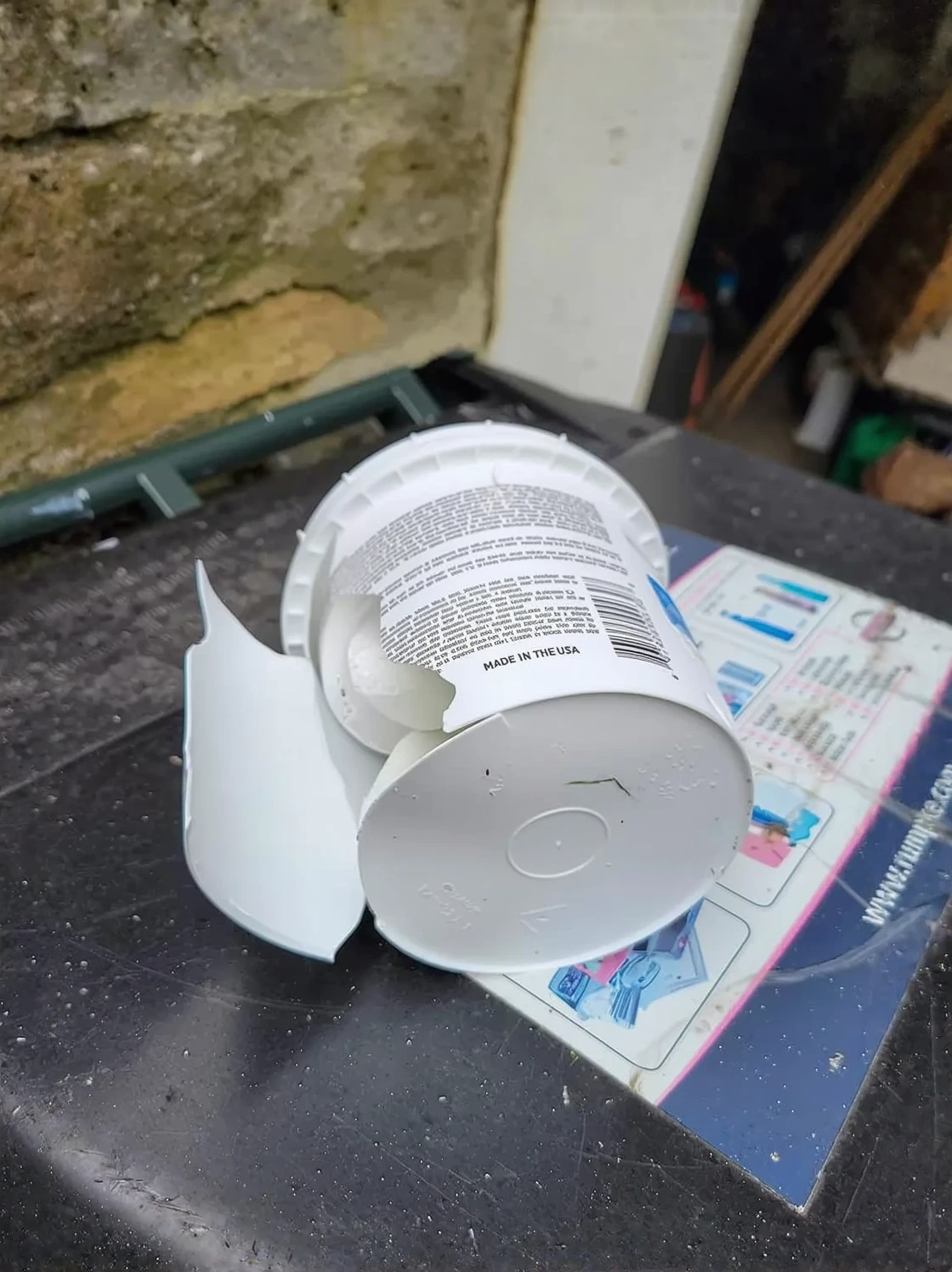
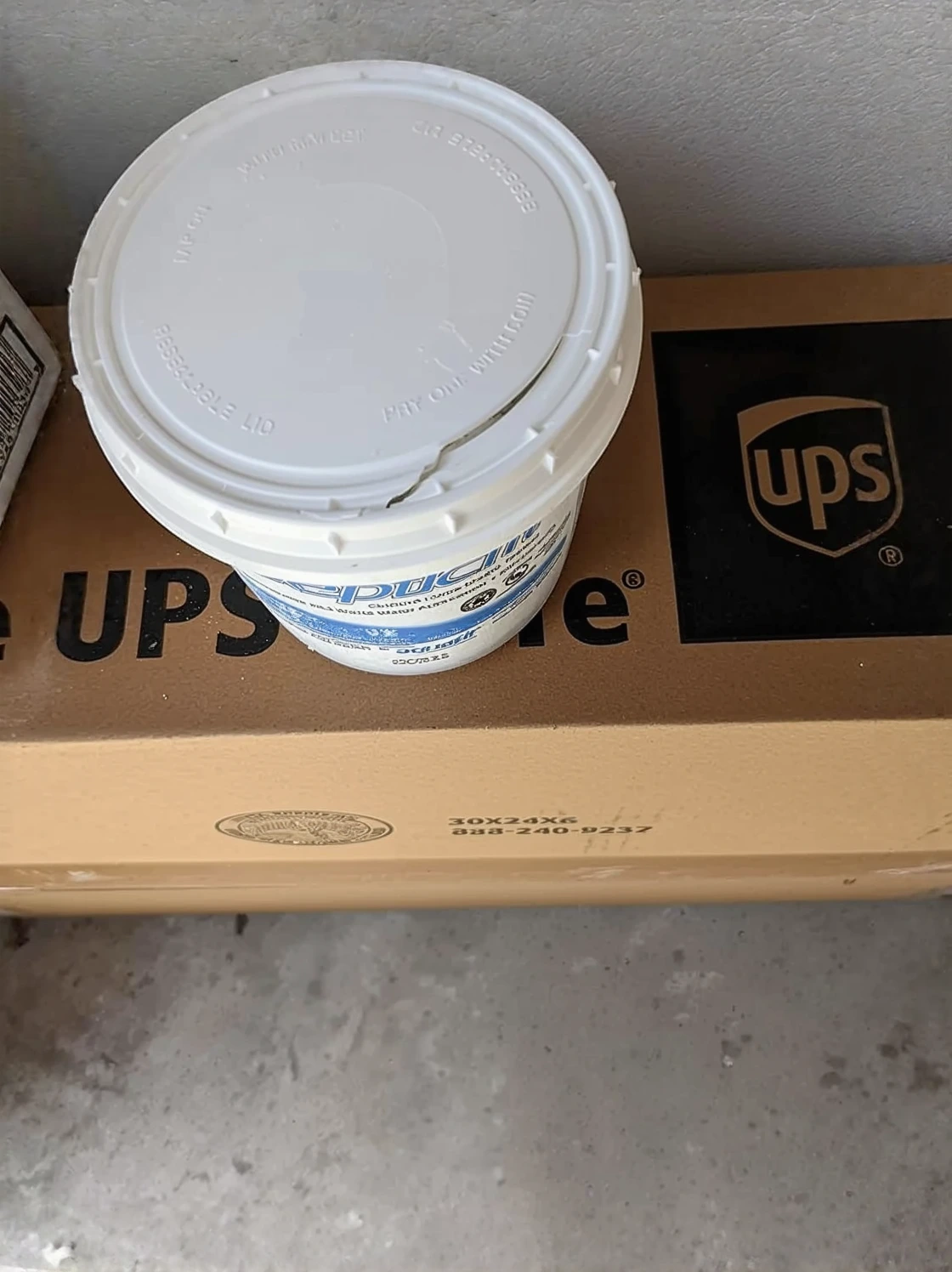
I resisted adding chlorine for the first two years because I thought proper aeration design should handle biofilm on its own — I was wrong, and a fouled diffuser replacement taught me that lesson the expensive way. Septicfit Septic Chlorine Tablet
Tier Two: The Semi-Annual Professional Service
The monthly checks above are yours. This tier is not, and it is the one that determines whether the unit reaches fifteen years or ten. Most ATU manufacturers build their service policy around two professional visits a year, and most state programs expect an agreement to be in place.
- Sludge and scum depth measured in each compartment, recorded and compared against the last visit — the trend matters more than any single reading
- Aerator or diffuser pulled and inspected; fouled diffusers are the most common cause of degraded treatment
- Air pump output tested against spec, intake filter cleaned, diaphragms assessed for hardening
- Clarifier and return line checked for short-circuiting solids
- Disinfection verified — tablet feed rate, or UV bulb hours and sleeve clarity
- Alarm, float, and control panel function test
- A written service report, which is the only proof of compliance you will have
What a good report should tell you
Ask for sludge depths as numbers, not adjectives. “Looked fine” is not a maintenance record. If your provider gives you measured depths visit after visit, you can see accumulation trending and schedule pumping on data rather than guesswork, which is usually the difference between pumping every three years and pumping every five.
Tier Three: Annual and Multi-Year Items
| Item | Interval | Typical cost |
|---|---|---|
| UV bulb replacement | Annually, if UV-equipped | $90–$180 |
| Air pump rebuild kit (diaphragms) | 3–5 years | $70–$150 in parts |
| Air pump replacement | 4–8 years | $450–$900 installed |
| Diffuser or aerator replacement | 5–8 years | $250–$600 |
| Tank pumping | 3–5 years, by measurement | $400–$700 |
| Effluent filter cleaning | Annually | DIY, or bundled into service |
| Control panel and float replacement | 8–12 years | $200–$600 |
Averaged across the years, an ATU costs meaningfully more to run than a conventional tank — figure $500 to $900 annually once you spread the mechanical replacements out. Anyone who told you otherwise at the point of sale was selling.
The Failure Nobody Budgets For
It is not the air pump, even though that is what fails most often. A dead air pump is loud in its own way: the alarm goes off, you notice, you replace it, and the biology recovers in a couple of weeks. The expensive failure is the one that stays quiet.
A partially fouled diffuser does not trigger anything. The pump still runs, the alarm stays dark, and dissolved oxygen quietly drops below what the aerobic bacteria need. The system goes septic-smelling and treatment quality collapses, but nothing tells you. That is precisely what the semi-annual inspection exists to catch, and it is the single strongest argument for keeping the contract even in years when nothing seems wrong.
Sources and further reading
About This Article

Written by Joel Grayson. Rural property owner who learned septic systems the hard way after my own failed 15 years ago. I created Backyard Septic to give homeowners honest, practical guidance on septic installation, maintenance, and troubleshooting. More about this site.
Scope and limits. Joel is an experienced rural property owner, not a licensed septic inspector. Have a licensed septic professional handle pumping, permits, and any diagnosis you plan to act on — and never enter a tank.
Verify this against a primary source
Specifics change, and your situation may differ from the one described here. These are the authorities worth checking directly:
- EPA SepticSmart — septic system care, inspection intervals and failure signs
- NSF International — treatment unit and tank certification standards