
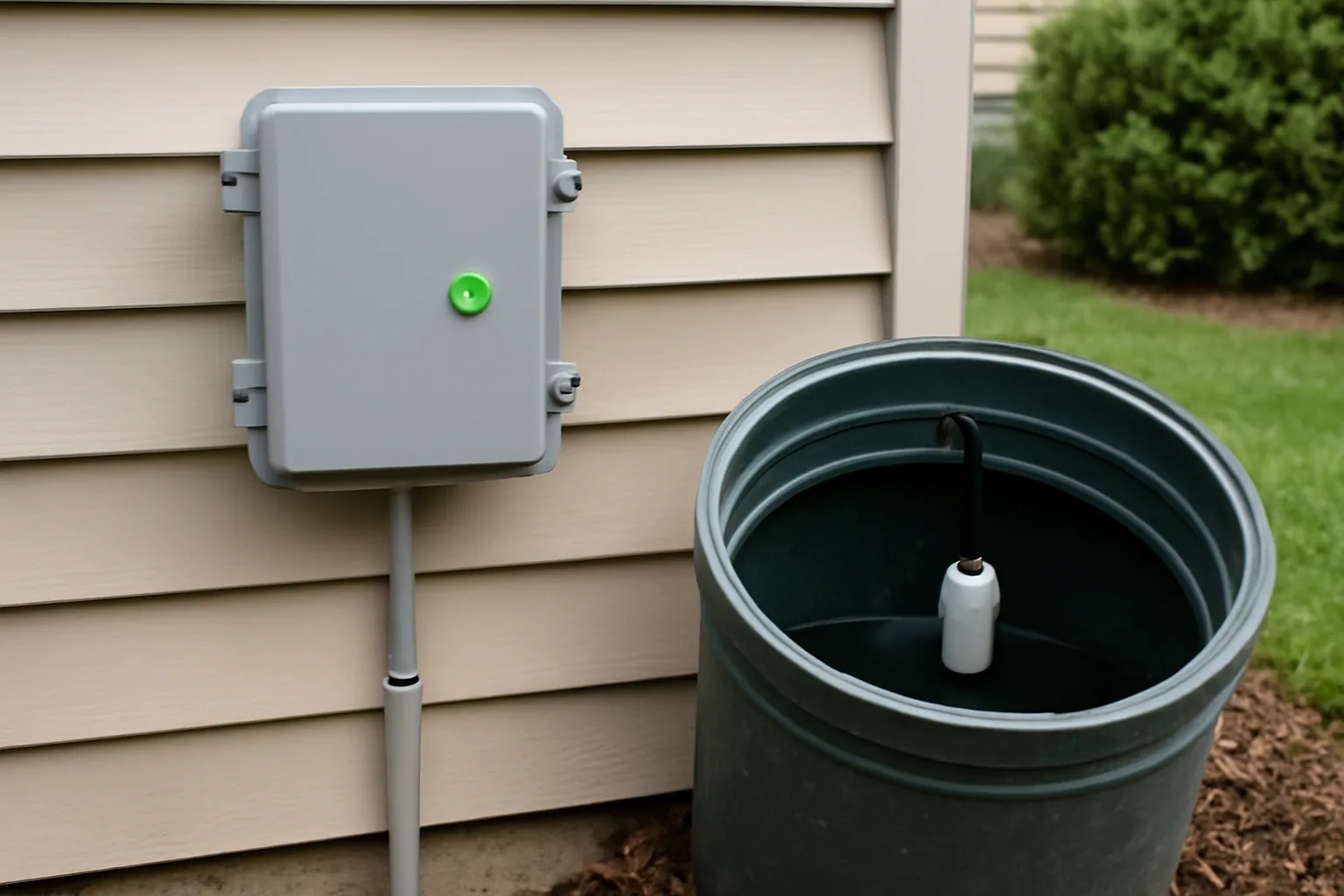
Most homeowners assume their septic system will announce trouble loudly and unmistakably when failure is imminent. That assumption is dangerously wrong. I’ve stood in basements where raw sewage was actively flowing across concrete while residents upstairs remained completely oblivious. The reason every one of those incidents could have been prevented is simple: the absence of a septic alarm. Grasping how septic alarm systems actually operate separates homeowners who catch problems early from those who face five-figure repairs. After 15 years spent inspecting and diagnosing systems throughout the rural Southeast, I can state this without reservation: nothing—not a good pumping schedule, not an additive, not even meticulous water conservation—matches the value of a properly functioning alarm.
The persistent myth I encounter is that alarms matter only for specialized installations—aerobic treatment systems, mound configurations, or setups with mechanical pumps. That’s incorrect. Any system containing a pump tank, distribution chamber, or lift mechanism requires an alarm. Even gravity-fed conventional designs can gain real benefit from one. These devices aren’t optional upgrades. They’re detection tools that extend your response window to somewhere between 12 and 48 hours—the margin between a routine service call and a system collapse.
What follows is a detailed walkthrough of how these systems detect problems, which conditions activate them, testing procedures you can perform yourself, and the specific equipment I’ve come to trust based on practical field use. Let’s dive in.
Septic Alarm System How It Works: The Basic Mechanics
At its core, a septic alarm system keeps tabs on the wastewater elevation within your pump tank or dosing chamber. The mechanism is straightforward. A suspended float switch sits at a predetermined height inside the tank—customarily positioned 2 to 4 inches above where the pump float rests at its “activate” position. Once liquid rises past this threshold, that upper float triggers both an audible warning and typically a visible red indicator light.
The significance becomes clear when you understand the sequence. Your pump operates on a timing mechanism: it activates at one level and deactivates once liquid drops sufficiently. If the pump malfunctions, becomes obstructed, or circuit protection trips, liquid continues accumulating with nothing to disperse it. The alarm float sits precisely in this gap—above normal pump activity—to intercept exactly this failure pattern. You receive notification before the tank spills over. That notification window—typically spanning 12 to 48 hours based on how much water your household generates—gives you the opportunity to contact a service professional before backup reaches your fixtures.
The alarm assembly itself installs indoors on a wall, positioned where household occupants will plainly hear it. It communicates with the float by means of low-voltage cable running through protective conduit originating at the tank. The typical installation draws power from a standard 120V household outlet. Numerous models incorporate battery backup capability. The alert mechanism emits sound—ordinarily 85 to 95 decibels—alongside a flickering or continuous red display. This dual approach is purposeful. Audio penetrates sleep and distraction. Light provides instant visual confirmation of which system requires attention.
What Actually Triggers a Septic Alarm
This represents a frequent source of misinterpretation among property owners. Many believe activation automatically signals a full tank. Occasionally that’s accurate, though often it reflects something else entirely. From my experience, the dominant factors are pump malfunction, defective floats, breaker interruption, and elevated water infiltration during intense precipitation events.
Consider a situation from last spring involving a homeowner near Knoxville. After five days of substantial rainfall, her alarm activated. The tank dated to 12 years prior and exhibited minor groundwater seepage where the top cover had deteriorated. The pump functioned normally, but incoming flow exceeded outgoing capacity. That diagnosis points toward a separate remedy than electrical pump failure—and recognizing the distinction means significant savings. Upon checking the control panel, I confirmed pump operation was proceeding correctly and scheduled tank-lid sealing and top-cover replacement for the following week. That intervention totaled roughly $400. Set that beside the expense of sewage cleanup, which typically ranges from $3,000 through $8,000 contingent on contamination severity.
Mechanical issues with floats also appear frequently—either the warning float or the pump activation float becomes seized, typically due to accumulation of grease or particulate matter that prevents free movement. Regular examinations help catch this early. I advise checking accessible float mechanisms at minimum annually, preferably coinciding with your scheduled professional pump-out visit.
The “Silence” Button Is Not the “Fix” Button
Let me state this without ambiguity: engaging the silence or mute function on your panel merely stops the noise. It solves nothing underneath. The red light indicator should persist illuminated. Should it extinguish, your control panel itself is malfunctioning. I’ve entered residences where the alarm had been quieted for extended periods. The occupants held the mistaken belief all was well. The pump had been inoperative for approximately 10 days. That sequence leads directly to drainfield saturation and bills in the vicinity of $15,000 for system replacement.
Once that alarm sounds, quieting it is acceptable—fine, even necessary. However, follow that immediately with a response inside one day. Cut water consumption sharply right away. Postpone laundry. Abstain from extended baths or showers. Don’t run the dishwasher. Then get a trained service specialist involved.
Float Placement and Installation Standards
Where the float sits matters significantly, and I regularly observe amateur installations that go awry in this exact area. The warning float must sit 2 to 4 inches directly above the “pump activate” float. This spacing provides the detector sufficient room to identify pump failure before the tank attains full capacity. Position the alarm float excessively high and you forfeit those critical warning hours. Situate it too low and you’ll experience recurrent false alerts triggered by ordinary pump cycling.
Many jurisdictions codify this requirement. Tennessee’s Department of Environment and Conservation mandates audible and visual alarms on pump-tank setups under Rule 0400-48-01, for example. Equivalent language appears in Wisconsin’s SPS 383, Minnesota’s Chapter 7080, and contemporary septic codes in most states. Should your pump system lack an alarm, you could conceivably fall outside regulatory compliance—a status that creates complications during property transactions.
Position the control panel indoors in a heated area—not a cold garage or outside structure. You must be capable of hearing it. Cable routing from tank to panel requires protective conduit—ordinarily 1/2-inch PVC—and should transit the tank boundary through a sealed opening. Experience taught me this lesson: during an early project, I neglected proper sealing at the wire entry. Subsurface moisture wicked along the cable, triggering corrosion at the float coupling after roughly 18 months elapsed. My process now incorporates waterproof wire connectors and sealant at every tank opening.
How to Test Your Septic Alarm
The procedure takes minimal effort and fewer than five minutes to complete. Most control panels feature a test switch integrated into the design. Press and maintain pressure on this button—sound should emit and the red indicator should illuminate in under two seconds. Release pressure and both should cease. This verifies the panel itself and the warning device are operating as designed.
This button test, however, bypasses the float mechanism entirely. For comprehensive verification, you must manually raise the alarm float within the tank. With the panel energized, apply upward force on the float until activation occurs—the alert should respond within seconds. Return the float to its resting position and the signal should terminate. Certain panels incorporate automatic reset. Others require you to actuate a reset switch on the control unit after the float settles.
Perform full-system verification—both panel electronics and float mechanics—on a semi-annual schedule. Use adhesive label tape to mark the test date on the inside of your panel enclosure. This straightforward maintenance habit requires less time than verifying your fire alarms. Align your testing cycle with seasonal property maintenance—spring and autumn work effectively.
The Alarm That Actually Woke Me Up to a Problem—Before It Became a Disaster
An alarm system only delivers value when you register when your tank approaches capacity. The SJE-Rhombus Tank Alert XT positions itself within your tank and activates the moment elevation enters unsafe territory—providing you days or weeks to arrange a pumping appointment rather than frantic emergency hours to find available service.
What works
- The mechanical switch activates with dependable precision when effluent levels actually pose a backup risk—avoiding the false positives that occur from standard operation or heavy downpours.
- The noise output (or illuminated indicator, contingent on configuration) delivers instantaneous, undeniable notification instead of depending on odors or visual observation to determine something requires attention.
- Deployment through the existing tank access opening took approximately 60 minutes for my installation—no excavation of the tank structure was necessary, and compatibility spans the majority of conventional tank designs.
What doesn’t
- Should your alarm apparatus lack convenient proximity to your electrical source or improper wiring exists, sound transmission into occupied interior spaces during cold-weather months may prove inadequate.
- This constitutes a detection apparatus solely—it indicates when pumping becomes necessary but independently resolves neither drainfield dysfunction nor compromised distribution piping.
I was skeptical the first month, half-expecting a false alarm every other week, but after three trouble-free months I realized this thing was actually catching real problems. When that alarm finally went off, I felt oddly grateful instead of panicked. Grab the SJE-Rhombus Tank Alert XT and stop wondering if your next load of laundry is the one that tips everything over.
Septic Tank Alarm Troubleshooting: What to Do When It Goes Off
A septic tank alarm going off at 11pm is genuinely alarming the first time. It is almost never an emergency in the next ten minutes, but it is always something. Here is the order I work through it.
- Silence it, then start a clock. The silence button stops the buzzer and nothing else. The red light stays on because the condition is still there. Note the time — how long the light stays lit matters for the diagnosis.
- Stop putting water in. No laundry, no dishwasher, short showers. Every gallon you add goes into a tank that is already telling you it cannot move water out.
- Check the breaker and the pump. A tripped breaker or a GFCI outlet at the control panel is the single most common cause I see. Reset it once. If it trips again immediately, stop — that is a failed pump or a damaged cable, and repeated resets will not fix either.
- Listen at the tank. With the lid access open, you should hear the pump run when the float calls for it. Silence means no power reaching the pump or a seized motor. A running pump with no level drop usually means a clogged impeller or a stuck check valve.
- Look at the float. Floats tangle on cords and on each other, and they snag on solids that should not be there. A float hung up in the high position will alarm on a perfectly normal tank.
- Rule out the easy false alarms. Heavy rain and groundwater infiltration will raise levels temporarily. So will a stuck toilet flapper feeding the tank all night.
What each alarm pattern usually means
| What you see | Most likely cause | What it costs to sort out |
|---|---|---|
| Alarm clears on its own after heavy rain | Infiltration or a surge load | Usually nothing — watch it |
| Alarm returns every few hours | Pump running but under-performing | $400–$900 pump replacement |
| Breaker trips on reset | Failed pump or damaged cable | $500–$1,200 including diagnosis |
| Alarm on, tank level normal | Stuck or tangled float | $150–$300 service call |
| Alarm on, no power light at panel | Panel or supply fault | $200–$600 electrical |
The one thing I would not do is disconnect the alarm to stop the noise. I have seen exactly that turn a $600 pump swap into a drainfield replacement, because nobody heard the system complaining for another eight months.
Septic Tank Alarm Installation: What It Involves
If your system has a pump but no alarm — which is more common on older installs than it should be — adding one is a modest job. A basic high-water alarm panel runs $90–$200 for the unit. The float hangs at a set height in the pump chamber, wired back to a panel mounted where you will actually hear it, usually inside or on an exterior wall near a door.
The float placement is the part worth getting right: it should trigger with enough reserve capacity left in the tank to give you a day or two of normal household use, not five minutes. On most residential pump chambers that means setting it a few inches above the pump-off float and well below the inlet invert. Septic tank alarm installation is legitimately DIY-able if you are comfortable with line-voltage wiring in a wet location; if that sentence gave you pause, this is a two-hour job for an electrician and worth every dollar.
Sources and further reading
About This Article

Written by Joel Grayson. Rural property owner who learned septic systems the hard way after my own failed 15 years ago. I created Backyard Septic to give homeowners honest, practical guidance on septic installation, maintenance, and troubleshooting. More about this site.
Scope and limits. Joel is an experienced rural property owner, not a licensed septic inspector. Have a licensed septic professional handle pumping, permits, and any diagnosis you plan to act on — and never enter a tank.
Verify this against a primary source
Specifics change, and your situation may differ from the one described here. These are the authorities worth checking directly:
- EPA SepticSmart — septic system care, inspection intervals and failure signs
- NSF International — treatment unit and tank certification standards