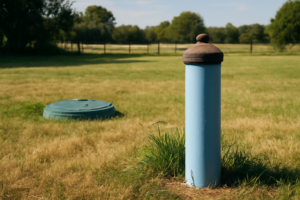
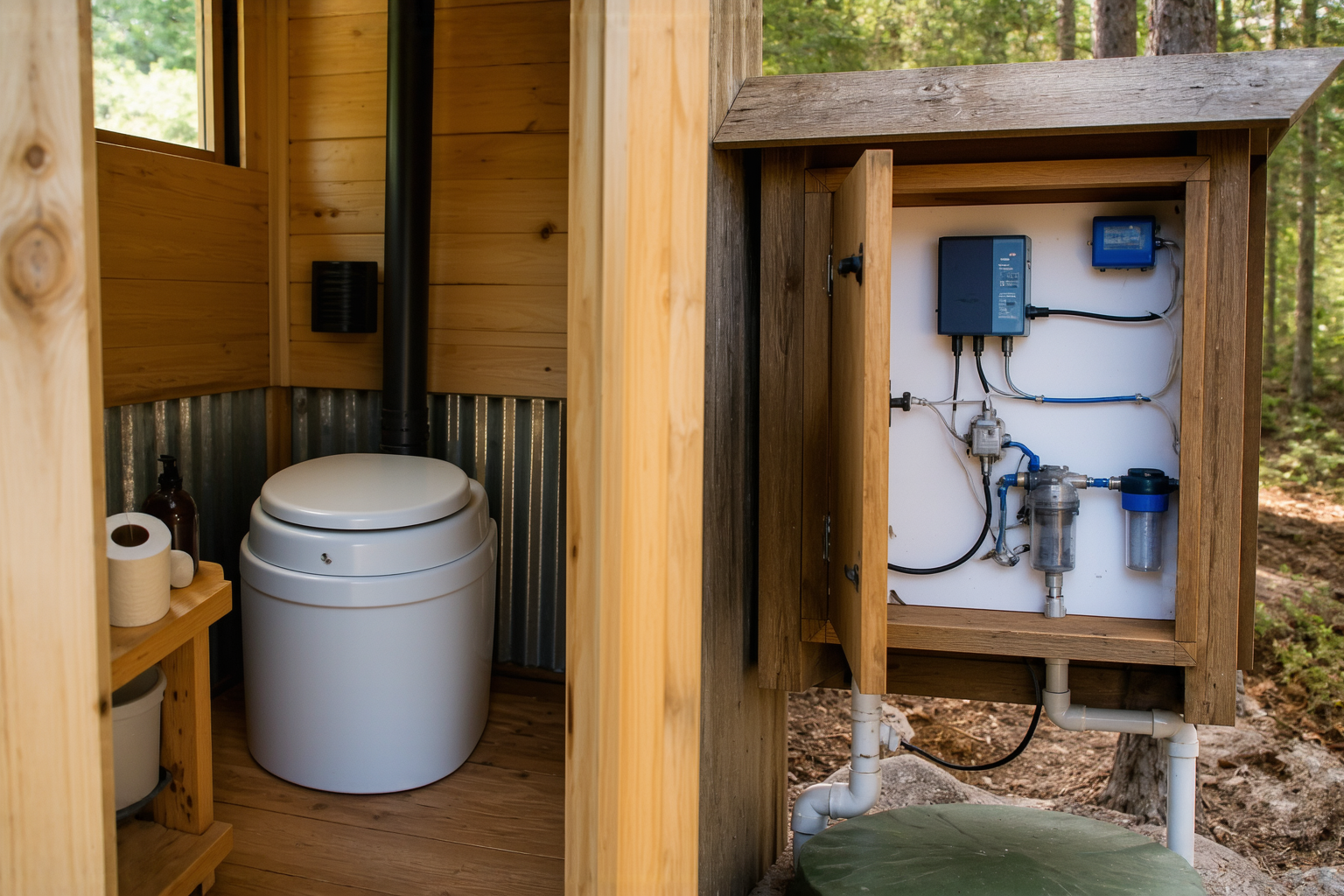

I’m standing in front of a standard septic tank right now, watching the probe needle settle at the sludge layer, and I can tell you with certainty: the “composting septic system” that homeowners keep asking me about doesn’t actually exist as a real, off-the-shelf product category.
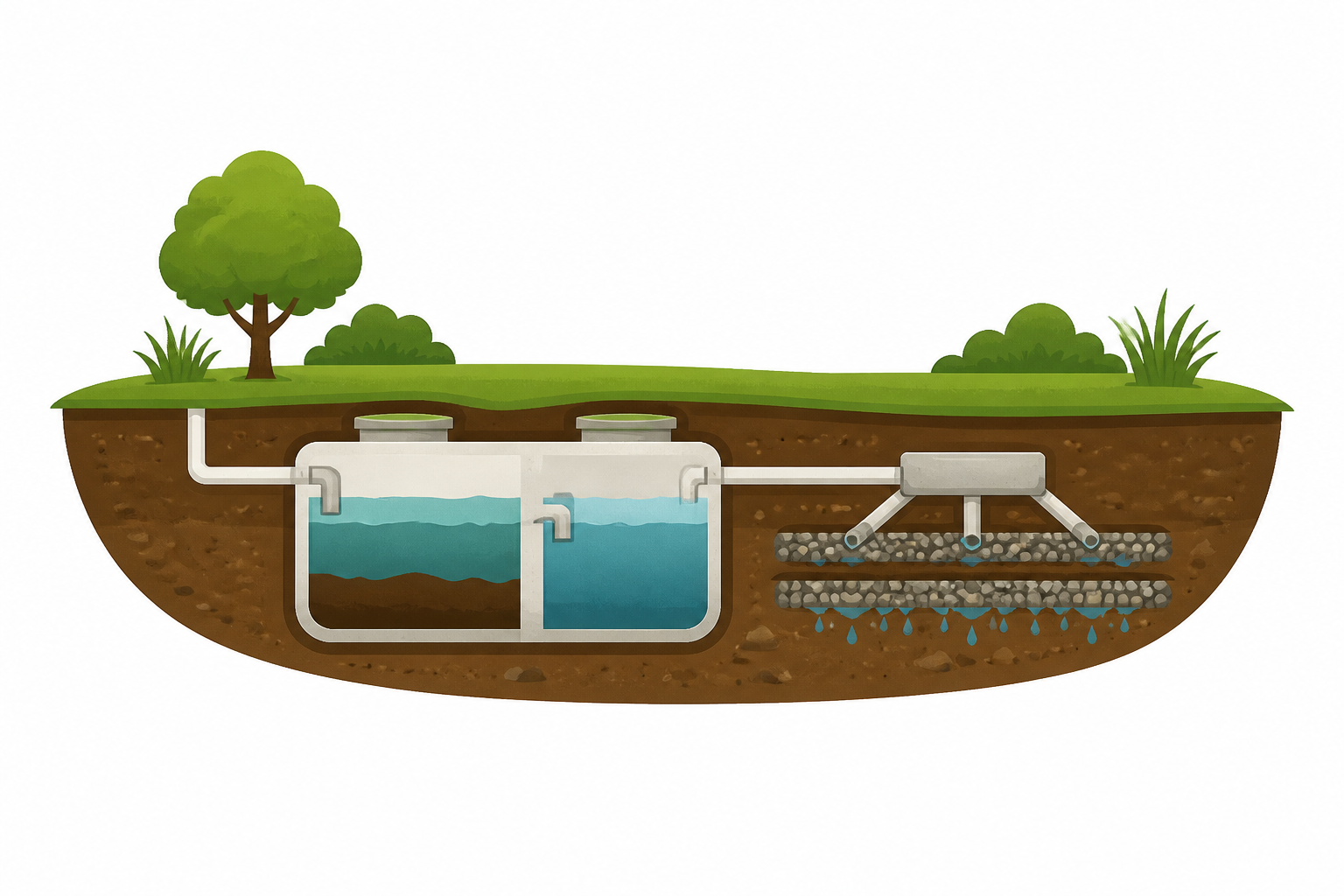
In my 18 years installing and inspecting systems across the rural Southeast, I’ve taken enough calls on this topic to see the pattern clearly. Most folks who search for those words are reaching for one of three genuinely distinct solutions—and they’re asking about completely different things without realizing it. A traditional septic tank operates anaerobically, breaking solids down in an oxygen-free environment. Composting, by contrast, demands oxygen to function. They’re biological opposites. So when someone phones asking about a “composting septic system,” I’ve learned they’re almost always describing one of three legitimate alternatives. Let me break down all three so you land on what actually fits your land and your lifestyle.
The Misconception: Why “Composting Septic System” Isn’t Something You Can Buy
Years back, I had Tom call from up in the North Carolina foothills. He’d spent time searching the web for “composting septic system” and found himself on a handful of murky websites that pitched it as some kind of hybrid—partway between a buried tank and a standalone composting toilet, supposedly the green middle ground that would spare him the hassle of a full septic build-out. He had no municipal sewer line, no desire for major excavation, and the whole “composting” angle made it sound simpler and more sustainable than what he thought traditional tanks offered.
Once we were twenty minutes into the conversation, I realized what Tom was picturing: a single underground unit that would somehow transform his household waste into finished compost and eliminate the need for a separate drainfield entirely. That’s not aligned with how septic biology actually operates, and it’s not aligned with any licensed system you can actually purchase and install either.
What’s really happening is that “composting septic system” is a search phrase born from confusion—it’s what people type into Google when they’re uncertain about their choices, not what any manufacturing company actually sells under that name. The moment I walked Tom through what he genuinely needed, everything clicked. I’m willing to bet one of the three paths below is exactly what you’re hunting for as well.
Option 1: Composting Toilets (Standalone Off-Grid Choice)
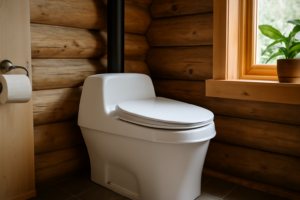
A composting toilet operates on completely different principles than any septic arrangement. It’s an enclosed device that diverts liquid away from solid material, introduces air circulation to the solids, and facilitates biological breakdown right there in the unit. Tank-free. Drainfield-free. No dependency on municipal water lines. Fully independent.
This is likely what the term “composting septic system” is accidentally pointing toward if you’re dealing with a plot of land that has no running water supply, or if you’re equipping a seasonal cabin, an auxiliary structure, or a mobile setup. Situations like those demand this approach. Our dedicated resource on standalone composting toilet systems lays out which models hold up in actual field conditions and which ones fall short—check that page for full installation guidance, the realities of day-to-day upkeep, and how to navigate local code sign-offs by jurisdiction.
The unit I encounter most regularly throughout the Southeast and consistently back is the Nature’s Head Self Contained Composting Toilet. Solid construction, two-person capacity without operational strain, and that distinctive hand-crank mechanism fits well into compact spaces (cabins, trailers, tight bathrooms). Price tag sits around $1,000, which isn’t pocket change—but it’s a proven, field-tested apparatus that delivers on its promises.
Nature’s Head Self Contained Composting Toilet with Close Quarters Spider Handle Design on Amazon
Reality check: you’re responsible for periodically removing the accumulated solids and either composting them yourself or arranging for someone to haul the material away—typically every few months based on how heavily the toilet is used. It’s straightforward and genuinely earth-conscious, though it demands active participation on your part. This path isn’t for everyone—but if you’re committed to staying truly off-grid and you’re willing to get your hands involved in the process, this delivers on what the name promises.
Option 2: Aerobic Treatment Units (ATUs)—The Alternative Approach
Here’s where the marketing pitch gets a little loose. Aerobic treatment units, commonly called ATUs, get promoted in some circles as “greener” variants or systems with a smaller ecological footprint. There’s actually substance to that argument—they harness aerobic microorganisms (bacteria that thrive in oxygen) to decompose waste more rapidly and thoroughly compared to the standard anaerobic approach.
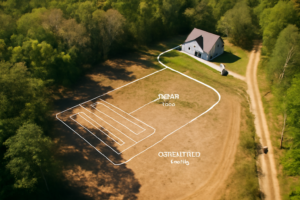
The catch: an ATU is still fundamentally a buried tank paired with a drainfield. You need a water source—municipal or private well. It isn’t composting in the hands-on, DIY sense. It remains a conventional septic arrangement, just employing a different biological procedure within the tank itself.
If “composting septic system” is what you typed into the search box but what you actually have is water service running to your house and you’re hoping for a system that does the heavy biological lifting behind the scenes in a more natural way, then an ATU might be the thing you’re envisioning. Our full piece on comparing ATU models and installation expenses breaks down the numbers and the mechanics—that’s required reading if you’re deciding between this route and the conventional tank approach.
The expense trade: installation typically lands between $6,000 and $10,000 or higher (compared to $3,000 to $5,000 for a standard configuration), ongoing upkeep is somewhat heavier, and the aerator motor demands electricity to run. On the flip side, these systems can shrink your drainfield footprint in a lot of cases and handle wastewater streams that would overwhelm a regular tank. If you’re drawn to the environmental benefit story without committing to a true off-grid existence, this gets closer to reality.
Option 3: Greywater/Composting Hybrid (Custom Off-Grid Build)
Plenty of off-grid residents and people living a homesteading lifestyle construct their own custom setups by splitting streams: greywater (shower, sink, washing machine outflows) branches away from blackwater (toilet discharge), the lighter water heads to a rudimentary leach pit or vegetated drain zone, and the heavier material routes through a composting toilet instead. It’s workable in rural contexts, and some folks do it successfully.
But understand this plainly: you’re not looking at an approved, standardized “composting septic system” here. What you’re building is a one-off arrangement, and it demands explicit permission from your local county health department before you touch a shovel. Regulations for greywater splitting shift dramatically based on where you live—some counties permit it under specific requirements, others reject it outright. Permitting rules differ too. Some areas mandate paperwork; some don’t require any.
If you’re considering this path, do not proceed assuming your county will allow it. Contact the health department or environmental services office in your jurisdiction first, before you buy anything or dig anything up. I’ve watched homeowners install these systems thinking they were in the clear, then get hit with a compliance violation weeks later. It’s not a risk worth taking.
What You’re Actually Looking For
Drawing from nearly two decades in the industry, here’s my honest take when homeowners come to me after searching for “composting septic system”:
- No water hookup available, genuine off-grid independence the goal: A composting toilet (potentially with greywater management attached) is your legitimate answer. It’s the only certified, jurisdiction-approved product delivering authentic on-site composting.
- Water service present, seeking the “eco-conscious septic” narrative: An ATU represents the closest conventional option to what “composting septic system” implies in marketing language. Still a buried system, yet the bacterial process aligns more closely with aerobic decomposition than traditional anaerobic digestion.
- Considering a custom greywater/compost hybrid: Get written approval from your county health department before investing money or labor.
A standardized “composting septic tank” product doesn’t sit on any supplier shelf and deliver what that phrase suggests when you’re searching online. The three alternatives I’ve outlined represent what people are genuinely asking for when they look those words up. Identify which scenario fits your property situation—your water access, your off-grid requirements, your comfort with maintenance—and you’ll find an actual, code-compliant, functional system that meets your needs.
Need clarification? Leave a note in the comments or contact your county health department office. They’re your most reliable source for learning what qualifies as legal and operational in your area.
This post contains affiliate links. As an Amazon Associate, I earn from qualifying purchases.