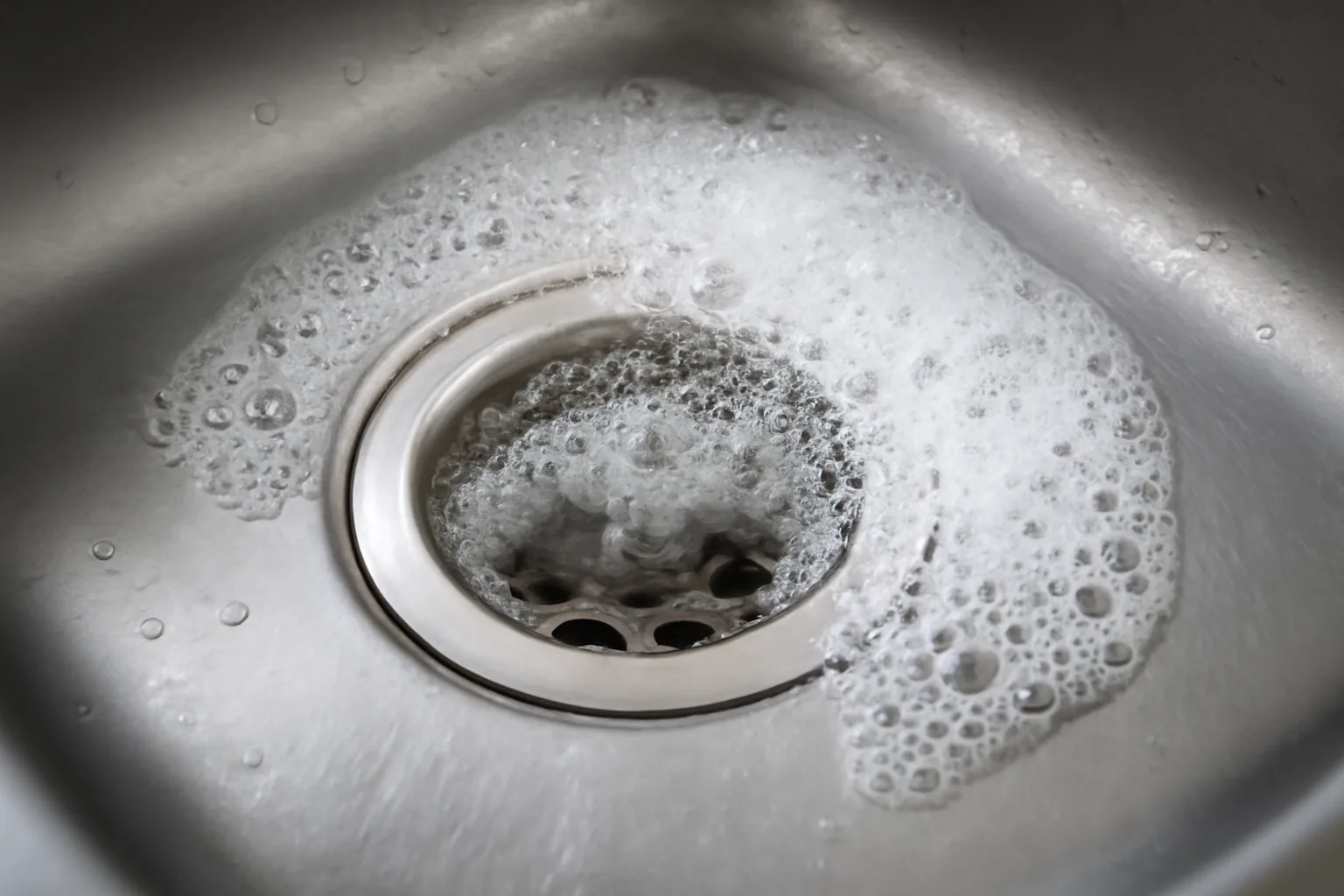

Gurgling Drains and Soggy Yard Spots: Reading the Warning Signs

  • Any situation where you’d need to enter or lean over an open tank
  • That last point is critical safety information, not a disclaimer. Septic tanks produce hydrogen sulfide and methane gas. Concentrations above 100 ppm of hydrogen sulfide can cause unconsciousness in minutes. People die in septic tanks every year — typically rescuers who go in after someone else. Never enter or lean directly over an open tank without confined space equipment and a trained partner. This is non-negotiable.

    A licensed inspection in most states runs $250 to $500 and includes a written report. If you’re buying a property, that cost is trivial compared to inheriting a failing system. I’ve seen buyers walk away from $350,000 homes after inspection revealed drain fields that would cost $22,000 to replace. Worth every penny of that inspection fee.

    Final Thoughts on Septic System Warning Signs

    Septic system warning signs are never subtle forever. They start subtle — a occasional gurgle, a faint smell after rain, a patch of grass that’s slightly greener than the rest. Then they escalate. The homeowner who called me about his “broken washing machine” had actually noticed that green patch three months earlier. He just didn’t know what it meant.

    Now you do. Gurgling in multiple drains means pressure imbalance — investigate within two weeks. A soggy yard patch near the drain field means surfacing effluent — keep people away and call a pro. Persistent odors mean something is venting wrong or overflowing — don’t wait. Slow drains throughout the house after you’ve cleared local clogs mean your tank or field needs attention now, not next season.

    The most powerful thing you can add to your diagnostic toolkit is a quality sewer camera. Running one down your cleanout once a year takes about 20 minutes and gives you a clear picture of exactly what’s happening in your pipes. The 100-foot HD 1080P model I use has paid for itself many times over in avoided guesswork. For most homeowners, that one tool is the difference between catching a problem at $400 and inheriting it at $15,000.

    Your septic system is doing quiet, thankless work every single day. Give it 20 minutes of attention once a year. It will return the favor for decades.

    This post contains affiliate links. As an Amazon Associate, I earn from qualifying purchases at no extra cost to you.
  • A tank lid that is cracked, missing, or unsecured
  • Any situation where you’d need to enter or lean over an open tank
  • That last point is critical safety information, not a disclaimer. Septic tanks produce hydrogen sulfide and methane gas. Concentrations above 100 ppm of hydrogen sulfide can cause unconsciousness in minutes. People die in septic tanks every year — typically rescuers who go in after someone else. Never enter or lean directly over an open tank without confined space equipment and a trained partner. This is non-negotiable.

    A licensed inspection in most states runs $250 to $500 and includes a written report. If you’re buying a property, that cost is trivial compared to inheriting a failing system. I’ve seen buyers walk away from $350,000 homes after inspection revealed drain fields that would cost $22,000 to replace. Worth every penny of that inspection fee.

    Final Thoughts on Septic System Warning Signs

    Septic system warning signs are never subtle forever. They start subtle — a occasional gurgle, a faint smell after rain, a patch of grass that’s slightly greener than the rest. Then they escalate. The homeowner who called me about his “broken washing machine” had actually noticed that green patch three months earlier. He just didn’t know what it meant.

    Now you do. Gurgling in multiple drains means pressure imbalance — investigate within two weeks. A soggy yard patch near the drain field means surfacing effluent — keep people away and call a pro. Persistent odors mean something is venting wrong or overflowing — don’t wait. Slow drains throughout the house after you’ve cleared local clogs mean your tank or field needs attention now, not next season.

    The most powerful thing you can add to your diagnostic toolkit is a quality sewer camera. Running one down your cleanout once a year takes about 20 minutes and gives you a clear picture of exactly what’s happening in your pipes. The 100-foot HD 1080P model I use has paid for itself many times over in avoided guesswork. For most homeowners, that one tool is the difference between catching a problem at $400 and inheriting it at $15,000.

    Your septic system is doing quiet, thankless work every single day. Give it 20 minutes of attention once a year. It will return the favor for decades.

    This post contains affiliate links. As an Amazon Associate, I earn from qualifying purchases at no extra cost to you.
  • Sunken or collapsed ground over the tank or drain field
  • A tank lid that is cracked, missing, or unsecured
  • Any situation where you’d need to enter or lean over an open tank
  • That last point is critical safety information, not a disclaimer. Septic tanks produce hydrogen sulfide and methane gas. Concentrations above 100 ppm of hydrogen sulfide can cause unconsciousness in minutes. People die in septic tanks every year — typically rescuers who go in after someone else. Never enter or lean directly over an open tank without confined space equipment and a trained partner. This is non-negotiable.

    A licensed inspection in most states runs $250 to $500 and includes a written report. If you’re buying a property, that cost is trivial compared to inheriting a failing system. I’ve seen buyers walk away from $350,000 homes after inspection revealed drain fields that would cost $22,000 to replace. Worth every penny of that inspection fee.

    Final Thoughts on Septic System Warning Signs

    Septic system warning signs are never subtle forever. They start subtle — a occasional gurgle, a faint smell after rain, a patch of grass that’s slightly greener than the rest. Then they escalate. The homeowner who called me about his “broken washing machine” had actually noticed that green patch three months earlier. He just didn’t know what it meant.

    Now you do. Gurgling in multiple drains means pressure imbalance — investigate within two weeks. A soggy yard patch near the drain field means surfacing effluent — keep people away and call a pro. Persistent odors mean something is venting wrong or overflowing — don’t wait. Slow drains throughout the house after you’ve cleared local clogs mean your tank or field needs attention now, not next season.

    The most powerful thing you can add to your diagnostic toolkit is a quality sewer camera. Running one down your cleanout once a year takes about 20 minutes and gives you a clear picture of exactly what’s happening in your pipes. The 100-foot HD 1080P model I use has paid for itself many times over in avoided guesswork. For most homeowners, that one tool is the difference between catching a problem at $400 and inheriting it at $15,000.

    Your septic system is doing quiet, thankless work every single day. Give it 20 minutes of attention once a year. It will return the favor for decades.

    This post contains affiliate links. As an Amazon Associate, I earn from qualifying purchases at no extra cost to you.
  • Sunken or collapsed ground over the tank or drain field
  • A tank lid that is cracked, missing, or unsecured
  • Any situation where you’d need to enter or lean over an open tank
  • That last point is critical safety information, not a disclaimer. Septic tanks produce hydrogen sulfide and methane gas. Concentrations above 100 ppm of hydrogen sulfide can cause unconsciousness in minutes. People die in septic tanks every year — typically rescuers who go in after someone else. Never enter or lean directly over an open tank without confined space equipment and a trained partner. This is non-negotiable.

    A licensed inspection in most states runs $250 to $500 and includes a written report. If you’re buying a property, that cost is trivial compared to inheriting a failing system. I’ve seen buyers walk away from $350,000 homes after inspection revealed drain fields that would cost $22,000 to replace. Worth every penny of that inspection fee.

    Final Thoughts on Septic System Warning Signs

    Septic system warning signs are never subtle forever. They start subtle — a occasional gurgle, a faint smell after rain, a patch of grass that’s slightly greener than the rest. Then they escalate. The homeowner who called me about his “broken washing machine” had actually noticed that green patch three months earlier. He just didn’t know what it meant.

    Now you do. Gurgling in multiple drains means pressure imbalance — investigate within two weeks. A soggy yard patch near the drain field means surfacing effluent — keep people away and call a pro. Persistent odors mean something is venting wrong or overflowing — don’t wait. Slow drains throughout the house after you’ve cleared local clogs mean your tank or field needs attention now, not next season.

    The most powerful thing you can add to your diagnostic toolkit is a quality sewer camera. Running one down your cleanout once a year takes about 20 minutes and gives you a clear picture of exactly what’s happening in your pipes. The 100-foot HD 1080P model I use has paid for itself many times over in avoided guesswork. For most homeowners, that one tool is the difference between catching a problem at $400 and inheriting it at $15,000.

    Your septic system is doing quiet, thankless work every single day. Give it 20 minutes of attention once a year. It will return the favor for decades.

    This post contains affiliate links. As an Amazon Associate, I earn from qualifying purchases at no extra cost to you.
  • Sewage backing up into the house through floor drains or toilets
  • Sunken or collapsed ground over the tank or drain field
  • A tank lid that is cracked, missing, or unsecured
  • Any situation where you’d need to enter or lean over an open tank
  • That last point is critical safety information, not a disclaimer. Septic tanks produce hydrogen sulfide and methane gas. Concentrations above 100 ppm of hydrogen sulfide can cause unconsciousness in minutes. People die in septic tanks every year — typically rescuers who go in after someone else. Never enter or lean directly over an open tank without confined space equipment and a trained partner. This is non-negotiable.

    A licensed inspection in most states runs $250 to $500 and includes a written report. If you’re buying a property, that cost is trivial compared to inheriting a failing system. I’ve seen buyers walk away from $350,000 homes after inspection revealed drain fields that would cost $22,000 to replace. Worth every penny of that inspection fee.

    Final Thoughts on Septic System Warning Signs

    Septic system warning signs are never subtle forever. They start subtle — a occasional gurgle, a faint smell after rain, a patch of grass that’s slightly greener than the rest. Then they escalate. The homeowner who called me about his “broken washing machine” had actually noticed that green patch three months earlier. He just didn’t know what it meant.

    Now you do. Gurgling in multiple drains means pressure imbalance — investigate within two weeks. A soggy yard patch near the drain field means surfacing effluent — keep people away and call a pro. Persistent odors mean something is venting wrong or overflowing — don’t wait. Slow drains throughout the house after you’ve cleared local clogs mean your tank or field needs attention now, not next season.

    The most powerful thing you can add to your diagnostic toolkit is a quality sewer camera. Running one down your cleanout once a year takes about 20 minutes and gives you a clear picture of exactly what’s happening in your pipes. The 100-foot HD 1080P model I use has paid for itself many times over in avoided guesswork. For most homeowners, that one tool is the difference between catching a problem at $400 and inheriting it at $15,000.

    Your septic system is doing quiet, thankless work every single day. Give it 20 minutes of attention once a year. It will return the favor for decades.

    This post contains affiliate links. As an Amazon Associate, I earn from qualifying purchases at no extra cost to you.

  • Sewage backing up into the house through floor drains or toilets
  • Sunken or collapsed ground over the tank or drain field
  • A tank lid that is cracked, missing, or unsecured
  • Any situation where you’d need to enter or lean over an open tank
  • That last point is critical safety information, not a disclaimer. Septic tanks produce hydrogen sulfide and methane gas. Concentrations above 100 ppm of hydrogen sulfide can cause unconsciousness in minutes. People die in septic tanks every year — typically rescuers who go in after someone else. Never enter or lean directly over an open tank without confined space equipment and a trained partner. This is non-negotiable.

    A licensed inspection in most states runs $250 to $500 and includes a written report. If you’re buying a property, that cost is trivial compared to inheriting a failing system. I’ve seen buyers walk away from $350,000 homes after inspection revealed drain fields that would cost $22,000 to replace. Worth every penny of that inspection fee.

    Final Thoughts on Septic System Warning Signs

    Septic system warning signs are never subtle forever. They start subtle — a occasional gurgle, a faint smell after rain, a patch of grass that’s slightly greener than the rest. Then they escalate. The homeowner who called me about his “broken washing machine” had actually noticed that green patch three months earlier. He just didn’t know what it meant.

    Now you do. Gurgling in multiple drains means pressure imbalance — investigate within two weeks. A soggy yard patch near the drain field means surfacing effluent — keep people away and call a pro. Persistent odors mean something is venting wrong or overflowing — don’t wait. Slow drains throughout the house after you’ve cleared local clogs mean your tank or field needs attention now, not next season.

    The most powerful thing you can add to your diagnostic toolkit is a quality sewer camera. Running one down your cleanout once a year takes about 20 minutes and gives you a clear picture of exactly what’s happening in your pipes. The 100-foot HD 1080P model I use has paid for itself many times over in avoided guesswork. For most homeowners, that one tool is the difference between catching a problem at $400 and inheriting it at $15,000.

    Your septic system is doing quiet, thankless work every single day. Give it 20 minutes of attention once a year. It will return the favor for decades.

    This post contains affiliate links. As an Amazon Associate, I earn from qualifying purchases at no extra cost to you.

  • Active sewage surfacing in the yard
  • Sewage backing up into the house through floor drains or toilets
  • Sunken or collapsed ground over the tank or drain field
  • A tank lid that is cracked, missing, or unsecured
  • Any situation where you’d need to enter or lean over an open tank
  • That last point is critical safety information, not a disclaimer. Septic tanks produce hydrogen sulfide and methane gas. Concentrations above 100 ppm of hydrogen sulfide can cause unconsciousness in minutes. People die in septic tanks every year — typically rescuers who go in after someone else. Never enter or lean directly over an open tank without confined space equipment and a trained partner. This is non-negotiable.

    A licensed inspection in most states runs $250 to $500 and includes a written report. If you’re buying a property, that cost is trivial compared to inheriting a failing system. I’ve seen buyers walk away from $350,000 homes after inspection revealed drain fields that would cost $22,000 to replace. Worth every penny of that inspection fee.

    Final Thoughts on Septic System Warning Signs

    Septic system warning signs are never subtle forever. They start subtle — a occasional gurgle, a faint smell after rain, a patch of grass that’s slightly greener than the rest. Then they escalate. The homeowner who called me about his “broken washing machine” had actually noticed that green patch three months earlier. He just didn’t know what it meant.

    Now you do. Gurgling in multiple drains means pressure imbalance — investigate within two weeks. A soggy yard patch near the drain field means surfacing effluent — keep people away and call a pro. Persistent odors mean something is venting wrong or overflowing — don’t wait. Slow drains throughout the house after you’ve cleared local clogs mean your tank or field needs attention now, not next season.

    The most powerful thing you can add to your diagnostic toolkit is a quality sewer camera. Running one down your cleanout once a year takes about 20 minutes and gives you a clear picture of exactly what’s happening in your pipes. The 100-foot HD 1080P model I use has paid for itself many times over in avoided guesswork. For most homeowners, that one tool is the difference between catching a problem at $400 and inheriting it at $15,000.

    Your septic system is doing quiet, thankless work every single day. Give it 20 minutes of attention once a year. It will return the favor for decades.

    This post contains affiliate links. As an Amazon Associate, I earn from qualifying purchases at no extra cost to you.

    • Active sewage surfacing in the yard
    • Sewage backing up into the house through floor drains or toilets
    • Sunken or collapsed ground over the tank or drain field
    • A tank lid that is cracked, missing, or unsecured
    • Any situation where you’d need to enter or lean over an open tank

    That last point is critical safety information, not a disclaimer. Septic tanks produce hydrogen sulfide and methane gas. Concentrations above 100 ppm of hydrogen sulfide can cause unconsciousness in minutes. People die in septic tanks every year — typically rescuers who go in after someone else. Never enter or lean directly over an open tank without confined space equipment and a trained partner. This is non-negotiable.

    A licensed inspection in most states runs $250 to $500 and includes a written report. If you’re buying a property, that cost is trivial compared to inheriting a failing system. I’ve seen buyers walk away from $350,000 homes after inspection revealed drain fields that would cost $22,000 to replace. Worth every penny of that inspection fee.

    Final Thoughts on Septic System Warning Signs

    Septic system warning signs are never subtle forever. They start subtle — a occasional gurgle, a faint smell after rain, a patch of grass that’s slightly greener than the rest. Then they escalate. The homeowner who called me about his “broken washing machine” had actually noticed that green patch three months earlier. He just didn’t know what it meant.

    Now you do. Gurgling in multiple drains means pressure imbalance — investigate within two weeks. A soggy yard patch near the drain field means surfacing effluent — keep people away and call a pro. Persistent odors mean something is venting wrong or overflowing — don’t wait. Slow drains throughout the house after you’ve cleared local clogs mean your tank or field needs attention now, not next season.

    The most powerful thing you can add to your diagnostic toolkit is a quality sewer camera. Running one down your cleanout once a year takes about 20 minutes and gives you a clear picture of exactly what’s happening in your pipes. The 100-foot HD 1080P model I use has paid for itself many times over in avoided guesswork. For most homeowners, that one tool is the difference between catching a problem at $400 and inheriting it at $15,000.

    Your septic system is doing quiet, thankless work every single day. Give it 20 minutes of attention once a year. It will return the favor for decades.

    This post contains affiliate links. As an Amazon Associate, I earn from qualifying purchases at no extra cost to you.

    • Active sewage surfacing in the yard
    • Sewage backing up into the house through floor drains or toilets
    • Sunken or collapsed ground over the tank or drain field
    • A tank lid that is cracked, missing, or unsecured
    • Any situation where you’d need to enter or lean over an open tank

    That last point is critical safety information, not a disclaimer. Septic tanks produce hydrogen sulfide and methane gas. Concentrations above 100 ppm of hydrogen sulfide can cause unconsciousness in minutes. People die in septic tanks every year — typically rescuers who go in after someone else. Never enter or lean directly over an open tank without confined space equipment and a trained partner. This is non-negotiable.

    A licensed inspection in most states runs $250 to $500 and includes a written report. If you’re buying a property, that cost is trivial compared to inheriting a failing system. I’ve seen buyers walk away from $350,000 homes after inspection revealed drain fields that would cost $22,000 to replace. Worth every penny of that inspection fee.

    Final Thoughts on Septic System Warning Signs

    Septic system warning signs are never subtle forever. They start subtle — a occasional gurgle, a faint smell after rain, a patch of grass that’s slightly greener than the rest. Then they escalate. The homeowner who called me about his “broken washing machine” had actually noticed that green patch three months earlier. He just didn’t know what it meant.

    Now you do. Gurgling in multiple drains means pressure imbalance — investigate within two weeks. A soggy yard patch near the drain field means surfacing effluent — keep people away and call a pro. Persistent odors mean something is venting wrong or overflowing — don’t wait. Slow drains throughout the house after you’ve cleared local clogs mean your tank or field needs attention now, not next season.

    The most powerful thing you can add to your diagnostic toolkit is a quality sewer camera. Running one down your cleanout once a year takes about 20 minutes and gives you a clear picture of exactly what’s happening in your pipes. The 100-foot HD 1080P model I use has paid for itself many times over in avoided guesswork. For most homeowners, that one tool is the difference between catching a problem at $400 and inheriting it at $15,000.

    Your septic system is doing quiet, thankless work every single day. Give it 20 minutes of attention once a year. It will return the favor for decades.

    This post contains affiliate links. As an Amazon Associate, I earn from qualifying purchases at no extra cost to you.

  • Scheduling and monitoring a routine pump-out
  • Call a licensed septic professional immediately if you see:

    • Active sewage surfacing in the yard
    • Sewage backing up into the house through floor drains or toilets
    • Sunken or collapsed ground over the tank or drain field
    • A tank lid that is cracked, missing, or unsecured
    • Any situation where you’d need to enter or lean over an open tank

    That last point is critical safety information, not a disclaimer. Septic tanks produce hydrogen sulfide and methane gas. Concentrations above 100 ppm of hydrogen sulfide can cause unconsciousness in minutes. People die in septic tanks every year — typically rescuers who go in after someone else. Never enter or lean directly over an open tank without confined space equipment and a trained partner. This is non-negotiable.

    A licensed inspection in most states runs $250 to $500 and includes a written report. If you’re buying a property, that cost is trivial compared to inheriting a failing system. I’ve seen buyers walk away from $350,000 homes after inspection revealed drain fields that would cost $22,000 to replace. Worth every penny of that inspection fee.

    Final Thoughts on Septic System Warning Signs

    Septic system warning signs are never subtle forever. They start subtle — a occasional gurgle, a faint smell after rain, a patch of grass that’s slightly greener than the rest. Then they escalate. The homeowner who called me about his “broken washing machine” had actually noticed that green patch three months earlier. He just didn’t know what it meant.

    Now you do. Gurgling in multiple drains means pressure imbalance — investigate within two weeks. A soggy yard patch near the drain field means surfacing effluent — keep people away and call a pro. Persistent odors mean something is venting wrong or overflowing — don’t wait. Slow drains throughout the house after you’ve cleared local clogs mean your tank or field needs attention now, not next season.

    The most powerful thing you can add to your diagnostic toolkit is a quality sewer camera. Running one down your cleanout once a year takes about 20 minutes and gives you a clear picture of exactly what’s happening in your pipes. The 100-foot HD 1080P model I use has paid for itself many times over in avoided guesswork. For most homeowners, that one tool is the difference between catching a problem at $400 and inheriting it at $15,000.

    Your septic system is doing quiet, thankless work every single day. Give it 20 minutes of attention once a year. It will return the favor for decades.

    This post contains affiliate links. As an Amazon Associate, I earn from qualifying purchases at no extra cost to you.

  • Locating and inspecting tank lids for visible damage
  • Scheduling and monitoring a routine pump-out
  • Call a licensed septic professional immediately if you see:

    • Active sewage surfacing in the yard
    • Sewage backing up into the house through floor drains or toilets
    • Sunken or collapsed ground over the tank or drain field
    • A tank lid that is cracked, missing, or unsecured
    • Any situation where you’d need to enter or lean over an open tank

    That last point is critical safety information, not a disclaimer. Septic tanks produce hydrogen sulfide and methane gas. Concentrations above 100 ppm of hydrogen sulfide can cause unconsciousness in minutes. People die in septic tanks every year — typically rescuers who go in after someone else. Never enter or lean directly over an open tank without confined space equipment and a trained partner. This is non-negotiable.

    A licensed inspection in most states runs $250 to $500 and includes a written report. If you’re buying a property, that cost is trivial compared to inheriting a failing system. I’ve seen buyers walk away from $350,000 homes after inspection revealed drain fields that would cost $22,000 to replace. Worth every penny of that inspection fee.

    Final Thoughts on Septic System Warning Signs

    Septic system warning signs are never subtle forever. They start subtle — a occasional gurgle, a faint smell after rain, a patch of grass that’s slightly greener than the rest. Then they escalate. The homeowner who called me about his “broken washing machine” had actually noticed that green patch three months earlier. He just didn’t know what it meant.

    Now you do. Gurgling in multiple drains means pressure imbalance — investigate within two weeks. A soggy yard patch near the drain field means surfacing effluent — keep people away and call a pro. Persistent odors mean something is venting wrong or overflowing — don’t wait. Slow drains throughout the house after you’ve cleared local clogs mean your tank or field needs attention now, not next season.

    The most powerful thing you can add to your diagnostic toolkit is a quality sewer camera. Running one down your cleanout once a year takes about 20 minutes and gives you a clear picture of exactly what’s happening in your pipes. The 100-foot HD 1080P model I use has paid for itself many times over in avoided guesswork. For most homeowners, that one tool is the difference between catching a problem at $400 and inheriting it at $15,000.

    Your septic system is doing quiet, thankless work every single day. Give it 20 minutes of attention once a year. It will return the favor for decades.

    This post contains affiliate links. As an Amazon Associate, I earn from qualifying purchases at no extra cost to you.

  • Locating and inspecting tank lids for visible damage
  • Scheduling and monitoring a routine pump-out
  • Call a licensed septic professional immediately if you see:

    • Active sewage surfacing in the yard
    • Sewage backing up into the house through floor drains or toilets
    • Sunken or collapsed ground over the tank or drain field
    • A tank lid that is cracked, missing, or unsecured
    • Any situation where you’d need to enter or lean over an open tank

    That last point is critical safety information, not a disclaimer. Septic tanks produce hydrogen sulfide and methane gas. Concentrations above 100 ppm of hydrogen sulfide can cause unconsciousness in minutes. People die in septic tanks every year — typically rescuers who go in after someone else. Never enter or lean directly over an open tank without confined space equipment and a trained partner. This is non-negotiable.

    A licensed inspection in most states runs $250 to $500 and includes a written report. If you’re buying a property, that cost is trivial compared to inheriting a failing system. I’ve seen buyers walk away from $350,000 homes after inspection revealed drain fields that would cost $22,000 to replace. Worth every penny of that inspection fee.

    Final Thoughts on Septic System Warning Signs

    Septic system warning signs are never subtle forever. They start subtle — a occasional gurgle, a faint smell after rain, a patch of grass that’s slightly greener than the rest. Then they escalate. The homeowner who called me about his “broken washing machine” had actually noticed that green patch three months earlier. He just didn’t know what it meant.

    Now you do. Gurgling in multiple drains means pressure imbalance — investigate within two weeks. A soggy yard patch near the drain field means surfacing effluent — keep people away and call a pro. Persistent odors mean something is venting wrong or overflowing — don’t wait. Slow drains throughout the house after you’ve cleared local clogs mean your tank or field needs attention now, not next season.

    The most powerful thing you can add to your diagnostic toolkit is a quality sewer camera. Running one down your cleanout once a year takes about 20 minutes and gives you a clear picture of exactly what’s happening in your pipes. The 100-foot HD 1080P model I use has paid for itself many times over in avoided guesswork. For most homeowners, that one tool is the difference between catching a problem at $400 and inheriting it at $15,000.

    Your septic system is doing quiet, thankless work every single day. Give it 20 minutes of attention once a year. It will return the favor for decades.

    This post contains affiliate links. As an Amazon Associate, I earn from qualifying purchases at no extra cost to you.

  • Checking and cleaning vent stack from the roof (safely)
  • Locating and inspecting tank lids for visible damage
  • Scheduling and monitoring a routine pump-out
  • Call a licensed septic professional immediately if you see:

    • Active sewage surfacing in the yard
    • Sewage backing up into the house through floor drains or toilets
    • Sunken or collapsed ground over the tank or drain field
    • A tank lid that is cracked, missing, or unsecured
    • Any situation where you’d need to enter or lean over an open tank

    That last point is critical safety information, not a disclaimer. Septic tanks produce hydrogen sulfide and methane gas. Concentrations above 100 ppm of hydrogen sulfide can cause unconsciousness in minutes. People die in septic tanks every year — typically rescuers who go in after someone else. Never enter or lean directly over an open tank without confined space equipment and a trained partner. This is non-negotiable.

    A licensed inspection in most states runs $250 to $500 and includes a written report. If you’re buying a property, that cost is trivial compared to inheriting a failing system. I’ve seen buyers walk away from $350,000 homes after inspection revealed drain fields that would cost $22,000 to replace. Worth every penny of that inspection fee.

    Final Thoughts on Septic System Warning Signs

    Septic system warning signs are never subtle forever. They start subtle — a occasional gurgle, a faint smell after rain, a patch of grass that’s slightly greener than the rest. Then they escalate. The homeowner who called me about his “broken washing machine” had actually noticed that green patch three months earlier. He just didn’t know what it meant.

    Now you do. Gurgling in multiple drains means pressure imbalance — investigate within two weeks. A soggy yard patch near the drain field means surfacing effluent — keep people away and call a pro. Persistent odors mean something is venting wrong or overflowing — don’t wait. Slow drains throughout the house after you’ve cleared local clogs mean your tank or field needs attention now, not next season.

    The most powerful thing you can add to your diagnostic toolkit is a quality sewer camera. Running one down your cleanout once a year takes about 20 minutes and gives you a clear picture of exactly what’s happening in your pipes. The 100-foot HD 1080P model I use has paid for itself many times over in avoided guesswork. For most homeowners, that one tool is the difference between catching a problem at $400 and inheriting it at $15,000.

    Your septic system is doing quiet, thankless work every single day. Give it 20 minutes of attention once a year. It will return the favor for decades.

    This post contains affiliate links. As an Amazon Associate, I earn from qualifying purchases at no extra cost to you.

  • Checking and cleaning vent stack from the roof (safely)
  • Locating and inspecting tank lids for visible damage
  • Scheduling and monitoring a routine pump-out
  • Call a licensed septic professional immediately if you see:

    • Active sewage surfacing in the yard
    • Sewage backing up into the house through floor drains or toilets
    • Sunken or collapsed ground over the tank or drain field
    • A tank lid that is cracked, missing, or unsecured
    • Any situation where you’d need to enter or lean over an open tank

    That last point is critical safety information, not a disclaimer. Septic tanks produce hydrogen sulfide and methane gas. Concentrations above 100 ppm of hydrogen sulfide can cause unconsciousness in minutes. People die in septic tanks every year — typically rescuers who go in after someone else. Never enter or lean directly over an open tank without confined space equipment and a trained partner. This is non-negotiable.

    A licensed inspection in most states runs $250 to $500 and includes a written report. If you’re buying a property, that cost is trivial compared to inheriting a failing system. I’ve seen buyers walk away from $350,000 homes after inspection revealed drain fields that would cost $22,000 to replace. Worth every penny of that inspection fee.

    Final Thoughts on Septic System Warning Signs

    Septic system warning signs are never subtle forever. They start subtle — a occasional gurgle, a faint smell after rain, a patch of grass that’s slightly greener than the rest. Then they escalate. The homeowner who called me about his “broken washing machine” had actually noticed that green patch three months earlier. He just didn’t know what it meant.

    Now you do. Gurgling in multiple drains means pressure imbalance — investigate within two weeks. A soggy yard patch near the drain field means surfacing effluent — keep people away and call a pro. Persistent odors mean something is venting wrong or overflowing — don’t wait. Slow drains throughout the house after you’ve cleared local clogs mean your tank or field needs attention now, not next season.

    The most powerful thing you can add to your diagnostic toolkit is a quality sewer camera. Running one down your cleanout once a year takes about 20 minutes and gives you a clear picture of exactly what’s happening in your pipes. The 100-foot HD 1080P model I use has paid for itself many times over in avoided guesswork. For most homeowners, that one tool is the difference between catching a problem at $400 and inheriting it at $15,000.

    Your septic system is doing quiet, thankless work every single day. Give it 20 minutes of attention once a year. It will return the favor for decades.

    This post contains affiliate links. As an Amazon Associate, I earn from qualifying purchases at no extra cost to you.

  • Snaking a line to clear a localized clog
  • Checking and cleaning vent stack from the roof (safely)
  • Locating and inspecting tank lids for visible damage
  • Scheduling and monitoring a routine pump-out
  • Call a licensed septic professional immediately if you see:

    • Active sewage surfacing in the yard
    • Sewage backing up into the house through floor drains or toilets
    • Sunken or collapsed ground over the tank or drain field
    • A tank lid that is cracked, missing, or unsecured
    • Any situation where you’d need to enter or lean over an open tank

    That last point is critical safety information, not a disclaimer. Septic tanks produce hydrogen sulfide and methane gas. Concentrations above 100 ppm of hydrogen sulfide can cause unconsciousness in minutes. People die in septic tanks every year — typically rescuers who go in after someone else. Never enter or lean directly over an open tank without confined space equipment and a trained partner. This is non-negotiable.

    A licensed inspection in most states runs $250 to $500 and includes a written report. If you’re buying a property, that cost is trivial compared to inheriting a failing system. I’ve seen buyers walk away from $350,000 homes after inspection revealed drain fields that would cost $22,000 to replace. Worth every penny of that inspection fee.

    Final Thoughts on Septic System Warning Signs

    Septic system warning signs are never subtle forever. They start subtle — a occasional gurgle, a faint smell after rain, a patch of grass that’s slightly greener than the rest. Then they escalate. The homeowner who called me about his “broken washing machine” had actually noticed that green patch three months earlier. He just didn’t know what it meant.

    Now you do. Gurgling in multiple drains means pressure imbalance — investigate within two weeks. A soggy yard patch near the drain field means surfacing effluent — keep people away and call a pro. Persistent odors mean something is venting wrong or overflowing — don’t wait. Slow drains throughout the house after you’ve cleared local clogs mean your tank or field needs attention now, not next season.

    The most powerful thing you can add to your diagnostic toolkit is a quality sewer camera. Running one down your cleanout once a year takes about 20 minutes and gives you a clear picture of exactly what’s happening in your pipes. The 100-foot HD 1080P model I use has paid for itself many times over in avoided guesswork. For most homeowners, that one tool is the difference between catching a problem at $400 and inheriting it at $15,000.

    Your septic system is doing quiet, thankless work every single day. Give it 20 minutes of attention once a year. It will return the favor for decades.

    This post contains affiliate links. As an Amazon Associate, I earn from qualifying purchases at no extra cost to you.

  • Snaking a line to clear a localized clog
  • Checking and cleaning vent stack from the roof (safely)
  • Locating and inspecting tank lids for visible damage
  • Scheduling and monitoring a routine pump-out
  • Call a licensed septic professional immediately if you see:

    • Active sewage surfacing in the yard
    • Sewage backing up into the house through floor drains or toilets
    • Sunken or collapsed ground over the tank or drain field
    • A tank lid that is cracked, missing, or unsecured
    • Any situation where you’d need to enter or lean over an open tank

    That last point is critical safety information, not a disclaimer. Septic tanks produce hydrogen sulfide and methane gas. Concentrations above 100 ppm of hydrogen sulfide can cause unconsciousness in minutes. People die in septic tanks every year — typically rescuers who go in after someone else. Never enter or lean directly over an open tank without confined space equipment and a trained partner. This is non-negotiable.

    A licensed inspection in most states runs $250 to $500 and includes a written report. If you’re buying a property, that cost is trivial compared to inheriting a failing system. I’ve seen buyers walk away from $350,000 homes after inspection revealed drain fields that would cost $22,000 to replace. Worth every penny of that inspection fee.

    Final Thoughts on Septic System Warning Signs

    Septic system warning signs are never subtle forever. They start subtle — a occasional gurgle, a faint smell after rain, a patch of grass that’s slightly greener than the rest. Then they escalate. The homeowner who called me about his “broken washing machine” had actually noticed that green patch three months earlier. He just didn’t know what it meant.

    Now you do. Gurgling in multiple drains means pressure imbalance — investigate within two weeks. A soggy yard patch near the drain field means surfacing effluent — keep people away and call a pro. Persistent odors mean something is venting wrong or overflowing — don’t wait. Slow drains throughout the house after you’ve cleared local clogs mean your tank or field needs attention now, not next season.

    The most powerful thing you can add to your diagnostic toolkit is a quality sewer camera. Running one down your cleanout once a year takes about 20 minutes and gives you a clear picture of exactly what’s happening in your pipes. The 100-foot HD 1080P model I use has paid for itself many times over in avoided guesswork. For most homeowners, that one tool is the difference between catching a problem at $400 and inheriting it at $15,000.

    Your septic system is doing quiet, thankless work every single day. Give it 20 minutes of attention once a year. It will return the favor for decades.

    This post contains affiliate links. As an Amazon Associate, I earn from qualifying purchases at no extra cost to you.

  • Running a camera inspection from an accessible cleanout
  • Snaking a line to clear a localized clog
  • Checking and cleaning vent stack from the roof (safely)
  • Locating and inspecting tank lids for visible damage
  • Scheduling and monitoring a routine pump-out
  • Call a licensed septic professional immediately if you see:

    • Active sewage surfacing in the yard
    • Sewage backing up into the house through floor drains or toilets
    • Sunken or collapsed ground over the tank or drain field
    • A tank lid that is cracked, missing, or unsecured
    • Any situation where you’d need to enter or lean over an open tank

    That last point is critical safety information, not a disclaimer. Septic tanks produce hydrogen sulfide and methane gas. Concentrations above 100 ppm of hydrogen sulfide can cause unconsciousness in minutes. People die in septic tanks every year — typically rescuers who go in after someone else. Never enter or lean directly over an open tank without confined space equipment and a trained partner. This is non-negotiable.

    A licensed inspection in most states runs $250 to $500 and includes a written report. If you’re buying a property, that cost is trivial compared to inheriting a failing system. I’ve seen buyers walk away from $350,000 homes after inspection revealed drain fields that would cost $22,000 to replace. Worth every penny of that inspection fee.

    Final Thoughts on Septic System Warning Signs

    Septic system warning signs are never subtle forever. They start subtle — a occasional gurgle, a faint smell after rain, a patch of grass that’s slightly greener than the rest. Then they escalate. The homeowner who called me about his “broken washing machine” had actually noticed that green patch three months earlier. He just didn’t know what it meant.

    Now you do. Gurgling in multiple drains means pressure imbalance — investigate within two weeks. A soggy yard patch near the drain field means surfacing effluent — keep people away and call a pro. Persistent odors mean something is venting wrong or overflowing — don’t wait. Slow drains throughout the house after you’ve cleared local clogs mean your tank or field needs attention now, not next season.

    The most powerful thing you can add to your diagnostic toolkit is a quality sewer camera. Running one down your cleanout once a year takes about 20 minutes and gives you a clear picture of exactly what’s happening in your pipes. The 100-foot HD 1080P model I use has paid for itself many times over in avoided guesswork. For most homeowners, that one tool is the difference between catching a problem at $400 and inheriting it at $15,000.

    Your septic system is doing quiet, thankless work every single day. Give it 20 minutes of attention once a year. It will return the favor for decades.

    This post contains affiliate links. As an Amazon Associate, I earn from qualifying purchases at no extra cost to you.

    • Running a camera inspection from an accessible cleanout
    • Snaking a line to clear a localized clog
    • Checking and cleaning vent stack from the roof (safely)
    • Locating and inspecting tank lids for visible damage
    • Scheduling and monitoring a routine pump-out

    Call a licensed septic professional immediately if you see:

    • Active sewage surfacing in the yard
    • Sewage backing up into the house through floor drains or toilets
    • Sunken or collapsed ground over the tank or drain field
    • A tank lid that is cracked, missing, or unsecured
    • Any situation where you’d need to enter or lean over an open tank

    That last point is critical safety information, not a disclaimer. Septic tanks produce hydrogen sulfide and methane gas. Concentrations above 100 ppm of hydrogen sulfide can cause unconsciousness in minutes. People die in septic tanks every year — typically rescuers who go in after someone else. Never enter or lean directly over an open tank without confined space equipment and a trained partner. This is non-negotiable.

    A licensed inspection in most states runs $250 to $500 and includes a written report. If you’re buying a property, that cost is trivial compared to inheriting a failing system. I’ve seen buyers walk away from $350,000 homes after inspection revealed drain fields that would cost $22,000 to replace. Worth every penny of that inspection fee.

    Final Thoughts on Septic System Warning Signs

    Septic system warning signs are never subtle forever. They start subtle — a occasional gurgle, a faint smell after rain, a patch of grass that’s slightly greener than the rest. Then they escalate. The homeowner who called me about his “broken washing machine” had actually noticed that green patch three months earlier. He just didn’t know what it meant.

    Now you do. Gurgling in multiple drains means pressure imbalance — investigate within two weeks. A soggy yard patch near the drain field means surfacing effluent — keep people away and call a pro. Persistent odors mean something is venting wrong or overflowing — don’t wait. Slow drains throughout the house after you’ve cleared local clogs mean your tank or field needs attention now, not next season.

    The most powerful thing you can add to your diagnostic toolkit is a quality sewer camera. Running one down your cleanout once a year takes about 20 minutes and gives you a clear picture of exactly what’s happening in your pipes. The 100-foot HD 1080P model I use has paid for itself many times over in avoided guesswork. For most homeowners, that one tool is the difference between catching a problem at $400 and inheriting it at $15,000.

    Your septic system is doing quiet, thankless work every single day. Give it 20 minutes of attention once a year. It will return the favor for decades.

    This post contains affiliate links. As an Amazon Associate, I earn from qualifying purchases at no extra cost to you.

    • Running a camera inspection from an accessible cleanout
    • Snaking a line to clear a localized clog
    • Checking and cleaning vent stack from the roof (safely)
    • Locating and inspecting tank lids for visible damage
    • Scheduling and monitoring a routine pump-out

    Call a licensed septic professional immediately if you see:

    • Active sewage surfacing in the yard
    • Sewage backing up into the house through floor drains or toilets
    • Sunken or collapsed ground over the tank or drain field
    • A tank lid that is cracked, missing, or unsecured
    • Any situation where you’d need to enter or lean over an open tank

    That last point is critical safety information, not a disclaimer. Septic tanks produce hydrogen sulfide and methane gas. Concentrations above 100 ppm of hydrogen sulfide can cause unconsciousness in minutes. People die in septic tanks every year — typically rescuers who go in after someone else. Never enter or lean directly over an open tank without confined space equipment and a trained partner. This is non-negotiable.

    A licensed inspection in most states runs $250 to $500 and includes a written report. If you’re buying a property, that cost is trivial compared to inheriting a failing system. I’ve seen buyers walk away from $350,000 homes after inspection revealed drain fields that would cost $22,000 to replace. Worth every penny of that inspection fee.

    Final Thoughts on Septic System Warning Signs

    Septic system warning signs are never subtle forever. They start subtle — a occasional gurgle, a faint smell after rain, a patch of grass that’s slightly greener than the rest. Then they escalate. The homeowner who called me about his “broken washing machine” had actually noticed that green patch three months earlier. He just didn’t know what it meant.

    Now you do. Gurgling in multiple drains means pressure imbalance — investigate within two weeks. A soggy yard patch near the drain field means surfacing effluent — keep people away and call a pro. Persistent odors mean something is venting wrong or overflowing — don’t wait. Slow drains throughout the house after you’ve cleared local clogs mean your tank or field needs attention now, not next season.

    The most powerful thing you can add to your diagnostic toolkit is a quality sewer camera. Running one down your cleanout once a year takes about 20 minutes and gives you a clear picture of exactly what’s happening in your pipes. The 100-foot HD 1080P model I use has paid for itself many times over in avoided guesswork. For most homeowners, that one tool is the difference between catching a problem at $400 and inheriting it at $15,000.

    Your septic system is doing quiet, thankless work every single day. Give it 20 minutes of attention once a year. It will return the favor for decades.

    This post contains affiliate links. As an Amazon Associate, I earn from qualifying purchases at no extra cost to you.

    Last fall, I got a call from a homeowner in rural Tennessee who was convinced his washing machine was broken. His drains were gurgling every time it ran. His yard had a soft, spongy patch near the back fence. He’d already called an appliance repair company. Twice. Neither technician figured it out — because the problem wasn’t his washing machine at all. It was a failing drain field, and his septic system was about six weeks from complete backup. Recognizing septic system warning signs early is the single most important thing a homeowner on a private system can do. Miss them, and you’re looking at $8,000 to $30,000 in repairs. Catch them early, and you might spend a few hundred dollars on a pump-out and walk away clean.

    I’ve been inspecting septic systems and consulting on rural properties for 15 years. I’ve crawled under houses, pulled apart distribution boxes, and dug up drain fields in July heat. In that time, I’ve seen the same pattern repeat: homeowners notice something odd, dismiss it, and wait too long. This post is about ending that pattern. I’m going to walk you through the real warning signs — what they mean mechanically, why they happen, and exactly what to do about each one.

    What Your Gurgling Drains Are Actually Telling You

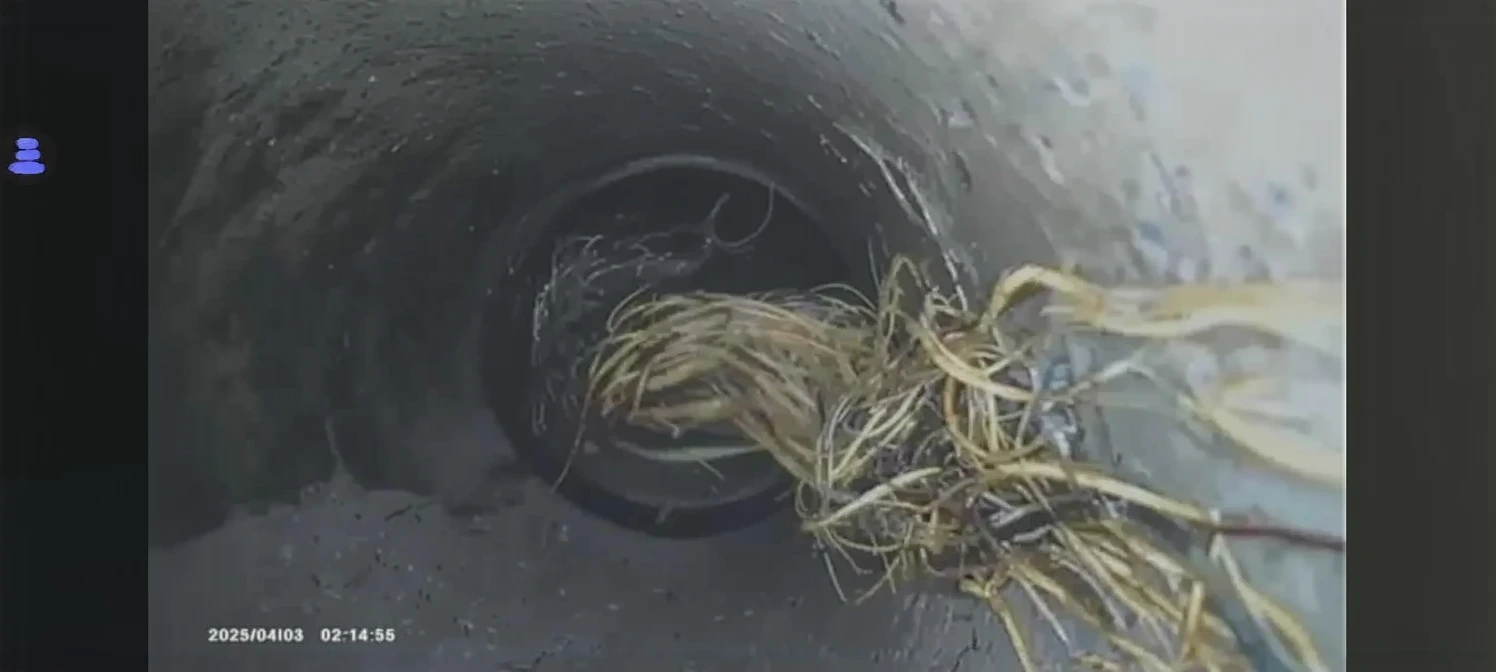
    A gurgling drain is not a quirk. It’s a pressure signal. When wastewater leaves your home, it moves through a network of pipes toward your septic tank. Air needs to move in the opposite direction to balance that flow — that’s what your vent stack handles. When you hear gurgling, it usually means one of two things: either the vent stack is blocked, or there’s a downstream restriction preventing water from flowing freely. In a healthy system, you hear nothing. Silence is the goal.

    In my experience, gurgling that occurs in multiple fixtures simultaneously is the more serious scenario. A single slow drain might be a localized clog. Gurgling in your toilet when you run the kitchen sink — that’s a system-wide pressure problem. Specifically, it often indicates the inlet baffle inside your septic tank is failing or clogged, or that the main line from the house is partially obstructed. I’ve seen inlet baffles made of concrete completely disintegrate in tanks older than 20 years. That’s code-relevant: most state health codes require functioning baffles, and many jurisdictions follow the EPA’s 1992 Onsite Wastewater Treatment Systems Manual as a baseline standard.

    The fix timeline matters here. Don’t wait more than two weeks to investigate gurgling that affects multiple drains. A camera inspection — more on that shortly — can confirm or rule out a serious blockage in under an hour. That one hour can save you months of headache.

    Soggy Yard Spots and What’s Hiding Underground

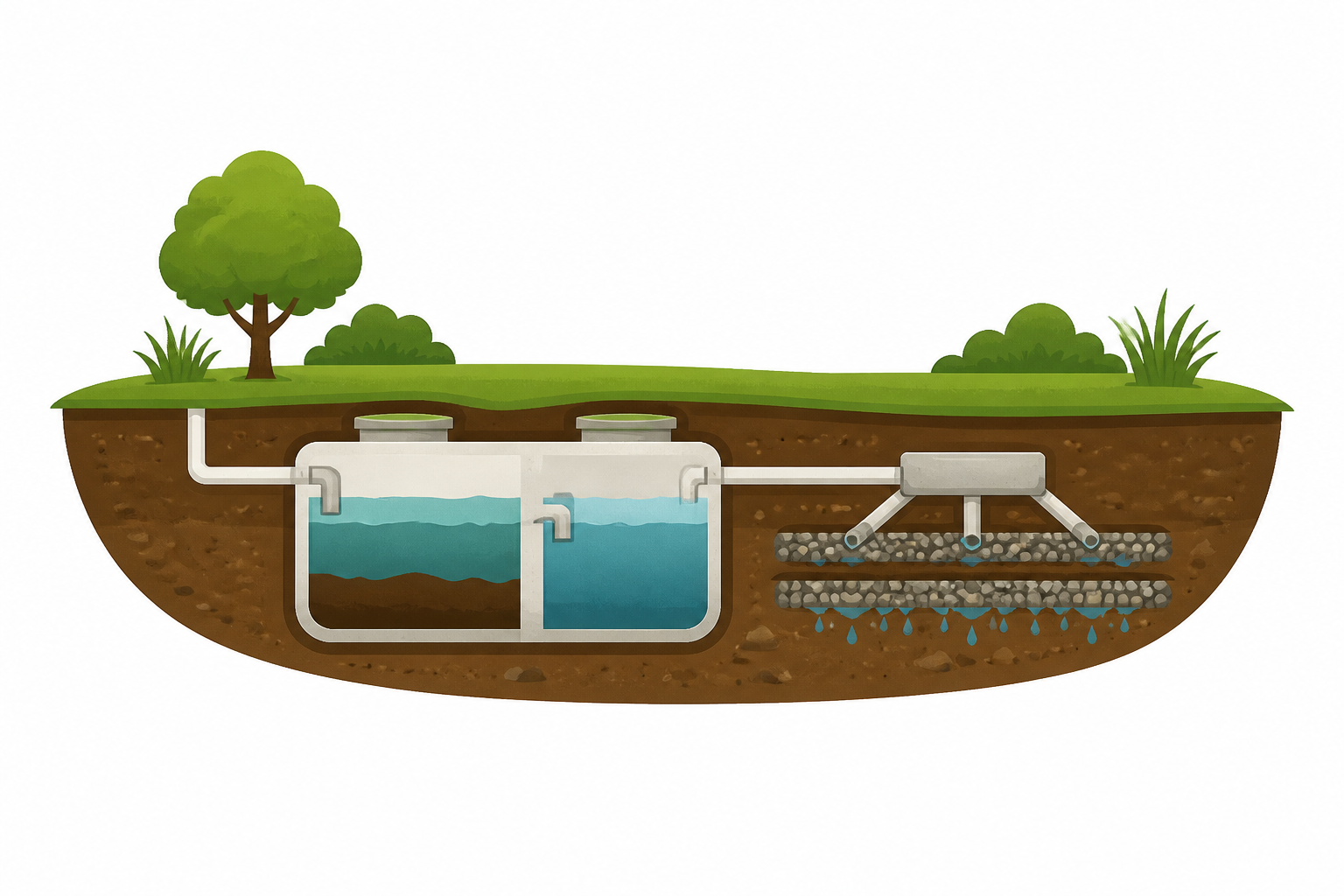
    That soft, wet patch in your yard is the warning sign I take most seriously. It’s called surfacing effluent, and it means partially treated wastewater is pushing up through the soil instead of filtering down through it. Your drain field is designed to disperse effluent through perforated pipes buried 18 to 36 inches down. When the soil becomes saturated — either from biomat buildup, compaction, or hydraulic overload — the liquid has nowhere to go but up.

    Here’s what I learned the hard way on a property in eastern Kentucky about eight years ago. The homeowner had a soggy area about 15 feet from the tank. I assumed it was a broken distribution line. Simple fix, right? Wrong. When I dug down, the lines were intact. The real problem was a biomat — a thick layer of anaerobic bacteria and grease — coating the bottom and sides of every trench. That field was effectively dead. Remediation cost the homeowner $4,200. Had they called me six months earlier when the first soft spot appeared, we might have saved it with aeration treatment and a pump-out for around $600.

    One critical safety note: surfacing effluent is a public health hazard. It contains pathogens including E. coli and fecal coliform bacteria. Keep children and pets away from the area immediately. Many states classify active surfacing as a system failure requiring mandatory repair — check your local health department’s guidelines, because fines can reach $1,000 per day in some jurisdictions.

    Slow Drains, Odors, and the Warning Signs You’re Ignoring

    Slow drains get blamed on hair clogs and grease buildup — and sometimes that’s accurate. However, when slow drains persist after you’ve snaked the line, you’re dealing with something deeper. Persistent slow drainage throughout the house points toward the septic side of the equation. The tank may be full (most residential tanks need pumping every 3 to 5 years), the outlet baffle may be failing, or the drain field is beginning to back up.

    Sewage odors are another septic system warning sign that homeowners rationalize away. Inside the house, a rotten egg smell near drains often means a dry P-trap — a minor fix. But if that smell is coming up consistently from multiple fixtures, or if you’re catching it outside near the tank lid or drain field, that’s different. Outside odors near the tank mean the tank is venting improperly or is overfull. Odors near the drain field mean effluent is surfacing or the field is undersaturated with oxygen, causing anaerobic breakdown at the surface.

    For reference, a standard 1,000-gallon residential tank serving a three-bedroom home should be pumped when the scum and sludge layers together occupy more than one-third of the tank volume. That’s roughly every 3 to 5 years for a family of four. I’ve seen tanks go 15 years without a pump-out. Every single one of them had failing drain fields within two years of discovery.

    How I Use a Sewer Camera to Diagnose Problems Myself

    This is the section where I get to talk about a tool that has genuinely changed how I work. When I started out in 2009, diagnosing a pipe problem meant either guessing or digging. Neither was efficient. Now I run a camera down the line first, every time. It eliminates guesswork completely.

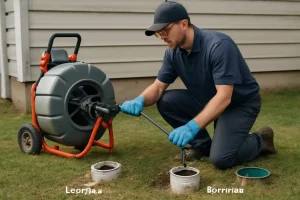
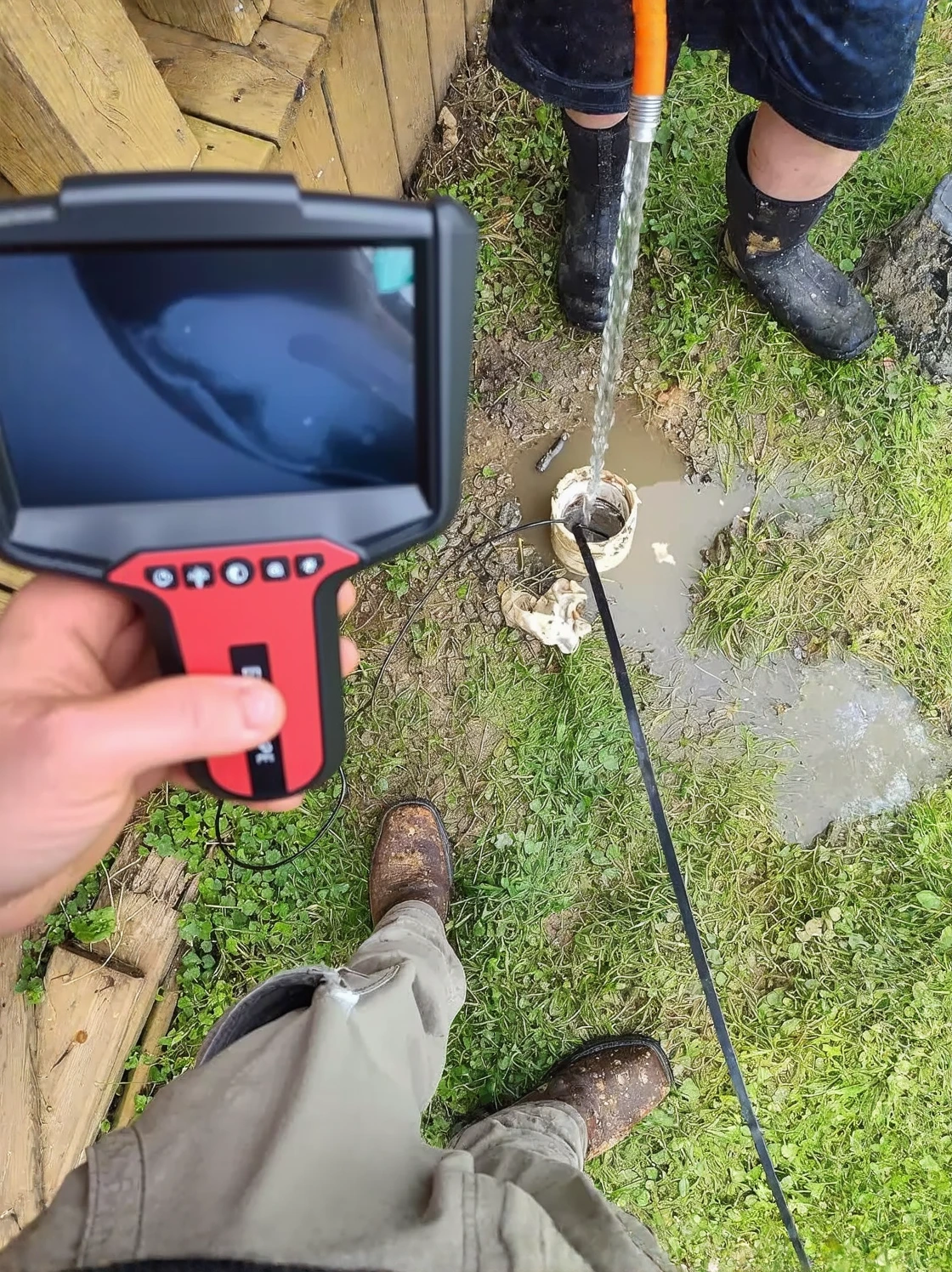
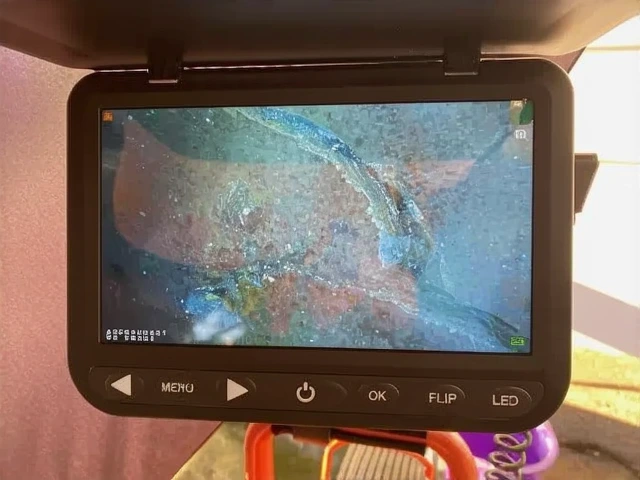
    The camera I’ve been using on recent inspections — and the one I’d recommend to any serious DIYer or property owner — is the 2026 new 7″ Sewer Camera, HD 1080P with DVR-32GB. The 100-foot cable gives me enough reach to inspect from a cleanout all the way to the inlet of the tank on most residential properties. The HD 1080P resolution is critical — I can actually read the condition of the pipe wall, spot root intrusion, see grease buildup, and identify offset joints. The 360° and 180° rotation capability means I’m not missing anything around a bend.

    The twist-to-unlock reel system is something I didn’t think I’d care about until I was using it one-handed at a crawl space access point in February. I genuinely appreciated it. The 5,000mAh battery lasts through a full inspection day without a recharge, and the built-in DVR records everything to a 32GB card. That recording matters: I can show homeowners exactly what I found, and it creates documentation if there’s ever a dispute about system condition during a property sale. The thicker cable reel also handles pushback in longer runs without the kinking I’ve experienced with cheaper units.

    A Budget-Friendly Option for Shorter Inspections

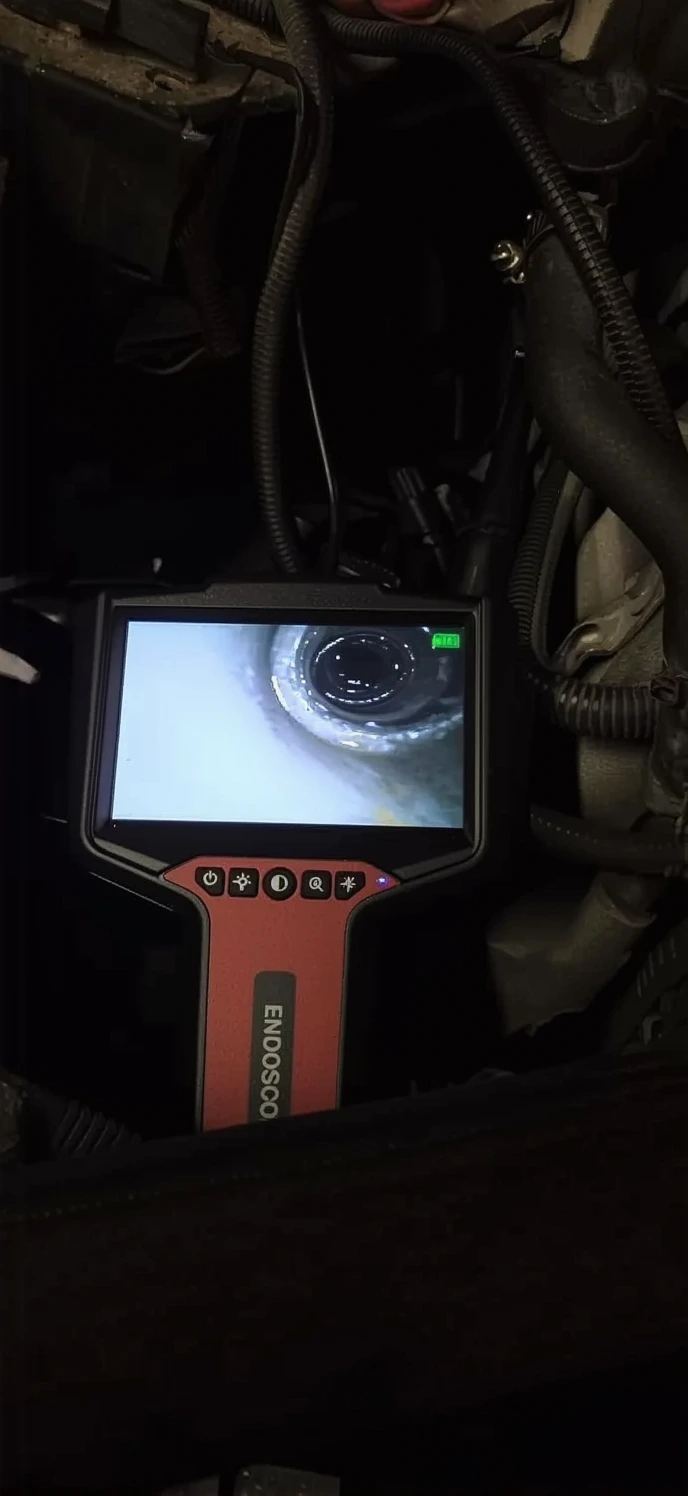
    If you’re not dealing with long runs and just want to check the first 15 to 20 feet of drain line — under a sink, from a floor drain, or into a short cleanout — the Endoscope Camera with Dual-Lens and 5″ 1080P display is a legitimate option. It’s waterproof, handles flexible routing well, and the dual-lens design gives you more viewing angles in tight spaces. At 16.4 feet, the cable won’t get you to your tank. However, for confirming a blockage close to the fixture, or checking an automotive or small plumbing application, it punches well above its price point. I keep one in my truck as a secondary unit.

    When to Call a Professional — And When You Can Handle It

    I’m a big believer in homeowner education. That said, I’m also honest about where DIY ends and professional work begins. Here’s my clear breakdown after 15 years in the field.

    You can handle these yourself:

    • Running a camera inspection from an accessible cleanout
    • Snaking a line to clear a localized clog
    • Checking and cleaning vent stack from the roof (safely)
    • Locating and inspecting tank lids for visible damage
    • Scheduling and monitoring a routine pump-out

    Call a licensed septic professional immediately if you see:

    • Active sewage surfacing in the yard
    • Sewage backing up into the house through floor drains or toilets
    • Sunken or collapsed ground over the tank or drain field
    • A tank lid that is cracked, missing, or unsecured
    • Any situation where you’d need to enter or lean over an open tank

    That last point is critical safety information, not a disclaimer. Septic tanks produce hydrogen sulfide and methane gas. Concentrations above 100 ppm of hydrogen sulfide can cause unconsciousness in minutes. People die in septic tanks every year — typically rescuers who go in after someone else. Never enter or lean directly over an open tank without confined space equipment and a trained partner. This is non-negotiable.

    A licensed inspection in most states runs $250 to $500 and includes a written report. If you’re buying a property, that cost is trivial compared to inheriting a failing system. I’ve seen buyers walk away from $350,000 homes after inspection revealed drain fields that would cost $22,000 to replace. Worth every penny of that inspection fee.

    Final Thoughts on Septic System Warning Signs

    Septic system warning signs are never subtle forever. They start subtle — a occasional gurgle, a faint smell after rain, a patch of grass that’s slightly greener than the rest. Then they escalate. The homeowner who called me about his “broken washing machine” had actually noticed that green patch three months earlier. He just didn’t know what it meant.

    Now you do. Gurgling in multiple drains means pressure imbalance — investigate within two weeks. A soggy yard patch near the drain field means surfacing effluent — keep people away and call a pro. Persistent odors mean something is venting wrong or overflowing — don’t wait. Slow drains throughout the house after you’ve cleared local clogs mean your tank or field needs attention now, not next season.

    The most powerful thing you can add to your diagnostic toolkit is a quality sewer camera. Running one down your cleanout once a year takes about 20 minutes and gives you a clear picture of exactly what’s happening in your pipes. The 100-foot HD 1080P model I use has paid for itself many times over in avoided guesswork. For most homeowners, that one tool is the difference between catching a problem at $400 and inheriting it at $15,000.

    Your septic system is doing quiet, thankless work every single day. Give it 20 minutes of attention once a year. It will return the favor for decades.

    This post contains affiliate links. As an Amazon Associate, I earn from qualifying purchases at no extra cost to you.

    Scroll to Top