Septic systems don’t stop working because it’s cold outside. They stop working because the pipes freeze solid, or the tank itself gets too cold to break down waste. By the time you realize something’s wrong, you’re often looking at a system that won’t drain at all—and emergency service calls in January when licensed professionals are already booked solid.
The good news: freeze-ups are one of the most preventable septic failures. You just need to understand what actually causes them, spot the warning signs early, and take the right steps before winter arrives.
How and Why Septic Systems Freeze
Your septic system relies on two things to function: water movement and microbial activity. Both shut down when temperatures drop below freezing for extended periods.
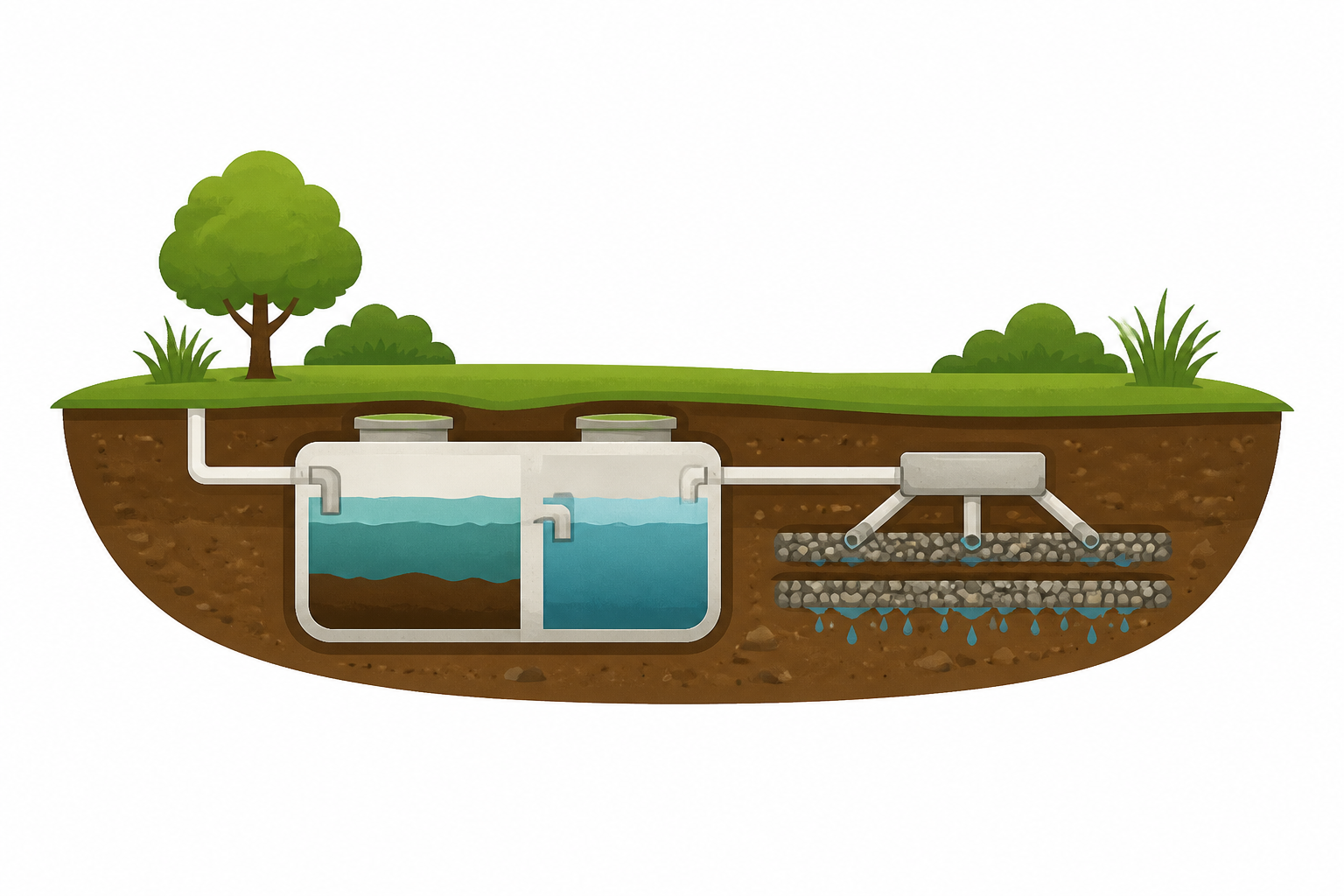
The pipes freeze first. Wastewater moving from your house to the septic tank travels through underground pipes. In regions where the ground freezes, pipes that aren’t deep enough or aren’t insulated will eventually ice over. Once ice forms, water backs up. You’ll notice slow drains, gurgling sounds, or complete blockage.
The tank itself becomes inactive. Inside the tank, bacteria break down solid waste and separate it into layers (scum, liquid, sludge). This biological process generates some heat. But if the tank sits in frozen ground with little activity—or if you’re away for weeks during winter—that microbial activity can nearly stop. The liquid in the tank thickens or freezes, and nothing moves.
Low water use accelerates the problem. If your household uses very little water during a cold snap (vacation, illness, fewer people home), the system cools faster because there’s less warm wastewater entering to maintain temperature.
Early Warning Signs of Freeze Risk
Catch these signs before a complete shutdown:
- Slow drains indoors. Toilets, showers, and sinks drain noticeably slower than usual, especially after a cold night.
- Backup smell indoors. You notice sewer odor in the house or near fixtures—a sign pressure is building because water can’t exit.
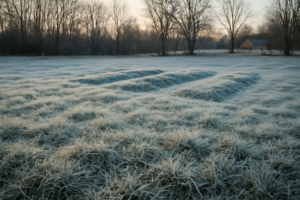
- Wet spots or ice on the ground above the system. Frozen wastewater can force liquid back up through the soil, creating icy patches or unexplained wet ground in winter.
- Gurgling sounds when you run water or flush.
- Septic alarm activation (if your system has one).
Any of these means the system is already stressed. Don’t wait for complete failure to act.
Prevention: The Steps That Actually Work
Prevention requires addressing three factors: depth, insulation, and water flow.
Depth
Septic tanks and distribution boxes should be buried below the frost line for your region. Frost line depth varies—anywhere from 12 inches in mild climates to 48+ inches in cold zones. If your system was installed shallow (a shortcut some older contractors took), you’re at high risk.
You can’t easily move a tank, but you can add insulation on top of it.
Insulation
This is where most prevention happens:
- Mulch over the tank and drainfield. A 12- to 18-inch layer of leaves, straw, or wood chips acts as a blanket. Avoid salt-based de-icing products that can seep into the system.
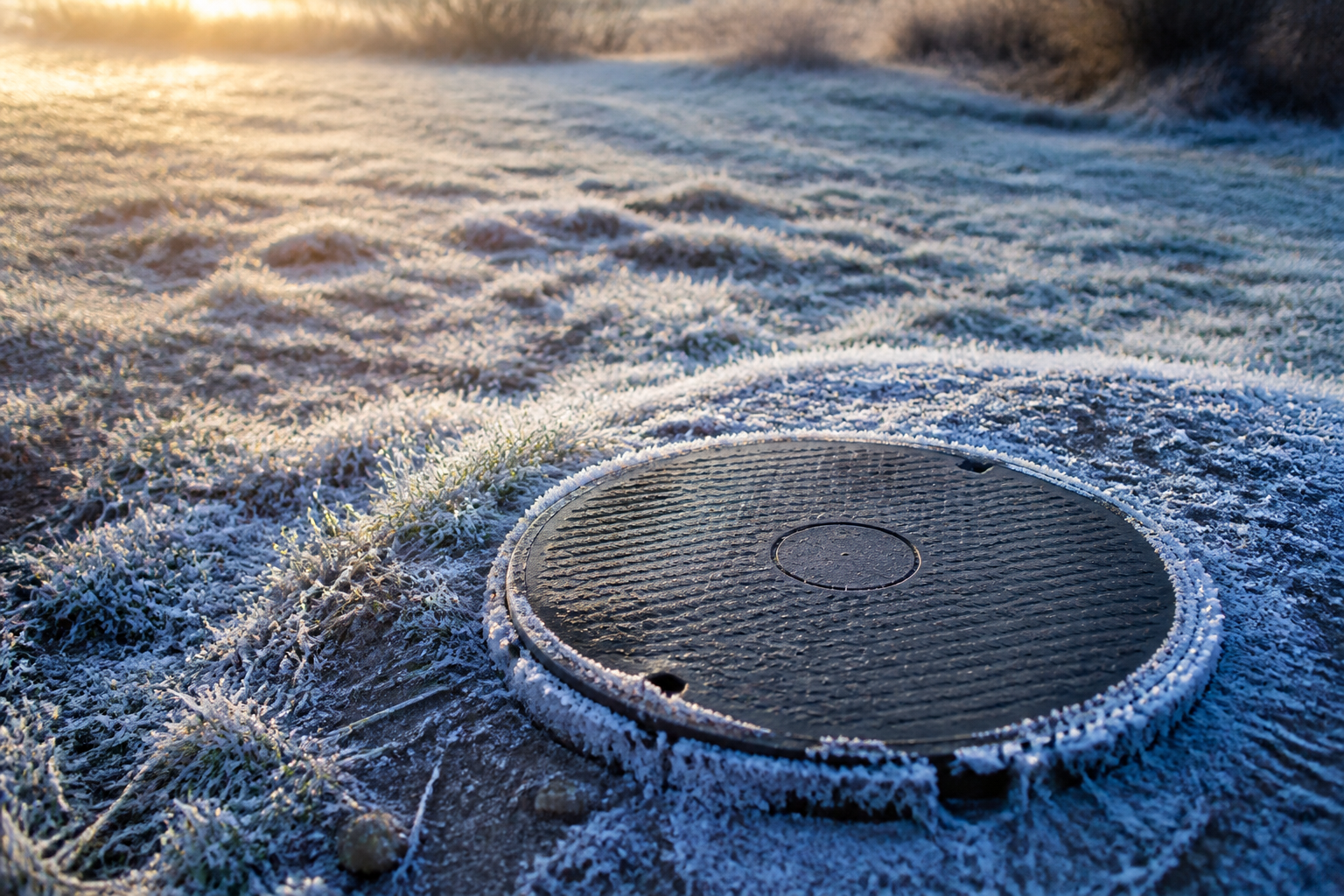
- Insulation boards or blankets can be placed directly over the tank access ports and cover area before frost arrives.
- Keep snow on the ground. Snow is an excellent insulator. Remove it from roof runoff paths to prevent ice dams that funnel extra water toward the system, but don’t actively clear snow from over the tank.
- Avoid paving or gravel directly over the drainfield. These conduct cold rather than insulate it.
I’d start with mulch—it’s cheap, effective, and you can add it in October or November before the deep freeze.
Water Flow and Temperature
- Use warm water normally. Showers, laundry, and dishwashing all send warm wastewater into the system. Continuous light use is better than long periods of no use.
- Avoid unnecessary water conservation in winter. In summer, water-saving practices help your system. In winter, steady warm-water use maintains tank temperature.
- Don’t let gutters and drainage pipes empty near the tank. Divert roof runoff and grading away from the system so cold rainwater or snowmelt doesn’t chill it further.
- Run water occasionally if you’re away. If leaving for more than a few days in winter, ask someone to run a shower or flush regularly, or leave a small drain trickling into the system.
What NOT to Do
- Don’t use heat tape on buried pipes unless it’s designed for septic use (standard electrical heat tape is a fire hazard).
- Don’t pour hot water down drains continuously—it can damage pipes and uses excess water.
- Don’t use salt-based additives or enzyme treatments; they won’t prevent freeze-ups and may damage the system.
- Don’t ignore warning signs hoping they’ll go away.
If Your System Freezes Solid
If drains stop completely and you’ve confirmed it’s a freeze (not a clog or pump failure), here’s what you can do:
Call a licensed septic professional. This is the honest answer. A frozen system often requires thawing equipment or professional service that goes beyond DIY fixes. They can use hot water, steam, or other methods safely without damaging the tank or pipes.
While waiting for service, minimize water use indoors to avoid backup into your home. Don’t pour antifreeze, rock salt, or harsh chemicals down drains—they won’t thaw the system and will damage it.
Temporary measures like running warm (not boiling) water down drains can sometimes help if the freeze is very early-stage, but don’t rely on this. The real fix is professional thawing or waiting for warmer weather.
After thawing, implement the prevention steps above so it doesn’t happen again next winter.
Why Prevention Matters More Than Emergency Fixes
A frozen septic system can lead to backup into your home, damage to the system itself, and expensive emergency calls. More importantly, winter freeze-ups often go undiagnosed until they’re severe. By then, damage may have occurred inside pipes or to bacterial colonies in the tank.
A few hours of preparation in fall—adding mulch, clearing drainage paths, confirming your tank depth—costs almost nothing and prevents weeks of headaches.
If you live in a climate where ground freezes, treating winter septic protection as routine maintenance (like winterizing a well or maintaining heating) will keep your system working when you need it most.
About This Article

Written by Joel Grayson. Rural property owner who learned septic systems the hard way after my own failed 15 years ago. I created Backyard Septic to give homeowners honest, practical guidance on septic installation, maintenance, and troubleshooting. More about this site.
Scope and limits. Joel is an experienced rural property owner, not a licensed septic inspector. Have a licensed septic professional handle pumping, permits, and any diagnosis you plan to act on — and never enter a tank.
Verify this against a primary source
Specifics change, and your situation may differ from the one described here. These are the authorities worth checking directly:
- EPA SepticSmart — septic system care, inspection intervals and failure signs
- NSF International — treatment unit and tank certification standards