
You’ll encounter two competing pieces of advice about protecting your septic system: one says a miracle bacterial additive will keep everything running smoothly, the other says to stick to a rigid pumping schedule and watch what goes down your drains. The second one is correct — and it starts in the kitchen. A couple of summers ago, I rolled up to a residence outside Putnam County to find a family standing over a waterlogged section of yard adjacent to their drainfield. They’d had their tank emptied just twenty-four months back, they told me. When I opened the tank to look, the picture was immediately clear: the inlet baffle wore a thick, waxy coating of solidified grease, and a floating layer of accumulated scum measured close to four inches deep. This wasn’t a frequency issue. This was a cooking behavior issue. And honestly, how your kitchen operates may be the single most valuable piece of guidance I share during every consultation and installation I complete.
The majority of property owners give their septic system no thought until failure forces attention. Over the past fifteen years in rural sections of Georgia, Alabama, and the Carolinas — learning, assessing, and fixing these systems — I’ve documented far more drainfield collapses originating in the kitchen than anywhere else on the property. Not your bathrooms. Not your washing machine. Your kitchen. The accumulation of grease, food matter from disposal use, and the residue from certain dish cleaners all get dumped into a tank engineered to process sewage, not culinary waste.
My objective here is to provide you with the precise guidance I distribute to every single homeowner upon completion of an installation or assessment. These fundamentals are not complex. However, they demand regularity — and when you grasp the reasoning behind each guideline, they become second nature far faster than just being told “avoid pouring fats into your drain.”
Why Your Kitchen Represents Your Septic Tank’s Greatest Risk
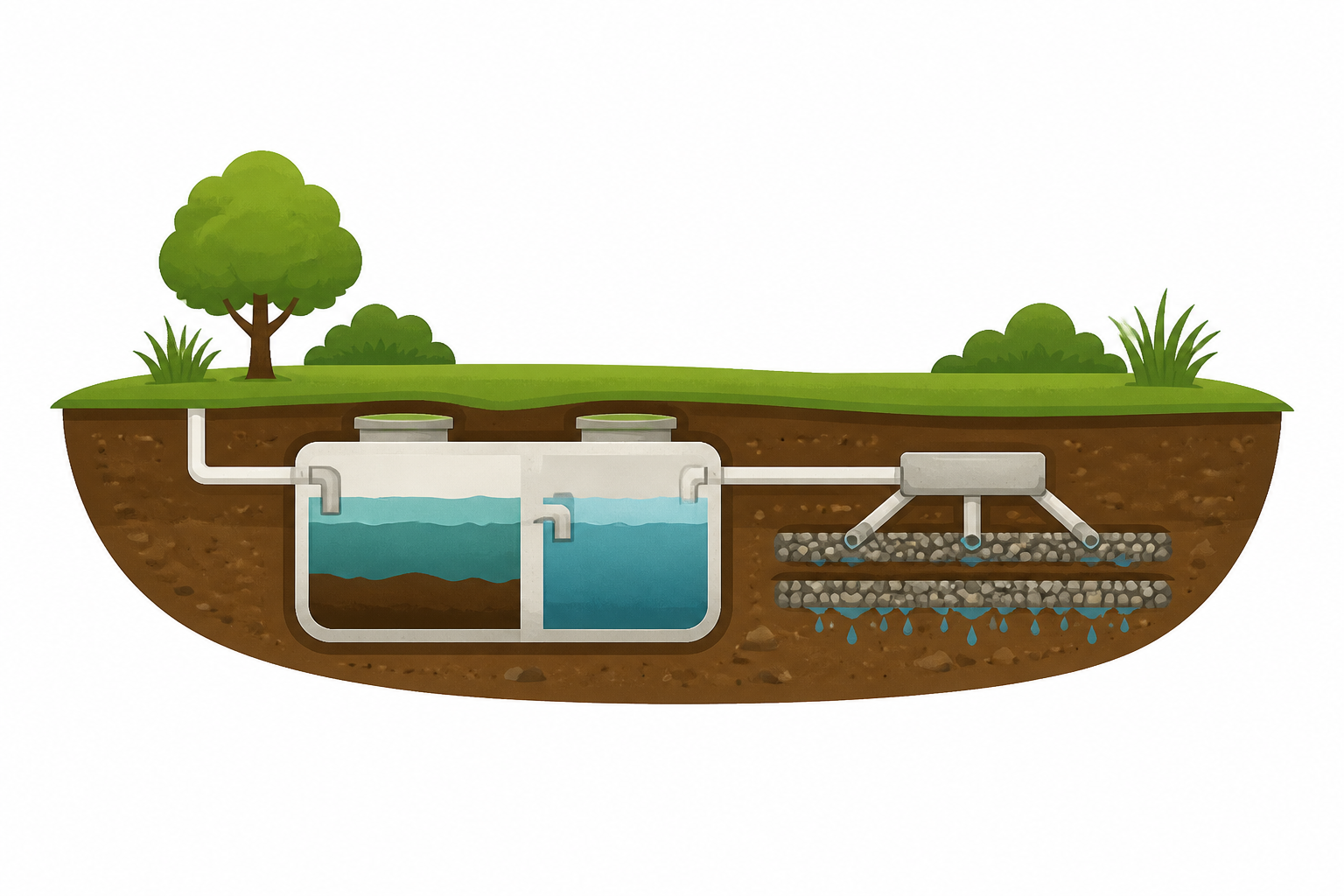
Here’s what most residents never learn: your septic tank functions as a living ecosystem. Deep inside, anaerobic microbes are perpetually decomposing organic particles. These microbes require particular circumstances — proper warmth, correct acidity, and appropriate waste composition — to do their work correctly. When you dump substantial quantities of fats, oils, and grease (FOG in industry terminology), you destabilize that ecosystem fundamentally.
Grease resists biological breakdown the way other organic material does not. It gets rigid when chilled, adheres to inlet tubing, blocks your baffle structure, and rises as a layer of scum atop your tank’s contents. The United States Environmental Protection Agency’s Homeowner’s Guide to Septic Systems explicitly identifies FOG as a main reason for system breakdown. Based on my field observations, a properly functioning tank should maintain a scum layer measuring roughly 1 to 2 inches deep maximum. That Putnam County installation I described earlier? Four inches thick. The threshold for calling your pumper typically arrives when scum reaches within 3 inches of the output baffle — at 4 inches, this family had already left the safety zone.
The kitchen also delivers substantial volumes of fine particles through disposal systems and leftover meal components. Research published by the University of Georgia Extension office reveals that disposal operation pushes total particles flowing into your tank upward by nearly fifty percent. This escalates your pumping demands and accelerates how quickly your drainfield gets saturated. Consequently, merely discarding food particles into your trash rather than your sink can expand your tank’s working life considerably.
The Fat, Oil, and Grease Standard: My Guiding Principle for Every Single System
Rule number one in my playbook, consistently applied with no exceptions: nothing containing fat goes through your kitchen sink drain. Not rendered bacon fat. Not melted butter remaining after cooking. Not the slick water remaining from deep-frying a meal. I advise every homeowner to position a recycled jar or dedicated grease collection container next to their cooktop. Allow it to solidify, then dispose of it in the garbage. Half a minute of behavioral adjustment safeguards you from a $400 emergency pump or a $6,000 drainfield replacement.
I arrived at this principle through personal failure on my own land, back when I was starting out in the business. Around year three, I felt overconfident. I maintained a small farm near Butts County, and I’d been rinsing my cast-iron cookware under heated water, believing the warmth would propel the oily residue harmlessly through my pipes. Sixteen months in, drainage had become sluggish and my baffle required service. My own buried tank became my best classroom, humbling me far more than any service call ever could. Hot water transports fats a greater distance in your system — but doesn’t make them vanish. Those fats solidify downstream, whether in your lateral lines, your baffle, or inside your tank itself.
The identical concern arises with culinary oils — sunflower oil, extra virgin, MCT oil. Though these stay fluid at normal household temperature, they nonetheless leave buildup on interior pipe surfaces and feed the accumulating scum across time. Even modest daily contributions mount quickly. That said, periodically washing a lightly-oiled dish won’t sabotage your entire system. But if your household is preparing multiple daily meals for a crowd and regularly rinsing cookware, you’re generating a significant accumulation over months and years of operation.
Food Waste Disposers and Septic Systems: What Actually Occurs
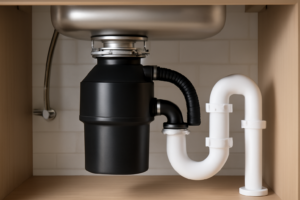
Homeowners pose questions about food waste disposers regularly. My candid response: for those with septic service, I advise eliminating a disposal unit entirely. Numerous state-level environmental agencies — Georgia’s On-Site Sewage Management standards under Chapter 511-3-1 being one example — mandate upgraded tank capacity when a disposal is installed, precisely due to this consideration. The additional solids reaching your system are too important to overlook; regulators have incorporated this fact directly into tank sizing specifications.
For those who currently own a disposal and decline to have it removed, here’s what I recommend as a workable middle ground: operate it exclusively for tiny leftover bits — scraps adhering to a dish following a manual scrape-off. Resist processing massive food-waste quantities. In particular, prevent anything fibrous — stalks of celery, corn silk, artichoke bottoms — which resist microbial decomposition and can form tangles and blockages in your tank chamber. Similarly, starch-heavy matter — potato skin, cooked pasta, uncooked rice — retains water and enlarges your overall solid burden rapidly.
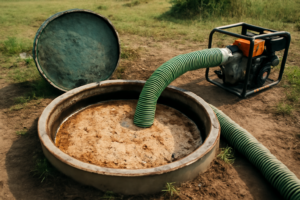
When I examine homes with heavy disposal activity, pumping cycles drop to every 18 to 24 months rather than the standard 3 to 5 year window. With each pump running between $350 and $500 throughout rural Georgia, the expenditure compounds to substantial amounts across your system’s operational span. Food compost processing represents a vastly superior path — and carries zero expense.
Dish Detergents, Bathroom Cleansers, and What Your Tank Can Tolerate
This arena generates considerable misunderstanding, including from residents genuinely attempting to maintain their systems responsibly. Dish detergent formulations are not interchangeable regarding tank function. The issue splits into a pair of concerns: certain formulations include antibacterial components that eliminate or weaken the microbial populations housed in your tank performing decomposition. Second, industrial-strength or bleach-containing products can throw off your tank’s internal balance.
What I consistently recommend is straightforward: select a biodegradable, phosphate-excluded dish detergent applied in reasonable volume. Products such as Seventh Generation or Method perform correctly. Original-formula Dawn in limited volumes generally poses no challenge to a solid tank — the operative consideration is restraint. Antibacterial variants should be bypassed when feasible. Nevertheless, occasional deployment of harsher substances won’t wreck everything. Your tank hosts resilient microorganism colonies that rebound readily. Long-term, constant contact with destructive compounds produces the genuine harm.
Concerning chemical drain opening products — I firmly discourage their application in any septic-served residence. Goods including Drano or Liquid-Plumr use caustic or acid-based compounds that harm your tank’s microbial ecosystem severely. If your pipes get obstructed, employ a mechanical auger or hire a licensed plumber instead. A $150 professional visit always beats restoring tank biology for $3,500.
The Under-Sink Apparatus That Transformed My Pumping Frequency
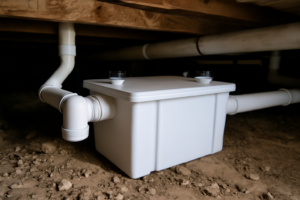
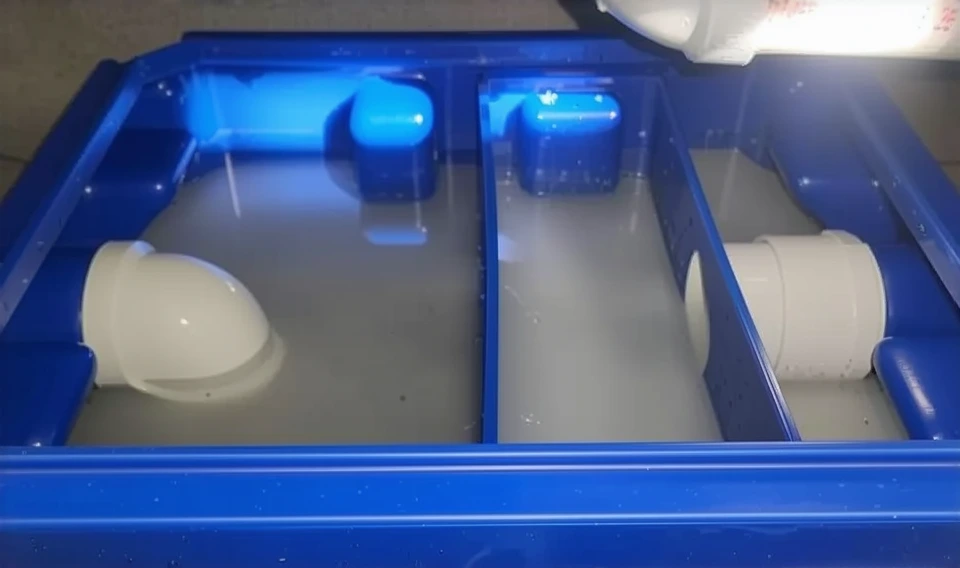
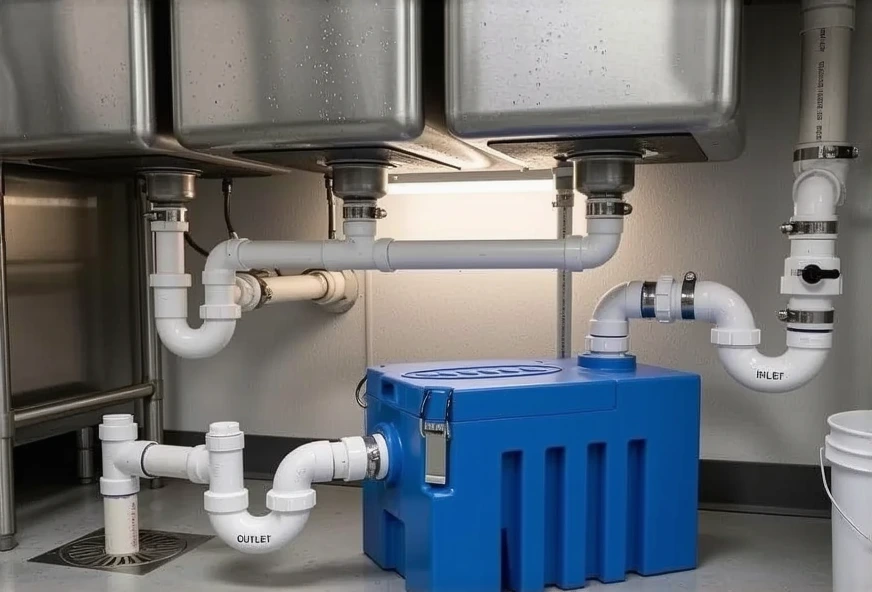
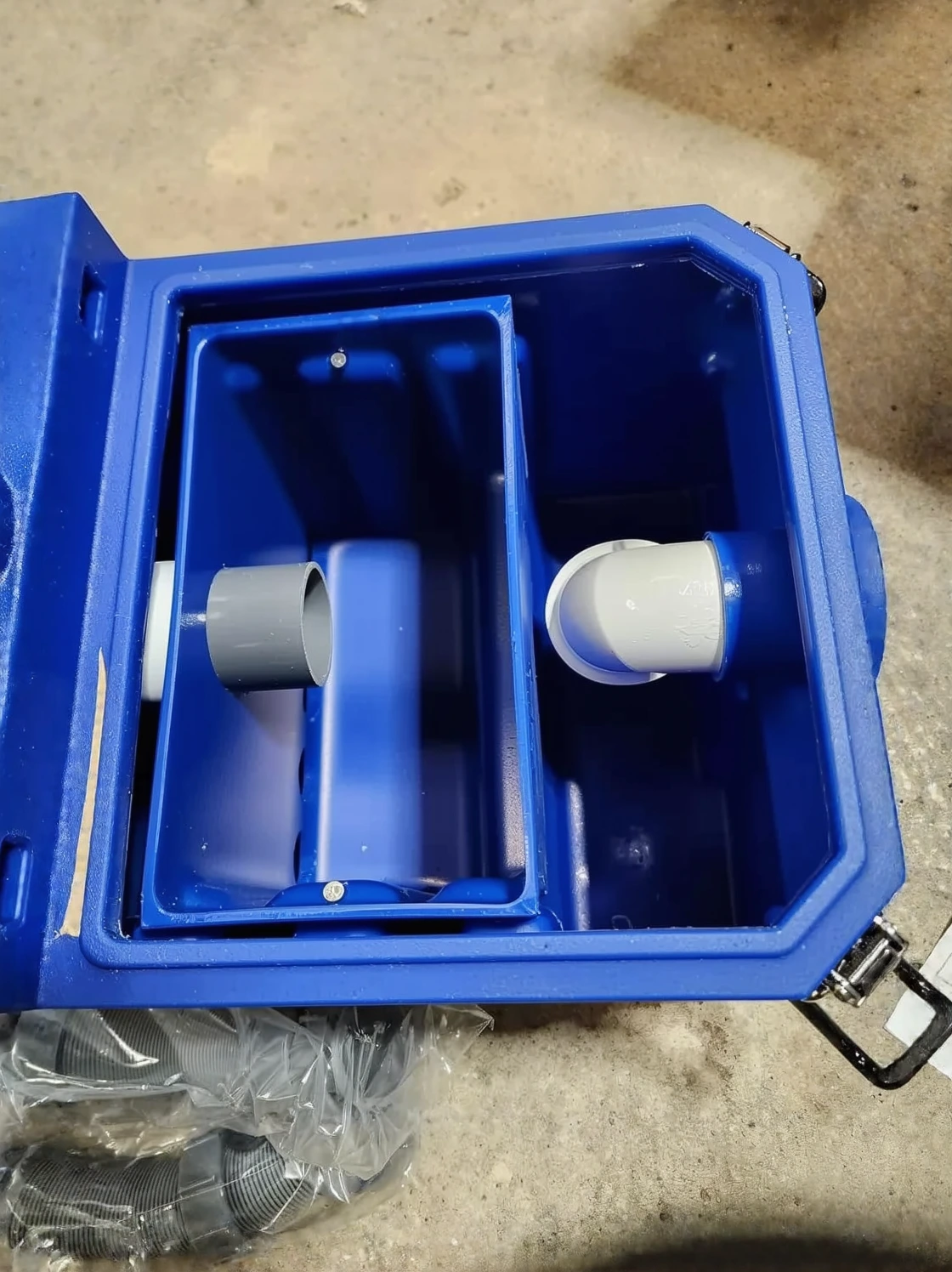
The oily layer adhering to your baffle’s entrance? It typically originates within your sink basin. An under-sink grease capture system stops the problem at its origin before the tank receives it, and it stands out as the most straightforward method to stretch intervals between pumping visits significantly.
Where it excels
- Installs beneath your sink requiring no specialized skills—simply connect it in your existing drain pathway in fifteen minutes or less.
- Intercepts grease before solidification occurs in your tank, allowing you to expand pumping intervals from every 2–3 years back toward 4–5 years or even longer.
- Emptying involves minimal effort—merely scrape accumulated grease into a disposal container roughly monthly or as capacity approaches, followed by a quick rinse.
Where it falls short
- Operating at 3 gallons per minute capacity means simultaneous drain use (running your dishwasher concurrent with showering) may create drainage resistance during peak periods.
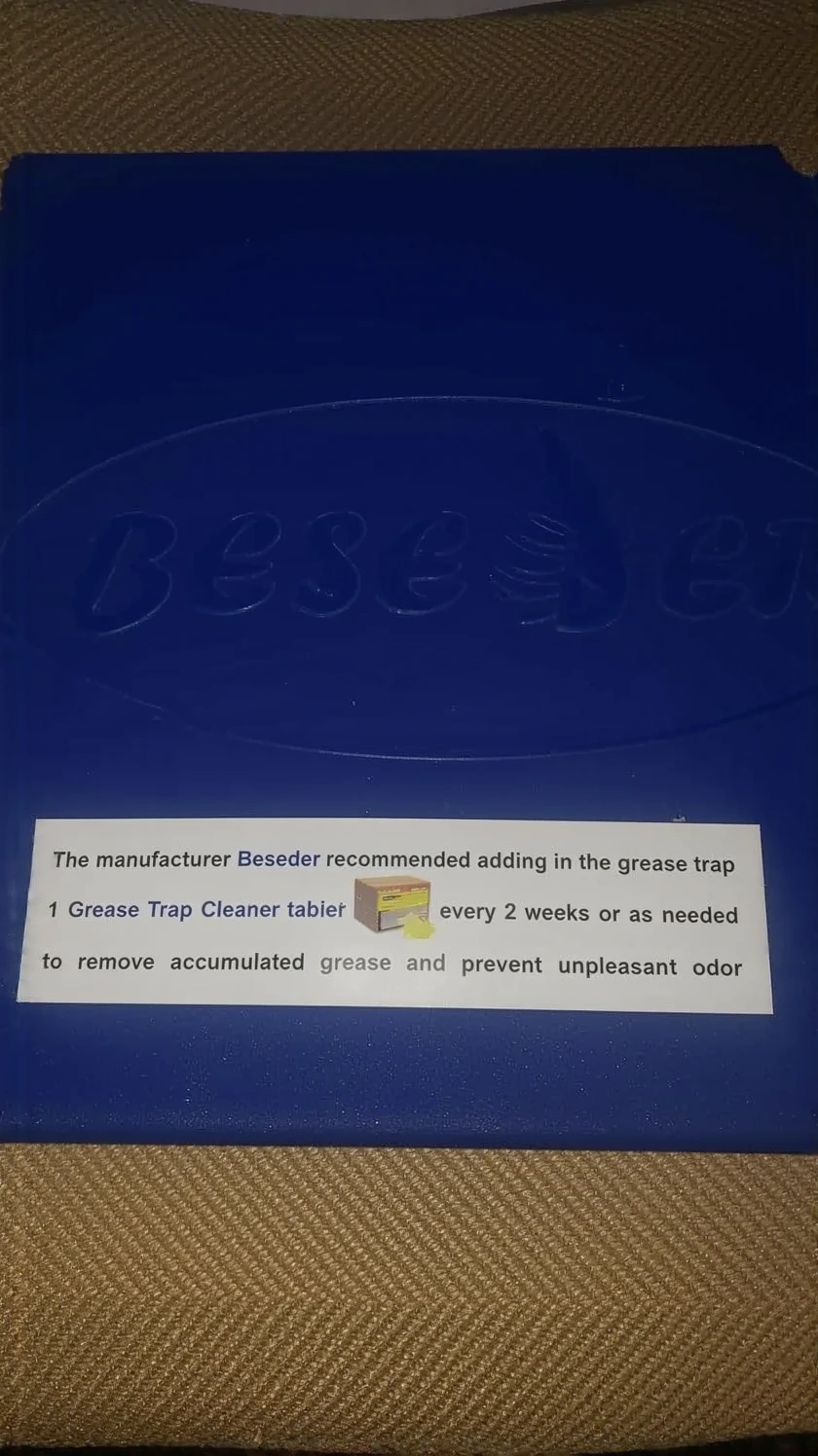
- Requires consistent attention and cleaning—skipping maintenance cycles permits grease accumulation that undermines the entire advantage.
I’ll admit, I was skeptical the first time I installed one at my own place—I figured it’d be another thing to maintain on top of everything else. But after three years without a pump call, I stopped overthinking it and started recommending them to every neighbor who would listen.
Sources and further reading
About This Article

Written by Joel Grayson. Rural property owner who learned septic systems the hard way after my own failed 15 years ago. I created Backyard Septic to give homeowners honest, practical guidance on septic installation, maintenance, and troubleshooting. More about this site.
Scope and limits. Joel is an experienced rural property owner, not a licensed septic inspector. Have a licensed septic professional handle pumping, permits, and any diagnosis you plan to act on — and never enter a tank.
Verify this against a primary source
Specifics change, and your situation may differ from the one described here. These are the authorities worth checking directly:
- EPA SepticSmart — septic system care, inspection intervals and failure signs
- NSF International — treatment unit and tank certification standards