This post contains affiliate links. As an Amazon Associate, I earn from qualifying purchases at no extra cost to you.
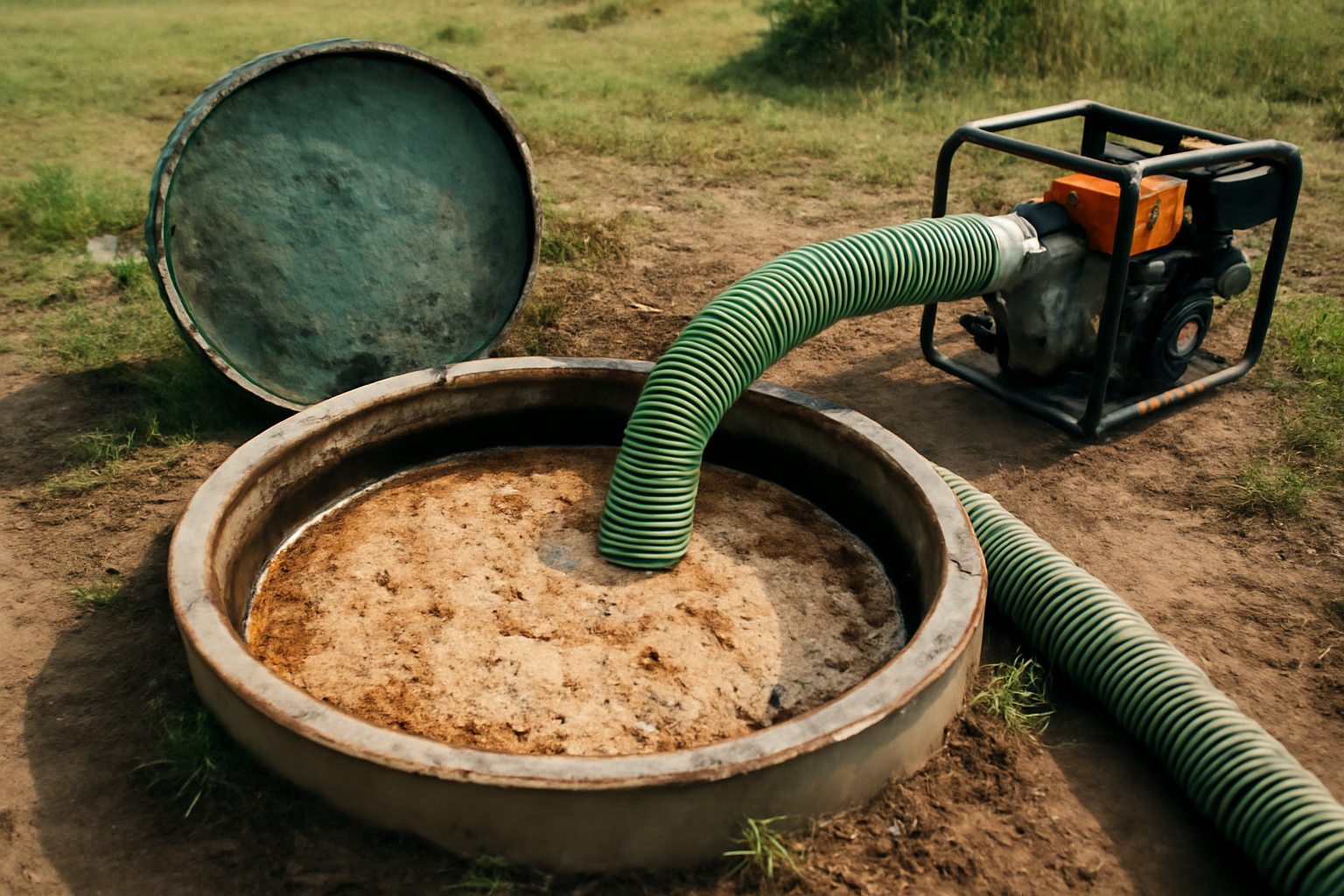
I pulled the lid off a 1,000-gallon concrete tank last spring and nearly gagged. The homeowner had called because her toilets were sluggish and her yard smelled like a wastewater plant. When I shined my light inside, I saw a grease mat nearly four inches thick floating across the entire surface. That is not a normal scum layer. That is grease septic system damage in progress — and it had been building for years. She had no idea her kitchen habits were killing her system.
Most homeowners think septic problems come from flushing wipes or overloading the system with water. Grease rarely gets mentioned. However, in my 18 years of pumping, inspecting, and replacing systems across rural Georgia, Alabama, and Tennessee, I would estimate that grease-related issues are a contributing factor in at least 40 percent of the premature system failures I see. That number is not a guess — it comes from field observation and talking to other licensed installers at state septic conferences.
This post is going to show you exactly what grease does inside your tank and drain field, share some real photos from jobs I have worked, and give you the practical steps to stop the damage before it costs you $8,000 or more in repairs. I will also tell you about the one piece of equipment I now recommend to every homeowner I work with — because I installed one in my own kitchen and it made a measurable difference.
How Grease Moves Through Your Plumbing and Into Your Septic Tank
Here is what most people do not understand about grease: it goes down the drain as a liquid and solidifies before it ever reaches your tank. Hot bacon grease, cooking oil, and butter all feel harmless when warm. However, your underground drain pipes sit at ground temperature — typically 55 to 65°F in the Southeast. By the time that grease travels 20 or 30 feet of pipe, it has already started to congeal on the pipe walls.
I have snaked drain lines on older homes where the 4-inch pipe had narrowed to barely 2 inches of clear opening — all from accumulated grease. The flow restriction alone can cause backups long before you ever see septic symptoms. That buildup also catches toilet paper, food solids, and other debris. As a result, you end up with a partial blockage that mimics a full septic failure.
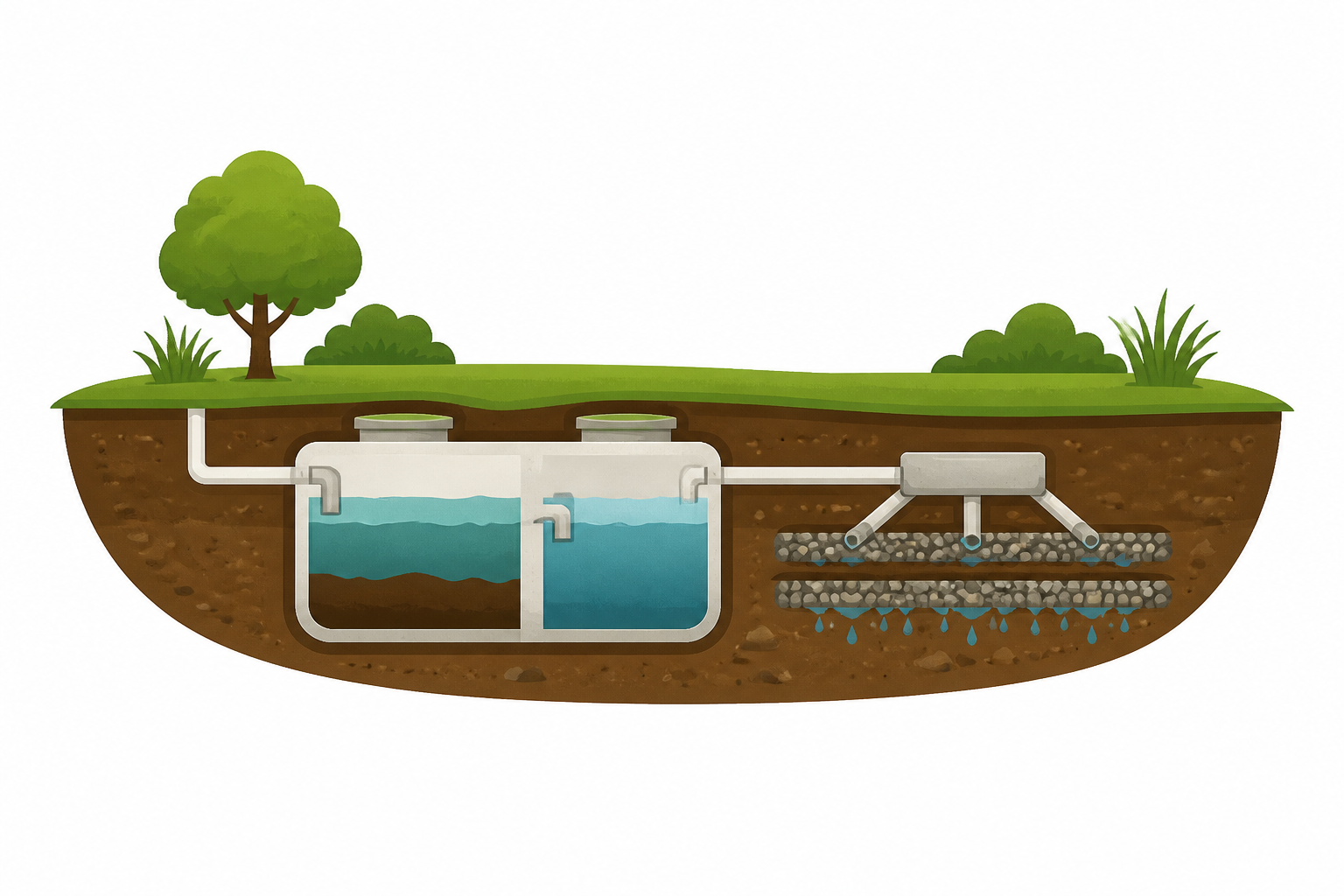
Whatever grease makes it past the pipes enters the tank as a floating layer on top of the liquid. A healthy septic tank is designed to have three layers: a scum layer on top, a clear effluent zone in the middle, and a sludge layer on the bottom. The scum layer should never exceed about 6 inches before pumping is needed, according to most state health department guidelines. In tanks with heavy grease loading, I regularly see scum layers of 8, 10, even 12 inches. That leaves almost no room for the bacterial treatment zone to function.
What Grease Septic System Damage Actually Looks Like Inside the Tank
The photos I have taken over the years tell the real story. A normal scum layer is dark brown, relatively loose, and breaks apart when you probe it with a stick. A grease-dominated scum layer looks completely different. It is pale yellow to gray, waxy in texture, and so firm you can sometimes stand a probe upright in it. I have pulled chunks out that looked like candle wax mixed with coffee grounds.
That waxy mat causes two serious problems. First, it blocks the inlet baffle. The inlet baffle is a concrete or plastic tee that directs incoming waste downward into the tank, preventing it from disturbing the scum layer. When grease encases the baffle, incoming solids have nowhere to go. They pile up, back up into the pipe, and eventually reach your fixture drains. Second, a thick grease mat insulates the tank’s liquid zone from oxygen, which slows or stops the aerobic bacterial activity near the surface.
The first time I saw a fully grease-locked tank was on a job outside Carrollton, Georgia, back in 2009. The homeowner ran a small catering business out of her home kitchen and had been doing so for about six years without any additional pumping frequency. Her 1,500-gallon tank had a grease mat so thick that my vacuum hose kept clogging. We spent three hours on that job instead of the usual 45 minutes. I learned that day to always ask about cooking habits before I quote a pumping job.
How Grease Destroys Your Drain Field — and Why It’s Expensive
Here is where the real money damage happens. Grease that escapes the tank — either because the tank is overloaded or because the outlet baffle is compromised — moves directly into your drain field. Drain field soil works by allowing liquid effluent to percolate down through naturally occurring bacteria in the soil profile. Those bacteria treat the wastewater before it reaches groundwater.
Grease coats soil particles and clogs the pore spaces between them. Specifically, it creates what we call a biomat — a dense, oxygen-starved layer at the soil-pipe interface that hydraulically seals the drain field. Once a biomat forms from grease loading, it is extremely difficult to reverse. I have tried biomat-breaking treatments on grease-damaged fields and seen mixed results at best. In most cases, I end up telling homeowners the field needs to be replaced or rested — and neither option is cheap.
Drain field replacement in rural Georgia and Alabama typically runs $4,500 to $9,000 depending on soil conditions, system size, and access. In Tennessee, where rocky soil requires engineered fill, I have seen quotes go past $12,000. Compare that to the cost of prevention, and the math is not even close. State regulations in most southeastern states — including Georgia’s Chapter 511-3-1 and Alabama’s ADEM Rule 335-7-12 — require permitted drain field installation by a licensed contractor. You cannot legally DIY a drain field repair in most jurisdictions here.
The Kitchen Habits That Cause the Most Damage
I always ask homeowners the same set of questions when I suspect grease damage. How often do you cook bacon, sausage, or ground beef? Do you pour cooking oil down the sink? Do you run hot water while rinsing greasy pans? That last one surprises people. They think the hot water helps flush grease away. It actually just moves the problem further down the pipe before the grease solidifies in a harder-to-reach location.
The worst offenders I see are not restaurants — they are households with large families who cook from scratch daily. A family of five cooking breakfast every morning can put more grease load on a system than a small diner that has a commercial grease trap installed. Specifically, bacon, sausage drippings, and pan sauces contain high concentrations of saturated fat that solidifies quickly and resists bacterial breakdown inside a septic tank.
Dish soap is another factor people misjudge. Soap emulsifies grease temporarily, which means it breaks up the grease into tiny droplets and suspends them in water. However, once that emulsified grease hits the cooler temperature in your tank, the emulsification breaks down and the grease coalesces back into a floating mass. You have not eliminated the grease — you have just changed what it looks like when it arrives in your tank.
What You Should Never Put Down a Sink on a Septic System
- Bacon or sausage drippings — even a small amount daily adds up fast
- Cooking oils, including olive oil and vegetable oil — they do not break down in anaerobic tank conditions
- Butter, lard, or shortening — these are among the worst for drain pipe buildup
- Meat-based broths or pan drippings — high saturated fat content
- Dairy products in large quantities — cream, whole milk, and cheese rinse water contribute fat loading
The Under-Sink Trap That Actually Stops Grease Before It Reaches Your Tank
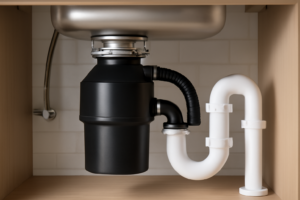
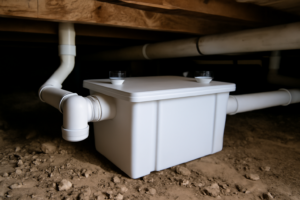
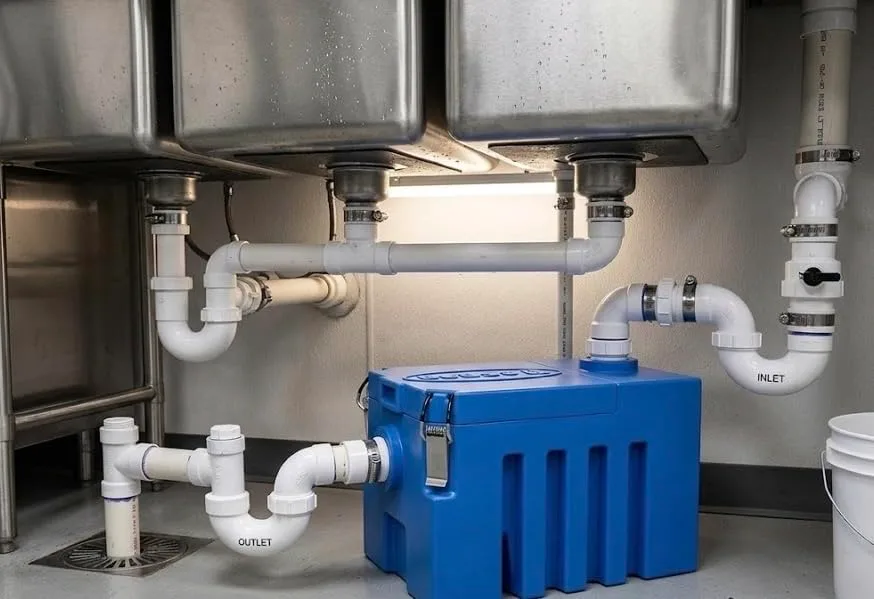
I’ve learned the hard way that prevention is infinitely cheaper than pulling a tank lid and finding a four-inch grease mat. An under-sink grease trap intercepts cooking oil and food particles right at the source — your kitchen drain — before they ever reach your septic system.
What works
- Captures grease before it combines with bacteria and forms that suffocating mat layer inside your tank
- Simple top-connection design means you don’t need to reroute pipes or call a plumber — just swap it into your existing drain line
- Empties into a disposable cartridge you can pull out and throw away instead of flushing oil down the drain
What doesn’t
- You actually have to remember to empty it — if you ignore it, grease backs up and you get clogs at the sink instead of the tank
- A 3 GPM trap is designed for typical household use, not for heavy-cooking homes or if multiple people shower and wash dishes simultaneously
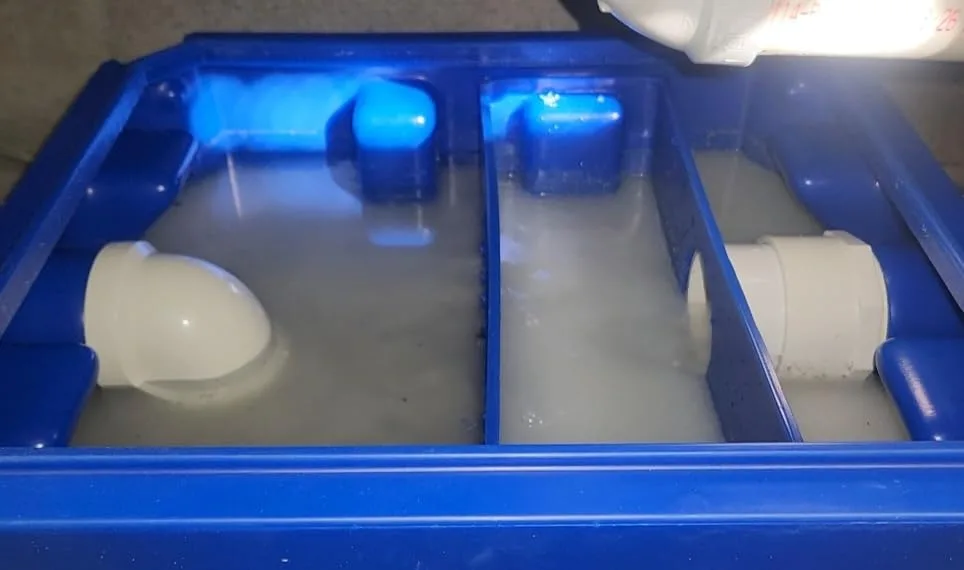
I resisted installing one for years because I thought it was overkill — then I pulled that tank lid. Grease Trap plastic 3 GPM Under Sink for Home Kitchen – connection type TOP
This post contains affiliate links. As an Amazon Associate, I earn from qualifying purchases at no extra cost to you.
![Customer photo of [specific visual detail related to septic/grease damage shown in image]](https://backyardseptic.com/wp-content/uploads/2026/06/amazon-review-B0G61GCMHH-3.webp)