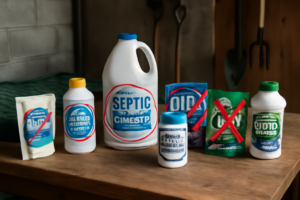
If I had a dollar for every time I’ve pulled the lid off a tank and immediately known the homeowner was using the wrong cleaners, I’d have retired by now. After 15 years inspecting septic systems and consulting on rural properties, I can tell you straight up: what goes down your drain matters enormously. Most homeowners never think about it until something goes wrong. That’s usually when I get the call. Building a reliable septic safe household cleaners list isn’t complicated, but it does require understanding why certain products destroy your system — and which ones actually leave your bacterial ecosystem intact.
Last spring, I had a client outside of Knoxville — older farmhouse, 1,200-gallon concrete tank installed in the late 1980s. She called me because her drain field was showing signs of failure: soggy ground, slow drains, that unmistakable odor. When I inspected the tank, the bacterial layer was nearly dead. Completely flat. She’d been using a popular bleach-based multi-surface spray every single day, plus antibacterial dish soap at every meal. Her system never had a chance. A new drain field in that area runs $8,000 to $15,000. That’s an expensive bottle of cleaner.
I’m not here to scare you. I’m here to give you the same advice I give every client who wants to protect their investment. Let’s break down exactly what’s safe, what’s dangerous, and what I personally use in my own home — which, yes, is also on a septic system.
Why Household Cleaners Directly Impact Your Septic System
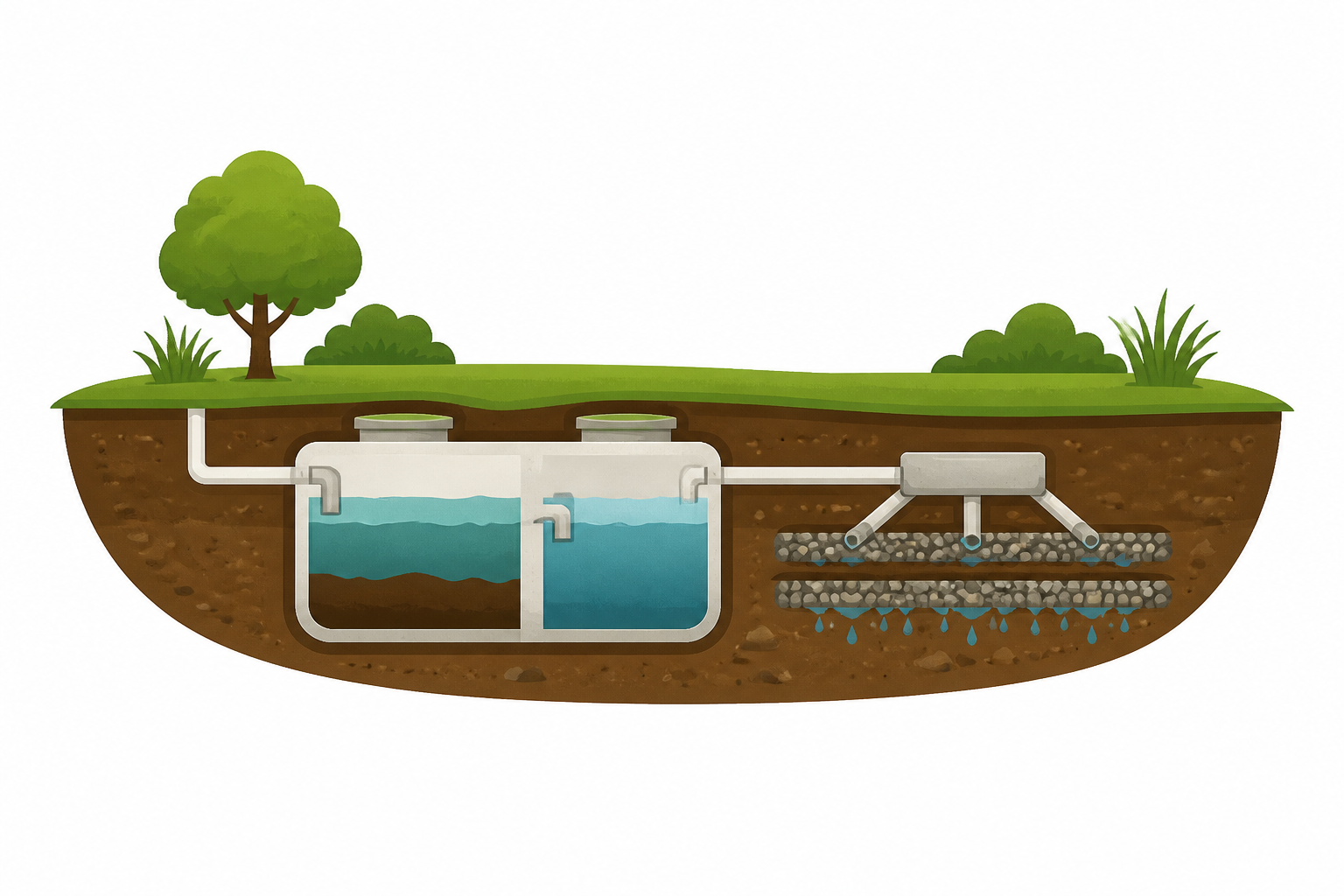
Your septic tank isn’t just a holding tank. It’s a living biological system. Billions of anaerobic bacteria break down solid waste, preventing your tank from filling up prematurely and protecting your drain field from solid intrusion. Anything that disrupts that bacterial balance creates a cascade of problems. I’ve seen it hundreds of times in the field.
The primary offenders are antimicrobial and antibacterial agents. Quaternary ammonium compounds — commonly called “quats” — are found in most commercial disinfecting sprays. Bleach (sodium hypochlorite) is another massive problem. Even at low concentrations, these compounds don’t distinguish between harmful pathogens and the beneficial bacteria your tank depends on. The EPA’s Design Manual for Onsite Wastewater Treatment notes that even moderate antimicrobial exposure can significantly reduce septic tank digestion efficiency.
pH also matters. Highly alkaline or highly acidic cleaners alter the tank’s internal environment. Bacteria thrive in a narrow pH range — roughly 6.5 to 7.5. Drain the wrong cleaner regularly, and you shift that balance enough to slow or stop biological activity. The result: sludge accumulates faster, solids escape into the drain field, and you’re looking at costly repairs.
The Septic Safe Household Cleaners List: What Actually Works
Here’s my working list. These are products and categories I’ve vetted personally, recommended to clients, and used in my own home. I’m not just pulling names from a manufacturer’s website. These are real-world choices that hold up under practical use.
The Disinfectant That Actually Breaks Down in Your Tank
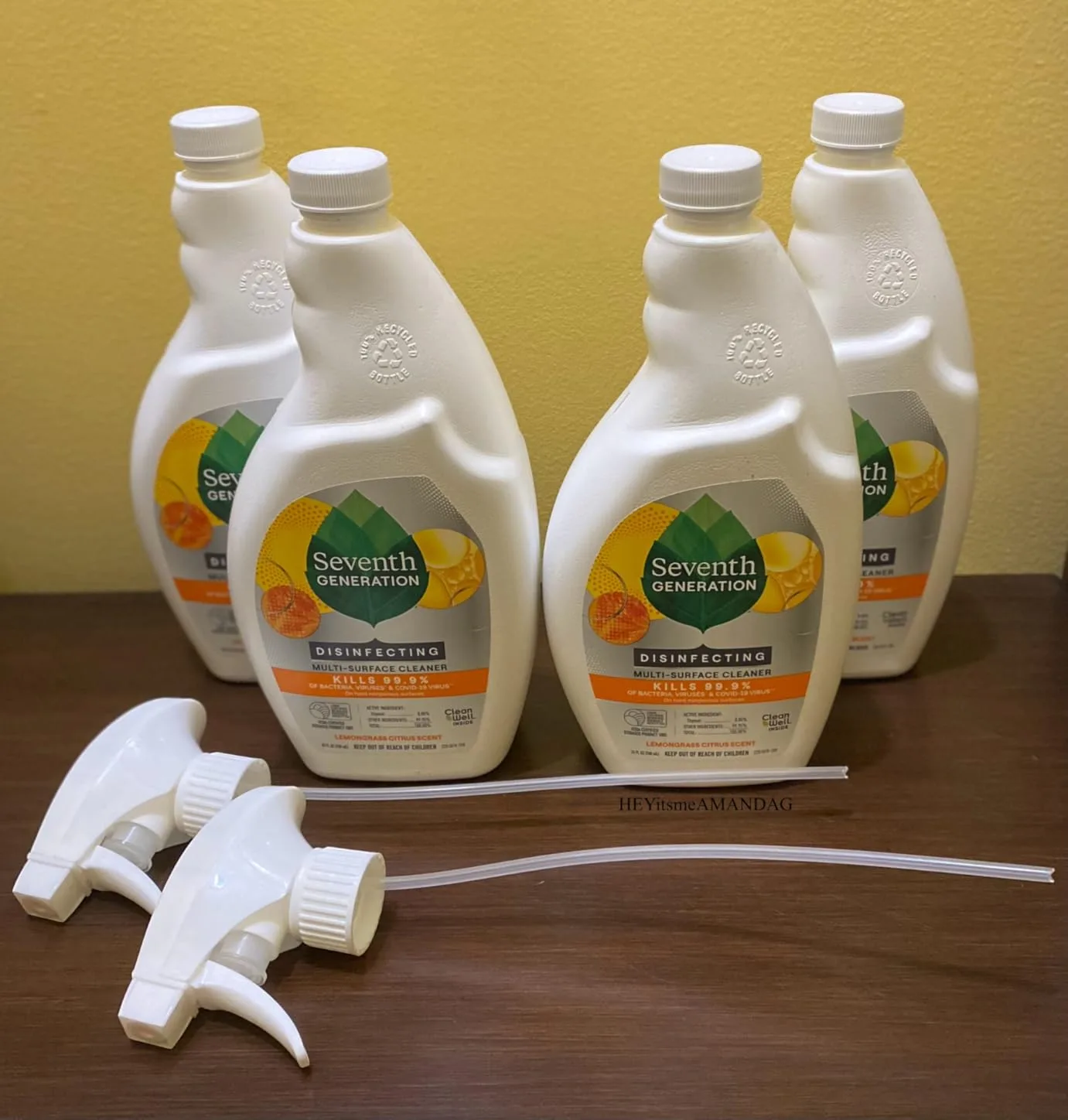
Most people reach for whatever’s under the sink without realizing that heavy-duty disinfectants kill the bacteria your septic system needs to function. I spent years watching tanks fail because homeowners were using bleach-based cleaners religiously, thinking they were doing the right thing. This one actually disinfects without nuking your bacterial colony.
What works
- Plant-based formula breaks down quickly instead of accumulating in the tank and clogging your drain field over time
- Actually kills surface germs on counters and bathrooms without the caustic fumes that signal “this will destroy your system”
- I can use it daily without the paranoia that I’m slowly poisoning my tank’s bacterial ecosystem
What doesn’t
- Costs more per ounce than conventional disinfectants—you’ll notice the price difference if you’re used to grabbing the cheapest bottle
- Doesn’t have the aggressive smell that makes people *feel* like something’s being sterilized, so some users think it’s not working as hard
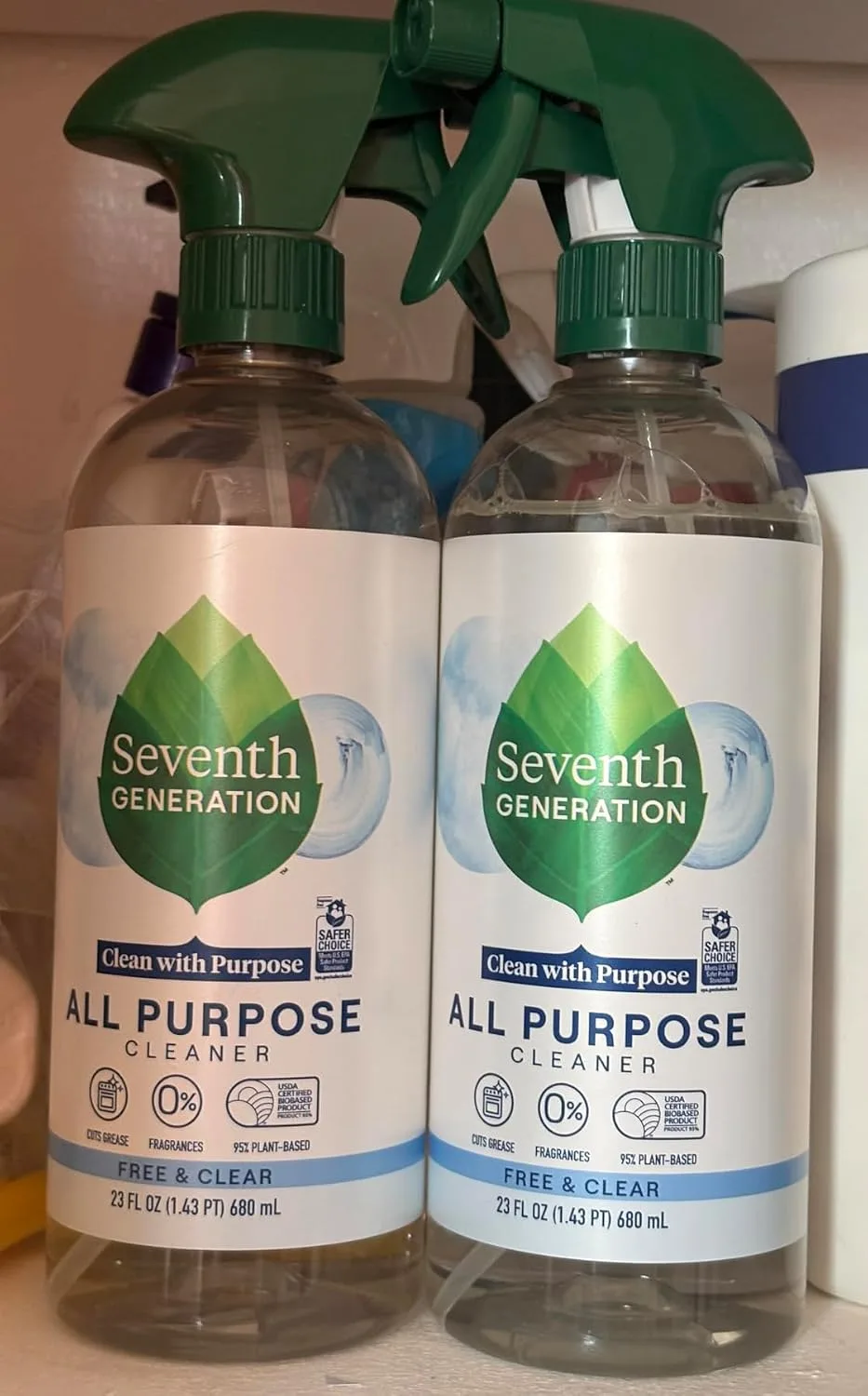
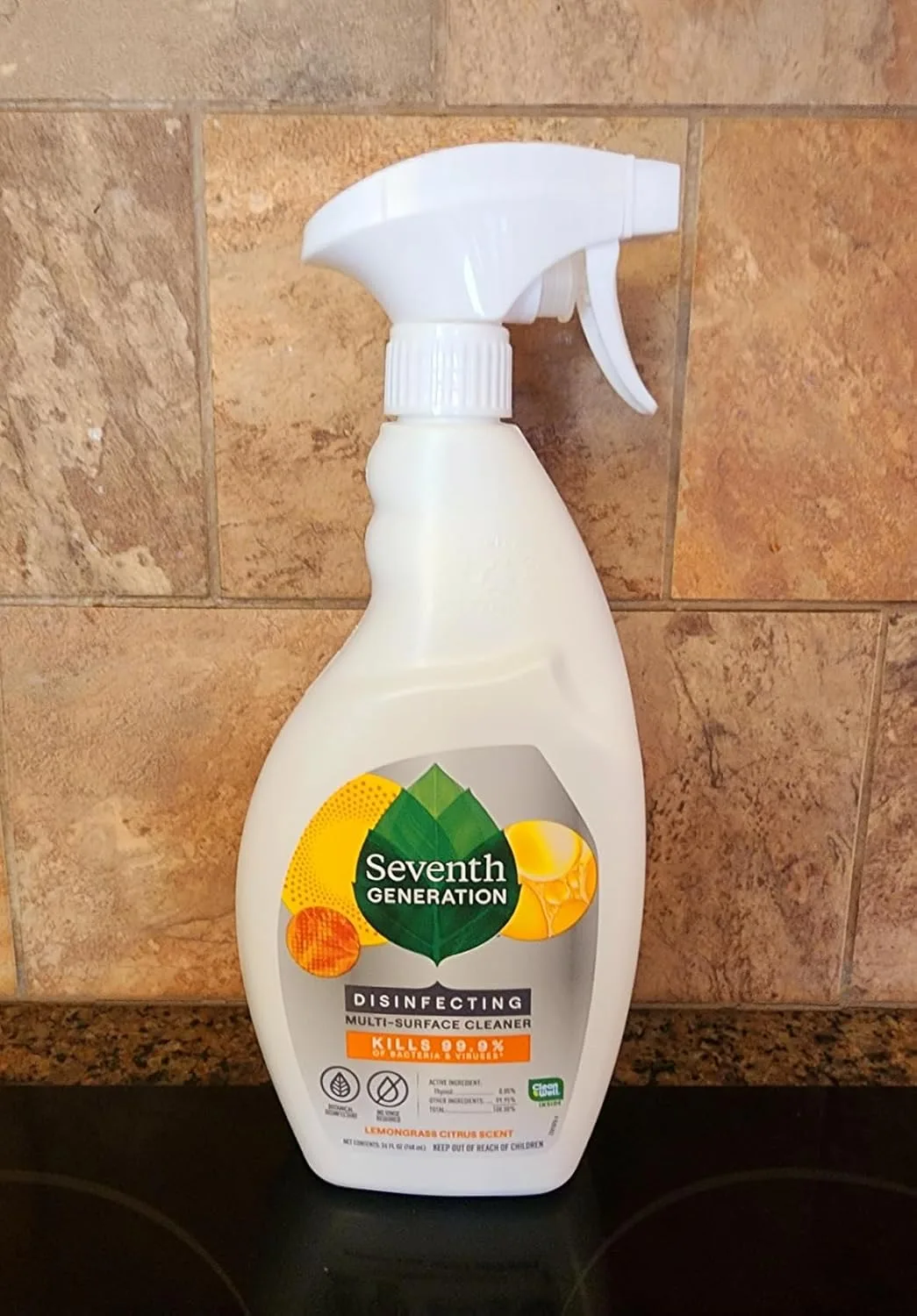
I’ll admit I was skeptical the first time I switched—I’d been conditioned to trust that chemical smell as proof of cleaning power. But after three years of using this and pulling tanks that show healthy bacterial levels, I’m sold. Grab the Seventh Generation Lemongrass Citrus Disinfecting Multi-Surface Cleaner and stop worrying about your tank every time you clean.
This post contains affiliate links. As an Amazon Associate, I earn from qualifying purchases at no extra cost to you.