This post contains affiliate links. As an Amazon Associate, I earn from qualifying purchases at no extra cost to you.
I get called out to properties all over the rural Southeast, and lately I’m seeing more homesteaders and off-gridders ask about going the composting toilet route. An off-grid composting toilet system sounds simple on paper — no tank, no drain field, no pump-outs. However, after 18 years of crawling under houses, digging up failed drain fields, and watching DIY installations go sideways, I can tell you that these systems are more nuanced than most YouTube videos let on. Some work beautifully. Others become a health hazard and a regulatory headache inside of two years.
The first time I saw a composting toilet up close was on a job in east Tennessee, around 2009. The homeowner had installed a Sun-Mar Excel on his own, was thrilled with it for about eight months, and then called me when liquid started seeping out the base. He had no idea the unit required a separate leachate drain line and that his daily household usage was double what the unit was rated for. That one visit cost him more than $800 in corrective work — more than the unit itself. I want to help you avoid that kind of lesson.
How Off-Grid Composting Toilet Systems Actually Work
Before you buy anything, you need to understand the biology. Composting toilets break down human waste through aerobic decomposition — the same process a backyard compost pile uses. Microorganisms consume organic material and reduce it to roughly 10–30% of its original volume. The end product, when done right, is a dry, pathogen-reduced material sometimes called “humus.” That said, reaching true pathogen-free compost requires sustained internal temperatures above 131°F for at least 72 hours, per EPA guidelines on biosolids treatment. Most residential units never get that hot.
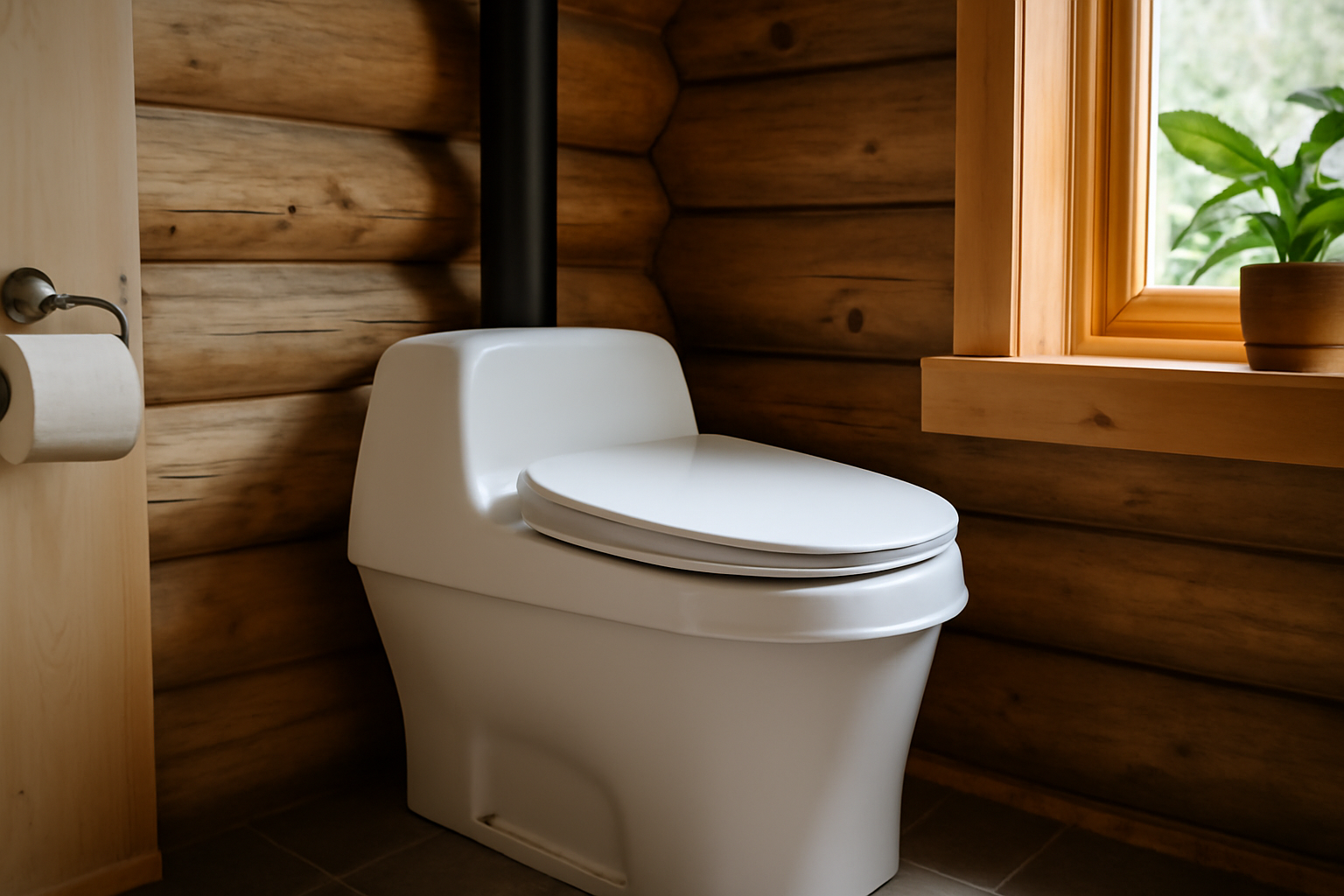
There are two main system types I see in the field. Self-contained units — like the Sun-Mar Excel or the Nature’s Head — house the composting chamber directly under the toilet seat. Central systems, like those made by Clivus Multrum, run a chute down to a large composting tank, often in a basement or crawl space. Central systems handle higher usage and do a better job with heat management. Self-contained units work well in cabins, tiny homes, or single-person dwellings with limited daily use.
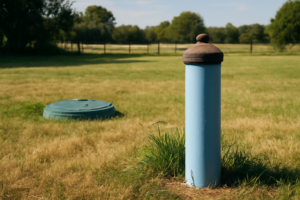
Every system also needs a vent stack — typically a 2- to 4-inch ABS or PVC pipe that exhausts odors and moisture to the outside. Without proper venting, you’ll have odor problems regardless of how well the composting chemistry is working. In my experience, this is the most commonly skipped or undersized component on DIY installs.
The Regulatory Side Nobody Talks About
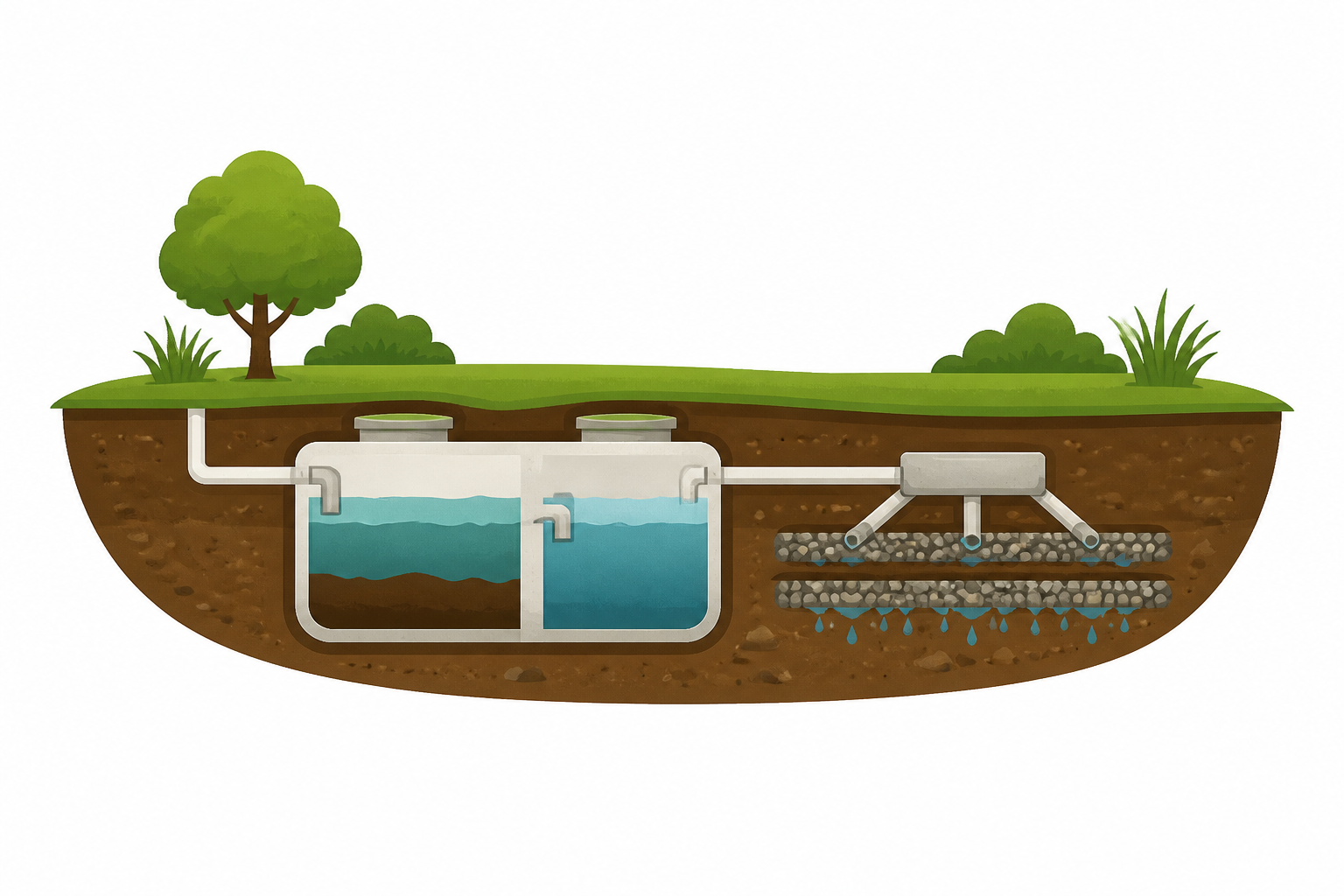
Here’s where I see people get into serious trouble. Many homeowners assume that because a composting toilet doesn’t use water, it automatically falls outside septic regulations. That is not true in most Southern states. In Georgia, North Carolina, and Tennessee, for example, composting toilets still require a permit from your county health department. Some counties require an engineered site plan. Others require a secondary graywater disposal system — meaning a separate drain field for sink, shower, and laundry water — before they’ll approve the composting toilet at all.
I had a client in rural North Carolina last fall who had been living full-time on a property for two years with an unpermitted composting toilet and a graywater system that drained into a rock pit. His county inspector showed up during an unrelated property survey and flagged both. He ended up spending close to $6,500 on a permitted graywater system and retroactive inspections. That was entirely avoidable with one phone call to the county health department before installation.
The NSF International Standard 41 is the benchmark certification you should look for on any composting toilet unit sold in the U.S. It confirms the unit has been independently tested for performance and pathogen reduction. However, NSF 41 certification does not guarantee your county will approve it — always verify local requirements first. The EPA’s voluntary guidelines on non-water carriage systems are a useful reference point, but state and local codes always override them.
What I’ve Seen Fail — And Why
Let me be direct: most composting toilet failures I’ve seen come down to three problems. Oversaturation, under-ventilation, and owner neglect. I’ll walk through each one.
Oversaturation
Composting is an aerobic process. Too much liquid kills the oxygen-loving bacteria you need. Self-contained units like the Nature’s Head are rated for about one to two people in full-time use. Run a family of four through one, and you’ll overwhelm the liquid management system within months. I learned this the hard way early in my career — I recommended a self-contained unit to a family without asking enough questions about household size. They were back on the phone in four months with a soggy, foul-smelling drum. Always size up, not down. If you’re unsure, go with a central system or add a urine-diverting toilet to reduce liquid load.
Under-Ventilation
The vent stack is not optional. Specifically, it needs to be installed with a slight upward angle — typically 1/4 inch per foot — so condensation drains back into the composting chamber rather than pooling in the pipe. A 4-inch vent pipe venting through the roof performs significantly better than a 2-inch sidewall vent in humid Southeast climates. In my experience, adding a small 12-volt muffin fan to the vent stack eliminates almost all odor complaints. The Sun-Mar Excel comes with a built-in fan — that’s one reason I recommend it over cheaper alternatives.
Owner Neglect
A composting toilet is not a set-it-and-forget-it system. It requires adding bulking material — peat moss, coconut coir, or wood shavings — after each use or on a daily basis. The drum or chamber needs to be rotated or turned every few days. Finished compost needs to be removed every three to six months, depending on usage. Homeowners who travel frequently or have inconsistent routines tend to let the system stagnate. As a result, the biology collapses and you end up with a smelly, wet, unfinished mess rather than usable compost.
What I’ve Seen Work — Real-World Success Cases
I don’t want to paint an entirely negative picture, because I have seen these systems thrive. The homesteads where composting toilets perform best share a few common characteristics. Single or two-person households. Year-round mild to warm temperatures — which helps with the composting chemistry. Owners who are engaged, detail-oriented, and genuinely committed to the maintenance routine. And critically, a properly permitted and installed graywater management system handling all non-toilet wastewater.
One of my favorite success stories is a couple in the north Georgia mountains who installed a Clivus Multrum Model M12 in 2017. They ran the chute through their floor into a well-ventilated crawl space, permitted everything through their county, and paired it with a constructed wetland for graywater. Five years later, that system is still running clean. They remove finished compost twice a year and use it on their fruit trees. The total installed cost was around $4,200, including permitting — higher upfront than a basic septic, but they have zero ongoing pump-out costs.
That said, I always tell clients: budget $200–$400 per year for bulking materials and consumables even when everything is working correctly. That’s the realistic ongoing cost most product marketing glosses over.
The Manual That Kept Me From Recommending Composting Toilets Too Soon
When homeowners first ask me about going composting-toilet-only, I realized I was missing the fundamentals myself—the difference between what *sounds* maintenance-free and what actually holds up in real conditions. This manual filled that gap for me before I steered someone wrong.
What works
- Explains the real hygiene and public health codes behind off-grid systems—not just marketing hype—so you know what your county actually allows before you dig in
- Covers hybrid setups (composting toilet + greywater management) that I’ve actually seen succeed where full composting-only systems failed
- Gives you the maintenance reality check: what these systems demand daily, seasonally, and when they need professional help—spoiler, it’s more often than the ads claim
What doesn’t
- It’s written for conventional septic systems first, so the composting toilet section is shorter—you’ll need to supplement with manufacturer docs for your specific unit
- Doesn’t replace a site visit or soil test; it teaches principles, not whether *your* property can actually support what you’re planning
I once confidently told a customer a composting toilet would work for their family of four until I actually read through the maintenance requirements and realized I’d been glossing over the hard part. The Septic System Owner’s Manual is what I should have consulted first.
This post contains affiliate links. As an Amazon Associate, I earn from qualifying purchases at no extra cost to you.