
This post contains affiliate links. As an Amazon Associate, I earn from qualifying purchases.
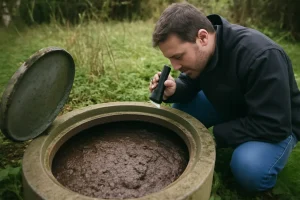
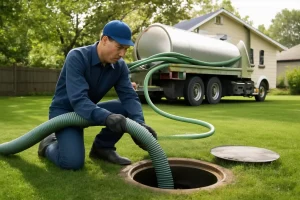
A homeowner in rural North Carolina called me out to inspect a tank that hadn’t been pumped in seven years. His reasoning: he’d been adding a biological supplement to the system religiously, figured it was doing the job, and saw no reason to spend $350 on a pump-out if the additive was working. When I opened that tank, the sludge layer was thick enough that I could barely see the liquid level. The bacteria hadn’t failed. The system hadn’t “broken.” He’d simply believed marketing copy instead of following basic maintenance rules.
That conversation—and dozens like it over my 15 years in the field—is exactly why I’m writing this. Homeowners ask me about Septicleanse all the time. They see it at the hardware store, read five-star reviews online, and wonder: should I be using this? Will it actually keep my system running longer? Can it really reduce how often I need pumping?
I’m going to give you the direct answer, backed by what I’ve actually observed in thousands of inspections. Some of what I’ll tell you won’t be what the marketing wants you to hear. But it’s what you need to know.
What Septicleanse Promises to Accomplish
The sales pitch is consistent across platforms and retailers. Septicleanse and competing biological additives claim to:
- Speed up the decomposition of waste material
- Extend the interval between tank pumpings
- Unclog drains that flow too slowly
- Eliminate unpleasant sulfur odors from the tank
- Revitalize a system showing signs of sluggish performance
The pitch lands hard when you’re facing a $350 pump-out or worried about what “drain field failure” might cost. But the promise is only as good as what’s actually in the bottle and whether it can do what the label suggests.
The Actual Contents and How They’re Supposed to Work
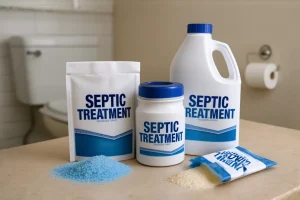
Septicleanse belongs to the biological additive category—no harsh chemicals, no acids, just live microorganisms and enzymatic compounds. The formula combines bacterial strains with enzymes meant to bolster the microbial community that’s already colonizing your tank.
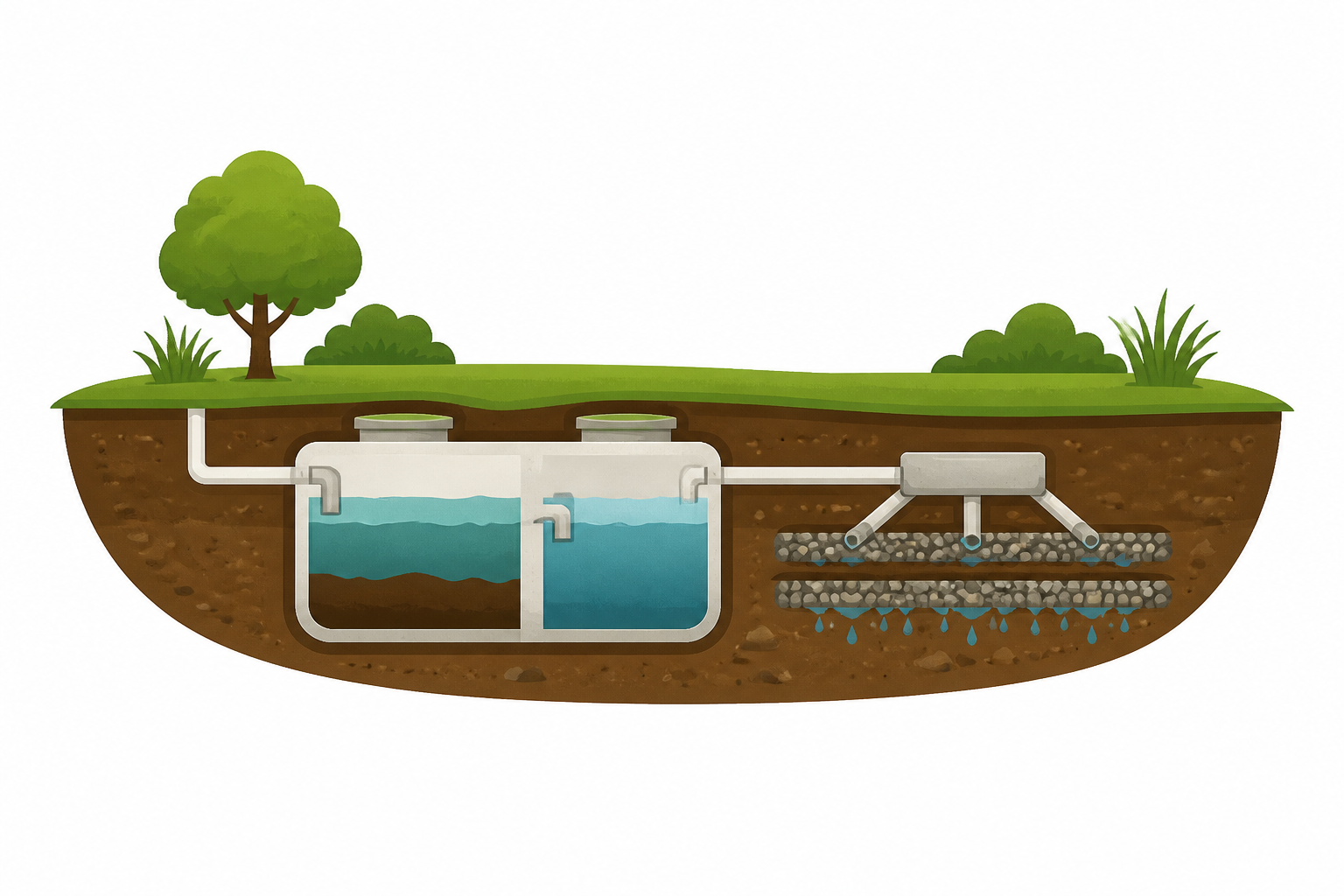
The fundamental principle is straightforward from a biological standpoint: your tank harbors trillions of naturally occurring anaerobic microbes that consume and transform solid waste into liquid and gaseous byproducts. These bacteria exist without any human intervention and accomplish their work through ordinary septic function. The additive’s job is to introduce supplemental bacterial colonies that theoretically accelerate that natural decomposition cycle.
The logic path seems airtight: introduce additional microorganisms and enzymes, achieve faster waste reduction, generate less accumulated sludge, extend the time before your next pumping appointment.
Except the real world rarely works that way.
The Reality: What the Research Actually Shows
I need to be direct about this: the EPA and independent researchers have not identified reliable evidence that bacterial additives like Septicleanse eliminate pumping requirements or repair damaged drain fields. The science on this is clear. If you want to dig into the technical literature, I’ve detailed the research in my broader piece on septic additives, but the short version holds: independent testing does not back up the sweeping claims made in marketing materials.
Why the disconnect? Because your tank already contains an enormous bacterial population. Amplifying that population rarely translates to better system performance—particularly when the underlying issue isn’t a microbial shortage at all.
I’ve conducted inspections on hundreds of systems showing signs of distress. When I investigate sluggish drainage, unpleasant smells, or backup conditions, the root cause is almost never bacterial colony collapse. What I actually find instead:
- Accumulated solids requiring immediate pump-out (by far the leading cause)
- A drain field that’s become waterlogged or partially failed
- A deteriorated or broken baffle inside the tank
- Invasive tree root intrusion into pipes or distribution box
- Electrical or mechanical failure in a pump system or sensor
No bottle of bacteria—regardless of brand, cost, or endorsements—addresses any of those situations. I’ve watched too many property owners spend money on additives when what they really required was a professional inspection and honest assessment.
How I Learned This Lesson
A property owner contacted me about five years back with a common concern: he wanted to extend the time between pumping appointments and had read that biological additives could do exactly that. For two consecutive years, he purchased and regularly applied a Septicleanse-equivalent product, convinced he was building a more resilient microbial ecosystem that would reduce his waste accumulation.
When I inspected the tank, the sludge volume had reached dangerous levels—nearly occupying half the tank’s total capacity. The bacterial cultures hadn’t somehow prevented normal, inevitable solids accumulation. They never could. He faced a $650 emergency extraction and learned an expensive lesson about the difference between marketing messaging and engineering reality.
He wasn’t unintelligent or reckless. He’d simply trusted the product narrative without understanding its actual limitations.
Realistic Situations Where Septicleanse Could Provide Genuine Benefit
I want to be fair here: there are specific, narrow circumstances where introducing supplemental bacteria genuinely makes sense and might produce measurable results:
- Recovery after antibiotic therapy: Prescription antibiotics can selectively eliminate some bacterial populations living in your tank. Introducing fresh bacterial cultures immediately following a course of antibiotics could theoretically accelerate ecosystem recovery.
- Chemical sterilization from excessive disinfectant use: Overuse of household bleach, strong cleaners, or germicidal soaps can temporarily suppress your tank’s microbial balance. A dose of live bacteria might jumpstart recovery in these circumstances.
- Seasonal activation of dormant systems: A property occupied only seasonally or sporadically can develop a sluggish microbial environment from extended inactivity. Inoculating the tank with fresh bacterial colonies before the season picks up might help establish active processing conditions.
- Optional supplementation with a tight budget for maintenance: If the small annual expense provides psychological reassurance while you’re maintaining your regular pump-out schedule, spending $20–30 annually on Septicleanse is neither ruinous nor unreasonable—just understand you’re purchasing a minor supplement, not a system overhaul.
In these specific circumstances, the expense is defensible and the outcome may be modest but real. Don’t, however, elevate “possible minor advantage” into “transformation.”
Where Septicleanse Becomes a Financial Waste
Let me be equally clear about scenarios where Septicleanse simply cannot deliver results:
- Your tank has accumulated solids to dangerous levels and requires immediate pumping
- Your drain field is failing, waterlogged, or has reached the end of its functional lifespan
- Your system contains invasive tree roots that have damaged pipes or distribution infrastructure
- Your tank has structural damage, a deteriorated baffle, or other mechanical failure
- You’re attempting to eliminate pumping maintenance entirely
If you’re banking on Septicleanse to spare yourself from routine pumping obligations, you’re heading toward a substantially larger financial problem down the road.
What I Tell Homeowners: The Straight Assessment
Here’s my straightforward recommendation based on 15 years of field experience:
Septicleanse makes sense for your situation IF you maintain a standard pumping interval (roughly every 3–5 years), IF you view it as a modest supplement rather than a primary solution, and IF the annual cost ($15–30) fits your budget. If you’re the type of homeowner who wants to implement every reasonable practice to optimize system longevity and don’t object to a small recurring expense for added confidence, there’s no compelling reason to skip it.
But—and this cannot be overstated—never treat any additive as a replacement for scheduled pumping or a substitute for professional inspection and diagnosis. A properly functioning septic system demands consistent, routine maintenance. No product circumvents that requirement.
If your motivation for considering Septicleanse is to delay or eliminate pumping, stop here. Pump your system on the schedule that makes sense for your household size and tank volume. If you’re adding it alongside normal, responsible maintenance practices, you’re not wasting your money—you’re just not experiencing a revolution either.