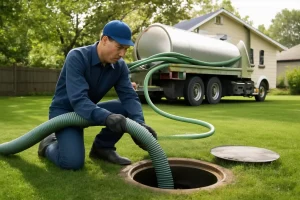
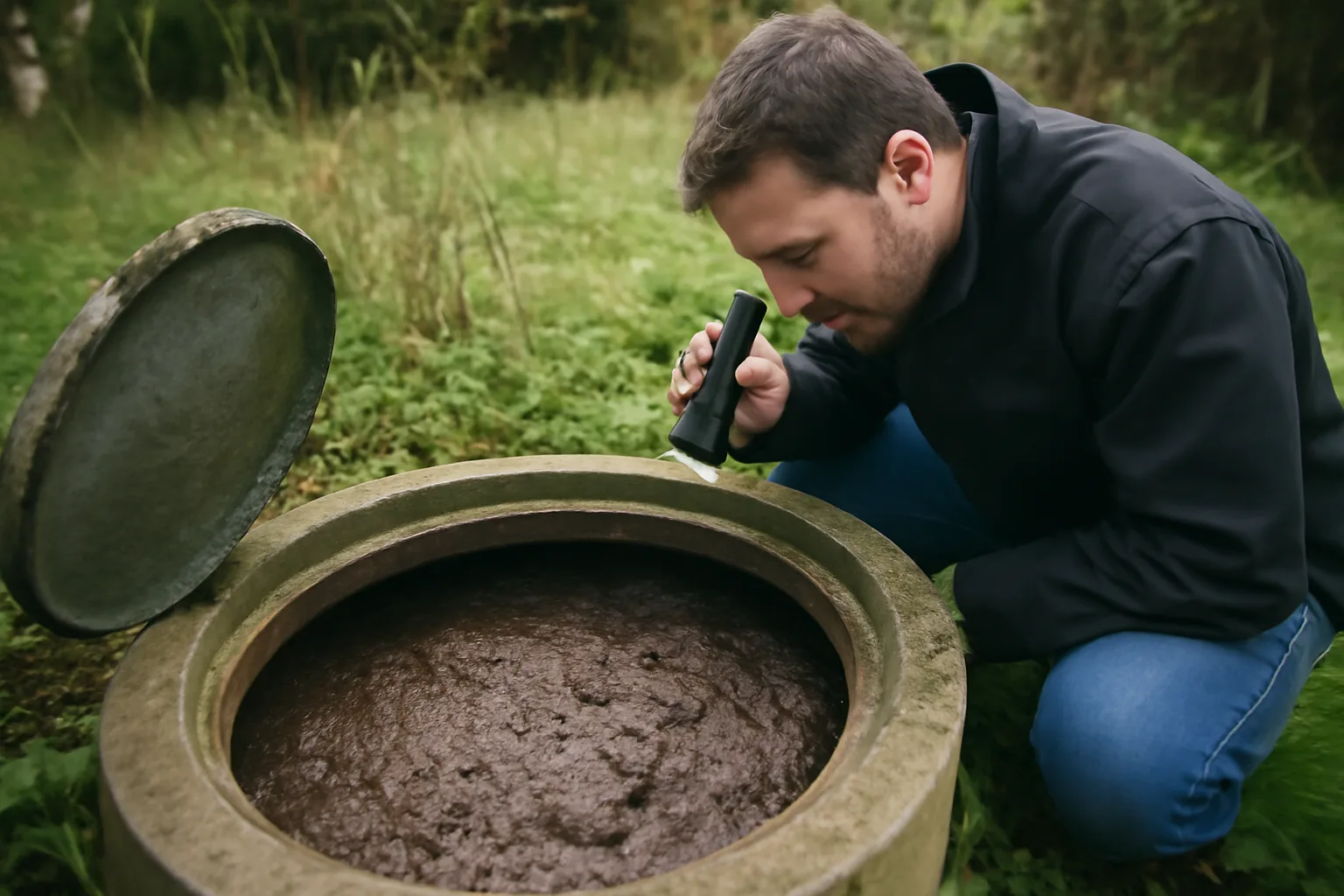

I’ve been inside — metaphorically speaking — hundreds of septic tanks over my 15-year career as an inspector and rural property consultant. But nothing prepares you for opening a tank that hasn’t been touched in two decades. Last fall, I pulled the lid on a 1,000-gallon concrete tank at a property outside of Knoxville, Tennessee. The homeowners had owned the place for six years and had no idea when it was last serviced. Turns out, the previous owners hadn’t pumped it in over 20 years. The septic tank never pumped problems I documented that day were some of the worst I’ve seen — and they’re exactly why I keep coming back to educate homeowners before it’s too late.
Most people don’t think about their septic system until something goes wrong. That’s human nature. But with a septic tank, ignoring it doesn’t just lead to a smelly inconvenience. It leads to complete system failure, contaminated groundwater, and repair bills that can hit $15,000 or more. I’m writing this post to show you exactly what happens inside a neglected tank — and what you can do about it before you end up in the same situation as my Knoxville clients.
What I Actually Found When I Opened That Tank
The first thing that hit me was the smell — a thick, sulfuric wave that told me anaerobic conditions had broken down completely. When I shined my light into the access port, I could see the scum layer had grown to nearly 14 inches thick. EPA guidelines recommend pumping before the scum layer reaches within 3 inches of the bottom of the outlet baffle. We were far past that threshold.
The sludge layer at the bottom was even worse. In a properly maintained tank, sludge should stay below 12 inches. In this tank, I measured approximately 28 inches of compacted sludge — leaving less than 18 inches of liquid working zone. That’s not a tank doing its job. That’s a tank that’s essentially just a pipe carrying raw solids directly toward the drain field.
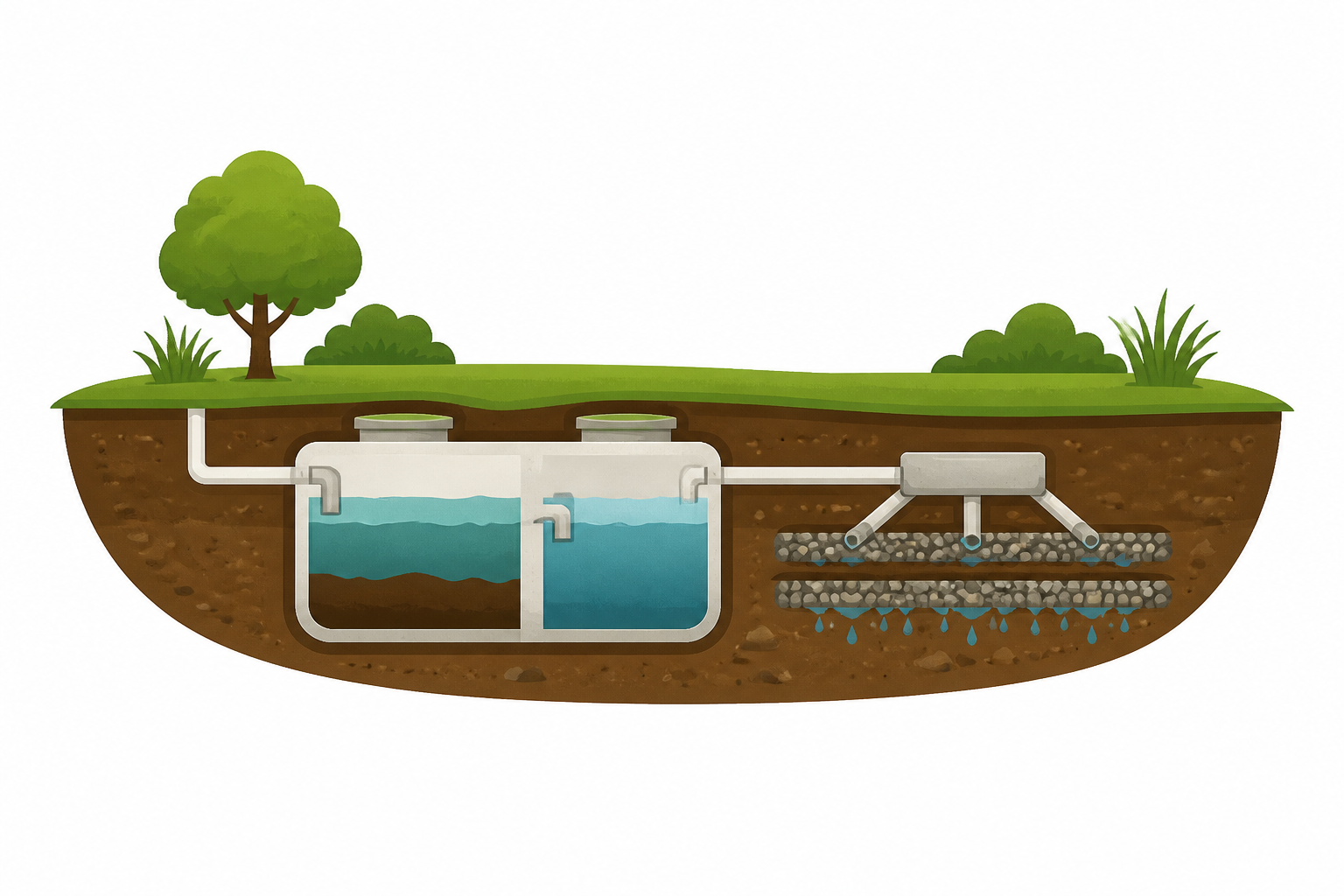
The outlet baffle — a critical component that prevents solids from escaping into the leach field — had partially collapsed. Baffles are typically made from concrete, sanitary tees, or PVC effluent filters. This one was original concrete from what I estimated was a late-1970s installation. Twenty years of hydrogen sulfide gas had eaten through the mortar. Solids had been passing freely into the distribution box for years. That drain field was almost certainly compromised.
The Chain Reaction: Septic Tank Never Pumped Problems That Stack Up Fast
Here’s what most homeowners don’t understand: septic failure isn’t a single event. It’s a chain reaction that builds silently over years. When sludge and scum consume more than one-third of the tank’s working volume, solids begin migrating toward the outlet. Once solids reach the drain field, they clog the biomat — the bacterial layer that naturally filters effluent in the soil. That clog is almost never reversible.
In my experience, a clogged drain field means full replacement. That’s typically $8,000 to $25,000 depending on your soil conditions, local regulations, and available land area. Compare that to pumping costs of $300 to $600 every three to five years. The math is brutal, but it’s straightforward. Neglect costs exponentially more than maintenance.
There’s also a legal dimension here. Most states follow standards derived from the EPA’s Onsite Wastewater Treatment Systems Manual. Many county health departments — including those in Tennessee, Georgia, and Texas — require pumping records as part of real estate transactions. My Knoxville clients couldn’t sell their property without a passed inspection. They ended up spending $4,200 on emergency pumping, baffle replacement, and a distribution box repair before the deal could close. That’s money that could have been avoided entirely.
The Hidden Damage You Can’t See Without Looking
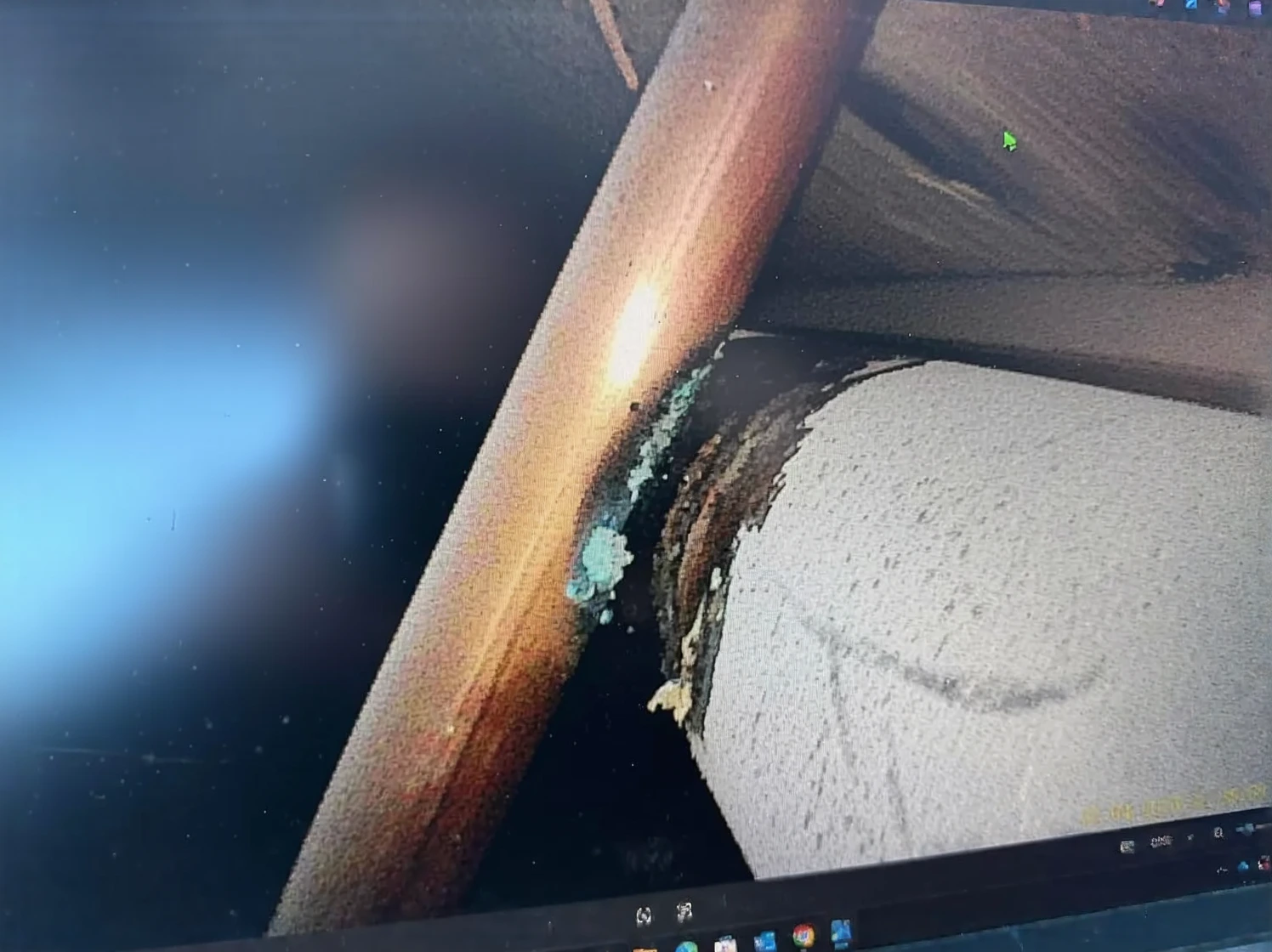
One of the most underappreciated problems with a neglected tank is what happens to the pipes you can’t see. The inlet pipe from the house and the outlet pipe leading to the drain field are both vulnerable. Hydrogen sulfide gas — a byproduct of anaerobic decomposition — corrodes concrete and degrades older PVC over time. I’ve found inlet baffles that crumbled when I touched them. That’s a direct path for toilet paper and solids to short-circuit the tank entirely.
This is exactly why I started using a sewer inspection camera on every job. You simply cannot assess pipe condition from the surface. What looks like a functional system from the lid can have significant damage 10, 20, or 40 feet down the line.
The Tool That Changed How I Inspect Neglected Systems
I’ll be honest — I resisted adding a sewer camera to my kit for years. I thought they were overkill for residential inspections. A client in rural Virginia changed my mind. I had cleared and inspected a tank visually, signed off on the system, and two months later the homeowner called me back. A root intrusion in the outlet line had gone completely undetected. I felt terrible. That was the last time I did a full inspection without running a camera.
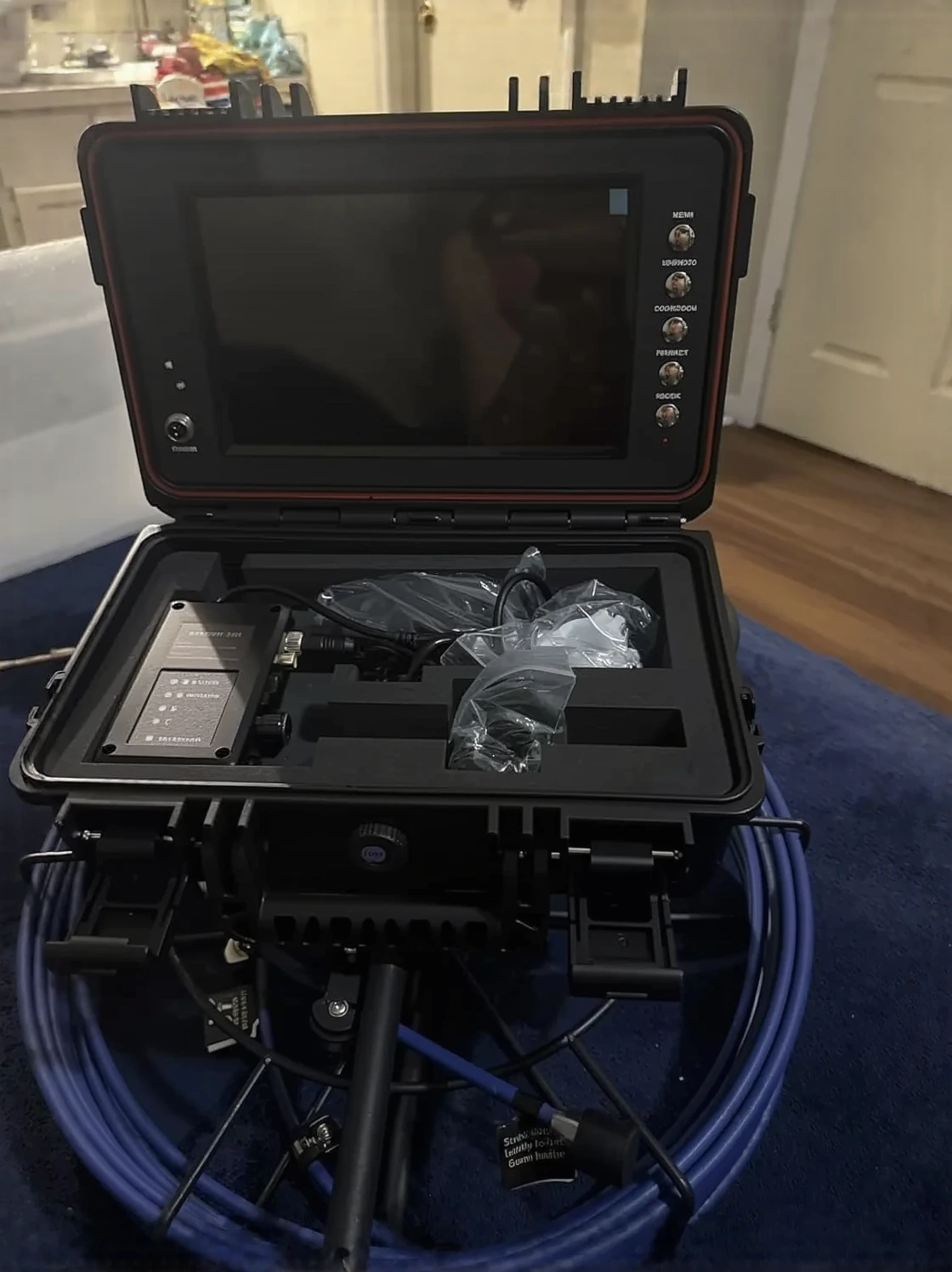
The camera I currently use — and genuinely recommend — is the Sewer Camera with 512Hz Transmitter, Self-Leveling Drain Camera 100ft with Meter Markings, 9″ HD Plumbing Camera Snake with 12 LED Lights, 5100mAh Battery, IP68 Waterproof, 32GB DVR. The 100-foot cable length covers the full run from a typical tank to the distribution box on most residential properties. The 512Hz sonde transmitter is a genuine standout feature — it lets me use a compatible locator above ground to pinpoint exactly where a blockage or break sits without digging a trench first.
The self-leveling camera head is something I didn’t know I needed until I had it. It automatically rotates the image to stay right-side up regardless of pipe orientation. That means I’m reading pipe conditions accurately, not guessing at a rotated image. The 12 LED lights provide solid illumination even inside a 4-inch sewer pipe caked with buildup. Battery life on the 5,100mAh pack runs about four hours of continuous use — enough for a full inspection day. The built-in 32GB DVR saves footage directly to the unit, which I then share with clients as part of their inspection report. That documentation alone has prevented two disputes with clients who questioned my findings.
A Budget-Friendly Option for Homeowners Doing Their Own Checks
If you’re a homeowner rather than a professional, you may not need a 100-foot professional-grade camera. In that case, take a look at the Teslong Two-Way Articulating Borescope with Light. It’s a 5-foot articulating inspection camera — more suited for checking accessible cleanouts, inlet baffles, or the first few feet of pipe near the tank access port. The two-way articulation gives you more control than a rigid scope. Specifically, it’s useful for checking outlet baffle condition without having to fully enter or disturb the tank environment. It won’t replace a full pipe run inspection, but for a homeowner doing basic annual checks, it’s a smart, affordable starting point.
How to Know If Your Tank Is Overdue
The standard pumping recommendation comes from the EPA: pump every three to five years for a typical household of four people with a 1,000-gallon tank. That interval changes based on household size, tank volume, and what goes down the drain. Garbage disposals, for example, increase sludge accumulation rates significantly — sometimes enough to cut the pumping interval in half.
Here are the warning signs I tell every client to watch for:
- Slow drains throughout the house — not just one fixture
- Gurgling sounds from toilets or drains after flushing
- Sewage odors inside the home or near the drain field area
- Unusually green or lush grass directly over the drain field
- Wet, spongy ground above the leach field lines — even in dry weather
- Sewage surfacing above ground — this is a health emergency
Any one of these symptoms warrants an immediate inspection. Don’t wait for two or three to appear together. In my experience, by the time a homeowner notices multiple symptoms, the system has already sustained damage that goes beyond simple pumping.
What a Proper Inspection Should Cover
A real inspection isn’t just lifting a lid and glancing inside. A thorough assessment covers sludge and scum layer measurements, inlet and outlet baffle condition, tank structural integrity, distribution box flow, and a camera run of the outlet line. I use a tape measure with a sewage depth finder (basically a weighted float on a graduated rod) to get accurate layer readings. Those numbers go directly into my written report. If a pumper doesn’t give you measurements, ask for them — or consider hiring a separate inspector.
When to Call a Professional — And When You’re Truly Out of Your Depth
I’m a strong believer in homeowner education. Knowing your system is the first step to maintaining it. However, there are situations where DIY is not appropriate — and I’d rather be straight with you than have someone get hurt or make things worse.
Call a licensed septic professional immediately if you have sewage surfacing above ground. That’s a public health hazard under most state codes. Many jurisdictions require reporting to the local health department. Don’t pump it yourself — the situation requires a licensed operator with proper equipment and waste disposal permits.
Also call a pro if your tank hasn’t been pumped in more than seven years. At that point, the sludge and scum levels are almost certainly beyond safe DIY assessment territory. The gases inside a neglected tank — hydrogen sulfide, methane, and carbon dioxide — are lethal in confined spaces. OSHA classifies septic tanks as permit-required confined spaces under 29 CFR 1910.146. Entry requires specific training, atmospheric monitoring, and ventilation equipment. No camera or curiosity is worth your life.
For standard maintenance inspections, annual visual checks of the access risers, and monitoring drain field conditions — those are things a diligent homeowner can absolutely manage. Use the tools available to you. Document what you find. And build a relationship with a licensed pumper in your area before you need one urgently.
Final Thoughts: Don’t Let a Forgotten Tank Become a Catastrophe
The septic tank never pumped problems I documented in Knoxville weren’t unusual. Across 15 years of inspections, I’ve seen the same pattern dozens of times. A home changes hands. Records get lost. Life gets busy. Nobody pumps the tank. Then a buyer’s inspector opens a lid and finds a 28-inch sludge layer, a collapsed baffle, and a drain field on life support.
The fix is simple and genuinely inexpensive compared to the alternative. Pump every three to five years. Know your warning signs. Use inspection tools — like the sewer camera I carry on every job — to see what your eyes can’t reach. And keep records. A folder with your pump-out receipts and inspection reports is worth real money at closing time.
Your septic system will quietly do its job for decades if you give it basic attention. Ignore it, and it will send you a bill you won’t forget. I’ve seen both outcomes. Trust me — the maintenance path is a lot more pleasant for everyone involved.
This post contains affiliate links. As an Amazon Associate, I earn from qualifying purchases at no extra cost to you.