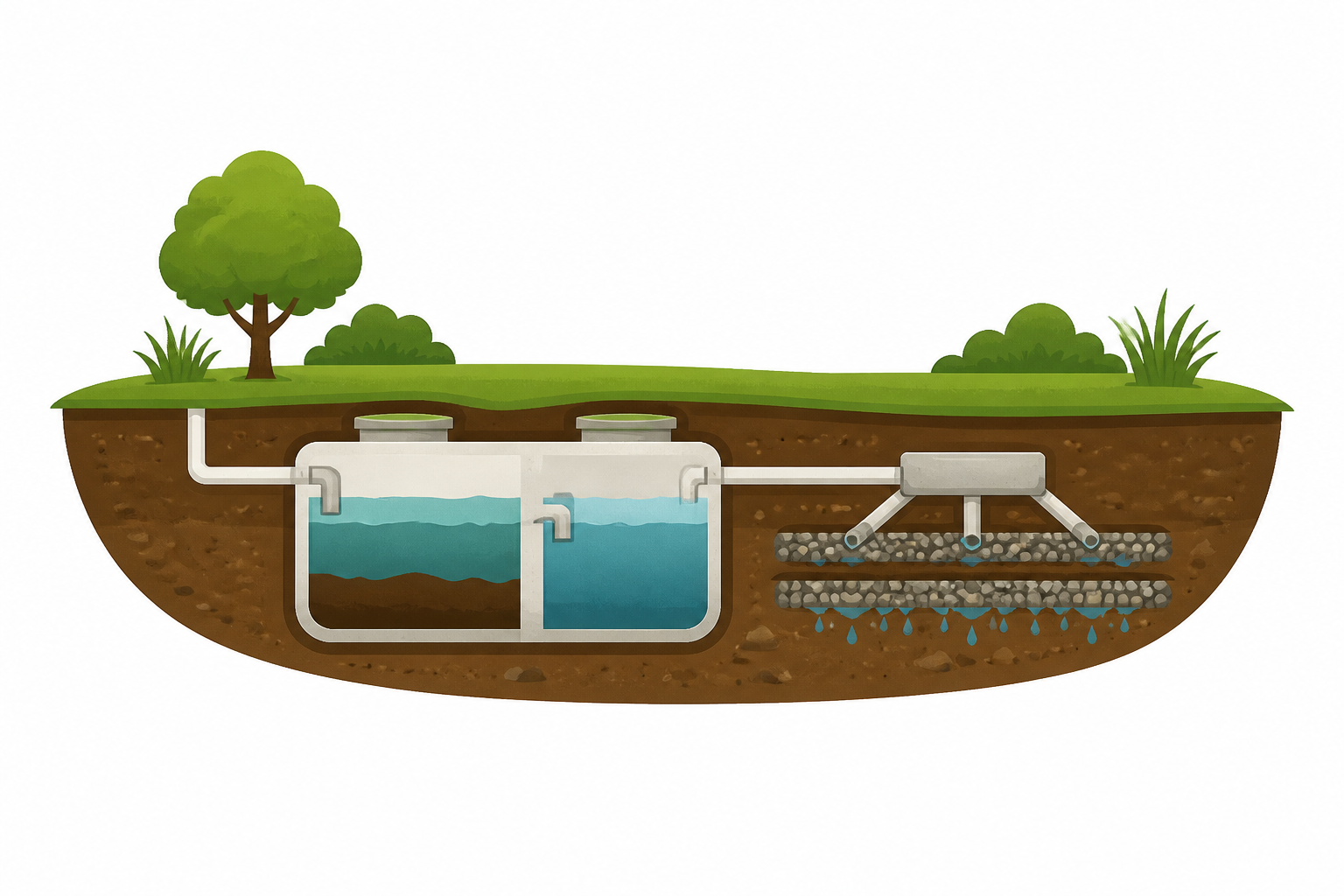

A drainfield can collapse from the weight of a single truck passing over it, or from tree roots that suffocate it from the inside. Both leave you with the same result: tens of thousands in replacement costs and months without proper wastewater treatment. Most homeowners never realize the damage until it’s underground and irreversible.
During my fifteen years evaluating septic performance across rural properties, I’ve inspected and serviced well over two thousand individual systems. The consistent pattern I’ve observed points to two particular habits that compromise drainfields faster than anything else: heavy vehicle traffic crossing the field area, and tree establishment directly above distribution lines. This article breaks down both scenarios, explains the mechanics of what deteriorates underground, and walks you through prevention strategies that actually work.
The Mechanism Behind Root Damage to Your Drainfield
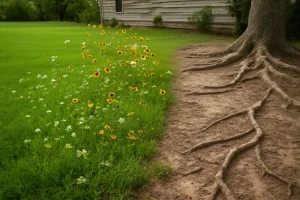
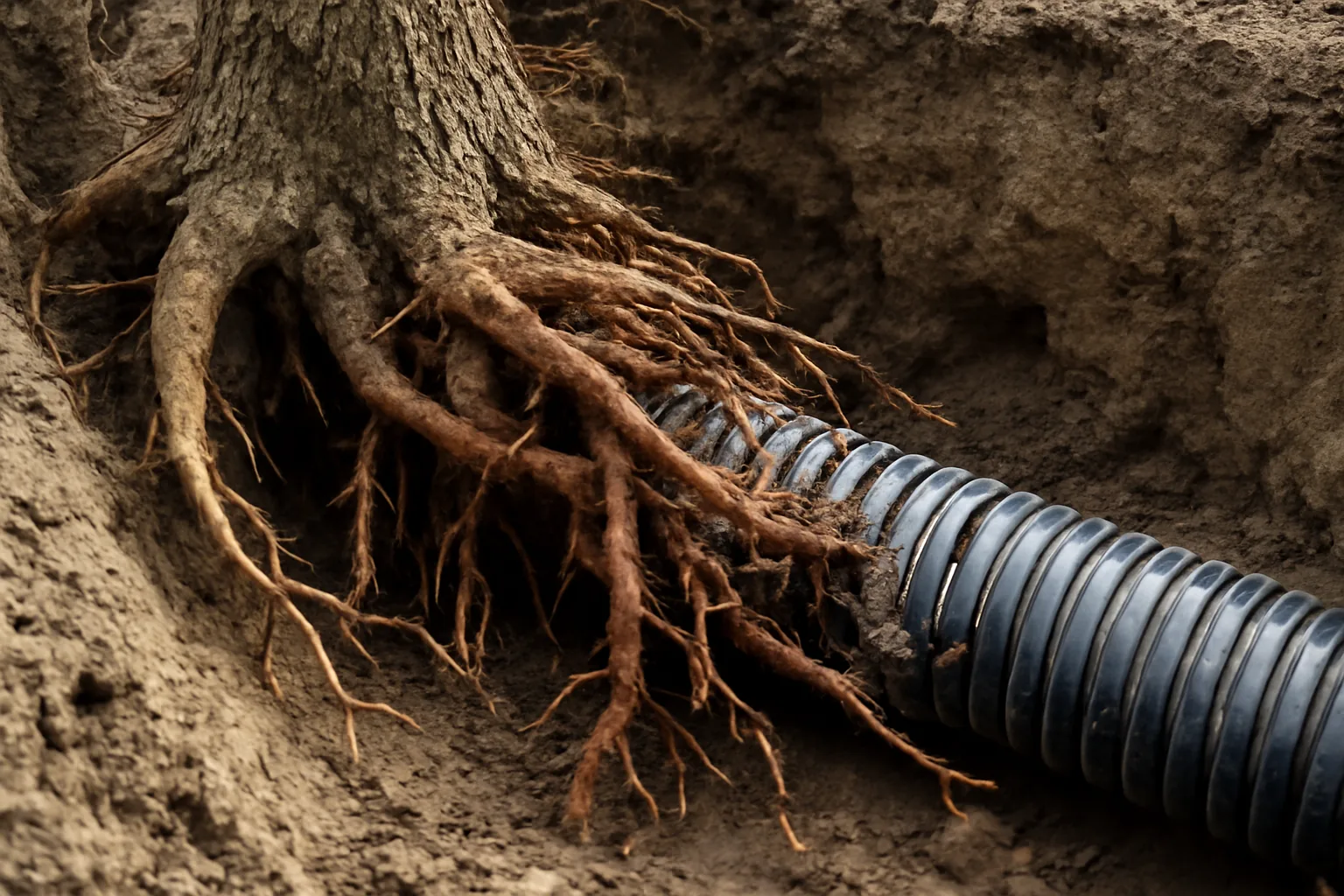
Most people imagine roots as thin, hair-like structures. The truth is more alarming. A mature tree develops a root network that actively hunts for water and nutrients with remarkable persistence. Your drainfield delivers both in abundance—warm, nitrogen-rich effluent flowing continuously through buried pipes represents an irresistible food and water source. Roots don’t need an existing opening; they penetrate straight through the intentional perforations that allow treated liquid to escape into the surrounding soil.
Once established inside a pipe, roots thicken progressively. Over seasons and years, the accumulated root mass expands with enough force to cleave pipe walls apart. I’ve extracted distribution piping where the interior was packed so densely with roots that virtually no space remained for effluent passage. The system response is predictable: liquid backs into your tank, surfaces in patches across the yard, or fails to disperse properly through the field. Each outcome requires expensive excavation to remedy.
Which tree species you select makes an enormous practical difference. Willows, silver maples, cottonwoods, and sweetgums pose the highest risk—their root systems can extend two to three times farther than their visible canopy spreads. A willow displaying a 20-foot crown overhead may send roots 40–60 feet horizontally underground. Even seemingly harmless selections like dogwoods or ornamental cherry varieties can create problems if positioned within 10 feet of your field lines. My field-tested guideline: maintain at least 25 feet of clearance between any woody plant and your drainfield components, and extend that to 30 feet for larger shade trees.
Documented Failure Modes When Trees Colonize Your Drainfield
Across my career, I’ve witnessed a consistent set of failure mechanisms repeat themselves. These aren’t hypothetical scenarios—they’re the actual damage patterns I excavate and document regularly.
Split and Ruptured Lateral Piping
The single most frequent damage condition I find involves ruptured field lines. Roots growing inside pipes create radial expansion pressure that standard 4-inch perforated pipe—including PVC variants—was never engineered to withstand. When lateral rupture occurs, effluent concentrates in one spot rather than distributing evenly across the treatment area. This localized saturation triggers rapid biomat formation. My field records show that a breached lateral in clay-based soils typically reaches complete failure within 18–24 months after initial root colonization begins.
Root Clogging Inside Distribution Boxes
Root invasion doesn’t stop at the lateral lines themselves. Roots follow pipes backward toward the distribution box—the manifold that directs effluent into your separate field runs. I’ve opened distribution boxes where roots occupied 80 percent of the interior space. Once this blockage forms, the proportional split across field lines becomes wildly unbalanced. One line receives excess flow and drowns while others receive insufficient throughput. The over-stressed line fails while the under-utilized lines remain inactive. A replacement distribution box involves $300–$600 for components and installation labor. A replacement field line that’s been destroyed by uneven saturation represents a far steeper expense.
Compaction of Soil from Tree Root Expansion at Base
As trees age, the flared root mass at the base expands progressively. This physical expansion compresses the overlying soil layer. When soil becomes compacted, its percolation capacity—the ability to absorb and process effluent—drops sharply. The EPA’s published guidance on Onsite Wastewater Treatment Systems specifically identifies soil compaction as a primary failure mechanism in drainfield systems. Once the soil’s percolation rate falls below the design specifications your system relies on, pumping your tank more frequently will not solve the underlying problem.
The Equally Serious Risk From Vehicular Traffic Over Your Drainfield
I discovered this hazard early in my inspection career during a routine evaluation where the homeowner assured me the drainfield was performing well. Walking the property revealed tire impressions in the grass running directly through the field area. The historical inspection report indicated that trenches had been set at 18 inches below the surface. A pickup truck transmits roughly 3,000–4,000 pounds per axle, and that weight doesn’t dissipate at the surface—it transfers downward through the entire soil column.
At 18 inches depth, your gravel bed and distribution pipes sit squarely within that pressure zone. During a later excavation, I uncovered lateral pipe that had been compressed to nearly half its original height—effectively flattened. No flow was occurring through those crushed sections. The system had been non-functional for years. The owner had been maintaining a pumping schedule of every six months just to sustain basic toilet operation. He’d misdiagnosed his situation as a “low-capacity” system when he actually had a structurally compromised one.
The same crushing force applies when RVs, boat trailers, loaded dump trucks, heavy equipment, or full-size all-terrain vehicles drive across the field area. A single pass by a heavily laden commercial truck can permanently collapse a trench. Residential drainfield installations are typically engineered to withstand only soil overburden—usually maximum coverage depths of 24 inches per state construction guidelines. Vehicle loads generate forces far exceeding the system’s design tolerance.
Appropriate Vegetation for Growing Above Your Drainfield
The solution isn’t exposing bare ground. Leaving soil uncovered creates its own set of problems: surface erosion, soil hardening from direct rainfall, and temperature fluctuations that disrupt the microbial ecosystem responsible for effluent processing. The correct approach involves shallow-rooted, herbaceous groundcover without woody stems.
Turf grass stands as the proven optimal choice. Fescue varieties, Kentucky bluegrass, and Bermuda grass all succeed well. Root development stays confined to the upper 6–8 inches of soil. Grass stabilizes the soil profile, facilitates evapotranspiration—which paradoxically enhances drainfield function—and poses no structural risk to buried components. Native wildflower seed mixes can also work effectively provided you select species featuring shallow, diffuse root architectures.
Maintain strict avoidance of: any arboreal or shrubby species, ornamental grasses including pampas and miscanthus varieties, bamboo in all forms, and vegetable beds requiring deep soil disturbance. Bamboo warrants particular emphasis—it spreads through subsurface rhizomatous runners and can infiltrate a drainfield from distances exceeding 30 feet. I’ve encountered situations where bamboo installed for aesthetic screening on one property boundary traveled beneath landscaping features to colonize a drainfield on an entirely different section of the lot within eight years.
Protective Measures When Existing Trees Remain Near Your Drainfield
Most homeowners confront a realistic challenge: mature trees, shrubs, or bamboo already occupy property near the drainfield location. Removing everything isn’t always practical or desirable. What actionable steps remain available?
Root deflection barriers represent the most practical solution when complete removal isn’t feasible. A well-installed root barrier redirects downward-growing roots laterally and away from buried infrastructure. This same technology protects sidewalk perimeters and driveway edges—the identical protective principle applies when safeguarding drainfield components. Installation depth proves critical to effectiveness. You require a barrier penetrating 18–24 inches below grade to intercept lateral root movement before it reaches your field lines.
Physical Root Deflection: The Preventive Barrier Worth Installing
Should you add trees anywhere in proximity to your drainfield, a root deflection system transforms from optional to essential—it’s your practical hedge against the $12,000 replacement scenario. Even “safe” tree species can shock you when their roots encounter the consistent moisture your drainfield provides; a buried barrier forces roots to grow horizontally rather than penetrating downward into your distribution system.
What performs reliably
- Sixty-mil thickness reliably stops even aggressive root systems—thinner materials I’ve observed in the field have succumbed to penetration within years, whereas this specification endures across a complete lifespan of tree growth.
- A 20-foot continuous run addresses typical residential field line spans without requiring joints, which represent the vulnerable entry points where roots locate gaps and push through.
- Positioning it before you plant requires a single afternoon of effort; retrofitting it after root damage has occurred demands $12,000 in excavation, removal, and replacement labor spread across an extended work period.
What does not work
- It cannot reverse preexisting root intrusion—the barrier functions as a preventive measure only, not as a treatment for damage that has already occurred.
- The effectiveness relies entirely on proper burial depth and horizontal coverage; insufficient installation defeats the protective purpose.
I’ll admit: when I first measured my own drainfield to install one, I wondered if I was being paranoid about a tree I wanted to plant 15 feet away. Then I remembered that Tennessee homeowner’s face when she realized those fifteen-year-old oaks had cost her a new system. That’s when paranoia became common sense. Get the West Bay 50ft x 24in x 60mil Tree Root Barrier and install it before you dig your first planting hole.
This post contains affiliate links. As an Amazon Associate, I earn from qualifying purchases at no extra cost to you.
![Customer photo of [specific item/situation shown - e.g., septic system damage, tree roots near drain field, etc.]](https://backyardseptic.com/wp-content/uploads/2026/06/B0BF12PW67-1.webp)
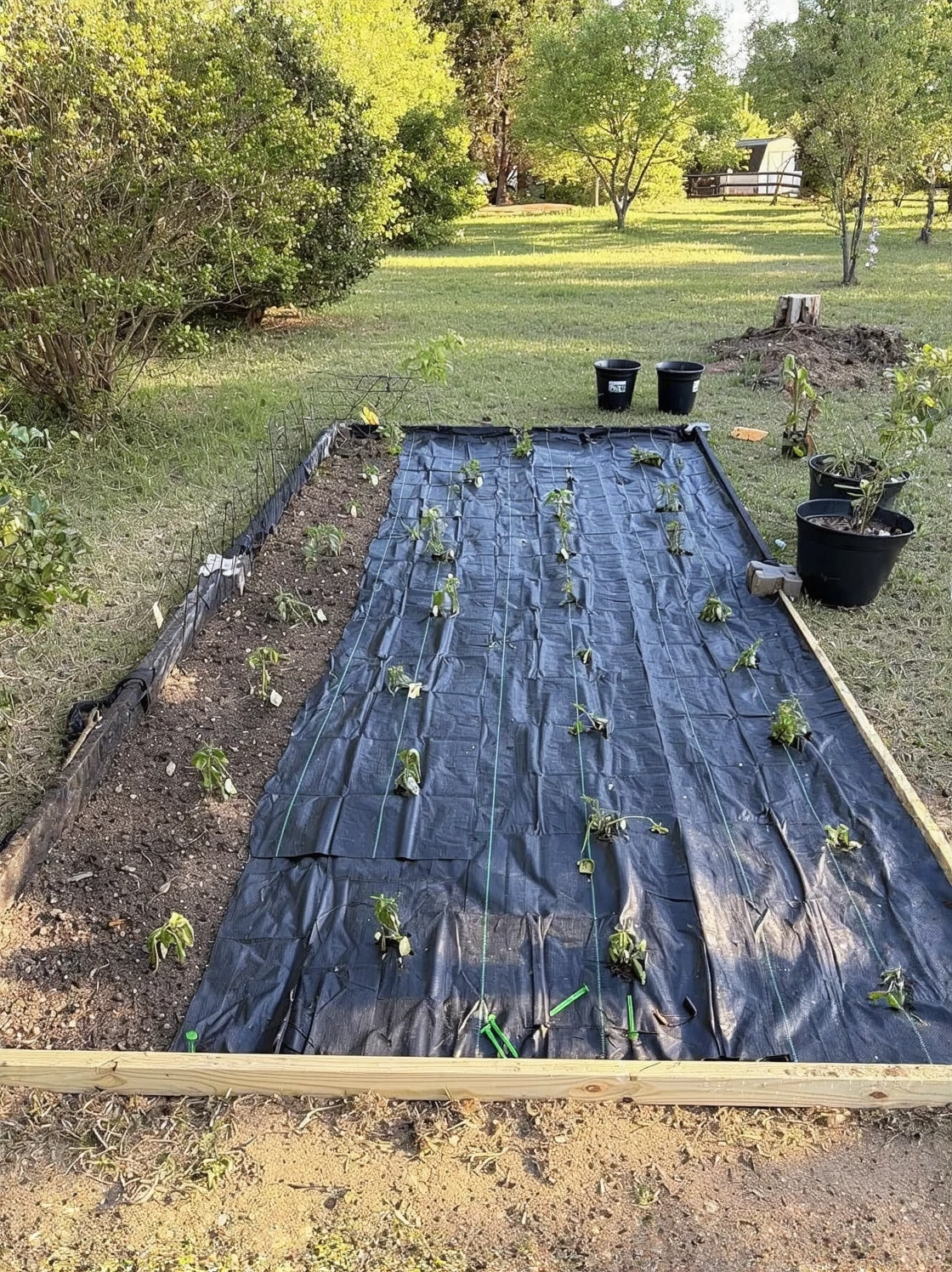
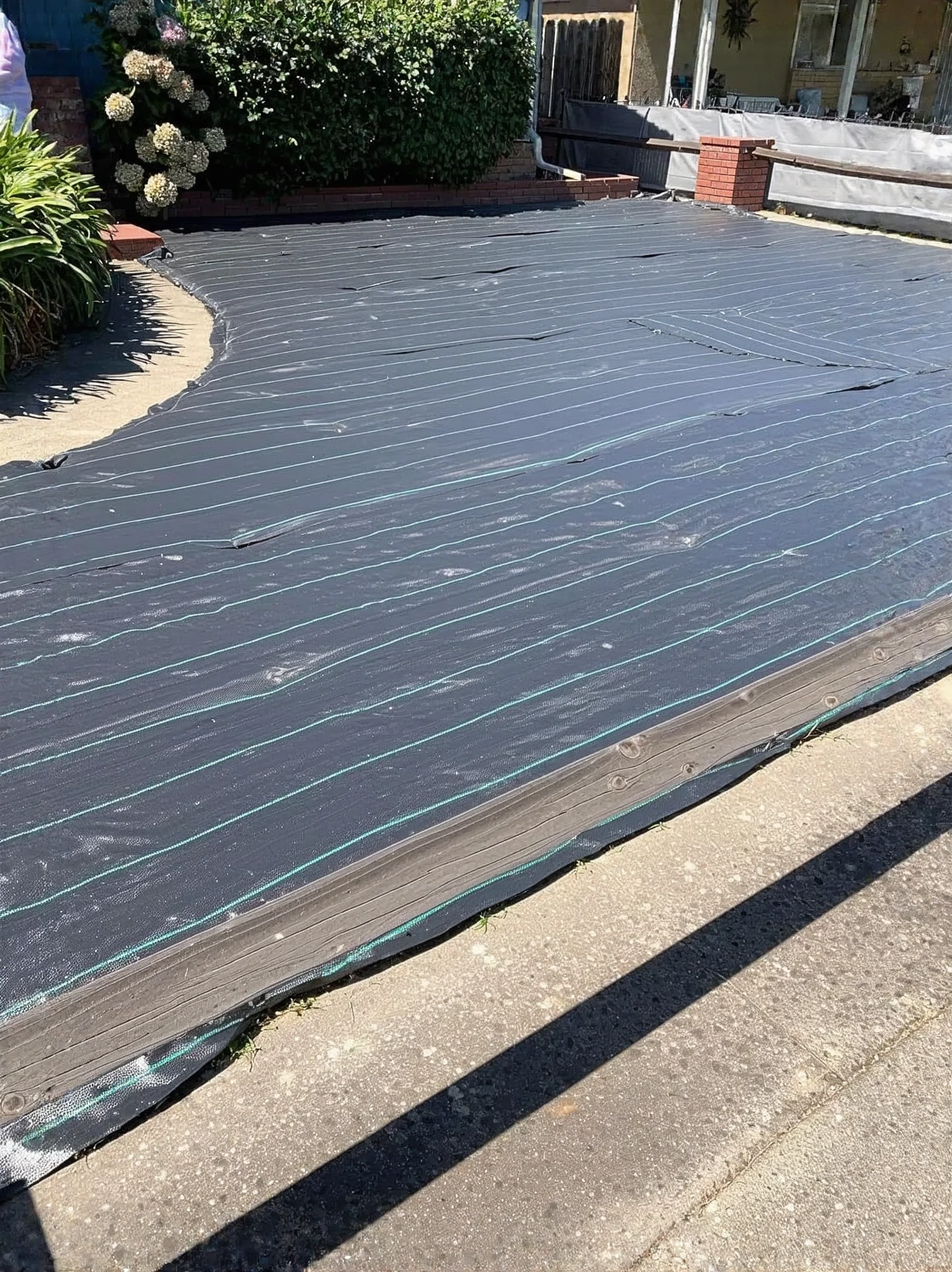
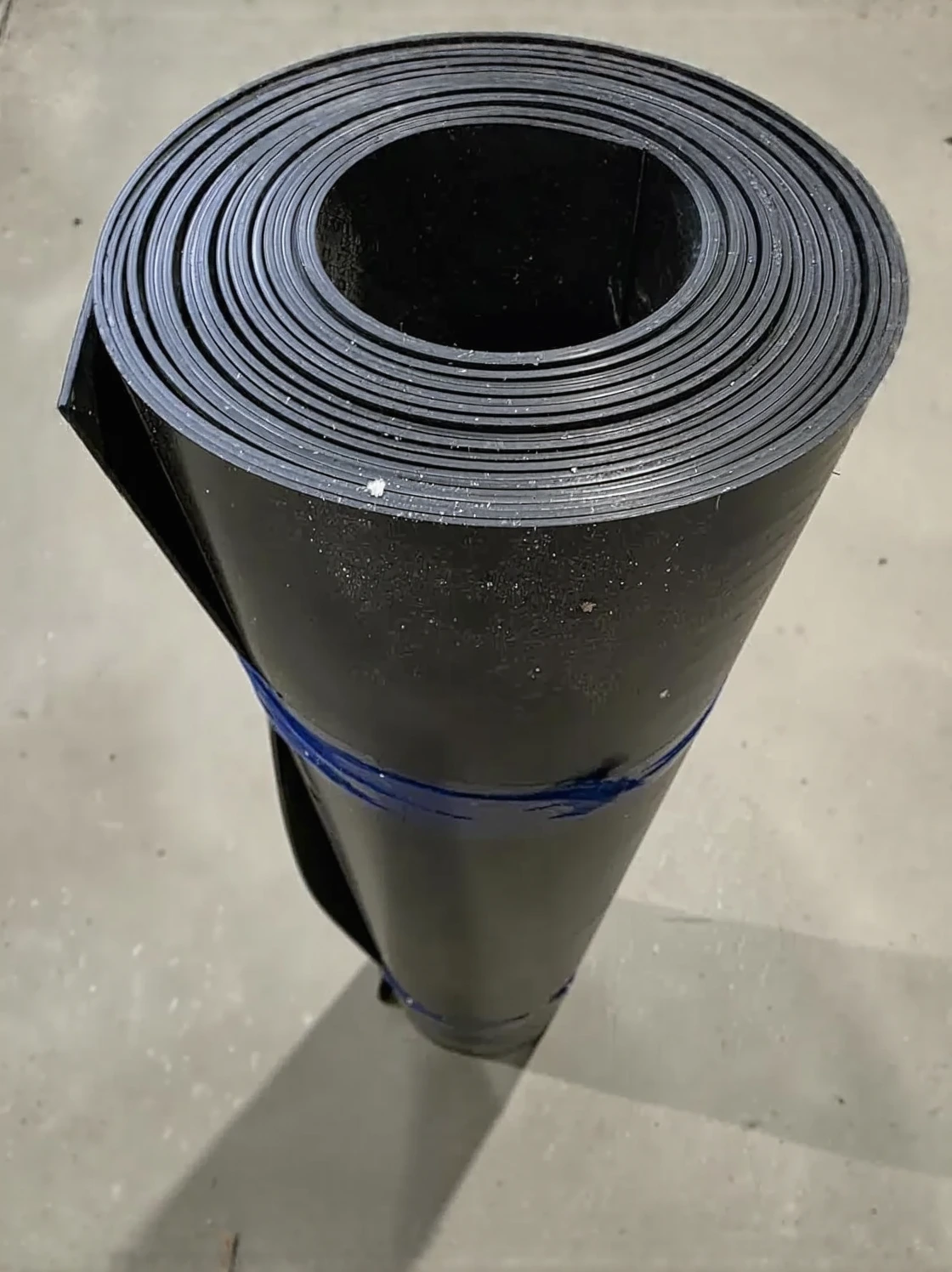
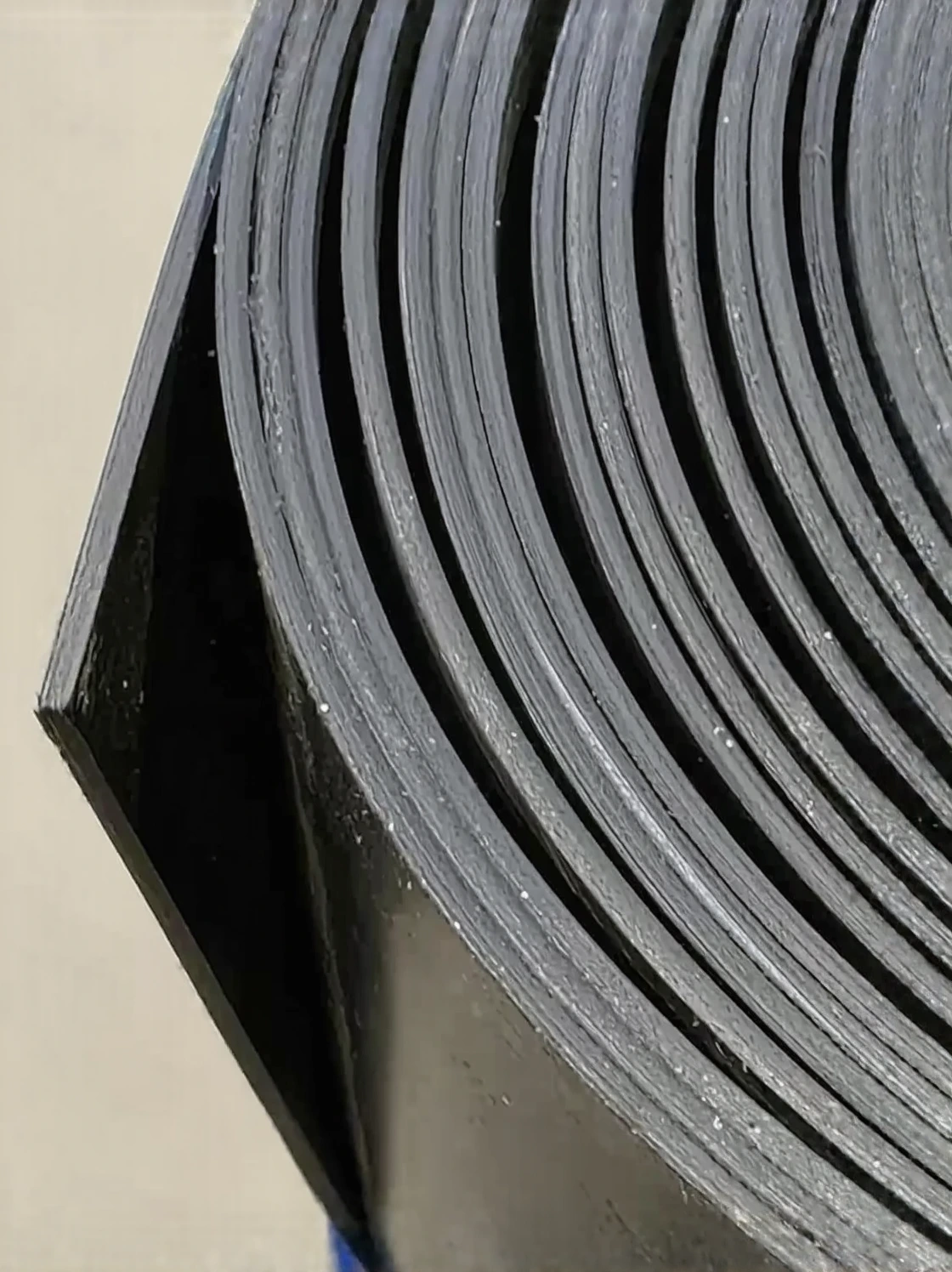
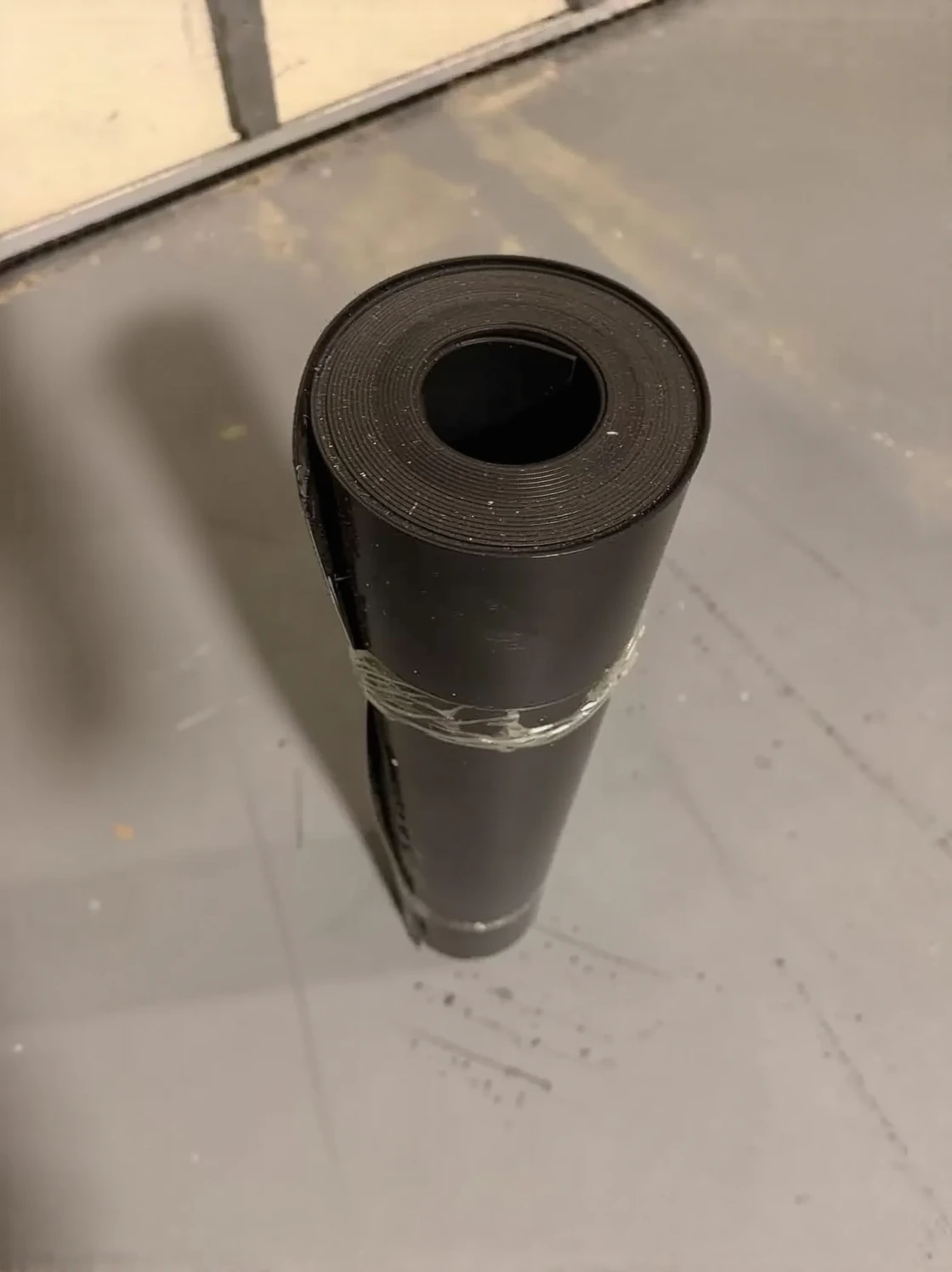
West Bay 50ft x 24in x 60mil Tree Root Barrier
I’ve watched thinner barriers fail within years; this 60mil thickness holds through a tree’s whole life.
Check Price on Amazon →