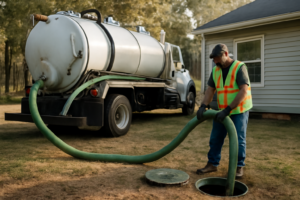

Right now, standing over a tank I’m inspecting on a property outside Spartanburg, the smell hits you first—that thick, sour bacterial stew backing up toward the inlet. The homeowner’s been quiet about maintenance for seven years. Her yard holds water after rain, and you can hear the pump strain when it cycles. This Tuesday-morning panic call costs her $2,400 in emergency pumping, riser work, and field flushing because she never set money aside for her system. Nine years of ownership, zero dollars invested. I’ve walked into this exact scene so many times across rural Georgia, Alabama, and the Carolinas that it stopped surprising me years ago.
The reality that catches most homeowners off guard is simple: a septic system isn’t a passive fixture. It’s working machinery that accumulates solids, wears internal parts, and demands attention. But that doesn’t mean you’ll face financial shock. If you establish a sensible spending plan and follow a few steady practices, your system can reliably serve you for 30 years or longer without any surprise bills. That’s the exact approach I share with neighbors, and it’s the same system my wife and I stick to on our own place.
Where Most Homeowners Miss the Mark on Septic Cost Planning
The most common error I witness is viewing septic maintenance as something you handle only when disaster strikes, rather than treating it as a predictable recurring cost. People allocate nothing, then panic when something breaks. A close second is seriously underestimating the actual price tag for basic service in this era. I learned this early on when I gave a friend a number based on 2007 pump truck pricing. By 2012, I was looking at costs that had climbed nearly 30 percent. Fuel surcharges, tipping fees at disposal sites, and technician labor have all moved upward year after year.
Across the rural Southeast right now, a standard pump-out for a 1,000-gallon tank runs anywhere from $275 to $500, depending on the distance your truck needs to travel. If your property sits deep in remote stretches of rural Alabama or the high country of Georgia, you’re adding another $50 to $100 for travel time alone. A thorough inspection including visual review and effluent testing sits on top of that at $150 to $300. These aren’t luxuries—the EPA’s guidance on residential septic systems calls for inspection every 1 to 3 years and pumping every 3 to 5 years in a four-person household.
Your actual schedule shifts based on family size, how old your system is, and the tank’s capacity. A household of five living with a 1,000-gallon tank might require service every 2 to 3 years. A two-person household in a 1,500-gallon tank could go 5 to 6 years between pumpings without risk. Pinpointing your household’s exact profile becomes the starting point for building a realistic septic budget.
The Numbers You Need: Setting Your Annual Septic Reserve
I recommend breaking your septic spending into three separate categories. Imagine three different buckets: one for regular maintenance, one for smaller problems, and one for major work. Each gets funded independently so you’re never caught without resources when something needs fixing.
Routine Service Reserve
Start by dividing what you’ll pay for pumping by how many years pass between pumpings. If your pumping cost is $350 and you pump once every 4 years, that’s $87.50 annually. A professional inspection every two years at $200 translates to $100 per year. Add a five-year check on the baffle and risers—roughly $125—for about $25 each year. For most homeowners in the rural Southeast, putting away $200 to $250 annually for routine work covers everything. Open a separate account and don’t withdraw from it for anything else.
Smaller Repairs Reserve
Smaller problems include replacing a damaged baffle ($150 to $300), repairing a damaged distribution box ($200 to $450), or installing a new effluent filter including installation ($100 to $250). These types of issues typically surface every 5 to 10 years on a system receiving proper care. Setting aside $150 annually for smaller repairs means you’ll have accumulated $750 to $1,500 by the time one of these situations appears—which usually matches what you’ll actually need to spend.
Major Work Reserve
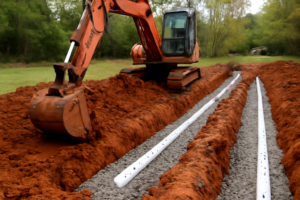
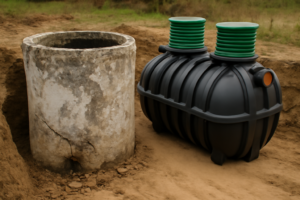
This is the line item that gets skipped, and it’s exactly what creates financial hardship when it’s needed most. Replacing a full drain field in rural Georgia costs between $4,000 and $12,000, depending on soil conditions, system footprint, and health department regulations. Replacing a tank itself ranges from $3,000 to $7,000. I urge everyone who asks me to set aside $500 yearly to a major repair cushion. After a decade, that’s $5,000 sitting in reserve—enough to handle most significant field problems without going into debt.
Combining all three categories, I tell typical rural Southeast homeowners to budget roughly $850 to $900 annually for their septic system. Spread across twelve months, that’s about $75 each month. Most households spend significantly more than that on subscription services they barely watch.
Practices That Lower Your Septic Spending Over Time
Setting aside money represents one piece. The other piece—equally important—is keeping your system performing well between professional visits so you’re not burning through that reserve fund ahead of schedule. In my work, the homeowners with the fewest septic emergencies consistently follow the same patterns.
First comes water conservation. A leaking toilet flapper wastes roughly 200 gallons daily through your system. This over-saturation destroys the drain field and encourages biomat development—the sludgy organic barrier that eventually clogs the surrounding soil. Repair leaks the moment you discover them. Second, keep your septic system clear of garbage. Wipes branded as “flushable,” feminine products, grease, and used coffee grounds destroy drain fields. I’ve opened inspection ports to find enough accumulated wipes to fill a whole bucket. Nobody wants that image.
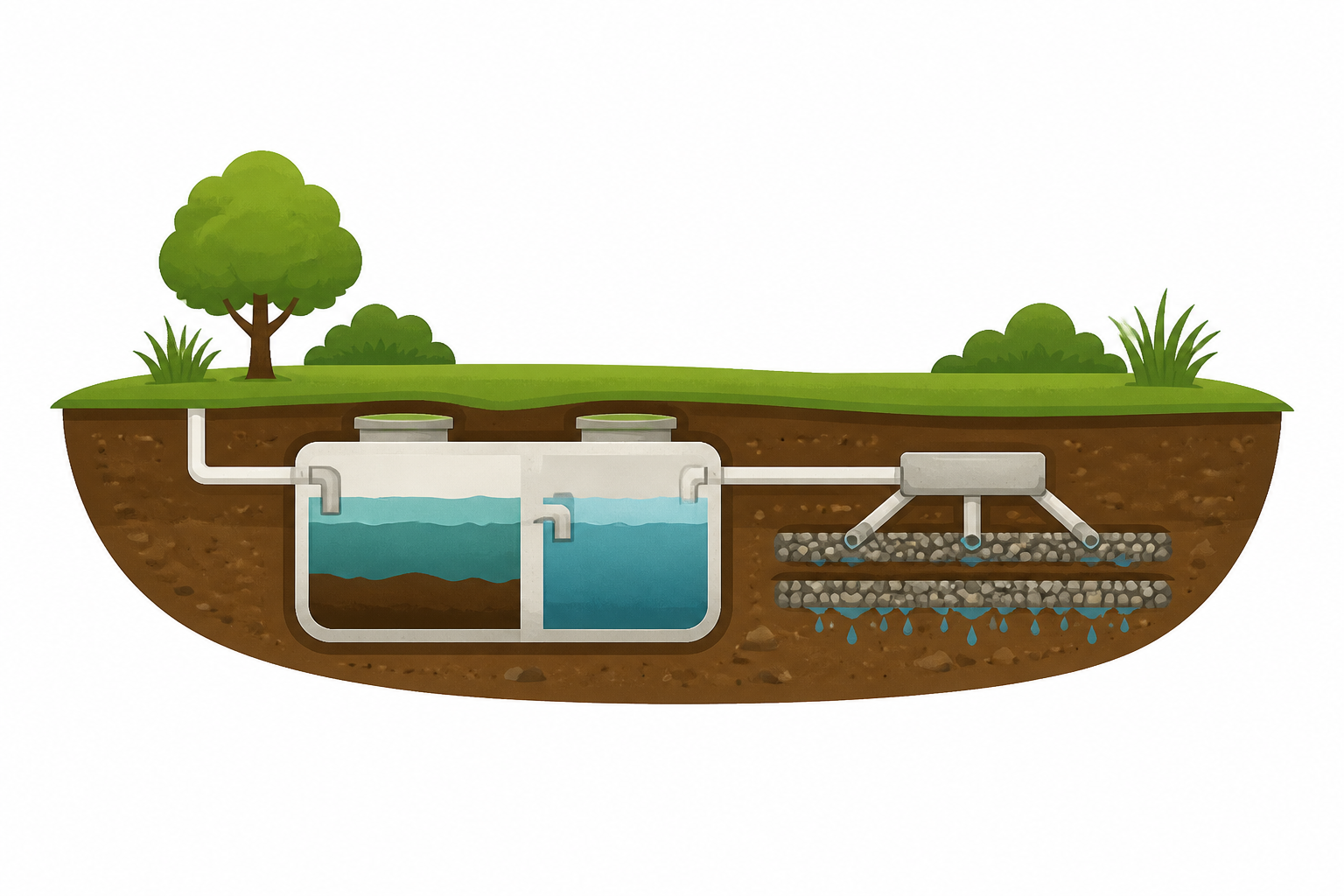
Third—and I want to focus on this piece—the homeowners who stay ahead use steady bacterial supplementation. Your tank’s effectiveness depends on anaerobic microorganisms breaking down waste solids. Antibacterial hand soaps, chlorine bleach, and certain heavy-duty detergents eliminate those organisms. Running a bacterial additive monthly supports that microbial population, particularly in homes where cleaning chemicals are used more frequently.
The Single Monthly Action That Kept My System From Becoming a $2,400 Emergency
Early on, I was operating my tank blindly—putting nothing in, assuming it would perform indefinitely. Then I realized: consistent enzyme treatment is the lowest-cost insurance against the kind of situation that ambushes you on a Tuesday.
Why it works
- Clear cost structure: buying a six-month batch means I know exactly what gets spent each cycle, eliminating guesswork about tank performance between service appointments
- Becomes automatic: dropping a treatment into the toilet each month takes under a minute and locks it into routine, not a vague aspiration
- Eliminates worry: I’m actively breaking down material instead of waiting for telltale signs that typically trigger calls costing $1,500 or more
What it doesn’t do
- Can’t restore a tank that’s deteriorating—this approach prevents breakdown, it doesn’t cure one, so years of neglect won’t be erased by starting bacteria treatment now
- Demands consistency: effectiveness vanishes if you skip months, and I’ve definitely forgotten and had to recalculate my spending notes afterward
I’ll admit, the first time I bought this I wasn’t sure it would make a real difference—enzymes feel almost too simple to prevent the catastrophes I’d heard about. But three years and zero emergency calls later, I’m a believer. RID-X Septic Tank Treatment Pods – 6 Month Supply
Sources and further reading
About This Article

Written by Joel Grayson. Rural property owner who learned septic systems the hard way after my own failed 15 years ago. I created Backyard Septic to give homeowners honest, practical guidance on septic installation, maintenance, and troubleshooting. More about this site.
Scope and limits. Joel is an experienced rural property owner, not a licensed septic inspector. Have a licensed septic professional handle pumping, permits, and any diagnosis you plan to act on — and never enter a tank.
Verify this against a primary source
Specifics change, and your situation may differ from the one described here. These are the authorities worth checking directly:
- EPA SepticSmart — septic system care, inspection intervals and failure signs
- NSF International — treatment unit and tank certification standards