This post contains affiliate links. As an Amazon Associate, I earn from qualifying purchases at no extra cost to you.
Last spring, a neighbor called me in a panic. Her tank had backed up into the house, and the first pumping company she called quoted her $650. The second quoted $310. She had no idea which was reasonable — and honestly, without knowing the region, tank size, and access conditions, neither did I at first glance. If you’re trying to get a handle on septic pumping cost 2026, that kind of price spread is exactly what you’ll run into. I’ve spent 18 years pumping, inspecting, and installing systems across Georgia, Alabama, Tennessee, and the Carolinas, and I can tell you the variation is real — and explainable.
Too many homeowners just Google a number, see “$300–$600,” and call it a day. That range was roughly accurate five years ago. In 2026, fuel costs, labor market shifts, and equipment costs have pushed averages higher across the board. I want to give you the real numbers I’m seeing on jobs right now — broken down by region, tank size, and access conditions — so you can walk into that phone call with a pumping company knowing whether you’re getting a fair deal or getting taken advantage of.
Why Septic Pumping Costs Vary So Dramatically
Before we get into regional numbers, you need to understand what actually drives the price. The biggest factors are tank size, access difficulty, haul distance to the nearest approved disposal facility, and local labor rates. A 1,000-gallon tank in suburban Atlanta with a surface-level lid and a disposal site 10 minutes away is a completely different job than a 1,500-gallon tank buried 18 inches deep on a rural Tennessee property with the nearest facility 45 minutes out.
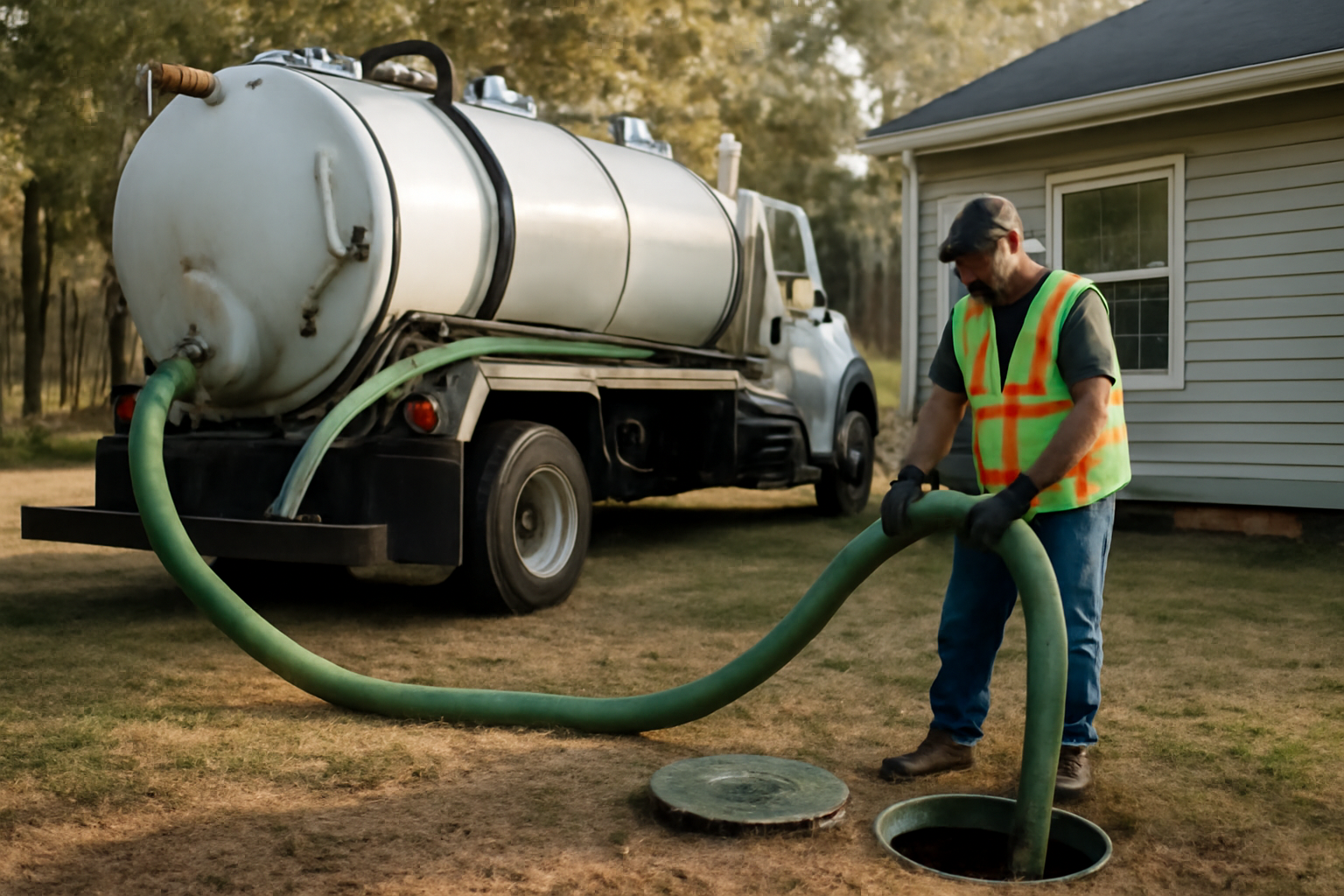
Pump trucks run on diesel, and operators have to factor in round-trip haul time. In my experience, every 15 additional minutes of haul adds roughly $25–$40 to your final bill. That’s not padding — that’s real operating cost. State-licensed disposal facilities, required under EPA biosolids regulations (40 CFR Part 503), charge tipping fees that vary by state and county. Those fees get passed directly to you.
Then there’s labor. The Southeast used to be one of the cheapest regions in the country for septic work. That gap has narrowed. Experienced pump truck operators are harder to find, and certification requirements have tightened in states like Georgia and North Carolina. As a result, you’re paying more for qualified hands than you were even three years ago.
Septic Pumping Cost 2026 by Region: Real Numbers From the Field
Here’s what I’m seeing across the regions I work in and the broader national data I track through industry contacts. These are averages for a standard 1,000–1,250 gallon residential tank with reasonable access. Expect to add $75–$150 for difficult access, buried lids, or tanks larger than 1,500 gallons.
Rural Southeast (Georgia, Alabama, Mississippi)
This is my home turf. Average pumping cost here runs $325–$475 in 2026. Rural counties in south Georgia are closer to the low end; suburban Atlanta fringe areas push toward $500 or higher simply due to traffic and labor costs. I did a job outside Valdosta last month — 1,000-gallon tank, good access, 20-minute haul — and the going rate from a licensed operator was $360. That’s fair for the area.
Appalachian Southeast (Tennessee, Western North Carolina, North Georgia Mountains)
Mountain terrain changes everything. Haul distances are longer, access is trickier, and many properties require a longer hose run from the truck to the tank. Expect $400–$575 in this region. I’ve seen operators in eastern Tennessee charge a flat $75 “terrain surcharge” on steep or wooded lots — and honestly, that’s reasonable given the wear on their equipment.
Mid-Atlantic and Carolinas
The Carolinas and Virginia have seen some of the steepest price increases in the past two years. State regulatory pressure — particularly North Carolina’s strict ONSITE rules under 15A NCAC 18A — has pushed up operating costs for pumping contractors. Current averages run $375–$550, with coastal areas near the Outer Banks and Myrtle Beach pushing $600+ due to limited disposal options and high seasonal demand.
Midwest and Great Plains
Shorter haul distances and lower labor costs keep prices competitive here. Typical range is $275–$425. However, states with aggressive nutrient management regulations — like Iowa and Minnesota — are seeing tipping fee increases that will eventually push retail prices up. That said, this region remains one of the more affordable in the country for basic pumping services.
Northeast (New England, New York, New Jersey)
The most expensive region in the country, consistently. Average pump-out in 2026 runs $500–$850, with parts of Connecticut and Massachusetts hitting $900 for larger tanks. Tight regulations, high disposal fees, expensive labor, and older systems requiring extra care all contribute. If you’re in this region and seeing quotes under $450, ask hard questions about licensure before you hand over a check.
Pacific Coast (California, Oregon, Washington)
Highly variable by county, but averaging $450–$750. California’s strict Regional Water Quality Control Board requirements add compliance overhead for operators. Rural Oregon can be surprisingly reasonable at $350–$450, while the Seattle suburbs push $700+ for standard service.
What Affects Your Specific Quote: A Checklist
Knowing the regional average is a starting point. Here’s what will move your actual quote up or down from that baseline. I go through this mental checklist every time I assess a new property.
- Tank size: 750-gallon tanks are cheaper; 1,500–2,000 gallon tanks add $75–$200 to average quotes
- Lid accessibility: Buried lids (common in systems installed pre-1990) require digging — expect a $50–$100 upcharge
- Hose run distance: Most trucks carry 100 feet of hose. Longer runs cost more
- Last pump-out date: If it’s been over 5 years, expect a heavier load and potentially a longer service call
- Inspection add-ons: Many operators offer a basic inspection for $50–$100 extra — worth every penny
- Emergency or after-hours service: Add $100–$200 minimum for weekend or holiday calls
- Filter cleaning: Effluent filters (required under many state codes) need cleaning at pump-out — some operators charge $25–$50 separately
The first time I learned about buried lids the hard way was on a job in Cherokee County, Georgia. The homeowner swore the lid was accessible. I showed up with my truck and spent 45 minutes digging before we even started pumping. I didn’t charge extra that time because I hadn’t confirmed it beforehand — a mistake I never made again. Always ask the homeowner directly, and always confirm lid accessibility before committing to a flat-rate quote.
How Often Should You Actually Pump? (And How to Reduce How Often You Need To)
The EPA’s basic guidance recommends pumping every 3–5 years for a typical household. Specifically, the EPA’s “Homeowner’s Guide to Septic Systems” ties frequency to household size and tank volume. A family of four with a 1,000-gallon tank should pump every 3–4 years. A couple in the same tank can go 5–6 years comfortably. I’ve inspected tanks that hadn’t been pumped in 12 years — and I’ve also seen tanks that needed pumping after 18 months because the household was using the system hard.
Here’s what most people miss: bacterial activity inside the tank is doing continuous work between pump-outs. Healthy anaerobic bacteria break down solids, reducing accumulation and protecting your drain field. However, antibacterial soaps, bleach, and certain medications kill off that bacterial colony. When the bacteria die, solids accumulate faster, you pump more often, and — worst case — solids reach the drain field and you’re looking at a $5,000–$15,000 repair bill instead of a $400 pump-out.
The Treatment I Started Using Between Pumpings to Actually Extend the Intervals
Here’s the thing: knowing your pumping costs is one part of the equation, but what if you could legitimately stretch the time between pumpings? That’s where septic treatment comes in—not as a miracle cure, but as a practical tool to keep solids from building up faster than they need to.
What works
- The pod format means no mixing or measuring—I just drop one in the toilet once a month, which means I actually remember to do it consistently.
- My pumping intervals genuinely stretched from every 3 years to closer to 4 years, which adds up to real savings when you’re looking at $300–$600 per service.
- The six-month supply format is sized for a typical household system, so there’s no guessing whether you’re overdosing or underdosing your tank.
What doesn’t
- This isn’t a substitute for pumping—if your tank is already full or backing up, treatment won’t fix it; you still need the truck.
- Results depend heavily on your habits; if you’re flushing things that shouldn’t go down (wipes, grease, medications), the bacteria in these pods can’t overcome that kind of abuse.
I was skeptical at first—spent months wondering if I was just throwing money at a problem that needed professional service anyway—until I tracked my actual pumping schedule and realized the intervals had genuinely improved. If you’re serious about controlling those pumping costs I mentioned earlier, grab RID-X Septic Tank Treatment Pods – 6 Month Supply and make it part of your routine.
This post contains affiliate links. As an Amazon Associate, I earn from qualifying purchases at no extra cost to you.