If you’ve just bought a rural property — or finally decided to stop ignoring that strange smell near the back fence — this complete homeowner guide to septic systems is the resource I wish someone had handed me fifteen years ago. I’ve inspected hundreds of systems across the rural South and Midwest. I’ve crawled through muddy yards at 6 AM, I’ve broken bad news to homeowners about $15,000 drainfield replacements, and I’ve watched perfectly good systems fail simply because nobody told the homeowner what not to flush. That changes today.
Most homeowners treat their septic system like a mystery buried under the lawn. Out of sight, out of mind — until something goes catastrophically wrong. In my experience, the difference between a system that lasts 30 years and one that fails in 12 almost always comes down to basic knowledge and simple habits. Nothing exotic. No expensive gadgets. Just understanding what you’re working with.
This guide covers everything: how your system actually works, pumping schedules, the warning signs you can’t afford to ignore, what to flush and what to never flush, drainfield protection, and when you absolutely need to call a licensed professional. Bookmark it. Share it with your spouse. Come back to it every spring. This is your septic system owner’s manual.
How a Septic System Actually Works
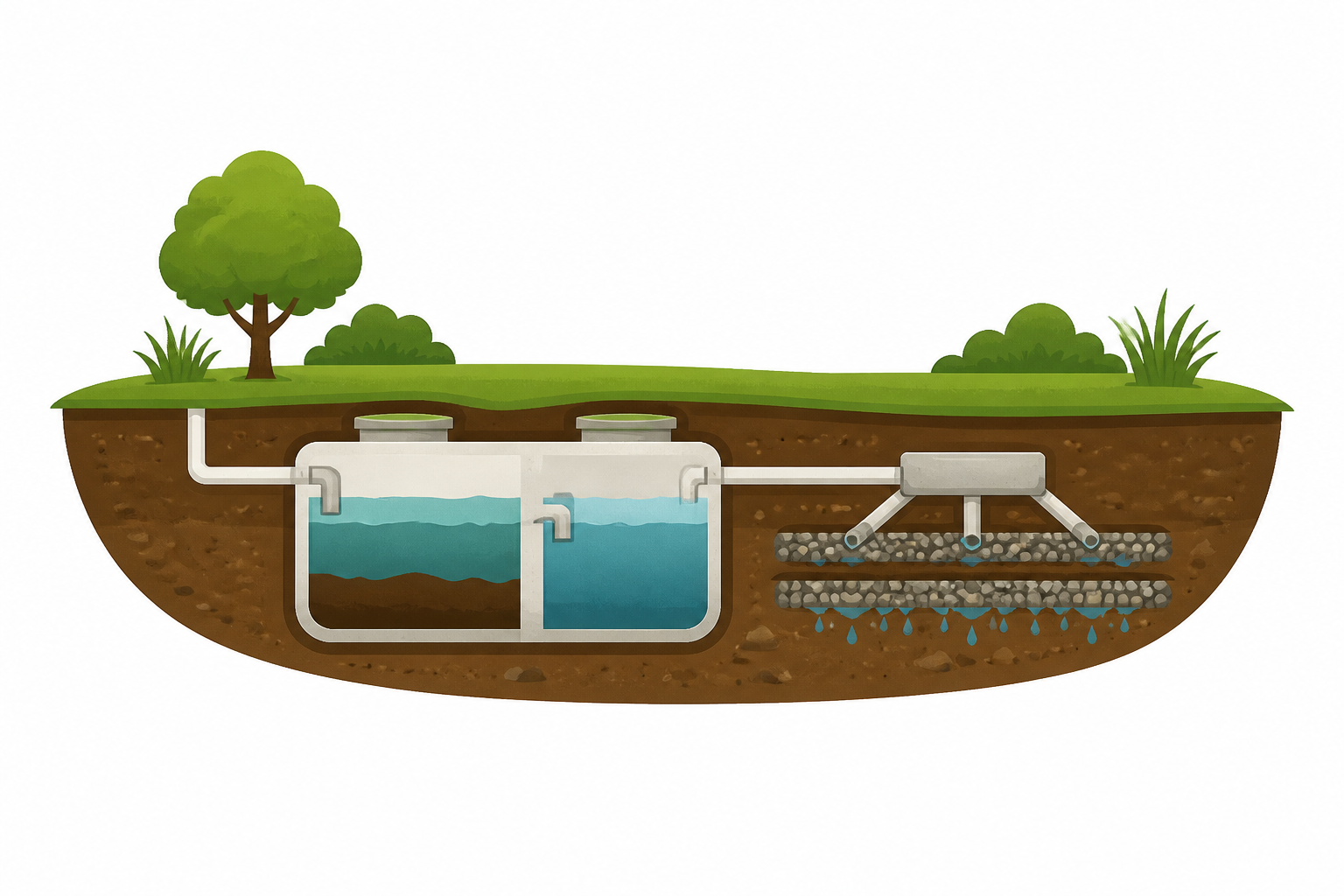
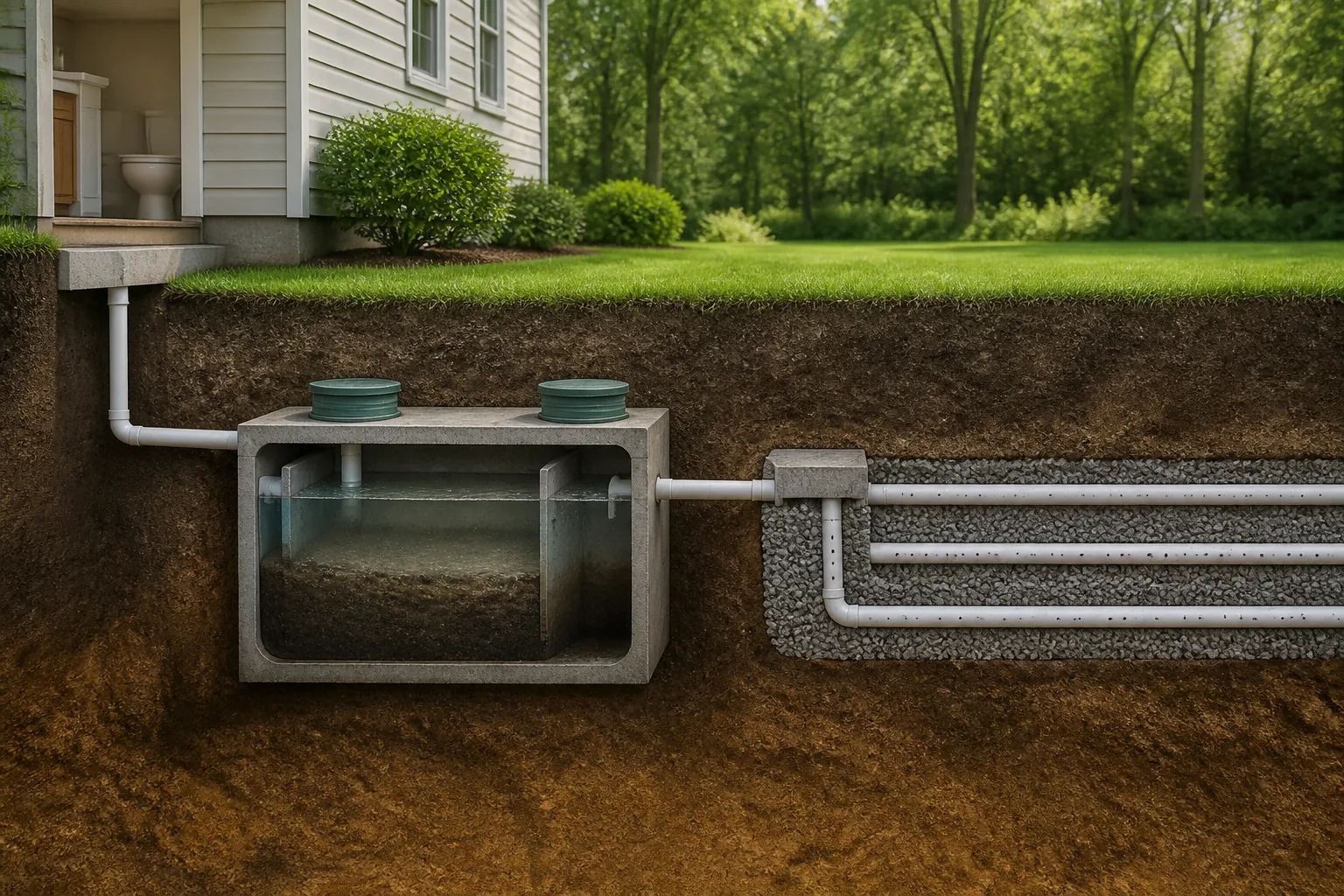
Most people think of a septic system as “a big tank underground.” That’s only half the story. A conventional system has two primary components: the septic tank and the drainfield (also called a leach field or absorption field). Understanding both is critical.
Wastewater from your home flows into the septic tank first. Inside the tank, solids settle to the bottom and form a layer called sludge. Lighter materials — grease, oils, and paper — float to the top as scum. The liquid layer in the middle, called effluent, flows out of the tank and into the drainfield. Bacteria inside the tank break down solids continuously. However, they can’t eliminate everything. That’s why pumping is non-negotiable.
The drainfield is where the real treatment happens. Effluent disperses through perforated pipes into gravel trenches, then percolates down through soil. Naturally occurring bacteria and soil particles filter out pathogens and nutrients before the water reaches groundwater. A properly functioning drainfield is a living biological system. Damage it, and you’re looking at one of the most expensive repairs a homeowner can face.
Tank Sizes and What They Mean for You
Most single-family homes have a tank sized between 1,000 and 1,500 gallons. A 1,000-gallon tank is the minimum allowed by most state codes for a three-bedroom home. Four-bedroom homes typically require 1,250 gallons or more. Larger households generate more wastewater, which accelerates sludge buildup and shortens the time between pump-outs.
If you don’t know your tank size, check your property’s as-built septic permit. That document should be on file with your county health department. Alternatively, a licensed inspector can measure during a pump-out. I always recommend new homeowners pull that permit record within the first month of ownership. It tells you tank size, drainfield location, system age, and soil type — all information you’ll eventually need.
The Pumping Schedule Every Homeowner Must Follow
Here’s the single most important maintenance task you have: pump your tank on a regular schedule. I tell every homeowner I work with — don’t wait until there’s a problem. By the time you smell something or see sewage backing up, the damage is often already done.
The general guideline, supported by the U.S. Environmental Protection Agency and most state health departments, is to pump every three to five years. However, that range depends on several variables. Household size matters enormously. A family of four with a 1,000-gallon tank should pump closer to every three years. A retired couple in the same home might comfortably go five years.
Garbage disposals change the equation significantly. In my experience, homes with active garbage disposals should shorten their pump interval by at least one year. Ground food waste adds considerable organic solids to your tank, accelerating sludge accumulation faster than most homeowners expect. [INTERNAL LINK: garbage disposals and septic systems]
How to Track Your Pumping History
Keep a simple log. Write the date, the pumper’s name, and the sludge depth measured before pumping. Responsible pumping contractors measure sludge and scum layers before they empty the tank. That measurement tells you how quickly your tank fills — valuable data for scheduling future pump-outs.
Pumping costs vary by region. Expect to pay between $300 and $600 for a standard residential pump-out in most U.S. markets. Urban areas with higher labor costs can run $500 to $800. That cost, spread over three to five years, works out to roughly $60 to $200 per year. Compare that to a drainfield replacement at $10,000 to $30,000. The math is obvious.
Warning Signs Your Septic System Is in Trouble
I’ve learned to read a property before I even get out of my truck. There are signs everywhere if you know what to look for. Catching problems early can mean the difference between a simple repair and a full system replacement.
The most obvious warning signs homeowners notice first are indoor. Slow drains throughout the house — not just one fixture — suggest the tank is full or the outlet baffle is failing. Gurgling sounds after flushing indicate pressure issues in the drain line. Sewage odors inside the home are a serious red flag. Never ignore them.
Outdoor Warning Signs to Check Regularly
Walk your drainfield area once a month. Lush, unusually green grass growing directly over the drainfield lines can indicate effluent surfacing — which means the soil is saturated or the pipes are clogged. Wet, soggy patches that don’t dry out are another major warning. Standing water or muddy areas near the tank itself often signal a failing baffle or a full tank.
Sewage odors outdoors, particularly near the drainfield or downwind of the tank, deserve immediate attention. A properly functioning system produces minimal odor at grade level. If you’re smelling sewage consistently in your yard, something is wrong. Don’t wait on that one. Call a professional within 48 hours.
One thing I check on every inspection is the condition of the outlet baffle inside the tank. A failed outlet baffle allows solids to escape into the drainfield — and that’s where catastrophic damage begins. A baffle inspection costs nothing if done during a routine pump-out. Ask your pumper to check it every single time. [INTERNAL LINK: septic tank baffle inspection and replacement]
The Complete Dos and Don’ts of Septic System Care
This section is where I spend most of my time educating first-time septic owners. Municipal sewer systems are forgiving. Septic systems are not. What goes into your system directly determines how long it lasts.
What You Should Do
- Use toilet paper labeled septic-safe or single-ply. It breaks down faster in the tank.
- Spread laundry loads throughout the week. Running multiple loads in one day floods the tank with water, pushing undertreated effluent into the drainfield.
- Fix leaky toilets and faucets immediately. A running toilet can add 200 gallons per day to your tank — quietly overwhelming the system over time.
- Divert roof gutters and surface water away from the drainfield. Saturated soil cannot absorb effluent.
- Keep a record of your tank’s location, size, and service history. Store it with your home documents.
- Schedule inspections every one to three years if your system is older than 20 years.
What You Should Never Do
- Never flush “flushable” wipes. They don’t break down in septic tanks. I’ve pulled tangled masses of them from outlet baffles more times than I can count.
- Never pour cooking grease or oils down the drain. Grease accumulates in the scum layer and clogs outlet baffles.
- Never use bleach-based drain cleaners regularly. Harsh chemicals kill the beneficial bacteria that make your tank work.
- Never flush medications, paints, solvents, or household chemicals. These disrupt bacterial activity and contaminate groundwater.
- Never park vehicles or place heavy structures over the tank or drainfield. Soil compaction destroys drain lines and can crack concrete tanks.
- Never plant trees near the drainfield. Root intrusion is a leading cause of pipe failure. Keep trees at least 30 feet away from drain lines.
I learned the hard way about “flushable” wipes early in my career. I watched a homeowner in Tennessee spend $2,400 on an emergency service call that traced directly back to three years of flushing them. The manufacturer’s label is misleading. Don’t trust it.
Protecting Your Drainfield — The Most Valuable Part of Your System
Most homeowners focus all their attention on the tank. That’s understandable — it’s the visible part. However, in terms of replacement cost and failure risk, the drainfield deserves equal attention. A tank replacement runs $3,000 to $5,000. A drainfield replacement can hit $10,000 to $30,000, depending on soil type, system size, and local regulations.
The drainfield needs two things to function: aerobic (oxygen-rich) soil and adequate capacity to absorb daily effluent flow. Anything that disrupts either condition threatens the field. Compaction from foot traffic, vehicles, or heavy equipment crushes the soil pores that allow absorption. Hydraulic overloading — sending too much water through the system too fast — saturates the biomat and prevents drainage.
The Biomat: What It Is and Why It Matters
The biomat is a layer of microbial organisms that forms naturally at the soil-gravel interface in your drain trenches. A healthy, thin biomat actually improves treatment by filtering pathogens. However, an overgrown biomat — caused by excessive solids or hydraulic overload — seals the trench bottom. Effluent has nowhere to go. That’s when you get surfacing sewage.
Resting a drainfield can sometimes rehabilitate a mildly failed biomat. Some systems are designed with alternating field sections for exactly this reason. However, once a field has truly failed — especially with root intrusion or physical pipe collapse — rest alone won’t fix it. A professional assessment is the only way to know which situation you’re dealing with.
As a practical rule, keep the drainfield area planted with shallow-rooted grass only. Mow it regularly. Never irrigate over it. Don’t let it become a garden bed or play structure foundation. Treat it like the critical infrastructure it is. [INTERNAL LINK: drainfield protection and maintenance tips]
When to Call a Professional — and Who to Call
I’m a strong believer in homeowner education. The more you know, the better decisions you make. That said, there are clear situations where you need a licensed professional immediately. Septic work is regulated for good reason. Improper repairs can create public health hazards and may void your system’s permit.
Call a professional if you notice sewage backing up into your home. Call immediately if you see sewage surfacing in your yard. Any odor that persists more than a day or two warrants a call. If you’re buying a property with an existing septic system, always — always — hire an independent inspector before closing. This is non-negotiable advice I give every rural buyer I consult with.
Understanding the Different Types of Septic Professionals
Not all septic professionals do the same work. A pumping contractor empties your tank but typically doesn’t diagnose mechanical failures. A licensed septic inspector evaluates the entire system — tank condition, baffles, distribution box, drainfield — and produces a written report. A septic system designer or engineer gets involved when you need repairs, expansions, or new installations.
For routine maintenance, a certified pumping contractor is your primary contact. For any concern beyond a routine pump-out, hire a licensed inspector separately. Confirm they hold a current state license. In most states, you can verify licenses through the department of health or environmental quality website. Don’t hire anyone who can’t show credentials on request.
Inspection costs vary. Expect to pay $150 to $400 for a thorough inspection that includes probing the drainfield and checking the distribution box. Some inspectors charge more for a full camera inspection of the inlet and outlet pipes. For a system older than 15 years, the camera inspection is worth every dollar.
Common Mistakes and Frequently Asked Questions
Mistake #1: Relying on Septic Additives Instead of Pumping
Septic additives — biological enzymes, bacterial packets, chemical treatments — are a multi-million dollar industry built largely on wishful thinking. The EPA has stated that biological additives have not been proven to eliminate the need for regular pumping. Your tank already contains billions of naturally occurring bacteria doing exactly what those products promise. Save your money. Pump on schedule instead.
Mistake #2: Assuming a New Home Means a New System
I’ve seen brand-new construction with improperly installed systems. Septic work is only as good as the installer and the oversight. Newly installed systems should be inspected after the first year to confirm proper settling and function. Don’t assume a permit means perfect installation. Permits confirm design approval — not necessarily flawless field execution.
Mistake #3: Using Too Much Water All at Once
Hydraulic overload is one of the most common and preventable causes of drainfield stress. Hosting a large gathering, running the dishwasher while doing four loads of laundry, and taking three back-to-back showers can push far more water through the system than it’s designed to handle in a short window. Spread water use throughout the day. Install low-flow fixtures. Your drainfield will thank you.
FAQ: How Do I Find My Septic Tank?
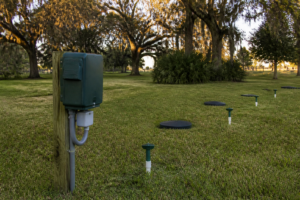
Start with your property’s as-built diagram from the county health department. If that’s unavailable, look for a slight depression or rectangular outline in the yard, typically 10 to 25 feet from the house where the main drain exits. A soil probe — a thin metal rod — can locate the tank lid without digging. Your pumping contractor can also use the same technique. Never dig blindly around a septic tank without knowing its location first.
FAQ: Can I Do Any Septic Maintenance Myself?
Yes — within limits. Homeowners can safely locate tank access lids, keep the drainfield clear of obstructions, monitor for warning signs, and manage household water use. However, opening a septic tank without proper training carries real safety risks. Septic tanks produce hydrogen sulfide gas, which is lethal in confined spaces. Never enter or lean directly over an open tank. Professional contractors have the training and equipment to work safely. For everything below ground level, call a pro.
Final Thoughts: Your Complete Homeowner Guide to Septic Systems in Practice
After fifteen years of inspections, service calls, and homeowner consultations, I can tell you this with complete confidence: septic system failure is almost always predictable and preventable. The homeowners who lose systems early are almost never unlucky. They’re uninformed. The homeowners who get 30 or 40 years out of a well-built system are the ones who learned the basics and stuck to them.
This complete homeowner guide to septic systems gives you everything you need to be that second type of homeowner. You understand how the system works. You know when to pump. You recognize the warning signs. You know what to keep out of the system and how to protect your drainfield. That knowledge alone puts you ahead of the vast majority of septic system owners I encounter in the field.
Here’s the practical action plan I give every homeowner I consult with for the first time:
- Pull your septic permit from the county health department this week. Know your tank size and system age.
- Schedule a pump-out and inspection if you don’t have a service record from the past three years.
- Walk your drainfield area monthly and look for the warning signs covered in this guide.
- Audit what goes down your drains. Eliminate wipes, grease, and harsh chemicals immediately.
- Set a calendar reminder for your next pump-out based on your household size and tank capacity.
Do those five things and you are already doing better than most. Your septic system isn’t glamorous infrastructure — but it’s essential. Treat it with the same respect you’d give your roof or your foundation, and it will serve you faithfully for decades. Ignore it, and it will eventually demand your attention in the most expensive way possible.
You’ve got this. And when questions come up — because they always do — come back here. This guide will be here waiting.