Here’s something I tell every new homeowner I work with: your drainfield doesn’t care how good your septic tank is. What kills drainfields — and I’ve watched it happen on dozens of rural properties — is hydraulic overload. Too much water hits the soil too fast, saturates the absorption field, and the whole system backs up. That’s a $10,000 to $30,000 replacement conversation nobody wants to have. The good news? Low flow fixtures extend drainfield life in a very real, measurable way, and most homeowners can make the switch in a single weekend for under $100.
I’ve been inspecting septic systems and consulting on rural properties for 15 years. I’ve crawled under houses, pulled distribution boxes apart, and stood in a lot of soggy yards with frustrated homeowners. I can tell you with confidence that fixture upgrades are one of the highest-return improvements you can make to a septic-dependent property. Not because of marketing claims. Because I’ve seen the before-and-after water usage numbers on properties where clients made the switch.
This post walks you through exactly what to upgrade, why it works, what it costs, and which specific products I recommend based on real-world use. Let’s get into it.
Why Hydraulic Load Is the Real Drainfield Killer
Most people think septic systems fail because of what goes into them — wipes, grease, chemicals. Those are real problems, sure. However, in my experience, the number one cause of premature drainfield failure is simply too much water moving through the system too fast. Soil has a finite percolation rate. When you exceed it, water pools, biomat builds up faster, and the field suffocates.
The EPA’s standard sizing guideline estimates 75 gallons per person per day for system design. A four-person household should theoretically push around 300 gallons daily through the system. In reality, I see households consistently running 400 to 600 gallons per day. That’s because older fixtures are wasteful by design. A standard pre-1994 showerhead runs 3.0 to 5.0 GPM. An old bathroom faucet aerator? Often 2.2 GPM or higher. Those numbers compound fast.
The National Sanitation Foundation (NSF) and WaterSense program — administered by the EPA — certify fixtures that meet efficiency thresholds. WaterSense faucet aerators, for example, must perform at 1.5 GPM or less. That single change on every sink in a home can reduce daily faucet water usage by 30 to 50 percent. For a drainfield that’s already stressed, that margin matters enormously.
How Low Flow Fixtures Extend Drainfield Life — The Real Mechanism
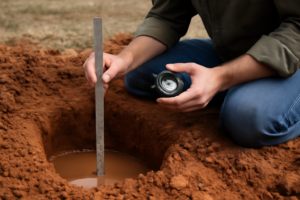
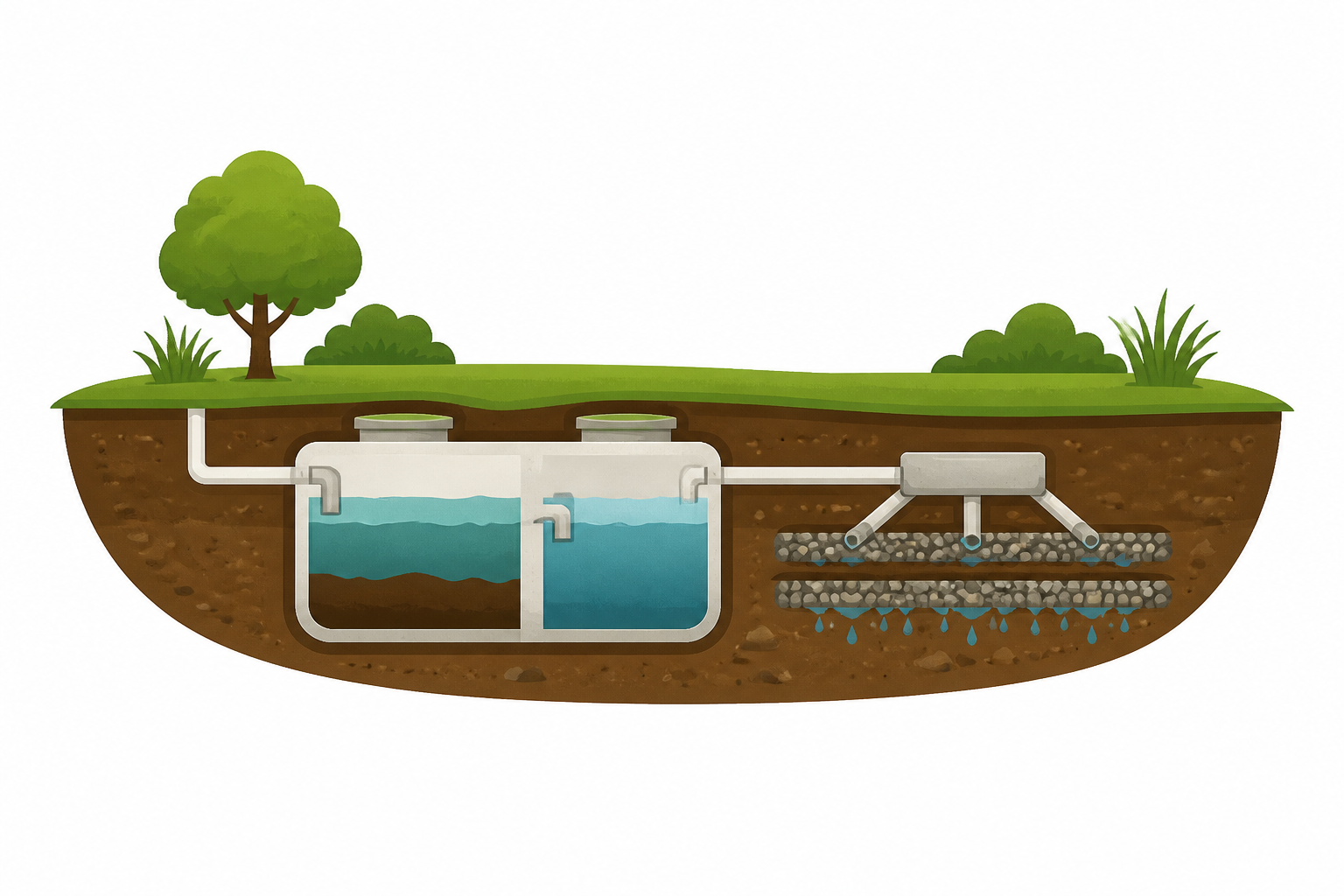
Let me explain the mechanism simply. Your drainfield absorption area has a design load — usually expressed in gallons per day per square foot of trench. Typical sandy loam soil handles about 0.6 to 0.8 gallons per day per square foot. A standard 3-bedroom system might have 600 to 900 square feet of trench. Once you consistently push water through faster than soil can absorb it, standing water develops. Anaerobic bacteria in that standing water form a biomat — a dark, slimy layer that progressively seals the soil.
Biomat formation is not reversible in the traditional sense. Once the soil seals, you’re looking at resting the field (if you have an alternating system), aerobic treatment upgrades, or full replacement. Reducing daily hydraulic load slows biomat formation dramatically. That’s not a theory — it’s basic soil science backed by University of Minnesota Extension research and EPA design guidance (EPA/625/R-00/008).
For example, last spring I worked with a client outside of Flagstaff who had a 15-year-old system showing early signs of failure — slow drains, slight odor near the field. Instead of immediately recommending replacement, I had them install low-flow aerators, a 1.5 GPM showerhead, and a dual-flush toilet conversion kit. Six months later, their system was functioning normally. No replacement needed. The reduced load gave the biomat time to partially oxidize and the soil to recover. That outcome isn’t guaranteed, but it happens more than people expect when you catch it early.
The Four Fixtures Worth Upgrading First
Not every upgrade delivers equal return. Here’s how I prioritize them based on actual water usage data.
1. Faucet Aerators
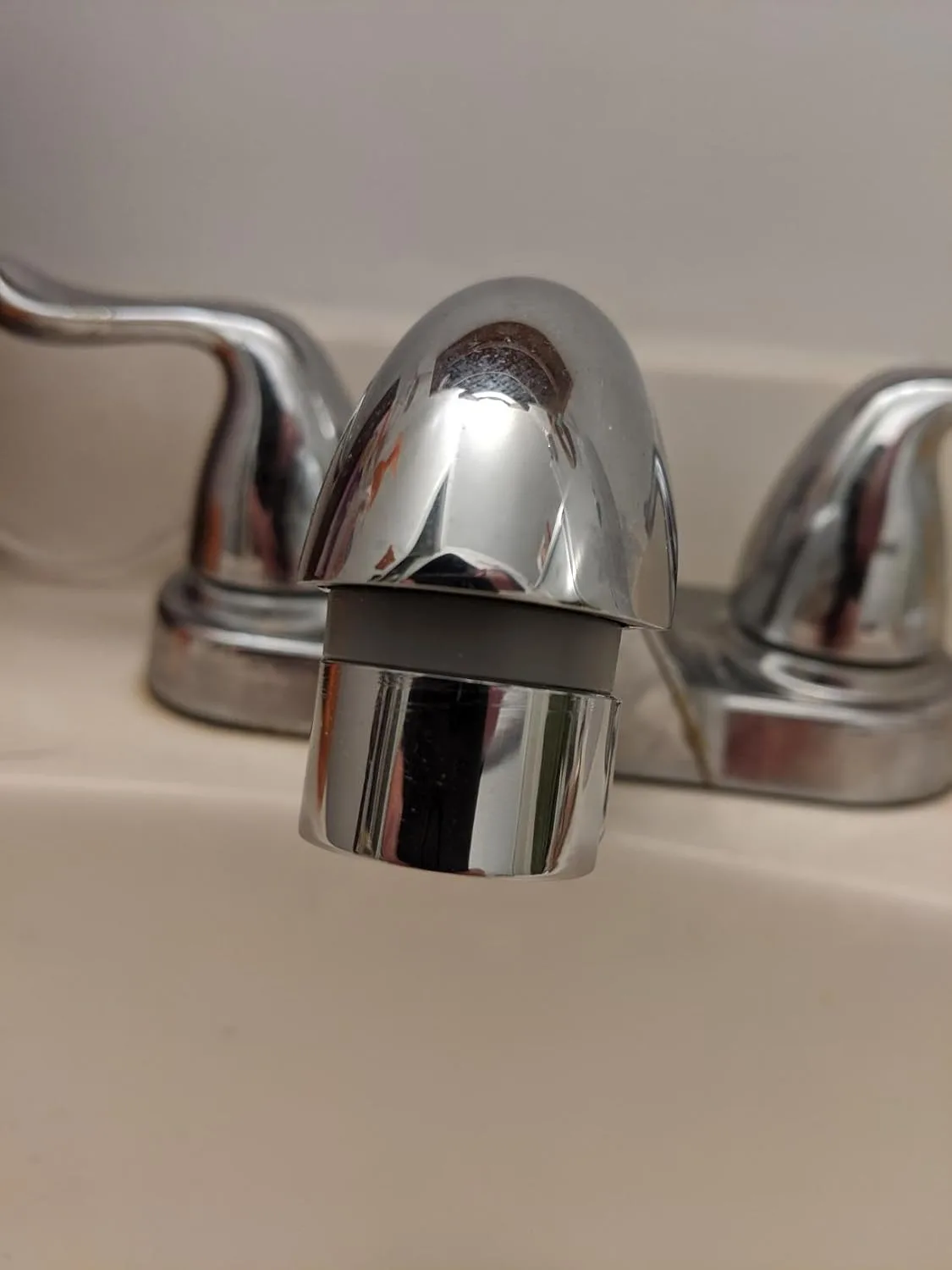
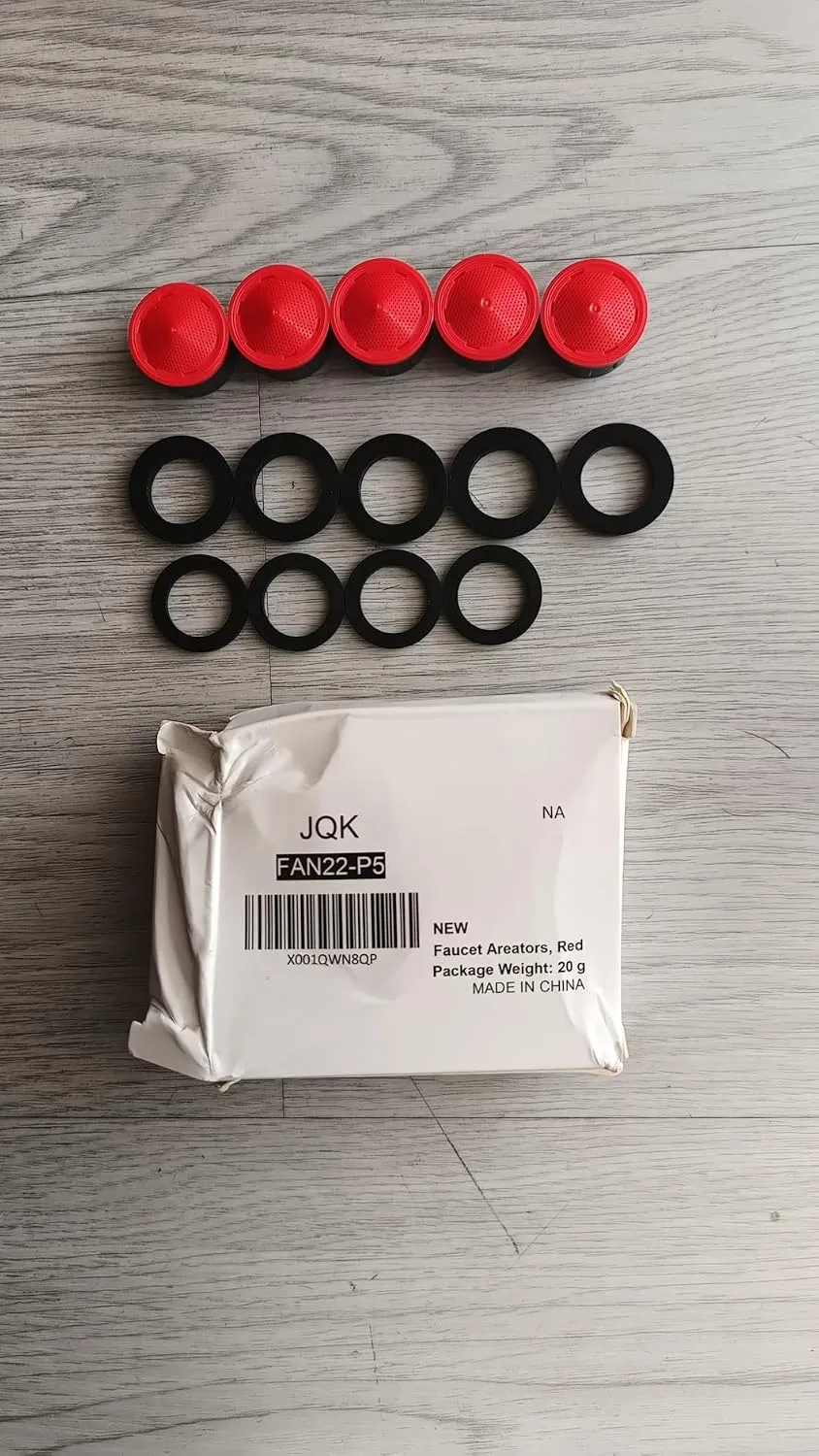
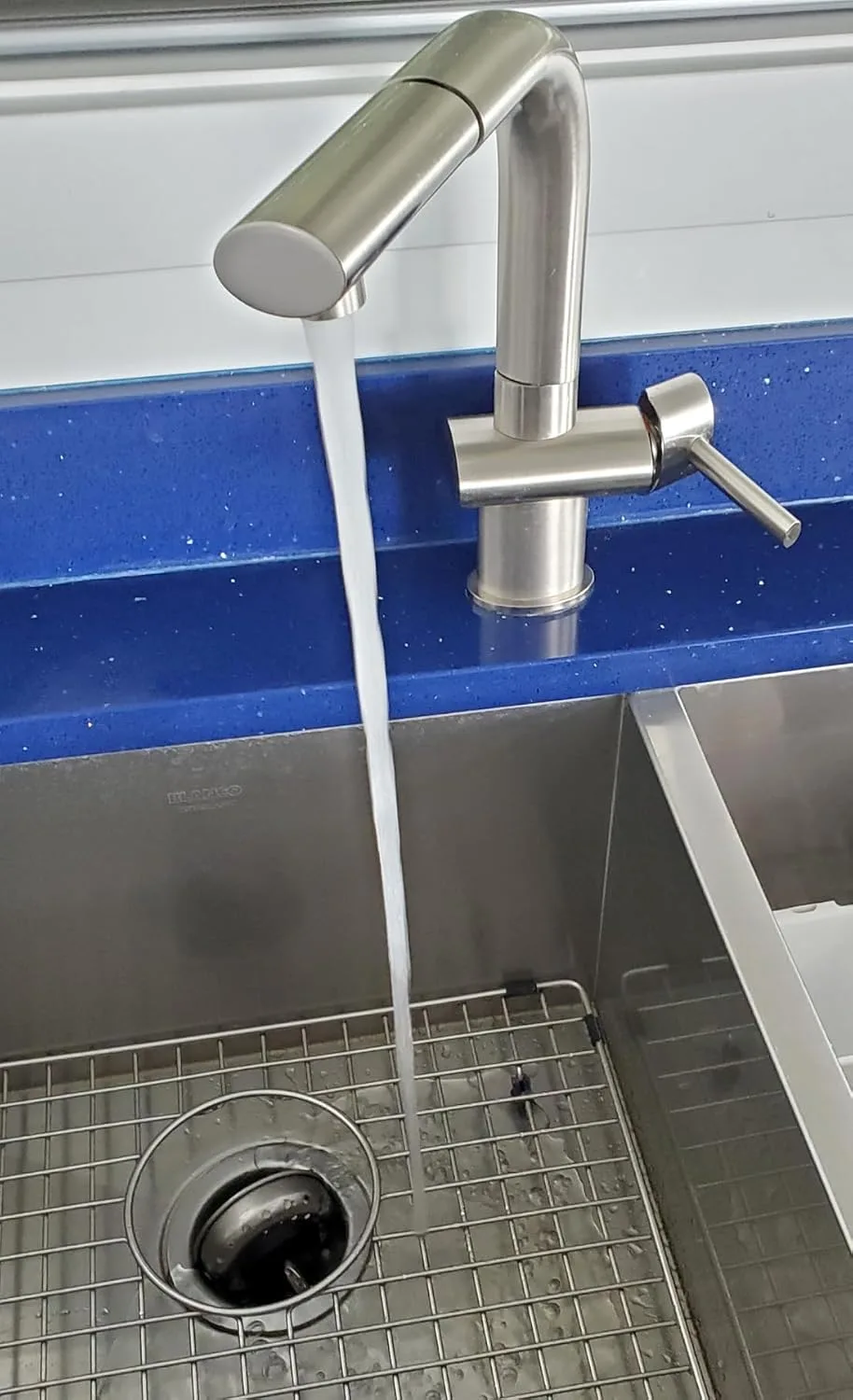
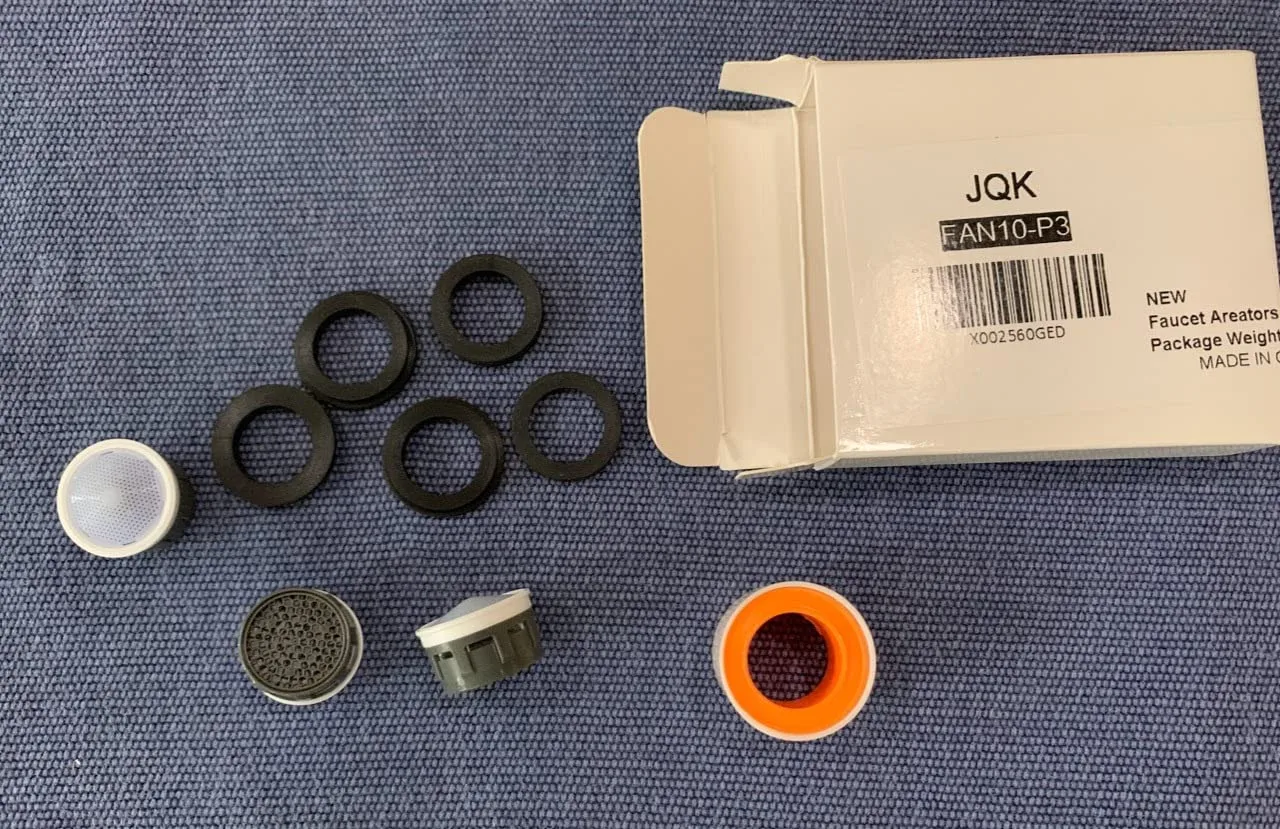
Aerators are the fastest, cheapest fix in the house. Most standard aerators flow at 2.2 GPM. Swapping to a 0.5 or 1.0 GPM aerator takes two minutes and costs $3 to $15 per unit. On a home with four sinks, that’s a $20 to $60 project. The savings in water volume are immediate and real. I always start here.
2. Showerheads
Showers are the second biggest water user in most homes. A family of four showering for 8 minutes each daily at 2.5 GPM uses 80 gallons. At 1.5 GPM, that drops to 48 gallons — a 32-gallon daily savings from one fixture type. WaterSense-certified showerheads must flow at 2.0 GPM or less. High-quality models from Delta, Kohler, and Niagara hit 1.5 GPM while maintaining decent pressure.
3. Toilets
Toilets account for roughly 30 percent of indoor water use. Pre-1994 models use 3.5 to 7 gallons per flush. Current federal standards (EPACT 1992) set the maximum at 1.6 GPF. High-efficiency toilets (HETs) certified by WaterSense use 1.28 GPF or less. Dual-flush models offer 0.8 GPF for liquid waste. For existing toilets, displacement bags or adjustable fill valves can reduce usage without full replacement.
4. Washing Machine
Top-loading machines from the 1990s and early 2000s use 35 to 50 gallons per load. A front-loading Energy Star washing machine uses 13 to 20 gallons. That’s a 50 to 60 percent reduction. I always advise clients to spread laundry across multiple days rather than doing six loads on Saturday. Peak hydraulic loads on a single day are far harder on a drainfield than the same total volume spread evenly.
The Aerator That Actually Cuts Flow Without Killing Water Pressure
Most low-flow aerators I’ve tried feel like showering through a coffee filter — you sacrifice pressure for flow rate, and homeowners end up removing them in frustration. The Niagara Conservation N3610CH solves that exact problem with pressure-compensating technology that maintains usable spray force while genuinely reducing the water hitting your drainfield.
What works
- Pressure-compensating needle spray delivers a tight, concentrated stream instead of a weak mist — people don’t immediately rip it off their faucets.
- Keeps flow at 0.5 GPM while maintaining enough force for practical rinsing, which means measurable reduction in daily water load without behavioral workarounds.
- Installs in seconds on any standard faucet — no tools, no plumbing knowledge needed, which matters when you’re retrofitting an entire house.
What doesn’t
- Doesn’t work well on older, low-pressure supply lines — you need at least 40–50 PSI for the compensator to activate properly.
- The needle-spray pattern takes adjustment; the first time you use it, the concentration can feel sharper and less forgiving than a conventional aerator.
I was skeptical the first time I installed one — thought it would be just another gimmick that feels like a straw — but watching my water meter drop while my shower still felt normal made a believer out of me. Pick up a Niagara Conservation N3610CH Tri-Max Pressure-Compensating Needle-Spray Faucet Aerator for your main fixtures and start protecting your drainfield today.
This post contains affiliate links. As an Amazon Associate, I earn from qualifying purchases at no extra cost to you.