
The smell hits you before you see anything — that thick, sour sulphur reek rising off the ground 20 feet from the lateral lines. Standing there last winter on a property outside Knoxville, I could already tell the homeowner had no clue the drainfield beneath the surprisingly healthy-looking grass was in serious trouble. Toilets were flushing normally. The lawn was green. But the nose knows. Understanding what ruins a septic drainfield before you can see it happening is the most useful knowledge any homeowner with a septic system can possess — because by the time visible damage shows up, the decay underneath has usually been underway for months, sometimes years.
Over my 15 years in this work, I’ve excavated and examined failed drainfields buried in everything from dense clay to loose sandy loam and dozens of soil types in between. I’ve watched property owners face $8,000 to $25,000 replacement bills for systems that should have given them another two decades of reliable service with nothing more than attentive maintenance. The unfortunate reality? Nearly all drainfield failures can be prevented. The damage accumulates quietly, invisibly — and most homeowners are unknowingly committing two, three, or sometimes four of these mistakes simultaneously right now.
Below are seven behaviors I see destroying drainfields with consistent regularity across my service area. This list matters. Your system’s longevity hinges on avoiding these traps.
1. Hydraulic Overload: Too Much Water, Too Fast
The dominant killer I encounter in the field is straightforward: hydraulic overload. Each drainfield has a maximum absorption rate — typically determined by the number of bedrooms in your home according to standards like AASHTO or the perc test results that guided your local health department’s approval. Push water into the system beyond its design capacity, and you get backup. The soil biomat becomes waterlogged and anaerobic, and the drainfield deteriorates rapidly.
A few years back, one of my clients ran six consecutive laundry cycles every Saturday. That’s roughly 300 gallons entering the system within a two-hour window. His drainfield had been engineered for 250 gallons spread across an entire 24-hour period — not concentrated into one morning block. He destroyed a perfectly functional 10-year-old system in four years flat. Space out your laundry. Wash a load every few hours instead. Address dripping fixtures immediately — a single running toilet wastes approximately 200 gallons over the course of a day.
Water softener regeneration discharge is another huge overload problem that flies under the radar. Most units dump 50 to 100 gallons in a single regeneration event straight into your tank. That momentary surge is extremely tough on the system. If code permits, divert your softener’s backwash somewhere else — many jurisdictions actually mandate this now.
2. Root Intrusion: The Slow Strangulation
Tree roots show no mercy. I’ve extracted 4-inch drainfield pipes that were completely obstructed by willow and silver maple root masses growing toward the system from distances exceeding 40 feet away. Roots migrate following moisture signals, and your drainfield basically advertises itself as an all-you-can-absorb water buffet. Once they penetrate the perforations, they accumulate, choke off flow, and disintegrate the gravel bed structure encasing the pipe.
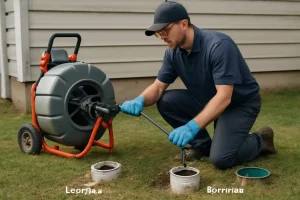
State codes and my own experience point to the same minimum safe distances: keep your drainfield at least 10 feet away from shrubs and 25 to 50 feet away from full-sized trees. The most aggressive species I’ve encountered — willows, poplars, and silver maples — can send roots 30 feet or more to reach lateral lines. If mature trees exist within that buffer zone on your property, schedule a cleanout camera inspection every two or three years. A rental unit runs about $150, and it eliminates guesswork.
Root-suppressing products containing dichlobenil or copper sulfate (sometimes marketed as root-kill foams) can manage growth to a degree. Deploy them carefully, though — they won’t undo existing root damage, and excessive use interferes with the beneficial bacterial ecosystem in your tank.
3. Compaction: What Damages Septic Drainfield Silently
This factor gets overlooked far too often. Soil compaction crushes the microscopic pore spaces that make percolation possible. Drive a vehicle across your drainfield a single time — just once — and the aggregate stone void structure collapses, and you can crush the lateral pipe itself. I’ve seen the same damage inflicted by a riding lawnmower operated on damp ground. Years of casual foot traffic across the field during rainy seasons compounds this destruction measurably.
Early in my career, I learned this lesson on my own system. I permitted a contractor to position a mini-excavator along the edge of my drainfield “temporarily.” By year three, wet zones appeared exactly where that equipment had sat. Excavation revealed the 3/4-inch aggregate had compressed to perhaps half its original thickness. The lateral had deformed into an oval. That single oversight cost me $1,200 to repair — a mistake that transformed my whole approach to system protection.
Outline your drainfield boundary with obvious markers: stakes, landscape edging, or fencing. Keep vehicles off the field permanently — this includes ATVs, lawn tractors, and heavy mowers. Make no exceptions. This one rule alone adds years to your system’s lifespan.
4. Harmful Household Chemicals
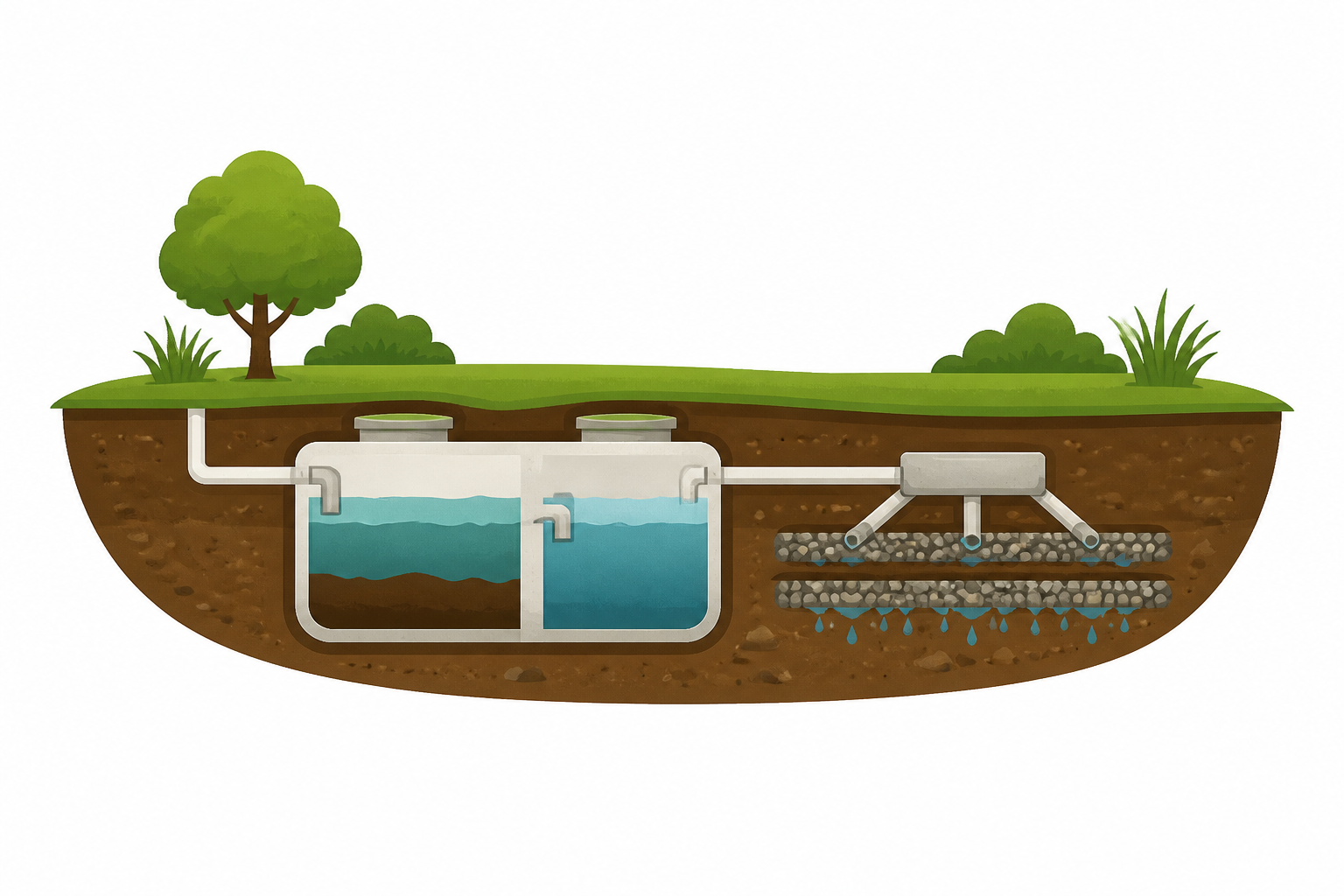
Your septic system operates as a living biological reactor. It hinges on bacteria — chiefly anaerobic organisms colonizing the tank, plus aerobic microbes in the drainfield’s biomat interface — to convert raw effluent into safe, treatable discharge. Specific household chemicals demolish this bacterial community. When bacteria die, solids pass untreated to the laterals and obstruct the soil interface.
The primary culprits I encounter repeatedly involve excessive antibacterial hand soaps, bleach-based drain openers, paint thinners, industrial solvents, and toilet-flushed prescription drugs. Even ordinary household disinfectants used liberally during spring cleaning can temporary devastate a tank’s microbial balance. As a concrete example: dumping a single quart of household bleach into a 1,000-gallon tank disrupts bacterial function for several days.
Choose EPA Safer Choice-certified cleaners wherever possible. Keep antibacterial soap use confined to one bathroom sink. Never discharge paint, solvents, or pharmaceuticals through any drain. These aren’t friendly guidelines — they’re mandatory operating parameters for any biological treatment system.
What About “Septic Treatments”?
Homeowners ask about bacterial supplement products all the time. My straightforward view: a properly maintained system shouldn’t require them. That said, after chemical shock or immediately following a pumping service, bacterial restarters like RidX can accelerate population recovery. Think of them as emergency recovery aids, not routine preventive medicine.
5. Improper Surface Water Drainage
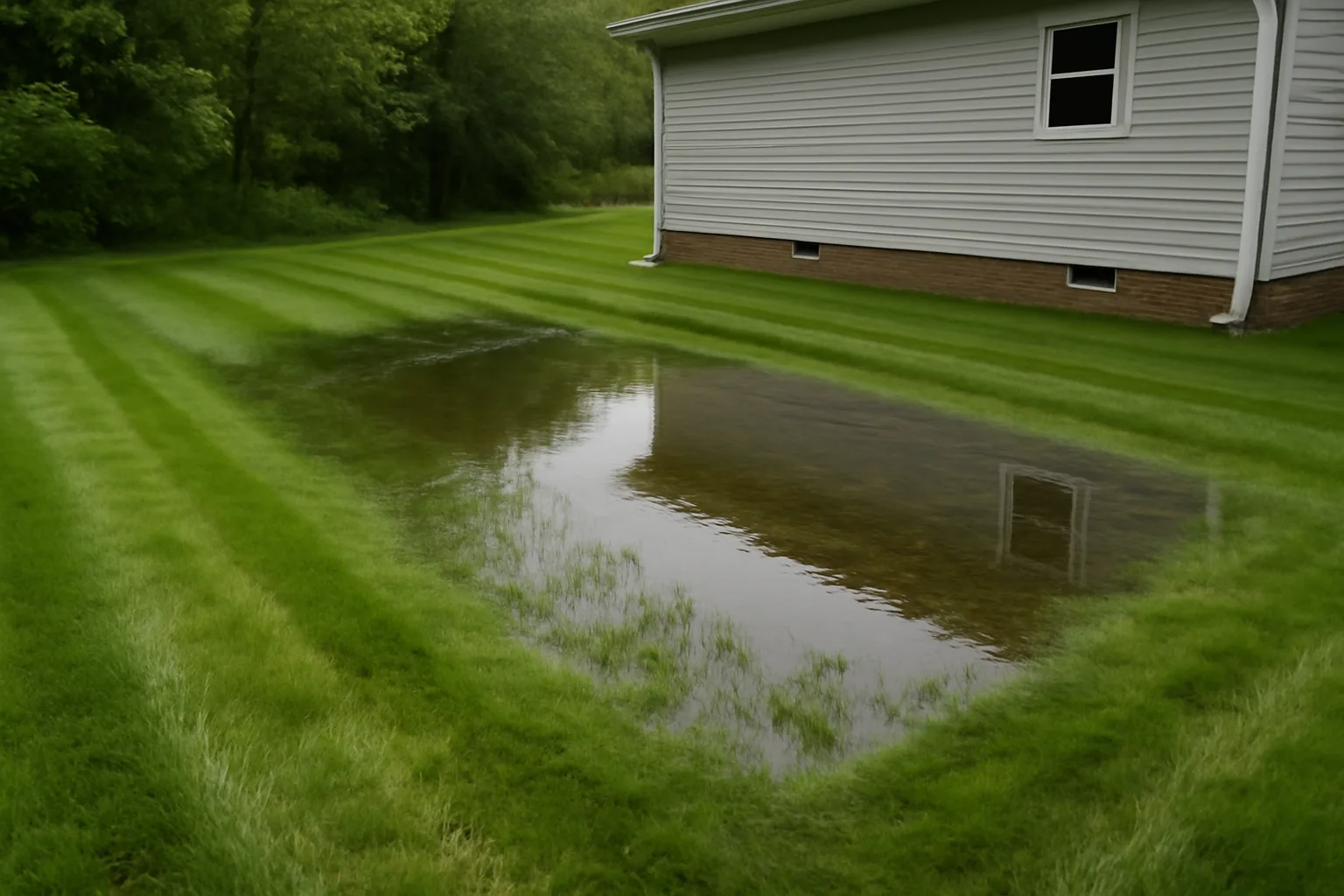
Runoff flowing across your drainfield represents a genuine hazard that escapes the attention of most homeowners. Stormwater pooling atop your lateral lines erases the unsaturated soil layer where aerobic bacteria accomplish their treatment work. The field becomes waterlogged. Effluent quits percolating downward, and it either bubbles to the surface or retreats backward into your tank.
On routine inspections, I frequently locate properties where gutters, sump pump outputs, or the yard’s slope direct precipitation directly toward the drainfield boundary. One homeowner I worked with had a gutter downspout emptying 15 feet upslope from her laterals. Rain events soaked the field. Despite being only eight years old, her system’s performance had degraded to match a 20-year-old installation. Moving that downspout 40 feet away in a different direction remedied most saturation within the following dry spell.
Channeling surface water away from your drainfield ranks as essential. This is where quality French drain construction proves its worth — I’ve personally witnessed properly installed surface drainage systems rescue drainfields that looked destined for replacement.
The Drain Pipe That Finally Stopped My Drainfield From Silting In
Sediment and biomat clogging the perforations in lateral lines ranks among the slower drainfield killers. When you undertake drainfield repair or complete system replacement, selecting pipe with adequate fabric shielding determines whether your investment provides another 15-year service life or fails again within five years.
What works
- Non-woven fabric wrapping genuinely blocks soil particles and biosolids from entering the perforations—capability bare pipe simply lacks, and something I wish I’d recognized during my first system overhaul.
- A 3-inch diameter represents the ideal balance for residential installations; it conveys effluent effectively without producing excessive flow velocity that causes scouring and early breakdown.
- Properly spaced perforations guarantee uniform effluent dispersal across the entire lateral rather than concentration in certain zones, which prevents wet patches and visible system distress.
What doesn’t
- Careless trench installation can puncture or compress the fabric layer, which completely undermines its protective function.
- The material carries a higher price tag than unprotected perforated pipe, and if upstream components like your tank or distribution box malfunction, this pipe alone cannot salvage a struggling system.
I was skeptical the first time I invested in fabric-wrapped pipe instead of standard perforated—the upfront cost stung—but watching a properly installed system perform five years later without the silt-in problems I’d seen before made it worth every penny. Grab a 3-inch Perforated French Drain Pipe with Non-Woven Fabric Sock if you’re doing this work right.
3-inch Perforated French Drain Pipe with Non-Woven Fabric
I use this on every drainfield now because it actually keeps perforations clear instead of silting shut.
Check Price on Amazon →This post contains affiliate links. As an Amazon Associate, I earn from qualifying purchases at no extra cost to you.