
I got a call on a Saturday afternoon in July — July 4th weekend, to be exact. A homeowner outside of Tuscaloosa had 60 guests showing up the next morning and her toilets had stopped flushing. That septic heavy use weekend turned into a full-blown emergency pump-out that cost her $650 on a holiday Sunday, double my normal rate. She told me she “didn’t think a party could hurt anything.” In 18 years of working septic systems across Alabama, Georgia, and the Florida Panhandle, I’ve heard that more times than I can count. It absolutely can, and the damage is rarely limited to one bad weekend.
Summer party season runs hard in the rural Southeast. Fourth of July cookouts, graduation parties, family reunions — these gatherings push residential septic systems well beyond their designed daily load. Most residential systems are engineered for 75 to 100 gallons per person per day based on standard EPA septic design guidelines. One busy party weekend can spike that number two or three times over in less than 48 hours. The system simply doesn’t have time to recover between flushes, showers, and sink cycles.
This guide is everything I tell my clients before a big event. Follow it and you’ll protect your drain field, avoid an emergency call, and actually enjoy your own party. Skip it and you might be the one I’m calling back on a Sunday morning with a pump truck in your driveway.
How Your Septic System Actually Works Under Heavy Load
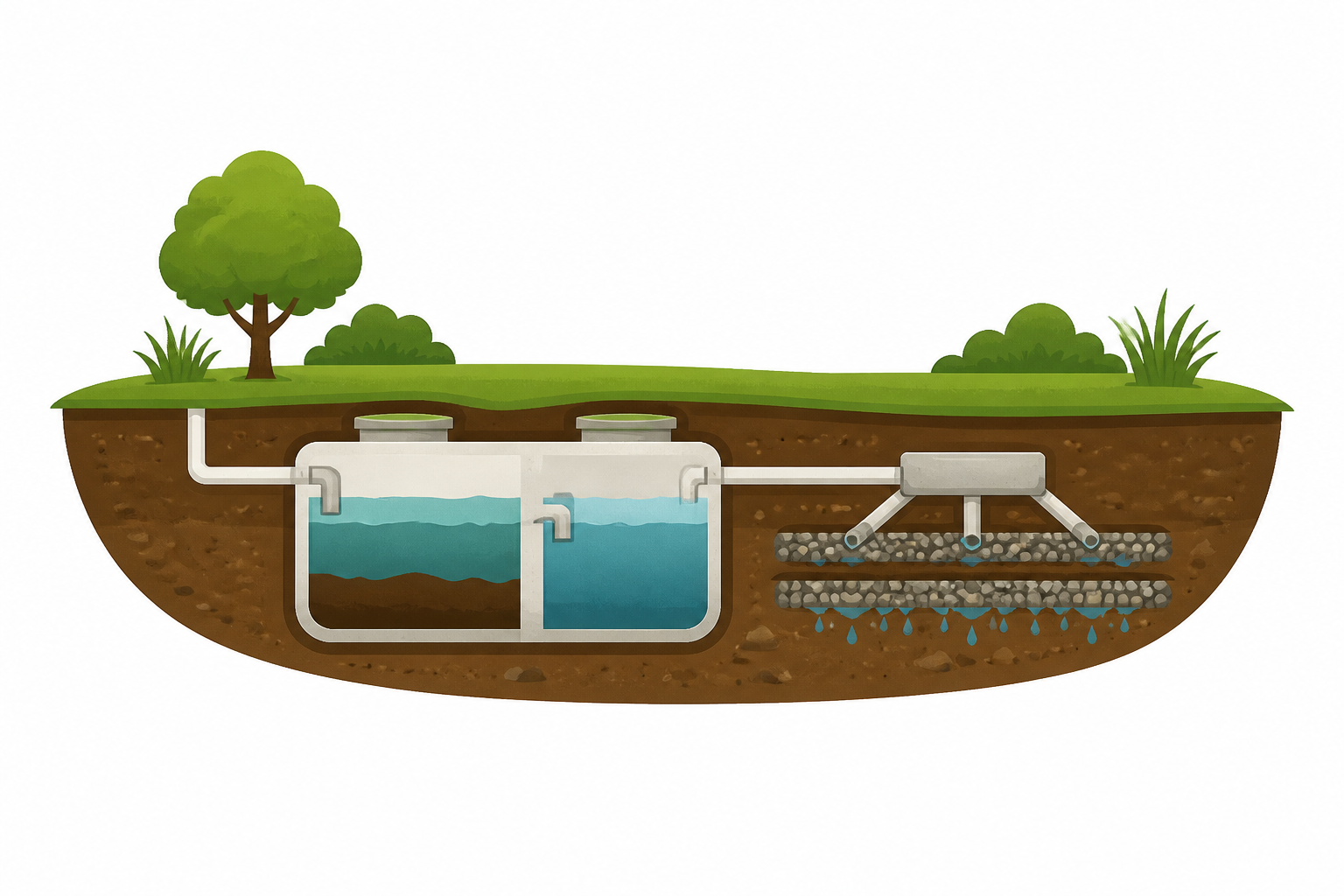
Before I talk strategy, I want you to understand what’s actually happening inside your tank during a big event. Your septic tank is a settling chamber. Solids sink to the bottom as sludge, grease and light materials float to the top as scum, and the middle layer — called effluent — flows out to your drain field. That process takes time. Hydraulic overloading is when you push more water in than the system can settle and release at a safe rate.
When that happens, unsettled solids get pushed out into the drain field before they’re ready. Those solids clog the perforations in your leach lines — and once a drain field clogs, you’re looking at $5,000 to $15,000 in repairs depending on the size and soil conditions. I’ve replaced drain fields in red clay Georgia soil that ran $18,000 because the ground doesn’t perc well and required an advanced system. That cost started with someone overloading the tank repeatedly over several summers.
Most standard residential tanks hold between 1,000 and 1,500 gallons. However, the usable liquid capacity between the inlet and outlet baffles is significantly less than the total tank volume. If your tank is already 40% full of sludge — which is common if you’re past due on pumping — your effective buffer for a heavy weekend drops dramatically. That’s where the math starts working against you fast.
Steps to Take Before Your Septic Heavy Use Weekend
Here’s what I recommend doing at least two weeks before a large gathering. Rushing this prep work in the final 48 hours creates more risk than it eliminates, so plan ahead.
Get the Tank Pumped
If you haven’t pumped in the last two to three years, do it now. The EPA and most state health departments — including Georgia EPD and the Alabama Department of Public Health — recommend pumping every three to five years for a family of four. However, before a major event, I always advise pumping regardless of when you last did it. A fresh pump-out gives you maximum tank capacity as a buffer. In my area, a standard pump-out runs $300 to $450. That’s a bargain compared to a Sunday emergency call or a drain field replacement.
Schedule the pump-out at least a week before the event. This gives the bacterial ecosystem in your tank time to reestablish before the heavy load hits. Pumping the day before strips out the active bacteria and reduces your system’s ability to break down solids efficiently during the event itself.
Locate and Inspect Your Access Points
I’ve seen homeowners who had no idea where their septic tank was located. If that’s you, pull your property records or contact your county health department — they typically have the original permit and site plan on file. Knowing where your tank and drain field are matters for two reasons: you need to keep guests and vehicles off the drain field, and you need accessible lids in case of an emergency pump-out during the event.
Compact soil over a drain field from foot traffic or parked cars can collapse distribution pipes and crush leach lines. I’ve seen a single large truck parked on a drain field for one afternoon do $2,000 in pipe damage. Rope off the area if you need to. Your guests will understand.
Reduce Water Load in the Days Before
In the three days leading up to the event, reduce unnecessary water use wherever you can. Hold off on laundry. Run the dishwasher only when full. Fix any running toilets — a toilet that runs continuously can dump 200 gallons a day into your tank without anyone flushing once. That’s a real number I verified with a flow meter on a job in Dothan, Alabama a few years back. Small leaks add up fast when your system is about to face peak demand.
Managing Water Use During the Event
Once the party is underway, your strategy shifts to load management. The goal is spreading water use over time rather than letting it all hit the tank in a single surge. I think of it like traffic flow — you want a steady stream, not a rush-hour pileup.
Space Out Showers and Laundry
If guests are staying overnight, stagger showers rather than letting everyone shower back-to-back. A standard shower uses about 17 to 20 gallons. Ten people showering in sequence over two hours is a 200-gallon surge with no recovery time. Spread those showers over four to five hours and your tank handles it with much less stress. It’s not complicated, but most people never think about it.
Hold off on laundry entirely during peak event hours. Washing machines use 15 to 45 gallons per cycle depending on the model. Running three loads while guests are also using bathrooms and the kitchen is asking for trouble. I recommend waiting until the morning after the event when overall water use has dropped back to normal levels.
Bring in a Portable Restroom
This is my single biggest piece of advice for events over 25 people: rent a portable toilet. I know it feels like a step down, but hear me out. A portable restroom rental in the rural Southeast runs $100 to $175 for a weekend. That’s a fraction of what you’d pay for an emergency pump-out or drain field repair. For a party of 50 or more, rent two units. Place them away from the house and clearly sign them — you’ll be surprised how many guests use them willingly once they’re available.
In my experience, a portable restroom can reduce your septic system’s liquid load by 30 to 50 percent during a large outdoor event. That margin is often the difference between a system that handles the weekend fine and one that backs up by Saturday night.
Watch What Goes Down the Drain
Grease is a septic system’s worst enemy during a heavy-use event. Cooking grease poured down the kitchen drain coats the inlet baffle and scum layer, accelerating clogging. Collect grease in a can and dispose of it in the trash. Set up a trash can specifically for grease near the grill or outdoor kitchen so guests and family don’t pour it down the sink out of habit.
Also remind guests not to flush anything other than toilet paper. Wipes — even “flushable” ones — do not break down in a septic tank. I’ve pulled wipes out of outlet baffles that were still intact after months in the tank. Paper towels, feminine hygiene products, and food scraps from a garbage disposal all add unnecessary solid load during an already stressful weekend for your system.
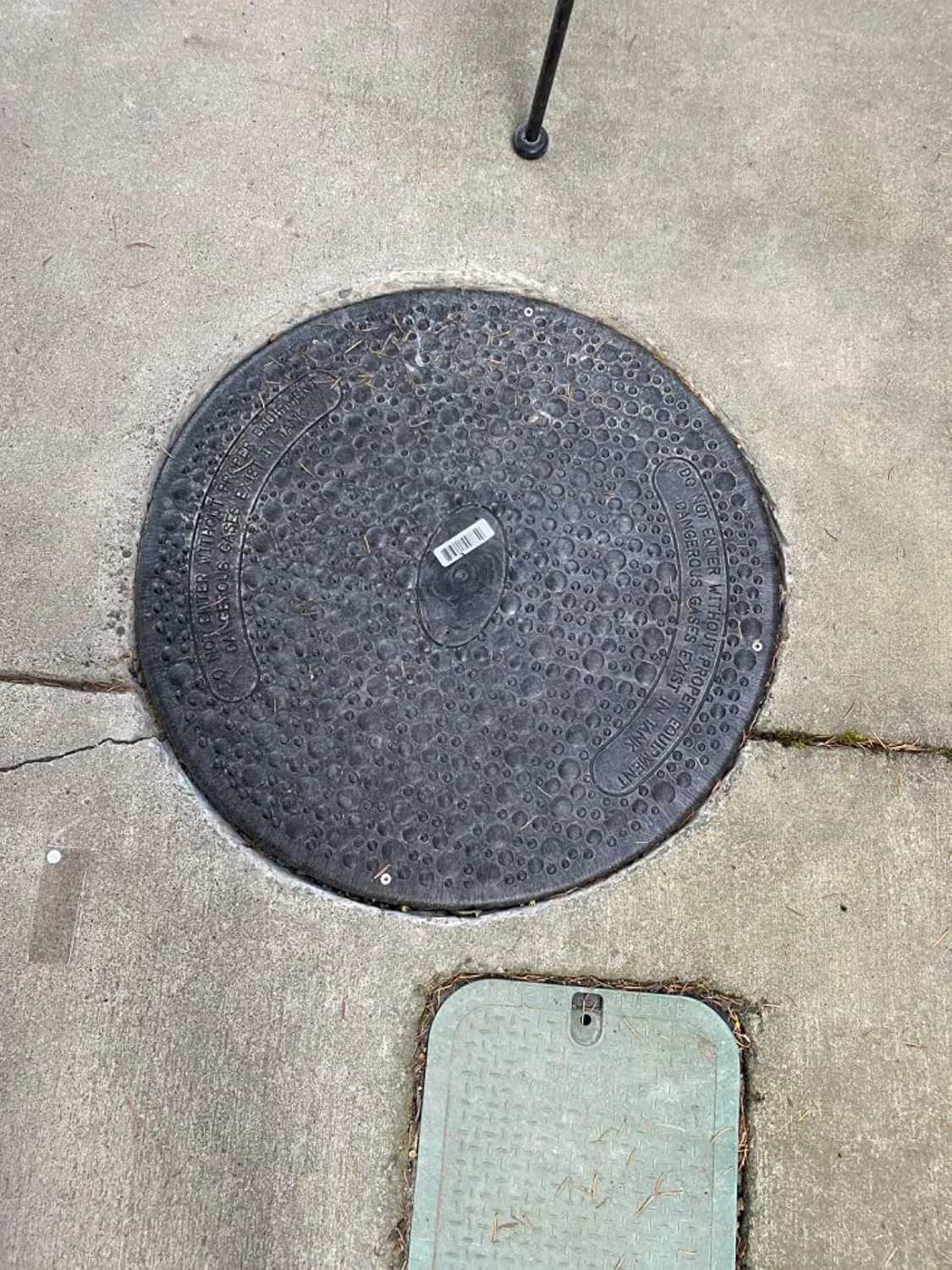
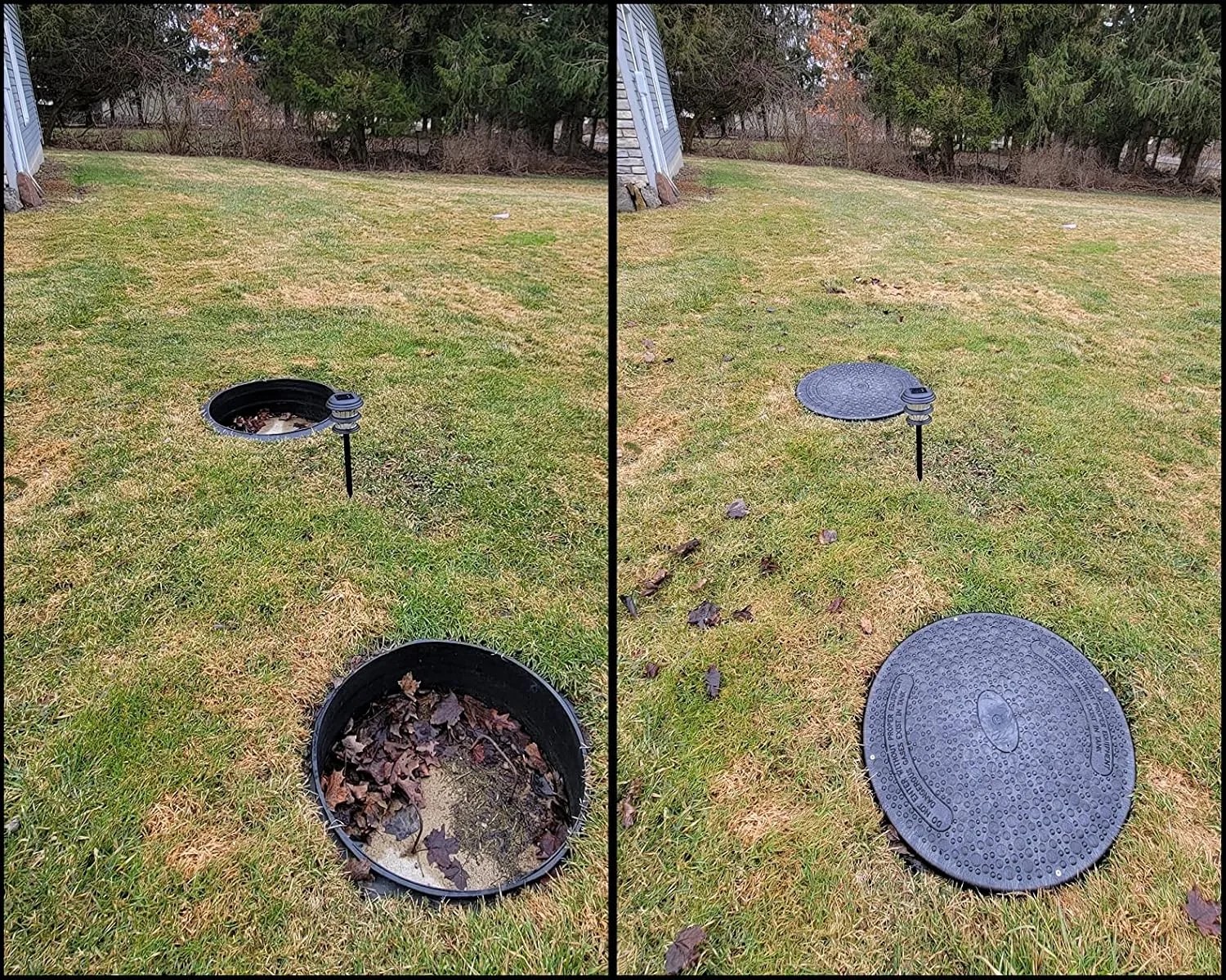
The Tank Access Cover That Saved Me During a 60-Person Party Weekend
When you’re managing a septic system during heavy-use weekends, you need fast access to monitor what’s happening in that tank without digging or calling an emergency pump truck. A proper riser cover turns your buried septic tank into something you can actually inspect and maintain on your own schedule—not just when disaster strikes.
What works
- Saves you from guessing—you can pop the lid and visually check solids levels before a big gathering instead of hoping your system can handle it
- Cuts emergency service time dramatically; I’ve pumped systems in under 30 minutes with easy access instead of spending two hours excavating the tank location
- Makes preventative inspections a real habit instead of a hassle—most homeowners with risers actually look at their systems quarterly, not just when something breaks
What doesn’t
- Installation requires you to either dig down to your tank or hire someone to do it—not a weekend job if your tank is deep or you don’t know where it sits
- Kids and guests will find it, so you need to keep it locked or warn people not to lift the lid during parties (I’ve had too many guests peek inside)
I’ll be honest—I almost didn’t recommend risers to homeowners for years because I made good money on emergency calls, but that Saturday in Tuscaloosa changed my mind. If that woman had been able to check her tank levels 48 hours before the party, she would’ve caught the problem and scheduled a routine pump for $200 instead of paying $650 on a holiday. Get yourself a Jackel Black 24 Inch Diameter Septic Tank Riser Cover (Model: SFRC24B) if you plan to host or know summer parties are coming.
This post contains affiliate links. As an Amazon Associate, I earn from qualifying purchases at no extra cost to you.