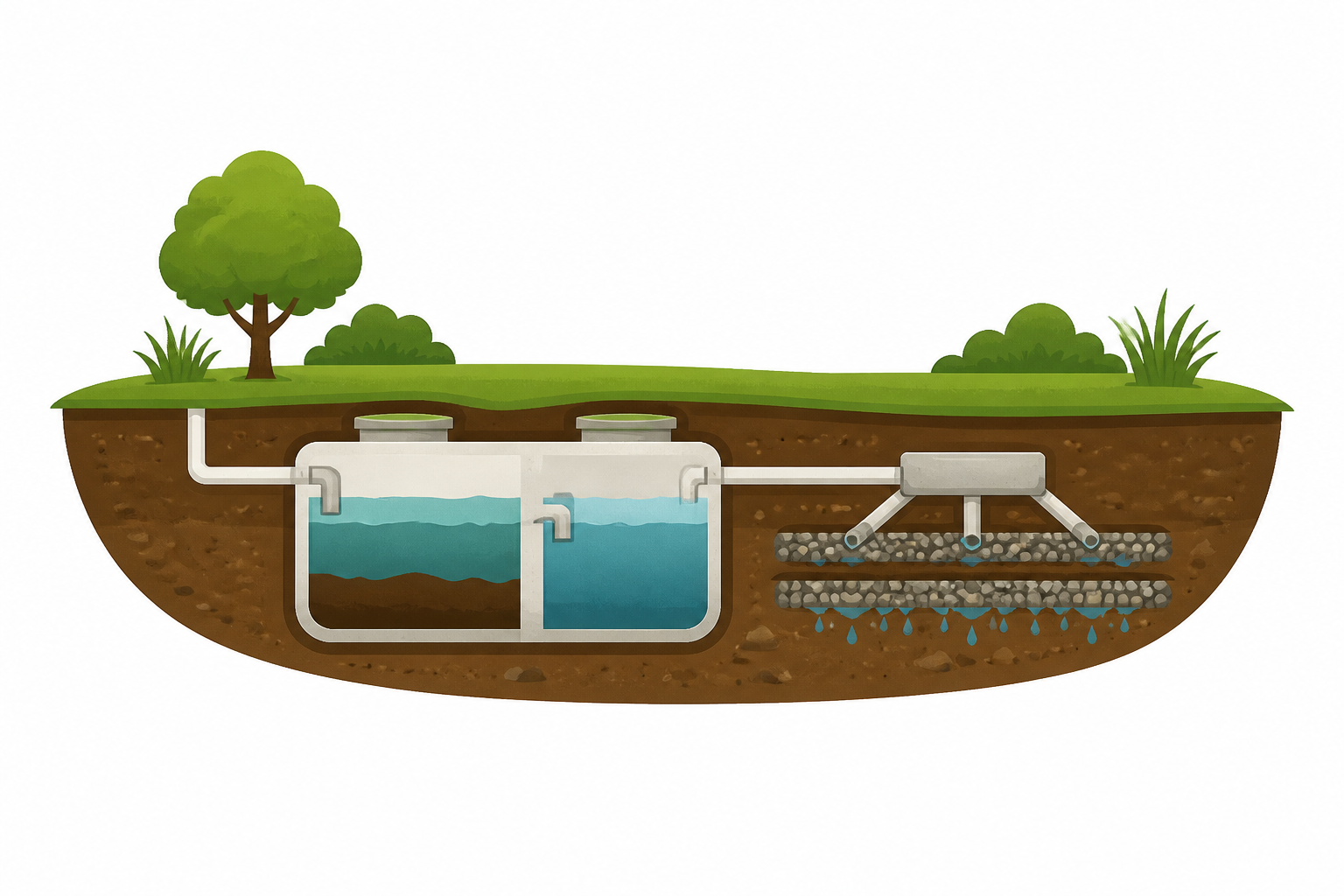

Every October, I run the same fall septic prep checklist on my own property that I’ve been refining for 18 years. I’ve seen what happens when homeowners skip it. Last fall, I got a call from a family in rural Georgia — flooded drainfield, sewage backing up through the shower, and a Thanksgiving gathering two weeks out. Their tank hadn’t been pumped in six years. The ground was already saturated from early rains. That job cost them $2,800 when a $400 pump-out and a 30-minute inspection in October would have prevented all of it.
Fall is the most important maintenance window for septic systems in the rural Southeast. Holiday guests are coming. Rain is picking up. Temperatures are dropping — and in my experience, cold, wet soil is far less forgiving than the dry summer ground most systems are used to. Getting ahead of problems now means you’re not scrambling in December when every septic contractor in the county is already booked solid.
This isn’t a generic checklist pulled from a county brochure. Everything here is something I actually do myself or walk clients through personally. I’ll tell you what to look for, what it means, and when you genuinely need to stop and call someone like me.
Step 1: Pump the Tank — Or Confirm It Doesn’t Need It Yet
The first item on every fall septic prep checklist is tank pumping — or at minimum, checking whether pumping is due. The EPA recommends pumping most residential septic tanks every 3–5 years. However, that range depends heavily on household size, tank capacity, and usage habits. A 1,000-gallon tank serving a family of five needs to be pumped closer to every 2–3 years, in my experience.
Here’s how I check it without pumping every single year: I use a septic tank gauge rod — basically a long stick wrapped in velvet or a similar material — to measure the sludge layer at the bottom and the scum layer at the top. When the combined sludge and scum layers take up more than one-third of the tank’s working capacity, it’s time to pump. Most homeowners don’t have this tool, so if you’re not sure, just schedule an inspection. In my area of the rural Southeast, a pump-out runs $350–$550 depending on access and tank size.
October is the right time because pumping before the holiday surge protects your system during its highest-use period. Pumping in January after a failure is always more expensive — and far more unpleasant.
Step 2: Inspect the Lids, Risers, and Access Points
This is the step most homeowners completely overlook — and it’s the one I’ve seen cause the most safety incidents. Septic tank lids and risers take a beating from UV exposure, freeze-thaw cycles, and ground movement. A cracked or missing lid is a genuine fall hazard, especially with kids and pets around. I personally know of two incidents in my career where children nearly fell into open tanks. That’s not something I’ll ever be casual about.
Every October, I walk every access point on my own property. I check for cracks in the riser body, confirm the lid is seated properly, and make sure there’s no evidence of ground settlement pulling the riser away from the tank collar. Specifically, I look for daylight between the riser base and the tank — that gap means groundwater can enter the tank, which overloads the drainfield with hydraulic pressure it was never designed to handle.
If a lid is cracked, warped, or won’t seat flush, replace it before winter. That leads me directly to the product I recommend most often to clients for this exact issue.
The Tank Cover That Saved Me From a Flooded Inspection
When October rains hit and you’re trying to locate your tank for that annual pump-out, a missing or deteriorated access cover turns a 30-minute job into a muddy, dangerous guessing game. I learned this the hard way — standing in wet leaves trying to probe for a tank I couldn’t see, risking a foot through a hidden opening.
What works
- Stays put through freeze-thaw cycles and heavy fall rains — no shifting or sinking that forces you to re-locate the tank every season
- Makes the pump truck operator’s job faster and safer, which means they actually show up on time and don’t charge extra for a difficult access situation
- Sits flush enough that you can mow over it without worrying, so your tank location doesn’t become a permanent dead spot in your yard
What doesn’t
- Installation requires digging out the existing riser or adapting to non-standard setups — if your tank sits deep or at an angle, you’re spending extra time on the retrofit
- Black plastic absorbs heat in direct sun, which can cause slight warping if left uncovered for years, though this doesn’t affect function
I almost skipped replacing my old rotted cover one October because I thought “I know where the tank is” — until I realized I’d lost track during a landscaping project and nearly drove my truck over it. The Jackel Black 24 Inch Diameter Septic Tank Riser Cover (Model: SFRC24B) fixed that problem permanently.
This post contains affiliate links. As an Amazon Associate, I earn from qualifying purchases at no extra cost to you.
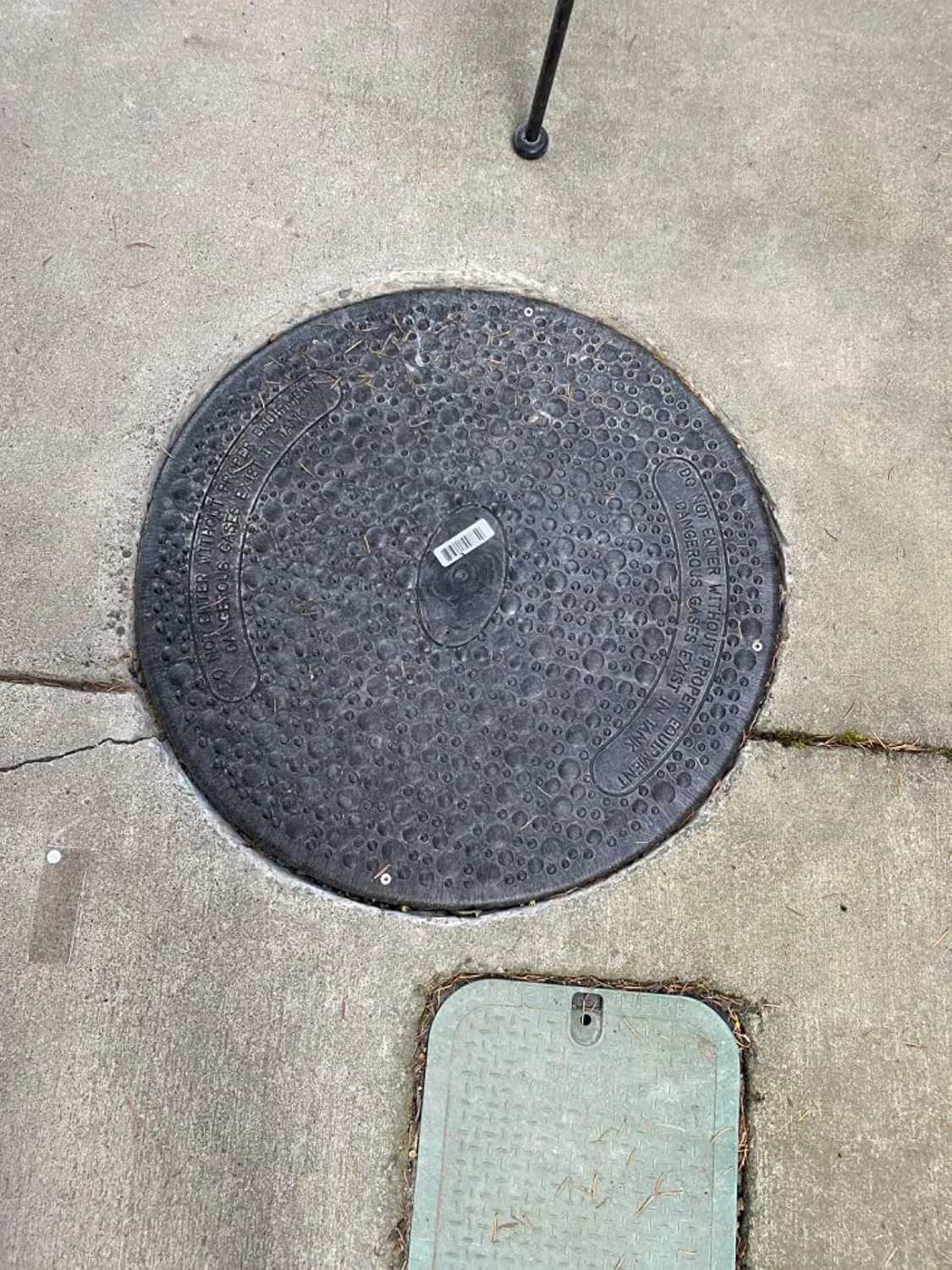
![Customer photo of [specific item/action related to septic maintenance]](https://backyardseptic.com/wp-content/uploads/2026/06/amazon-review-B07JGFDH2Y-2.webp)