This post contains affiliate links. As an Amazon Associate, I earn from qualifying purchases at no extra cost to you.
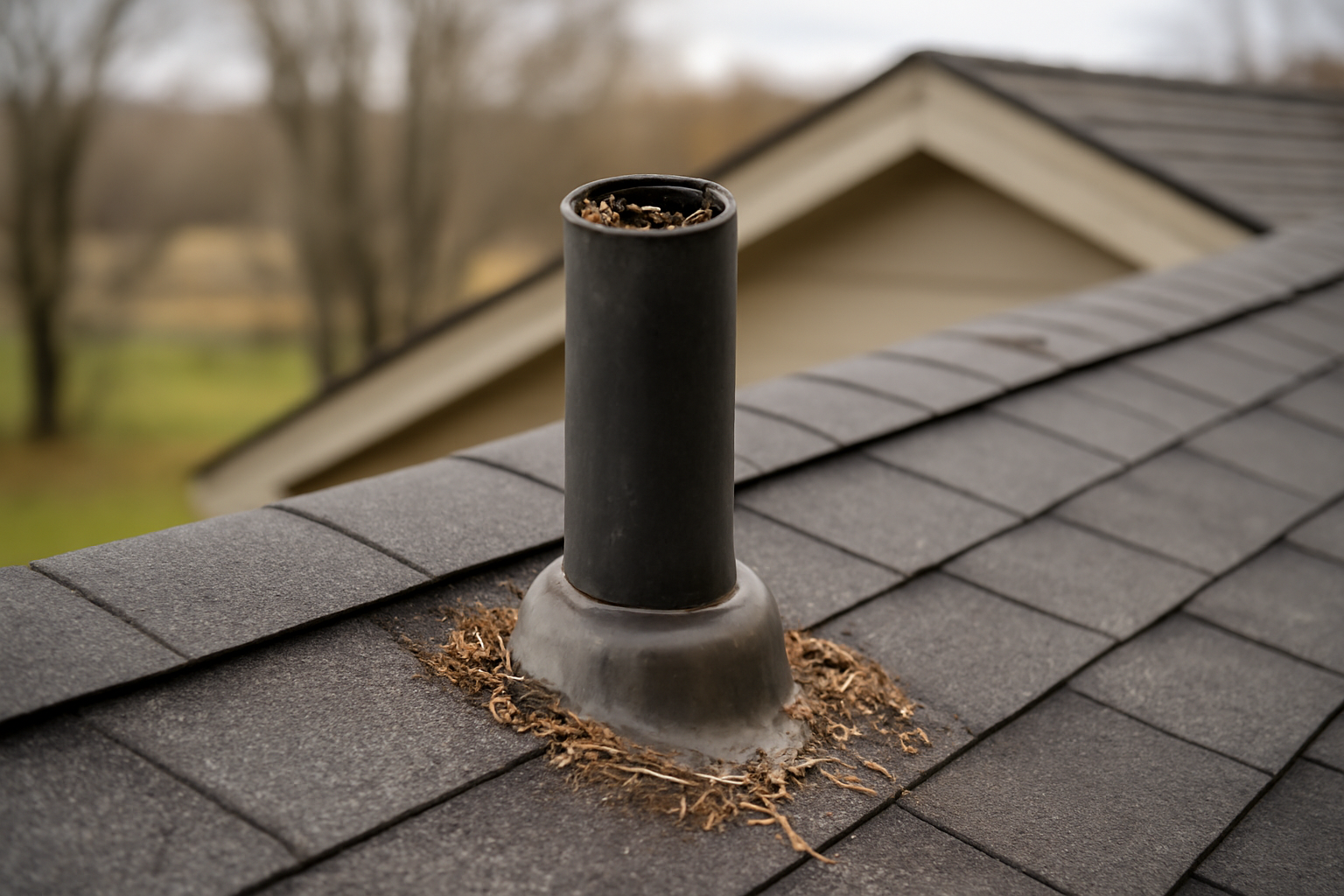
I pulled up to a farmhouse outside of Valdosta, Georgia, last spring, and the homeowner met me at the truck before I even shut off the engine. She was convinced her septic tank needed pumping — again — just fourteen months after her last service. The smell inside was unbearable, drains gurgled constantly, and she’d already poured two bottles of enzyme treatment down every drain in the house. I walked the yard, looked at the tank lids, and then looked up at her roof. The vent stack was completely capped over with a bird nest. That was her entire problem. She didn’t need a pump-out. She didn’t need enzymes. She had septic vent pipe problems that had been quietly making her life miserable for months. Eighteen years of doing this work in the rural Southeast has taught me that the roof vent is the most overlooked component of any septic system — and when it fails, people almost always blame something else first.
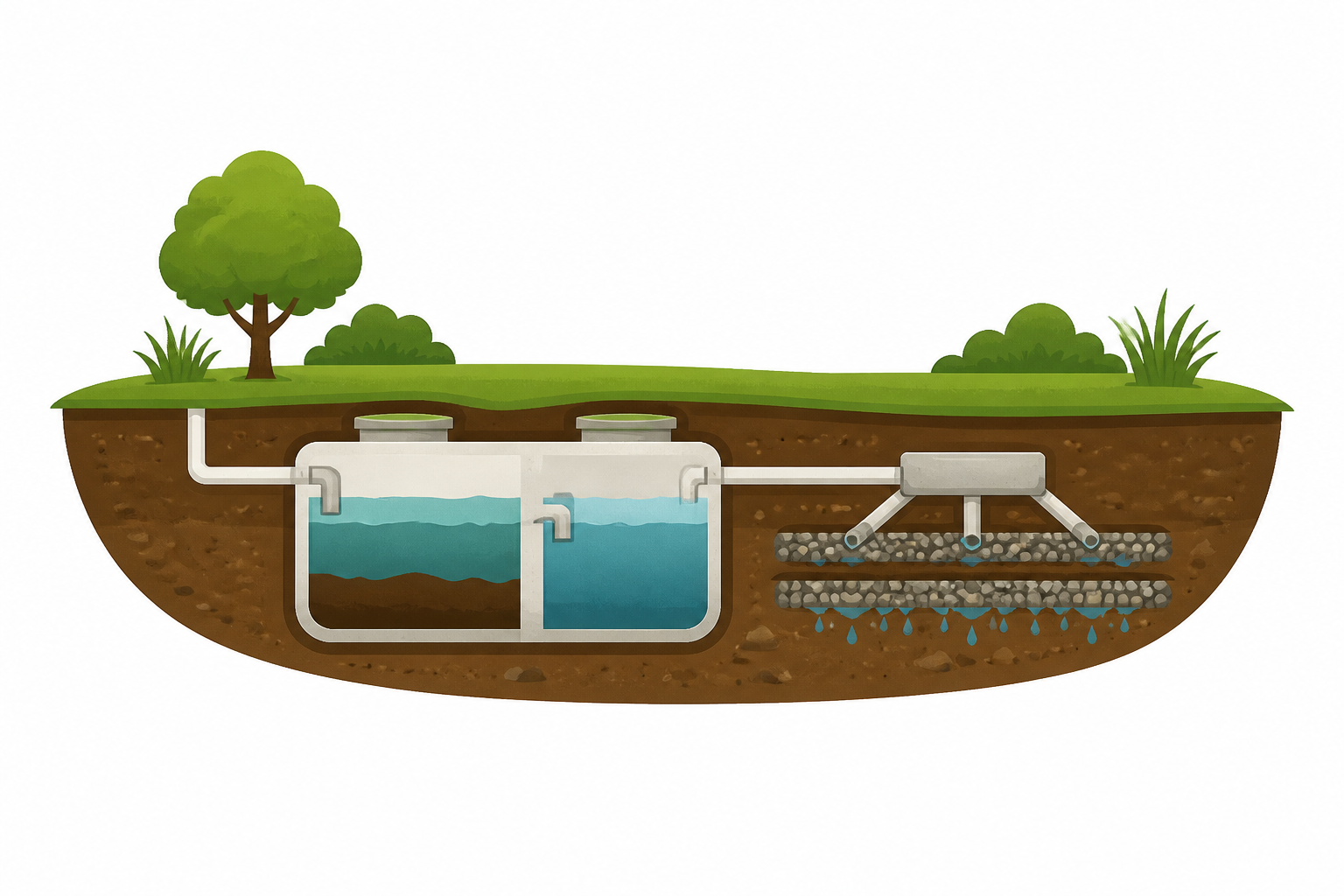
Most homeowners don’t even know their septic system has a vent pipe on the roof. They think about the tank, maybe the drain field, but the plumbing vent stack? That never crosses their mind. However, that pipe is doing critical work every single day. It equalizes air pressure across your entire drain system, allows sewer gases to escape safely above the roofline, and prevents those gases from being siphoned back through your trap seals. When it gets blocked, corroded, or improperly installed, the symptoms cascade fast. In this post, I’m going to walk you through everything I’ve learned the hard way about vent pipe failures — what causes them, how to diagnose them, and exactly what you can do about it.
How Your Septic Vent Pipe Actually Works
Your home’s drain-waste-vent (DWV) system is one interconnected network. The vent stack — typically a 3-inch or 4-inch PVC or ABS pipe — runs vertically from your drain lines up through the roof. Its primary job is to allow atmospheric air into the system so that wastewater flows freely. Think of it like a finger over a straw. Cover the top and liquid won’t drain smoothly. That’s exactly what happens when your vent is blocked or missing entirely.
The second job is equally important: venting sewer gas. Hydrogen sulfide, methane, ammonia, and carbon dioxide all build up naturally inside your septic system. Those gases need somewhere to go. Without a functioning vent stack, they take the path of least resistance — right back through your floor drains, toilet bowls, and sink traps. The International Plumbing Code (IPC) and most state health department regulations require a properly terminated vent at least 6 inches above the roof surface, and many rural Southeast counties follow their own amendments on top of that. In Georgia, for example, the state’s On-Site Sewage Management rules specifically address venting requirements for systems installed after 2000.
In my experience, a lot of older homes — especially those built in the 1970s and 1980s throughout rural Alabama, Georgia, and the Carolinas — were plumbed with cast iron or galvanized vent stacks. Those materials corrode from the inside out. By the time you see rust stains on the ceiling below, the pipe interior is already heavily restricted. That restriction alone can cause every symptom homeowners typically blame on a full tank.
The Most Common Septic Vent Pipe Problems I See in the Field
After nearly two decades of service calls, I can tell you the same problems show up again and again. Knowing what you’re dealing with is half the battle.
Blockages from Nests, Leaves, and Ice
Birds and squirrels love an open vent stack. I’ve pulled out mud dauber nests, twigs, leaves, and once — I’m not joking — a dried-out rat snake from a 3-inch stack in rural Mississippi. Leaf debris accumulates on top of the pipe opening and gets wet, compacting into a plug. In colder climates and even during Georgia’s occasional hard freezes, condensation inside the pipe can ice over the opening completely. The fix is usually straightforward — clear the obstruction and install a proper vent cap — but the damage done to those water trap seals in the meantime can take days to correct.
Corroded or Collapsed Pipe Sections
Older cast iron stacks corrode from hydrogen sulfide exposure. I’ve cut open vent pipes that had less than a half-inch of clear diameter left inside a nominal 3-inch pipe. That’s not venting anything effectively. PVC replaced cast iron in most new construction by the early 1990s, but there are thousands of homes in this region still running original cast iron. If your home was built before 1985 and you’ve never had the vent stack inspected, there’s a real chance the interior is heavily restricted.
Improper Termination Height
I’ve seen stacks that were cut off flush with the roof deck during a re-roofing job. Roofers aren’t plumbers — no offense to roofers — and sometimes that pipe just gets shortened or accidentally sealed with flashing material. The IPC requires termination at least 6 inches above the roof surface, with additional height required near windows, doors, or HVAC intakes. When a vent terminates too low, wind currents can actually push sewer gases back into the pipe and into the house. Specifically, this is called “backdrafting,” and it’s a genuinely miserable problem to diagnose if you don’t know to look for it.
Missing Vents on Added Plumbing
This one shows up constantly on renovation jobs. A homeowner adds a bathroom, a laundry room, or a basement wet bar — and the contractor runs the drain lines but never properly connects a vent. As a result, that fixture sucks air through its own trap every time it drains, creating a gurgling sound and eventually allowing sewer gas entry. This is a code violation under virtually every jurisdiction I’ve worked in, but it happens constantly in rural areas where permit inspections are inconsistent.
How to Diagnose a Vent Pipe Problem Before Calling Anyone
You don’t need any special tools for an initial diagnosis. Here’s what I tell homeowners to check first before they spend money on a service call.
- Gurgling drains: This is the classic sign. If your toilet gurgles when you flush a sink, or your tub gurgles when the washing machine drains, you likely have a venting issue — not a full tank.
- Slow drains in multiple fixtures: One slow drain is usually a local clog. Multiple slow drains throughout the house point toward a venting or main line problem.
- Sewer odor indoors: Specifically when no fixtures are running, this means gases are entering through compromised trap seals — a direct consequence of negative pressure from a blocked vent.
- Sewer odor outdoors near the roofline: If you smell it outside but not inside, the vent is working but exhausting gas too close to a window or HVAC intake. You need a taller termination or a filter.
- Visual inspection from the ground: Use binoculars. Look at the pipe opening. Can you see debris, a nest, or a missing cap? That’s your answer right there.
A garden hose inserted into the vent stack from the roof (carefully — always use fall protection) can help flush out soft blockages. However, don’t use a pressure washer. I made that mistake early in my career and blew a PVC coupling loose inside an attic. Cost me three hours and a client’s patience to repair it.
The Filter That Proved the Problem Wasn’t Inside the Tank
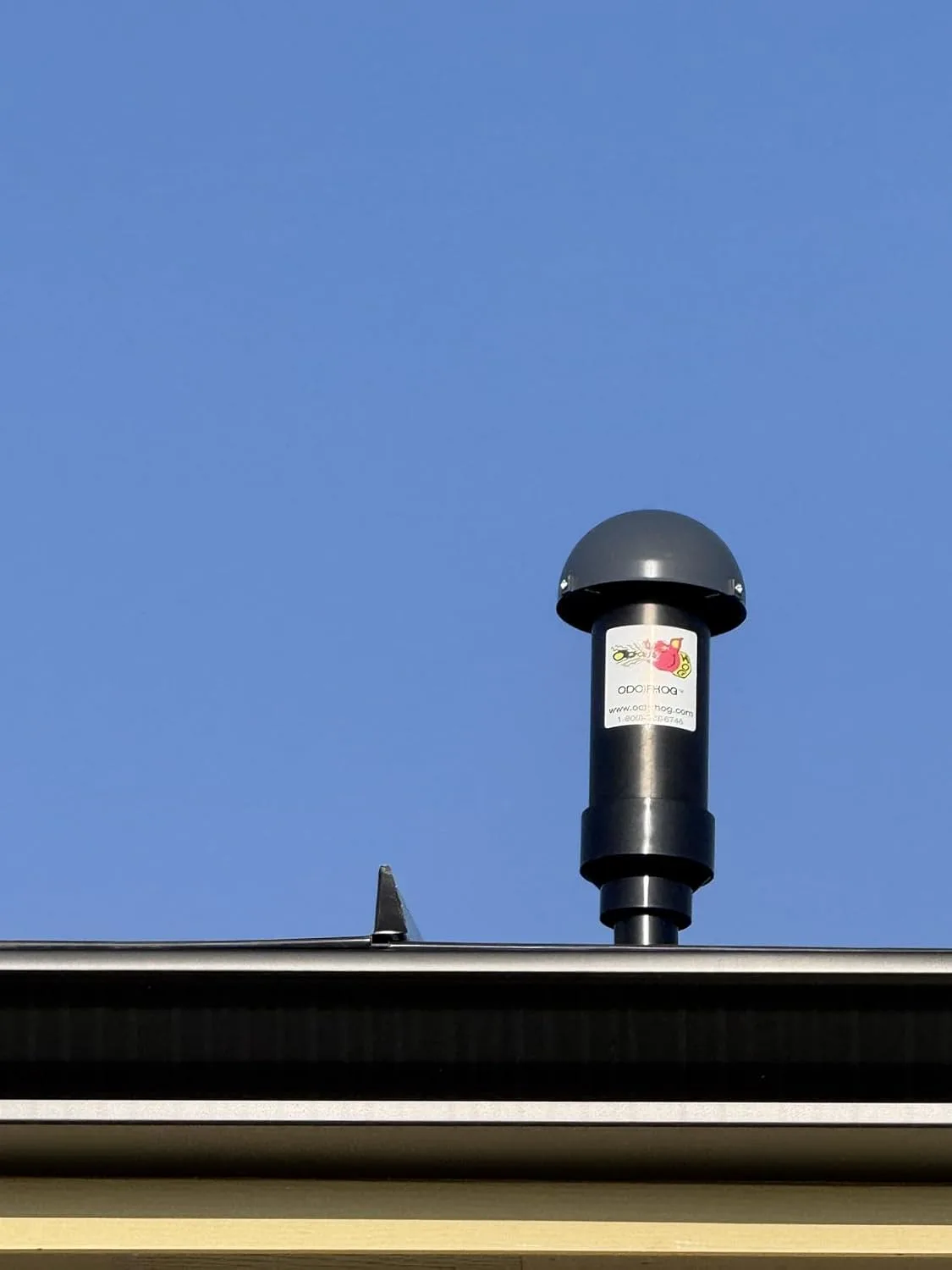
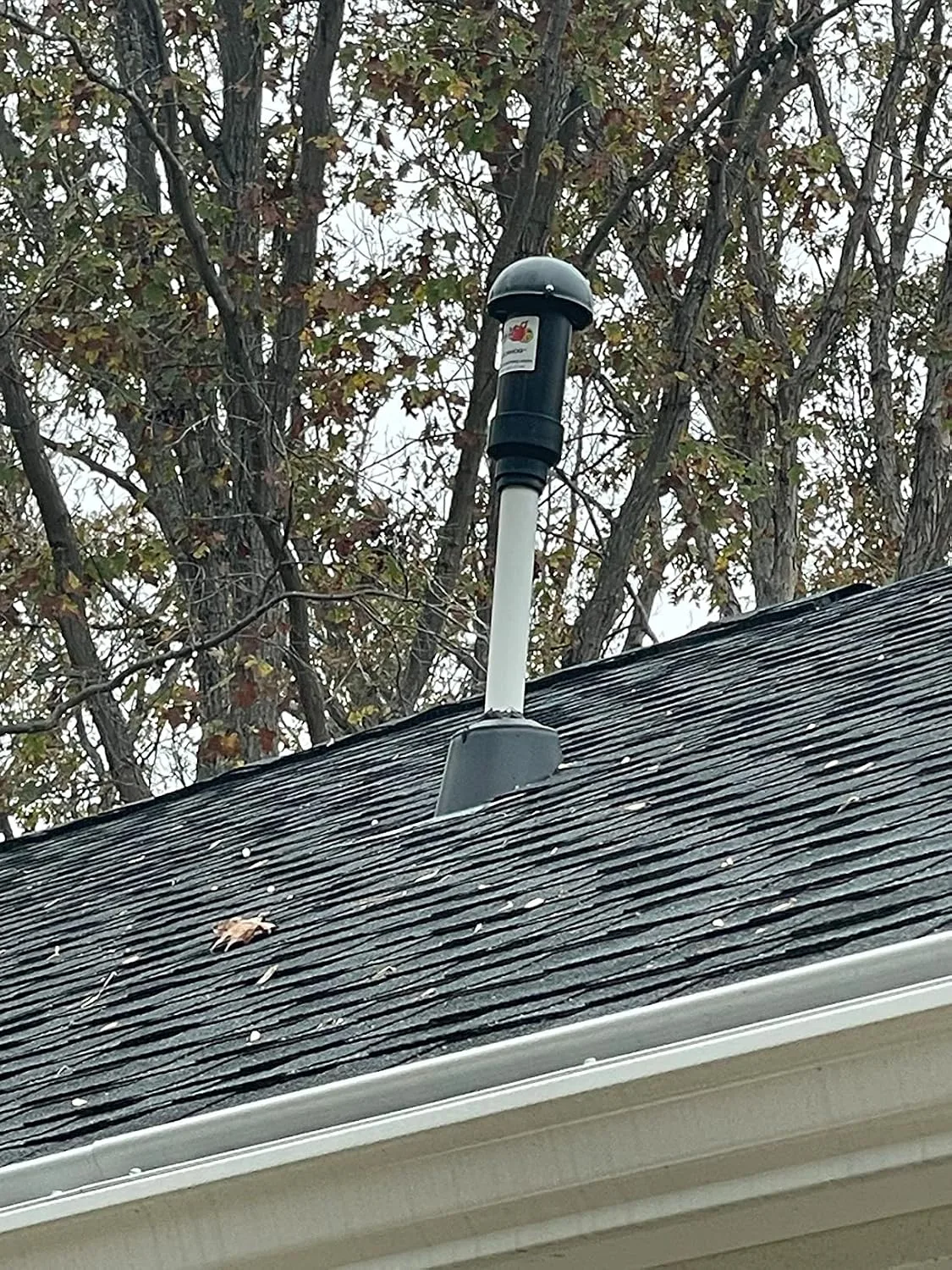
That farmhouse smell and those constant drain gurgles pointed to a clogged or missing vent stack filter — not a full septic tank. A blocked roof vent forces gases and pressure back into the system, creating the exact symptoms the homeowner was experiencing.
What works
- Stops odors at the source instead of masking them downstairs — you notice the difference within hours of installation
- The mushroom cap design actually sheds rain and debris instead of becoming a collection point, so it stays functional year-round without monthly cleaning
- Fits standard 3-inch ABS vent stacks with a wrench — no cutting, no special tools, no calling a plumber for a $300 service call
What doesn’t
- The black ABS can fade to gray after a couple of seasons in direct sunlight, though functionality stays the same
- In areas with heavy snow, wet leaves, or cottonwood fluff, you’ll want to inspect it every spring rather than just forgetting it exists
I almost ordered a new pump truck to that farmhouse before I climbed the roof and saw the old filter was completely caked with lint — I nearly missed the simplest fix on the call sheet. If you haven’t checked your roof stack in the last year, grab an OdorHog Vent Stack Pipe Filter (3.0-inch, Black ABS with Mushroom Cap) and do it today.
This post contains affiliate links. As an Amazon Associate, I earn from qualifying purchases at no extra cost to you.