This post contains affiliate links. As an Amazon Associate, I earn from qualifying purchases at no extra cost to you.
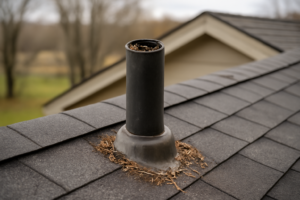
I got a call last July from a homeowner outside of Moultrie, Georgia, who had already spent over $400 on enzyme treatments, charcoal tablets, and something marketed as a “bio-activator crystal” — all trying to kill the rotten-egg smell coming from her yard. None of it worked. When I showed up, I found the problem in about eight minutes: her 4-inch vent stack pipe had no filter, and the prevailing wind was pushing sewer gas straight toward her back porch every afternoon. That visit cost her $85 for my time and about $60 for the right fix. The other $400 was wasted chasing septic odor fixes that were never going to solve her actual problem.
That story plays out more than you’d think. Septic smells are one of the most misunderstood problems in rural home ownership, and the internet is full of bad advice that sounds plausible until you understand how these systems actually work. After 18 years of pumping, installing, and inspecting systems across South Georgia, North Florida, and the Alabama hill country, I’ve seen every kind of odor problem there is. Some need a $50 fix. Others need a backhoe. This post is going to help you tell the difference — and stop spending money on things that don’t work.
Why Septic Odors Happen in the First Place
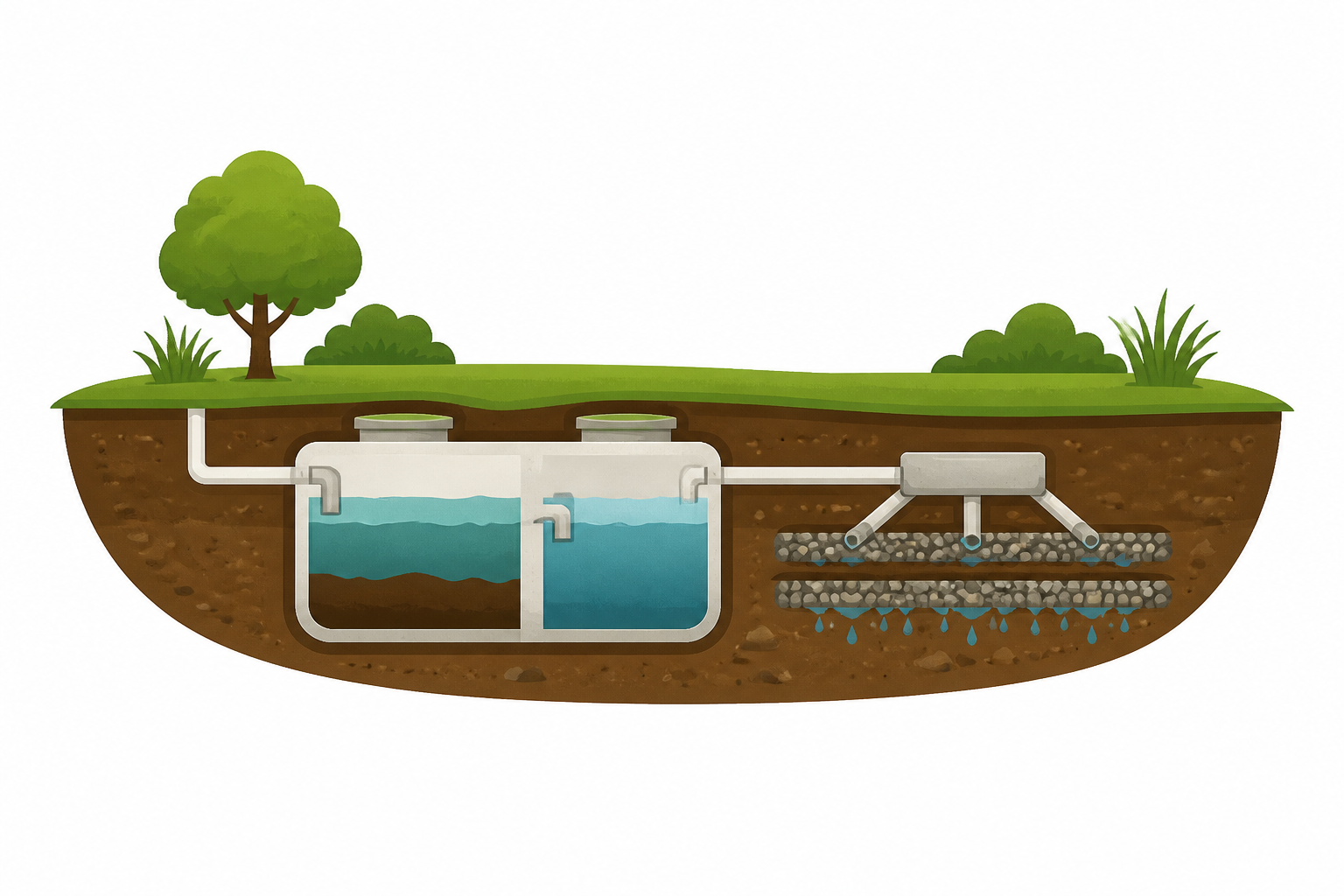
Before you can fix anything, you need to understand the source. Septic systems produce hydrogen sulfide gas — that’s your classic rotten-egg smell — along with methane, ammonia, and other volatile organic compounds. These gases are a normal byproduct of anaerobic bacterial digestion inside the tank. The system is designed to vent those gases safely through your plumbing stack, up through the roof, and away from living areas. When that venting pathway fails or gets bypassed, you smell it.
There are three places odors typically escape: through the roof vent stack, through the ground near the drain field, or back through your interior plumbing. Each one has a different cause and a different fix. In my experience, most homeowners jump straight to treating the tank when the real issue is the vent. That’s like putting a bandage on your knee when the cut is on your elbow — it feels productive, but it accomplishes nothing.
Understanding which zone the smell is coming from is your first job. Smell inside the house? That’s almost always a plumbing issue — dry P-traps, a cracked wax ring, or a failed toilet seal. Smell outside near the tank lid or drain field? That points to the tank, inlet baffle, or soil absorption issues. Smell outside but nowhere near the tank — especially downwind? That’s the vent stack. Knowing this saves you money before you spend a single dollar.
Septic Odor Fixes That Actually Work
Fix 1: Install a Vent Stack Filter
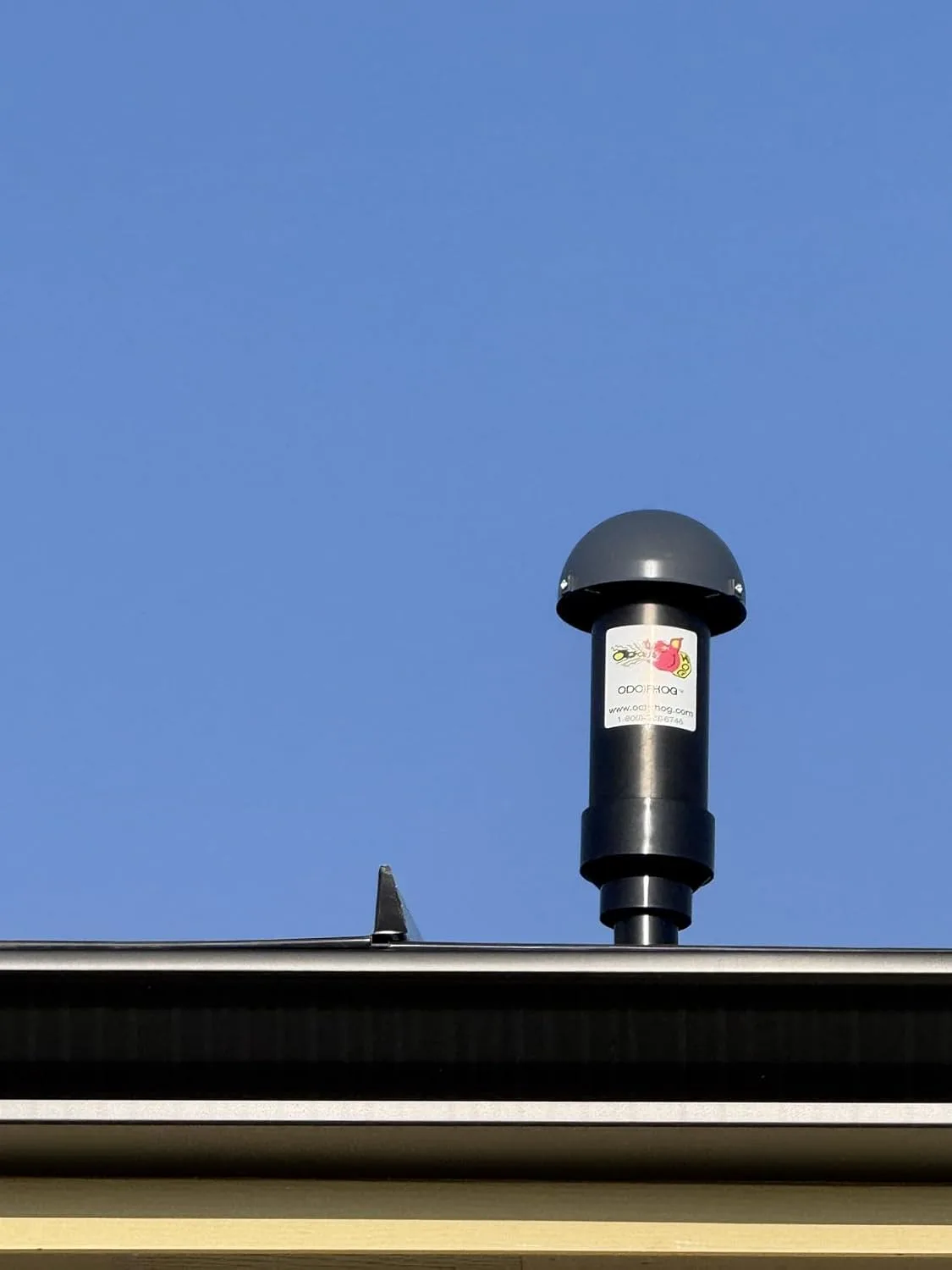
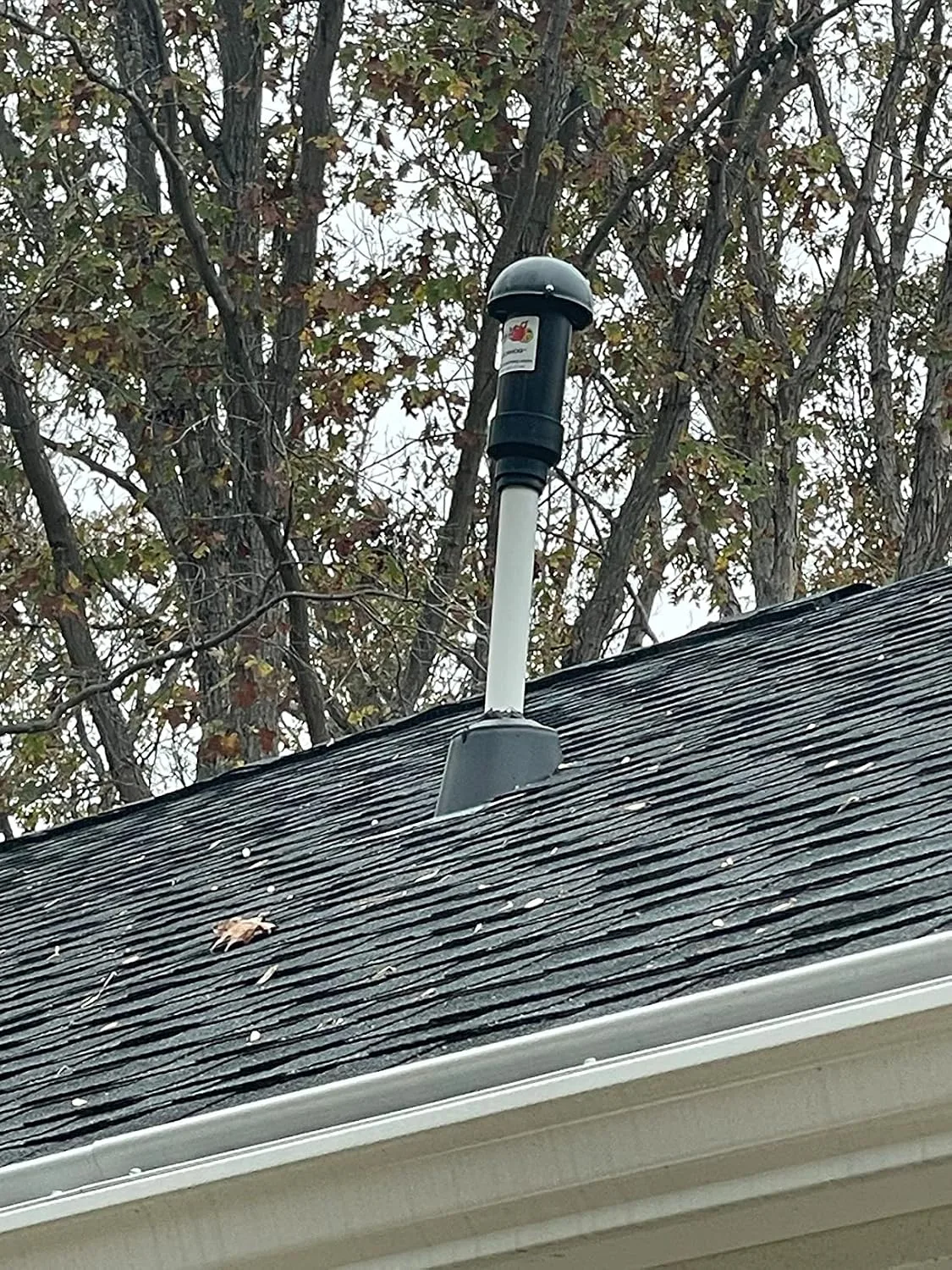
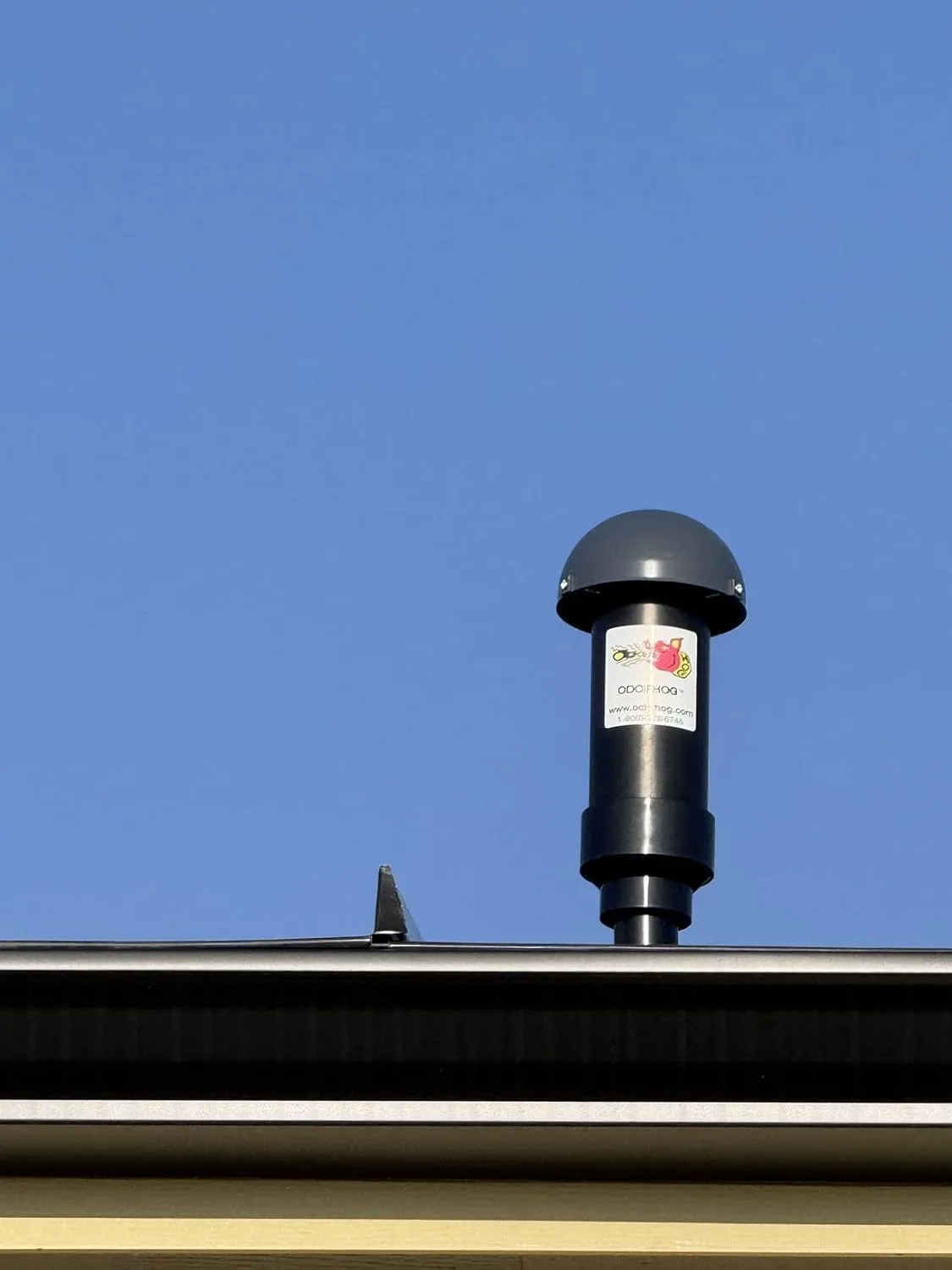
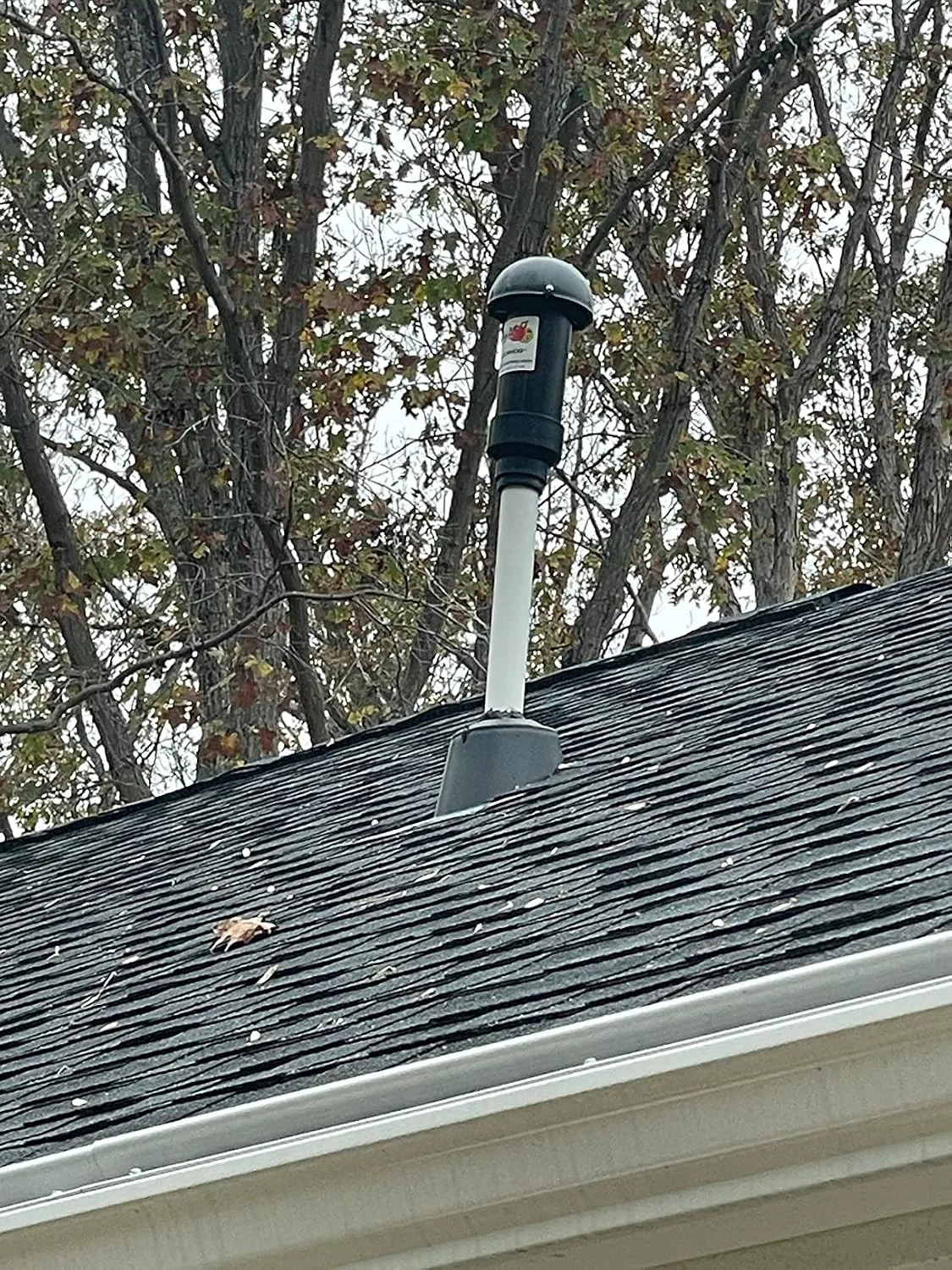
This is the single most effective fix I’ve seen for outdoor septic odors, and it’s dramatically underused. A carbon-filter vent pipe cap sits on top of your roof vent stack and filters the outgoing gas through activated carbon before it disperses into the air. The hydrogen sulfide gets neutralized rather than released. Result: the smell disappears within a day or two of installation, no chemistry required.
The first time I installed one of these, I was skeptical. A client in rural Lowndes County had complained about smell for two summers straight. Her plumbing was fine, her tank level was normal, and her drain field tested clean. I put a carbon vent filter on her 3-inch stack on a Wednesday afternoon. She called me Thursday morning to say she’d already noticed a difference. That was about six years ago, and I’ve since put these on dozens of systems.
Fix 2: Check and Repair Your P-Traps
If the smell is inside your home, the first thing I check is every P-trap in the house. These are the curved pipe sections under sinks and behind toilets. They hold a small amount of water that acts as a seal against sewer gas. In a guest bathroom that rarely gets used, that water evaporates — sometimes in as little as three to four weeks in a hot, dry summer. Once it’s gone, you have a direct open path from your septic system into your living space.
The fix is embarrassingly simple: run every faucet and flush every toilet in the house once a week. For vacation homes or seasonal properties, pour a cup of mineral oil down each drain before you leave. Mineral oil sits on top of the water and slows evaporation significantly. This costs maybe $3 and five minutes, and it works. I’ve also seen floor drain P-traps in laundry rooms and garages cause major interior odor problems — those get forgotten constantly.
Fix 3: Inspect the Tank Inlet Baffle
The inlet baffle is a T-shaped fitting inside your septic tank, right at the point where your main sewer line enters. Its job is to direct incoming wastewater downward, below the scum layer, so gases don’t escape back up the inlet pipe and into your house. When that baffle deteriorates — and in older concrete tanks, it often does — gases can travel backward through your sewer line and come up through every drain in the home.
Replacing an inlet baffle typically costs $150 to $350, depending on tank access and your region. In the Southeast, I charge around $200 for a standard replacement during a pump-out visit. That said, you cannot assess baffle condition without opening the tank. This is not a homeowner DIY job — hydrogen sulfide gas at confined concentrations is lethal, and septic tanks are classified as confined spaces under OSHA standard 1910.146. Always hire a licensed professional to open and inspect a tank.
Fix 4: Address Drain Field Odors at the Source
Surface odors near the drain field usually indicate one of two things: the field is saturated and releasing gases through the soil surface, or the distribution box has a failed outlet cap that’s allowing gas to escape. Either way, this is a more serious situation. A healthy drain field should absorb effluent quietly, with no surface odor, no standing water, and no unusually lush grass growth over the leach lines.
I learned this the hard way on one of my first solo jobs, back in 2008. A homeowner had sewage odor near his field and I told him to add a bacterial treatment to the tank. He called back three weeks later with sewage surfacing in his yard. The field was already failing — I had misread the symptom. That mistake cost him a full system replacement at around $8,500 and taught me to take field odors seriously from day one. Don’t treat the tank when the problem is the field.
Septic Odor Fixes That Waste Your Money
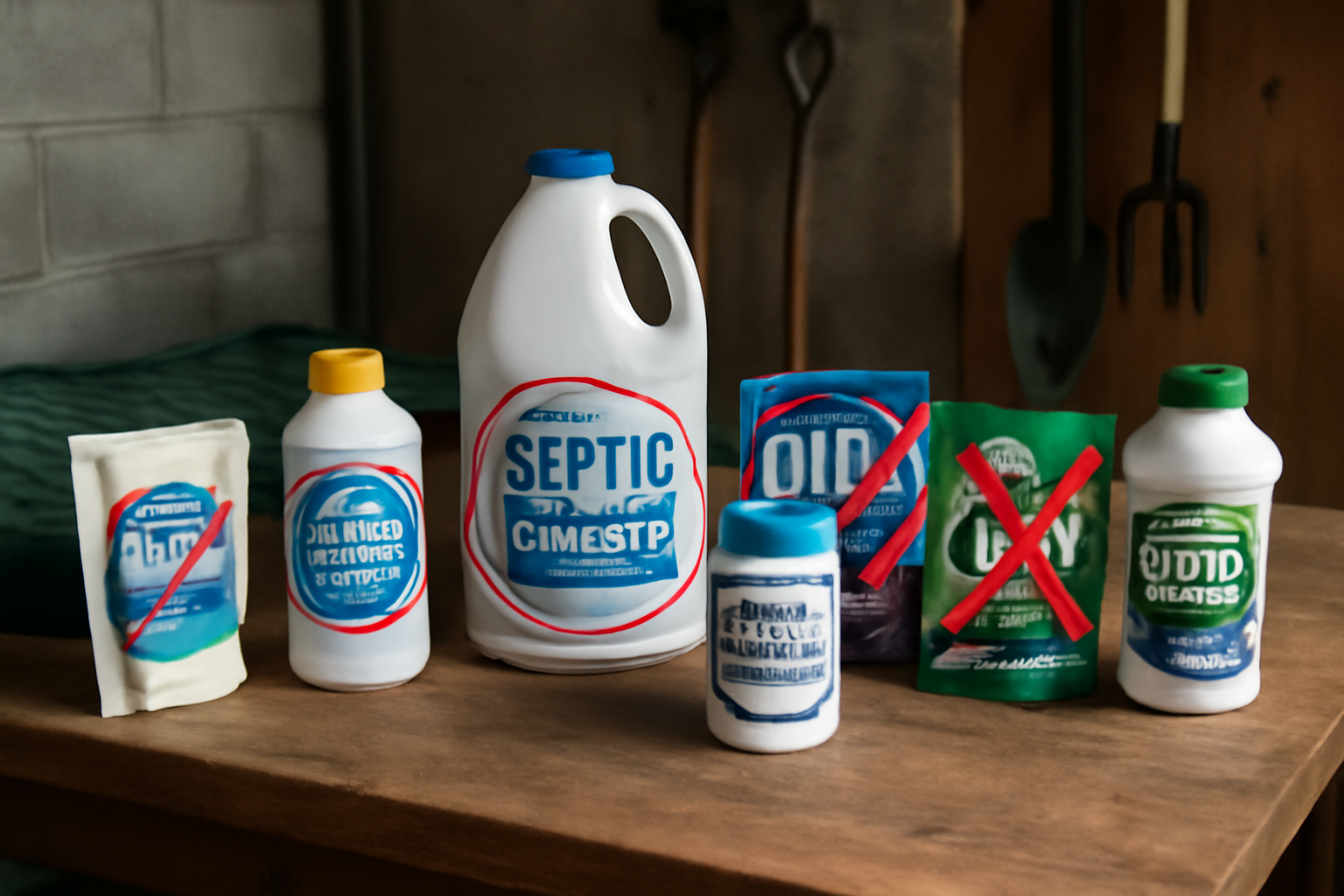
Let me be direct here: most of the products marketed as septic treatments at hardware stores and big-box retailers are a waste of money for odor problems. Enzyme treatments and bacterial additives are the biggest offenders. A healthy septic tank already contains billions of naturally occurring anaerobic bacteria doing the digestion work. Adding more bacteria doesn’t meaningfully change gas production — and it certainly doesn’t fix a failed baffle, a dry P-trap, or a saturated drain field.
The EPA’s own guidance on septic system maintenance is notably skeptical of these additives. Their published materials note that biological additives are not necessary for a properly functioning system and may in some cases harm the drain field by releasing solids that should remain in the tank. However, companies spend millions marketing these products, and homeowners understandably reach for them first because they’re easy and cheap. I’m not saying they’re always harmful — I’m saying they won’t fix odor problems.
Charcoal tablets dropped into the tank, “odor bombs,” scented vent covers, and aerosol sprays near the clean-out access are all in the same category. They may mask a smell briefly, but they address zero root causes. Specifically, if your vent stack is pushing gas toward your porch every afternoon, no amount of spray is going to stop it. You need to filter the gas at the stack — which brings me to the product I personally recommend.
The Vent Stack Filter That Finally Stopped the Rotten-Egg Smell
Most septic odors don’t come from inside the tank — they come pouring out of your vent stack. A clogged or unfiltered stack pipe is the real culprit behind that rotten-egg smell, and no enzyme treatment or bio-activator will fix it if air can’t escape properly.
What works
- Stops sewer gas from venting directly into your yard — the filter traps odors at the source instead of treating symptoms downwind
- Maintains proper system ventilation so your tank can breathe without pumping smell into the air
- Works on existing stacks without digging or tank work — a 15-minute install on top of your pipe
What doesn’t
- The filter needs replacing every 12–24 months depending on tank activity, so it’s not a one-time fix
- Won’t help if your actual problem is a full tank or damaged drain field — it only solves vent odors
I was skeptical the first time I installed one — seemed too simple to beat $400 in failed treatments — but within a week the homeowner called back and said the smell was completely gone. You can find the OdorHog 3-inch version here on Amazon
This post contains affiliate links. As an Amazon Associate, I earn from qualifying purchases at no extra cost to you.