This post contains affiliate links. As an Amazon Associate, I earn from qualifying purchases at no extra cost to you.
I got a call last spring from a homeowner in Pickens County, Georgia. She’d already gotten two quotes — one for $1,800 to repair her failing drainfield, and one for $14,500 to replace the entire system. She wanted to know which one made sense. That question sits right at the heart of septic repair vs replacement cost, and it’s one I answer more than almost any other in my 18 years of work across rural Alabama, Georgia, and Tennessee. Getting it wrong doesn’t just cost money. It means you’re back in the same hole — literally — within two or three years.
Here’s the honest truth most contractors won’t tell you upfront: not every repair is a good investment, and not every system that looks like it needs replacing actually does. The tipping point between a smart repair and a necessary replacement comes down to system age, failure type, soil condition, and local health department regulations. I’m going to walk you through exactly how I evaluate that decision on a job site, using real numbers and real scenarios from the field.
What a Septic Repair Actually Covers — and What It Doesn’t
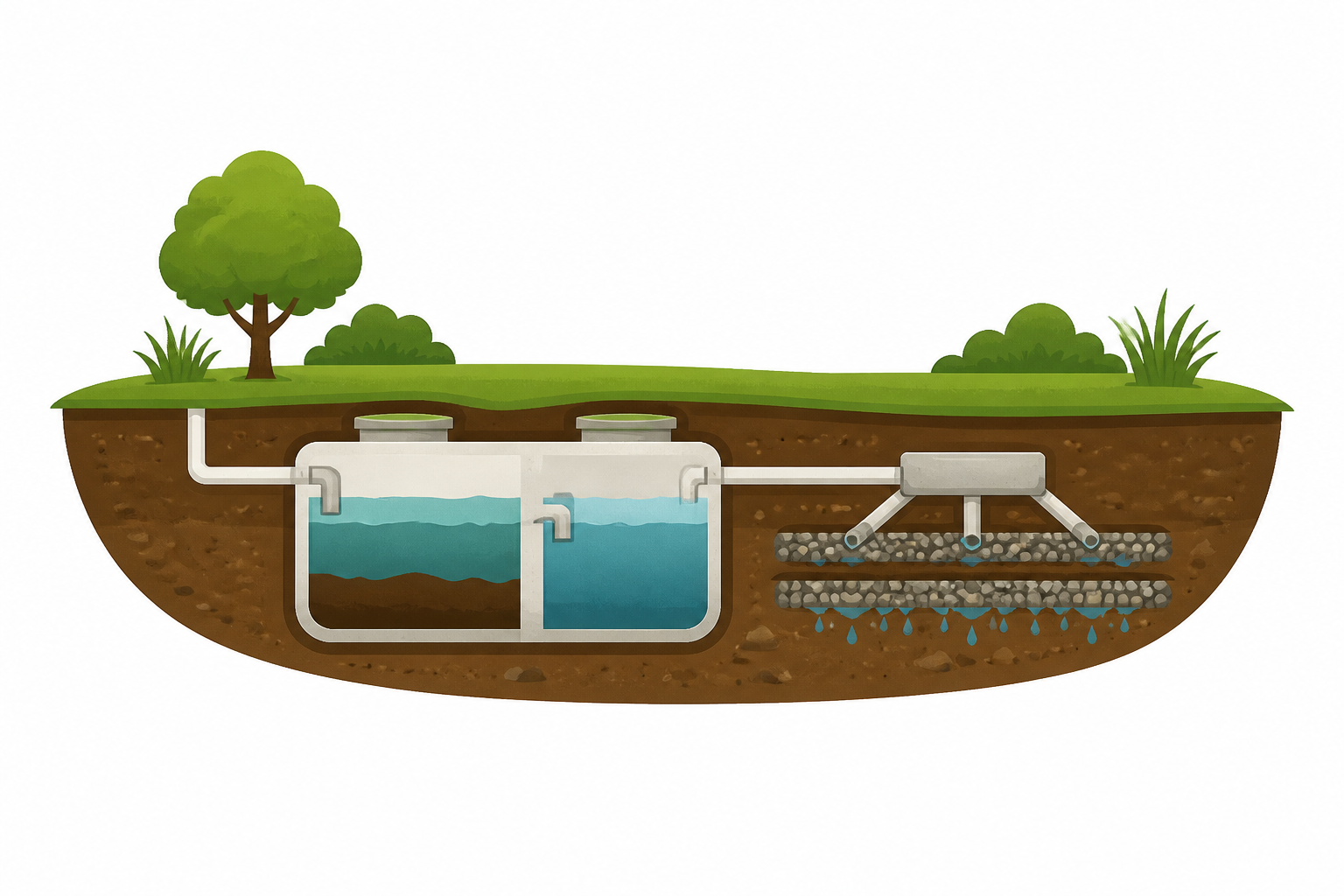
Most homeowners think “septic repair” means fixing the tank. In reality, septic systems have four major components: the tank itself, the inlet and outlet baffles, the distribution box or D-box, and the drainfield. Each one fails differently. Each one costs a different amount to fix. Understanding what’s actually broken is the first step to knowing whether you’re looking at a repair or a replacement.
A cracked baffle, for example, is a straightforward repair. I can replace a concrete or PVC baffle in under two hours for $150–$350 in most cases. A damaged distribution box runs $400–$800 installed. Crushed inlet or outlet pipes? Usually $500–$1,200 depending on how deep the line is buried. These are legitimate repairs that extend system life without breaking the bank. However, when the failure is inside the drainfield — saturated soils, biomat buildup, collapsed laterals — that math changes completely.
Drainfield repairs are where I see homeowners get burned. Some contractors will “rejuvenate” a failing field using aeration or jetting for $800–$2,500. In my experience, that buys you time — sometimes a year or two — but it rarely fixes the underlying cause. If the soil has been hydraulically overloaded or the biomat has fully sealed the infiltrative surface, no amount of jetting restores percolation permanently. That’s not a repair situation. That’s a replacement situation wearing a repair price tag.
The Real Septic Repair vs Replacement Cost Numbers
Let me give you actual figures from recent jobs in the rural Southeast, because vague ranges don’t help you make a decision. These costs reflect 2023–2024 pricing in Georgia, Alabama, and East Tennessee. Your area may vary by 10–20%, but the proportions hold.
Common Repairs and What They Cost
- Baffle replacement: $150–$400
- Distribution box replacement: $400–$900
- Inlet/outlet pipe repair: $500–$1,500
- Pump replacement (for pump systems): $800–$2,000
- Drainfield aeration or jetting: $800–$2,500
- Partial lateral replacement (1–2 lines): $2,000–$4,500
Full Replacement Costs in the Rural Southeast
- Conventional gravity system (3-bedroom home): $8,000–$15,000
- Pump-to-drainfield system: $10,000–$18,000
- Mound system (poor soil or high water table): $15,000–$25,000
- Aerobic treatment unit (ATU): $12,000–$20,000 installed
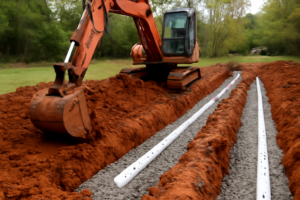
That Pickens County homeowner I mentioned? Her tank and baffles were in good shape. The D-box was cracked and misaligned, which had been sending uneven flow to one side of her drainfield for years — overloading it. Two laterals were dead. Two were still viable. We replaced the D-box, capped the two failed laterals, and added two new ones in a previously unused section of her lot. Total cost: $4,200. System has been running clean for 14 months. That was a repair worth making.
Five Signs You’ve Hit the Replacement Tipping Point
This is the part I want you to bookmark. After nearly two decades of evaluating systems, these are the five indicators that consistently tell me a repair is throwing good money after bad.
1. The System Is 25+ Years Old with No Upgrade History
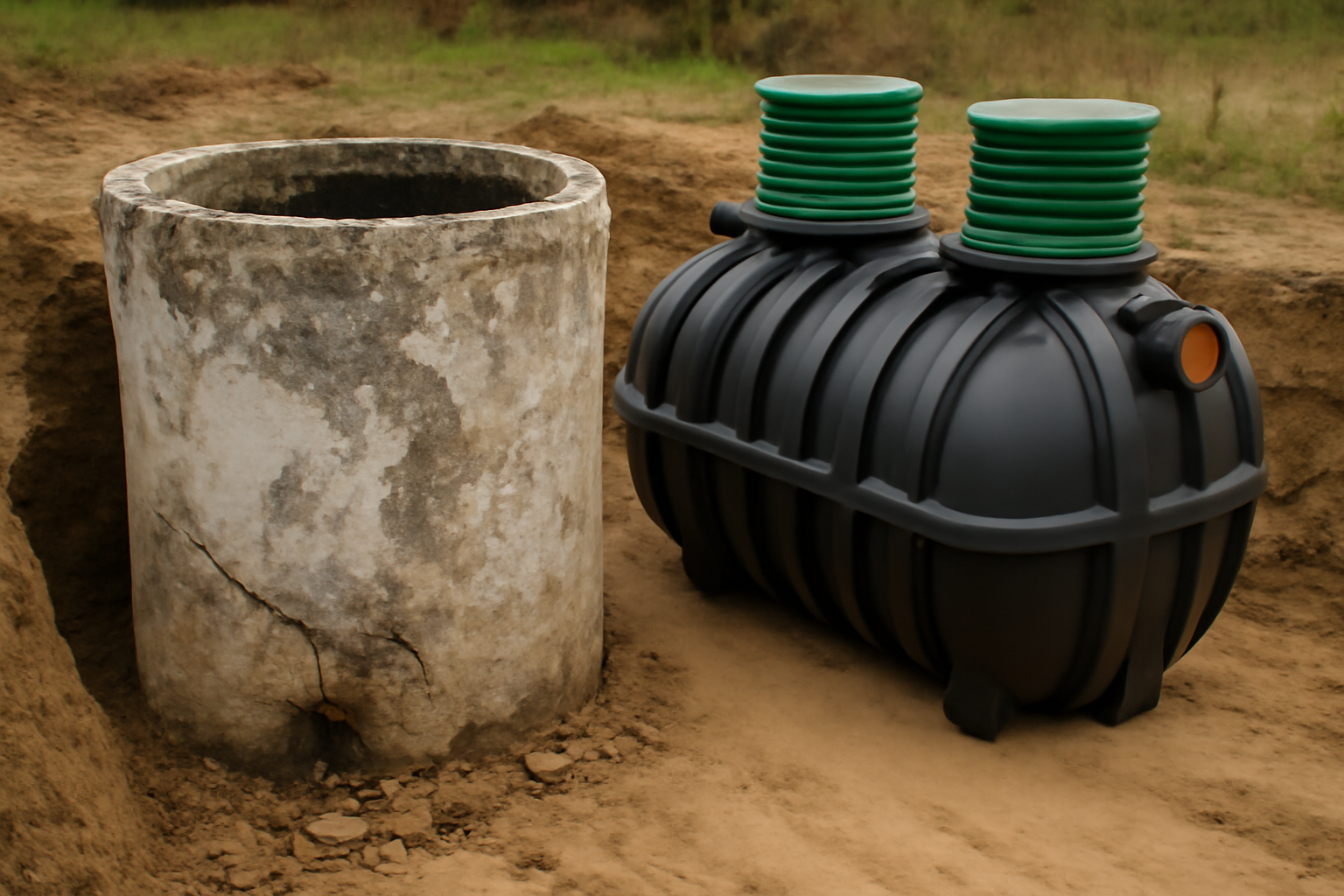
Concrete tanks installed before 1995 across the rural Southeast were often built with thinner walls and minimal corrosion protection. Many used tar-dipped steel baffles that dissolve within 15–20 years. Once a tank starts taking on groundwater through cracks, or the structural integrity is compromised, repairs become a band-aid on a structural problem. Most state health department regulations — including Georgia’s Rule 511-3-1 and Alabama’s ADEM Chapter 420 — require upgraded components any time major work is permitted. That sometimes forces a full upgrade anyway.
2. Multiple Components Are Failing Simultaneously
When I show up and the tank needs new baffles, the D-box is cracked, and two laterals are surfacing sewage, I’m looking at cascading failure. Each component repair is individually justifiable, but together they signal systemic deterioration. Specifically, if repair estimates stack up to more than 50% of replacement cost, I advise replacement. Spending $7,000 on repairs for a system with an $11,000 replacement cost is rarely wise.
3. The Drainfield Has No Viable Reserve Area
The EPA’s Onsite Wastewater Treatment Systems Manual recommends that systems include a 100% reserve drainfield area. Many older rural properties were permitted before this standard was enforced. If your existing drainfield is fully saturated and there’s no open area meeting your local health department’s setback requirements — typically 10 feet from property lines, 50–100 feet from wells — you may face a forced system redesign regardless of repair costs.
4. You’re Seeing Sewage Surfacing After Recent Pumping
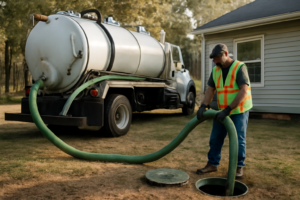
Pumping relieves hydraulic pressure temporarily. However, if sewage resurfaces within 30 days of a pump-out, the drainfield has lost its ability to accept effluent entirely. That’s not a repair scenario. I’ve seen homeowners pump the same system three times in one year at $400–$600 per pump-out, spending $1,800 that could have gone toward replacement. As a result, they ended up paying more over 18 months than a new system would have cost.
5. Perc Test Results Have Changed Significantly
Soil percolation changes over time, especially in clay-heavy soils common across the Piedmont and Appalachian foothills of the Southeast. If a new perc test shows rates that no longer support your existing system size, your county health department will require a new design at permitted capacity. That means replacement, not repair, regardless of what else is wrong.
The Treatment That Bought Me Time Before the Big Decision
When you’re staring down a $14,500 replacement bill, you want to know if aggressive tank maintenance can extend the life of a failing system long enough to save up or plan properly. RID-X pods won’t fix a collapsing drainfield, but they can slow the buildup that accelerates failure.
What works
- Easy to dose monthly without guessing — no mixing liquids or measuring sludge levels yourself
- Actually slows solid accumulation in the tank, which can give you 6–18 months of breathing room before a repair becomes urgent
- Works as preventive maintenance too — I use it in systems that aren’t failing yet, and it reduces pumpout frequency
What doesn’t
- Won’t reverse drainfield damage or fix soil saturation — it’s a tank treatment, not a field cure
- Results take 2–3 months to show up in pump-out reports, so it’s not a quick fix if you need proof of improvement by next month
I was skeptical the first time I recommended it to someone with a marginal system — I half-expected a call six weeks later saying it didn’t work. Instead, that homeowner’s next pumpout showed measurably less sludge, and she gained enough time to budget for repairs without panic. Pick up RID-X Septic Tank Treatment Pods — 6 Month Supply if you want a low-risk way to buy yourself time.
This post contains affiliate links. As an Amazon Associate, I earn from qualifying purchases at no extra cost to you.