Author: Joel Grayson — Licensed septic system installer and inspector, 18 years’ field experience across the rural Southeast.
This post contains affiliate links. As an Amazon Associate, I earn from qualifying purchases at no extra cost to you.
The worst job I ever walked into was a silent septic failure in rural Georgia. The homeowner had ignored an air pump alarm for three weeks. When I pulled the access cover, the aeration chamber smelled like a swamp. The aerobic system had gone completely anoxic. That one mistake cost them $8,000 in repairs and a tank replacement.
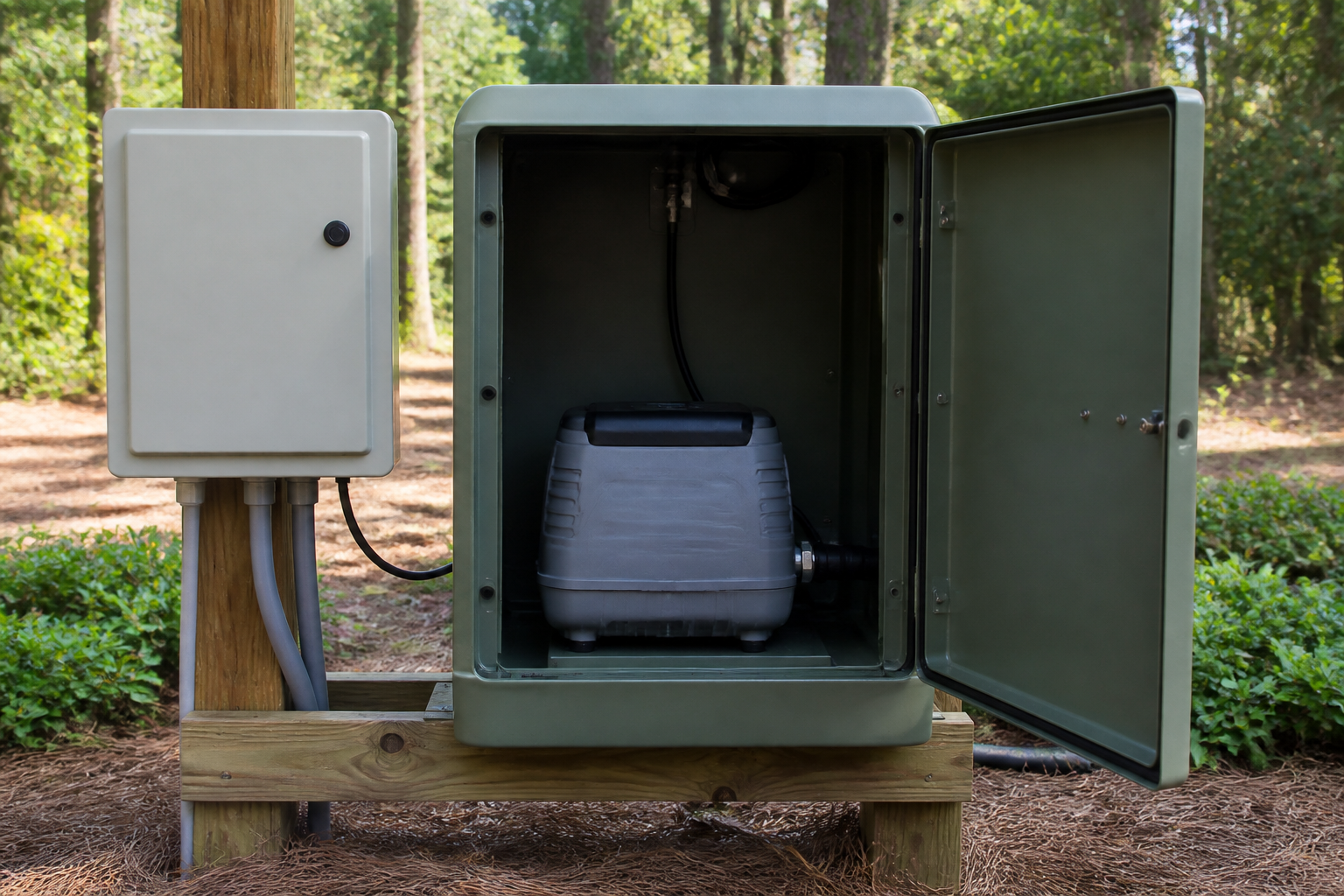
Your aerobic system air pump is not a “set it and forget it” component. It’s the heartbeat of your treatment tank. Every bubble it pushes through that diffuser keeps beneficial bacteria alive and treating your wastewater. When it fails—and it will eventually—you need to know exactly what to do.
After 18 years pumping and replacing aerobic system air pumps across the Southeast, I’ve learned what works, what fails early, and how to spot trouble before it becomes a disaster. Here’s everything you need to know about your aerobic system air pump: how it works, how long it actually lasts, and how to replace it yourself if you’re mechanically inclined.
How the Aerobic System Air Pump Actually Works
Let me start with the basics. Your aerobic system needs oxygen to function. That’s literally what makes it “aerobic.” Without continuous air supply, the bacteria in your tank can’t break down waste. The air pump is what delivers that oxygen. It runs continuously—24/7, 365 days a year—forcing pressurized air into the aeration chamber where it bubbles up through a diffuser stone.
Most residential aerobic treatment units (ATUs) use one of two types of pumps. Knowing the difference matters when you’re standing in front of a replacement unit trying to figure out what fits your system.
Type 1: Piston/Diaphragm Compressors (Linear Diaphragm Pumps)
These are the workhorses I see most often in residential Jet, Aerob-It, and similar mid-range units. Brands like Medo, Thomas, and Gast manufacture the diaphragm pumps that power roughly 60% of the aerobic systems I service.
Here’s how they work: inside the pump housing, a rubber diaphragm flexes back and forth. This flexing action draws air in through an inlet valve, then pushes it out through an outlet valve. The output is modest—typically 2–4 CFM (cubic feet per minute) at 3–5 PSI (pounds per square inch). That’s perfect for a single residential tank.
The big advantage? They’re relatively quiet. You won’t hear a constant roar. The downside is the diaphragm itself. It’s rubber. Rubber fatigues. In my experience, a diaphragm pump on a well-maintained Southeast ATU lasts 3–7 years in continuous duty. Dust exposure and summer heat accelerate wear. I’ve seen pumps fail at 2 years on dusty properties. I’ve also pulled 8-year-old units still humming along on cooler, protected installations.
Type 2: Regenerative Blowers
Higher-capacity systems—typically Norweco Singulair or commercial applications—often use regenerative blowers. Brands include Fuji Electric, Gast, and Sweetwater. These units can push 40–80 CFM or more at higher PSI, handling significant back-pressure from multi-chamber systems.
The tradeoff? Noise. A regenerative blower sounds like a small vacuum cleaner running in your yard. Some homeowners hate it. Others never notice. They last longer under heavy use but cost significantly more—typically $400–$800 for replacement.
For a standard single-tank residential ATU serving 3–5 bedrooms, a diaphragm pump is almost always the right choice. That’s what this guide focuses on.
Understanding Aerobic System Air Pump Specifications
Before you buy a replacement aerobic system air pump, you need four pieces of information. Get even one wrong, and you’ll either under-aerate (treatment fails) or over-pressurize (you burn out the pump early).
The Four Critical Specs You Need
- CFM output: Most residential diaphragm pumps push 2–4 CFM. This matches the diffuser demand in a standard tank. Write down the number from your original pump or system manual.
- PSI rating: Diaphragm pumps typically run 3–5 PSI. Blowers can handle 8–15 PSI. Your new pump must match or exceed the original spec.
- Voltage: Most residential pumps are 115V single-phase. Some regional installations use 230V. Check your control panel or the nameplate on your old pump. Wrong voltage = no power.
- Inlet/outlet barb size: The air line connection. Usually 3/8″ or 1/2″ barbed fittings. Measure your current hose or check the old pump body. Mismatched size means you can’t connect the hose.
I learned this the hard way. Years ago, I replaced a pump on what I thought was a standard Jet unit. Wrong CFM—the new pump was rated at 6 CFM instead of 3 CFM. The system over-aerated and burned through three more diaphragms in eight months. The homeowner wasn’t happy. I wasn’t charging for those call-backs.
Your system manual should list specs. If you’ve lost it, call your original installer or the manufacturer. Don’t guess. A five-minute phone call beats a $300 mistake.
How Long Does an Aerobic System Air Pump Last?
In my 18 years of service calls, I’ve kept detailed records on pump lifespan. The answer isn’t simple—it depends on climate, maintenance, and how hard the system works.
Real-World Lifespan Data from the Southeast
A well-maintained diaphragm pump typically lasts 3–7 years. That’s from my own service records. In cooler climates with lower humidity, pumps last longer. Here in the hot, humid Southeast, the shorter end of that range is more common.
What shortens pump life? Dust is the biggest culprit. If your system sits near gravel roads, exposed soil, or an area with significant construction, dust gets sucked into the air intake and clogs the diaphragm valve seals. I’ve seen 2-year failures on dusty properties. Installing a simple foam intake filter helps tremendously. Cost: $8. Lifespan gain: often 2–3 years. Worth it.
Heat also matters. Pumps in unshaded enclosures or in direct sun degrade faster. A shaded mounting location or a reflective cover can extend diaphragm life by a year or more. Summer temperatures in rural Georgia routinely hit 95°F. That heat stress is real.
Irregular or poor tank maintenance shortens everything’s lifespan. If the tank isn’t pumped every 3–5 years (based on your state health department rules, typically every 3 years for residential ATUs), solids accumulate, the diffuser gets clogged, and the pump works harder. Harder work = faster diaphragm fatigue.
Cost of Replacement
A replacement aerobic system air pump costs $120–$350 depending on the brand and type. A basic Medo or Thomas diaphragm pump runs $120–$200 retail. Higher-end units with built-in alarms run $250–$350. Regenerative blowers start at $400 and go up from there.
Labor for a professional replacement is usually $150–$300, depending on your region and the pump’s accessibility. If you’re mechanically comfortable, DIY replacement saves that labor cost and takes about 30 minutes once you have the new unit and a basic wrench.
How to Tell If Your Air Pump Is Failing
A failing aerobic system air pump doesn’t always announce itself with drama. Sometimes it dies quietly. Other times, you’ll see warning signs if you know what to watch for.
The Most Obvious Sign: The Alarm Sounds
Most ATU control panels include a dedicated air pump failure sensor—either a float switch in the aeration chamber or a pressure switch on the air line. When the pump stops or loses pressure, the alarm trips. A loud buzzer or alarm horn sounds. Some systems have a light too.
Here’s the critical part: do not ignore or silence that alarm. I’ve had homeowners unplug the alarm speaker because it annoyed them. That’s a recipe for disaster. Without aeration, your treatment tank goes anoxic (oxygen-depleted) within hours. Anaerobic bacteria take over. Your effluent becomes toxic. In 2–3 days, you have a full-blown septic failure.
If your alarm sounds, the pump is either dead or not producing air. You need to test it or replace it. Today. Not tomorrow.
Subtle Signs of Pump Decline
Before complete failure, a weakening pump shows gradual signs. The unit runs but produces less air. The hum becomes intermittent—running for a minute, stopping for 10 seconds, running again. This intermittent cycling means the pump can’t maintain pressure. The diaphragm is tearing.
You might also notice a grinding noise instead of a smooth hum. That’s the diaphragm material breaking apart inside. Not a good sign. A burnt smell coming from the pump enclosure means the motor is overheating, usually because the pump is working too hard against a failing diaphragm.
Tank odors can also hint at aeration problems. If you smell rotten egg or sulfur coming from the tank or drainfield, weak aeration might be the cause. Air flow has dropped below what’s needed to maintain aerobic conditions.
Testing Your Air Pump Without Special Tools
You don’t need a meter or specialized equipment to test if your aerobic system air pump is actually working. A simple hand test tells you most of what you need to know.
The Hand Test
First, shut off power to the system at the control panel. Wait 10 seconds. Locate the air line that runs from the pump to your aeration chamber. Usually, it’s 3/8″ or 1/2″ tubing, and it connects to the diffuser port on the tank.
Carefully disconnect the air line at the diffuser end—not at the pump. Note which direction the line came from. You’ll reconnect it the same way. Now, with the line disconnected, turn power back on.
Hold your hand over the open end of the air line coming from the pump. You should feel a constant, strong airflow. Not weak. Not pulsing. Constant and firm. This pressure should hold steady for several seconds. If the flow is weak or intermittent, the diaphragm is failing.
Next, reconnect the air line and turn power back on. The pump should hum smoothly. Listen for that steady hum. No grinding noise. No loud grinding or squealing. A normal diaphragm pump hums at about 60–70 decibels—roughly as loud as normal conversation.
Finally, check the diffuser itself. Look into the aeration chamber access cover (safely, with a flashlight). You should see steady, continuous bubbling from the diffuser stone. Not sporadic bubbles. Continuous. If the bubbling is weak or stops and starts, airflow is insufficient.
What the Tests Tell You
Strong constant hand-test airflow + smooth hum + continuous bubbles = pump is healthy. Weak or pulsing airflow + irregular humming or grinding + weak or sporadic bubbles = pump is failing. Replace it soon.
DIY Replacement: Step-by-Step Guide
If you’re comfortable with basic mechanics and you’ve confirmed the pump is dead, replacing it yourself is straightforward. A qualified plumber or pump specialist can do it, but you’ll pay $150–$300 in labor. You can do it in 30 minutes for the cost of the new pump alone.
What You’ll Need
- New replacement pump (correct CFM, PSI, voltage, and barb size)
- Basic adjustable wrench or socket set
- Hose clamps (two, ideally with worm-screw type for better grip) or push-to-connect fittings
- New section of air hose (if old hose is cracked or discolored)
- Flashlight
The Replacement Process
- Kill power at the control panel. Flip the breaker or switch to OFF. Wait 10 seconds to ensure the pump stops completely. Safety first.
- Disconnect the air line from the pump outlet. Loosen the hose clamp (or press the release collar on a push-to-connect fitting). Gently pull the hose free. Note the orientation—which direction the hose runs. You’ll reconnect the same way.
- Locate the pump mounting bolts. Most pumps are bolted to a steel mounting bracket or platform. Use your wrench to remove the bolts. Usually two to four bolts, sized between 1/4″ and 3/8″.
- Lift the old pump off the bracket. Be aware of any remaining air pressure in the system. Some units have a small amount of stored pressure. Disconnect slowly if you hear air escaping.
- Set the new pump on the bracket in the same position. Align the bolt holes. Hand-tighten the bolts first, then snug them with the wrench. Don’t over-tighten—you’ll crack the pump housing.
- Reconnect the air line to the new pump’s outlet. Use the same hose and clamp orientation you noted earlier. Slide the hose over the barbed outlet. If the hose is old, cracked, or brittle, replace it with new 3/8″ or 1/2″ vinyl tubing (depending on your barb size). Tighten the hose clamp firmly so the hose won’t slip off under pressure.
- Restore power. Flip the breaker or switch back to ON. The pump should start immediately with its normal hum.
- Verify airflow at the diffuser. Open the aeration chamber access cover safely. Look inside with a flashlight. You should see steady, continuous bubbles rising from the diffuser stone within 30 seconds. If you want to be thorough, use a wooden dowel or stick to gently stir the diffuser area—you’ll see bubbles move around, confirming good flow.
If bubbles appear and the pump hums steadily, you’re done. The replacement is successful. If no bubbles appear after 60 seconds or the pump isn’t humming, check that the air line is fully connected and the hose clamp is tight. A loose connection will prevent pressure from building and the diffuser stone won’t bubble.
One Critical Detail: Air Line Orientation
This caught me off-guard on a job years ago. I reconnected the air line but reversed the direction—the line came from the pump and went to the diffuser, but I routed it the long way around the tank to the opposite side. It worked but created a siphon pocket. Water accumulated in the air line during idle periods (when the pump shut off for pressure equalization).
The water eventually blocked the line, and airflow dropped. The homeowner called three weeks later complaining of weak aeration. The fix was one minute—rerouting the hose so it sloped downward from pump to tank with no low pockets.
Install your air line so it slopes slightly downward toward the diffuser and has no pockets where water can collect. This prevents condensation and any backflow water from blocking the line.
Choosing the Right Replacement: The Blue Diamond ET 80
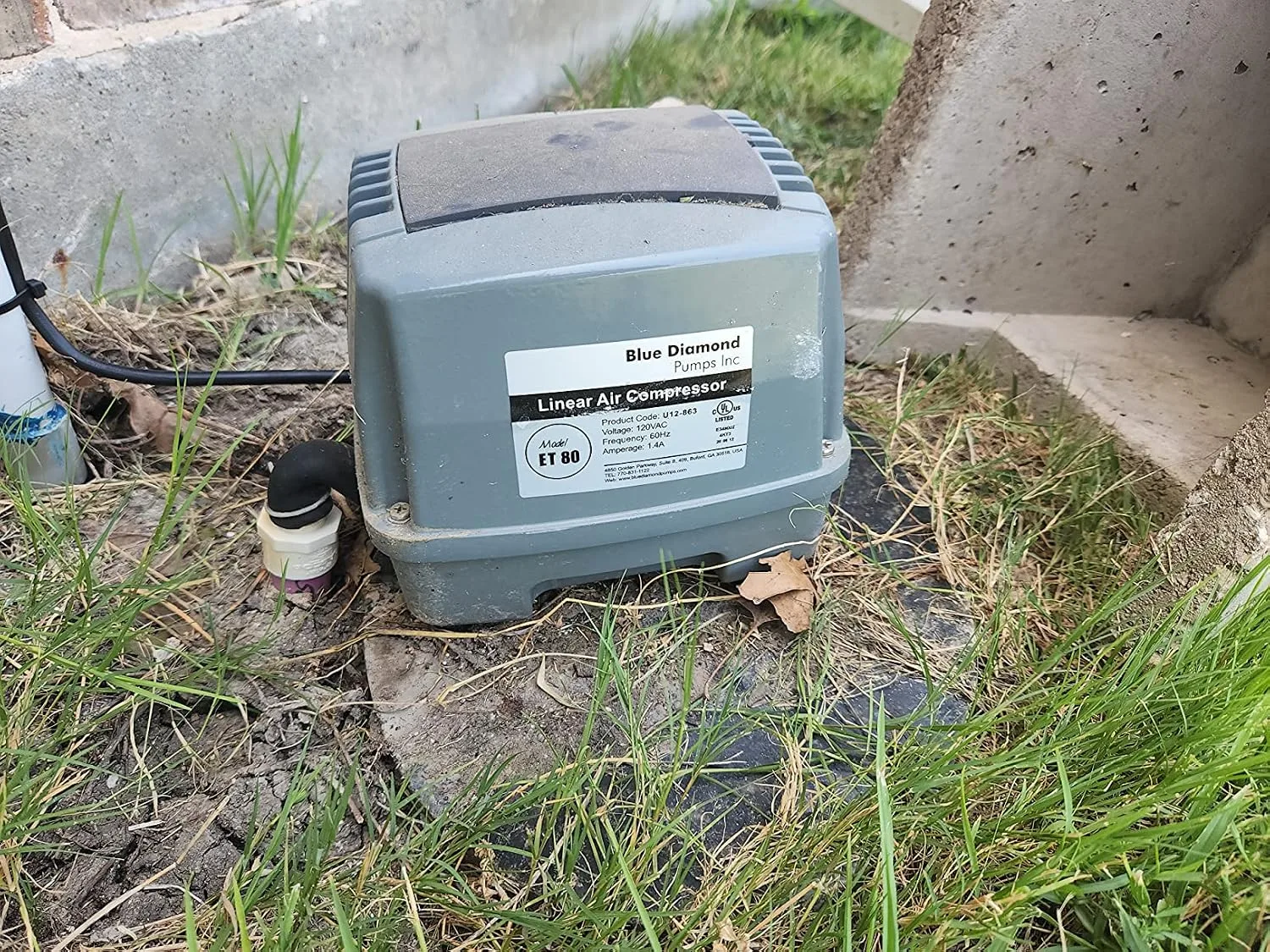
I always keep a Thomas 5050 on my service truck. It covers about 60% of the Jet and Aerob-It units I service across the Southeast. But for the past five years, I’ve recommended the Blue Diamond ET 80 Septic or Pond Linear Diaphragm Air Pump as my go-to diaphragm pump.
Here’s why: it outputs 3.2 CFM at 5 PSI, which matches standard residential ATU specs perfectly. The diaphragm is high-quality rubber, and I’ve seen units last 6–8 years in regular service. It’s 115V single-phase, comes with 3/8″ barbed fittings, and costs around $160–$190 online. That’s a solid value.
Last spring, I had a client in rural Georgia with a failing Jet unit pump. We replaced it with the Blue Diamond ET 80. Eighteen months later, she called me back. Not for pump failure—for routine maintenance. The pump was still humming smoothly, diffuser was bubbling strong, and she said it was quieter than the original unit. That’s the kind of experience that builds confidence in a product.
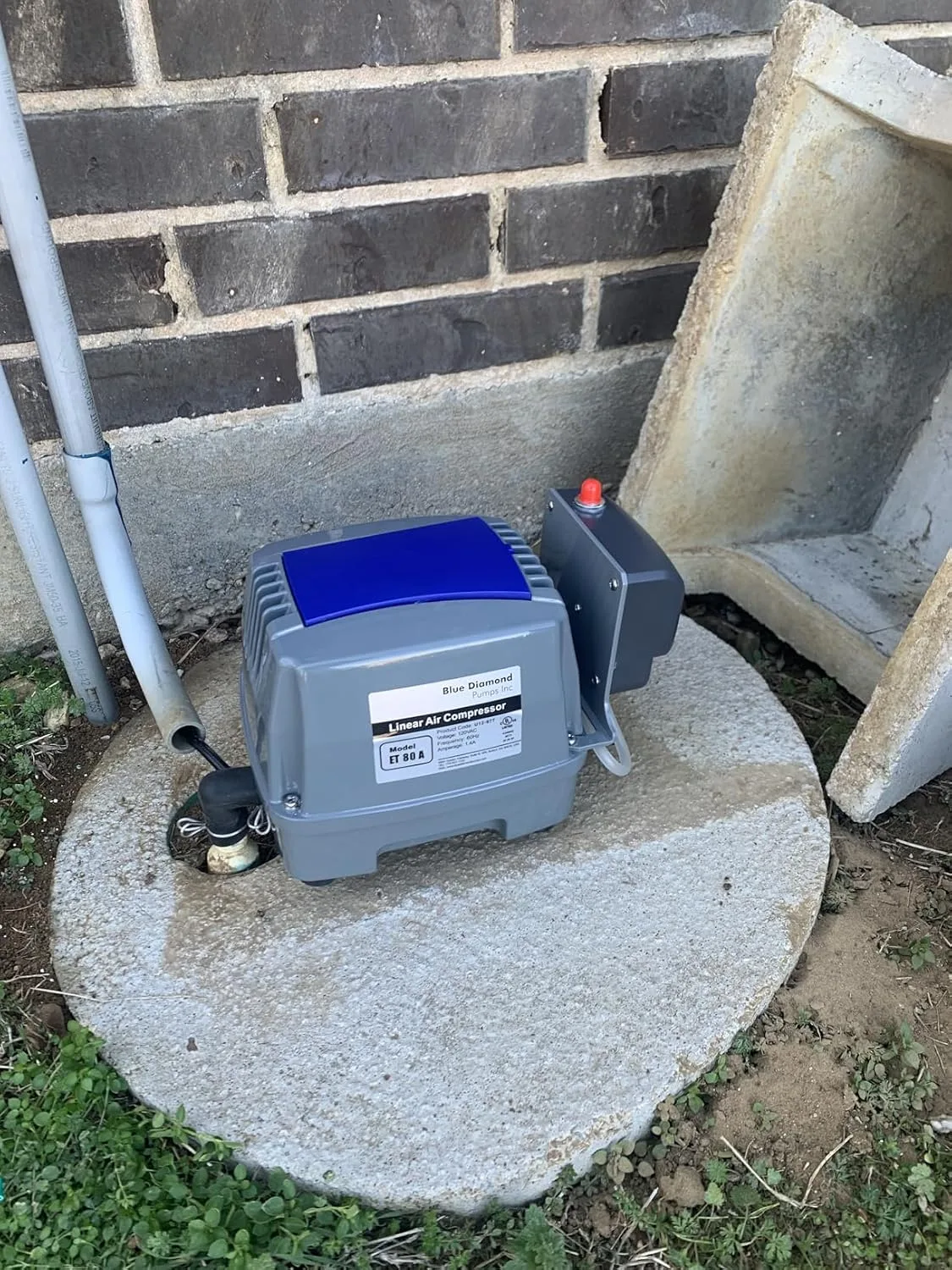
If you want added peace of mind, the Blue Diamond ETA 80 with built-in Alarm offers the same pump with an integrated pressure failure alarm. It costs about $50 more but gives you an independent backup alarm in case your control panel sensor fails. For a homeowner who worries about missing an alarm signal, that’s money well spent.
Maintaining Your Air Pump to Extend Its Life
The single best thing you can do to extend your aerobic system air pump lifespan is this: keep the tank maintained and install an air intake filter.
Tank Maintenance
Have your ATU pumped every 3 years (follow your state health department guidelines—most Southeast states require every 3 years for residential systems). A full tank overflows solids into the diffuser, which clogs and forces the pump to