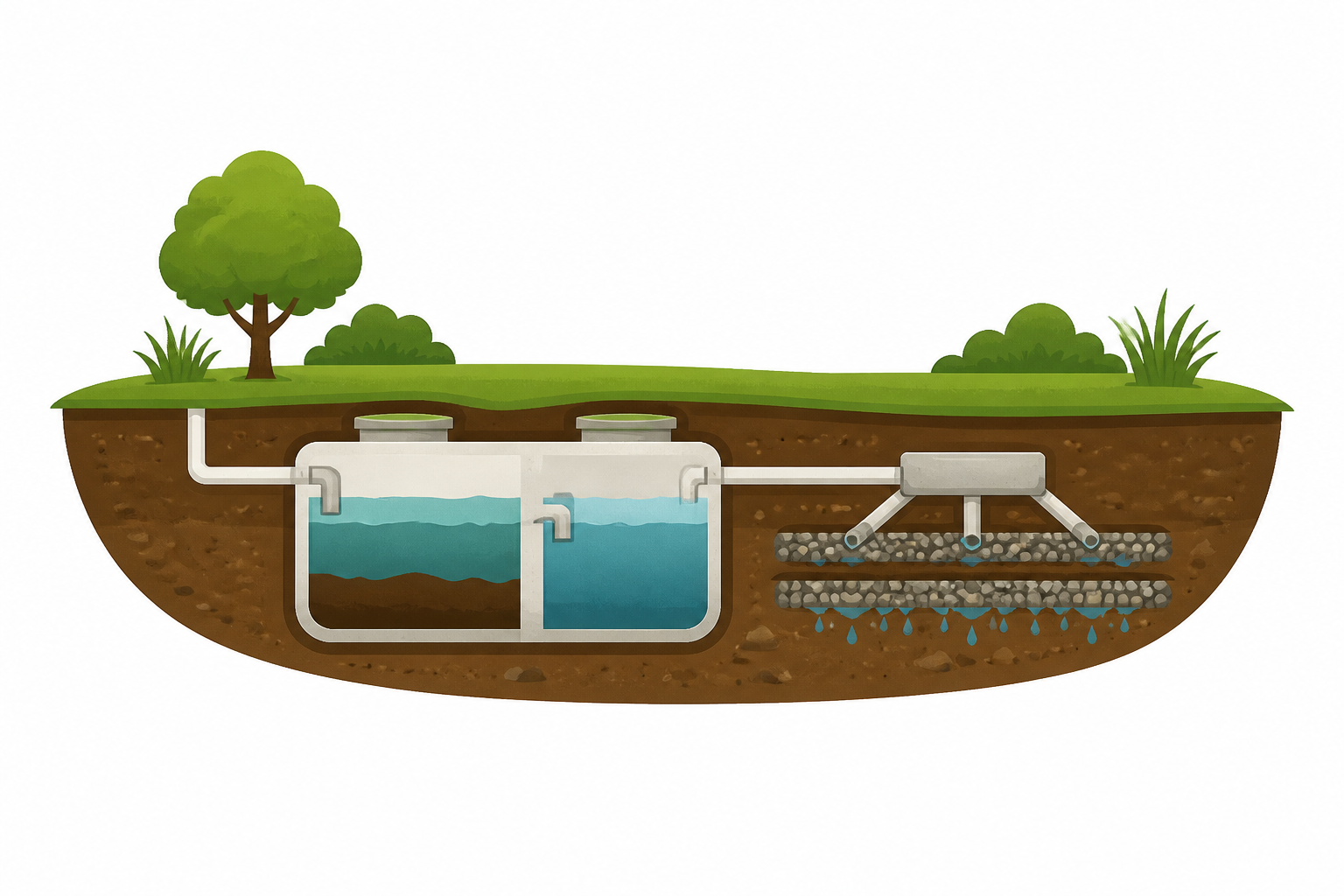
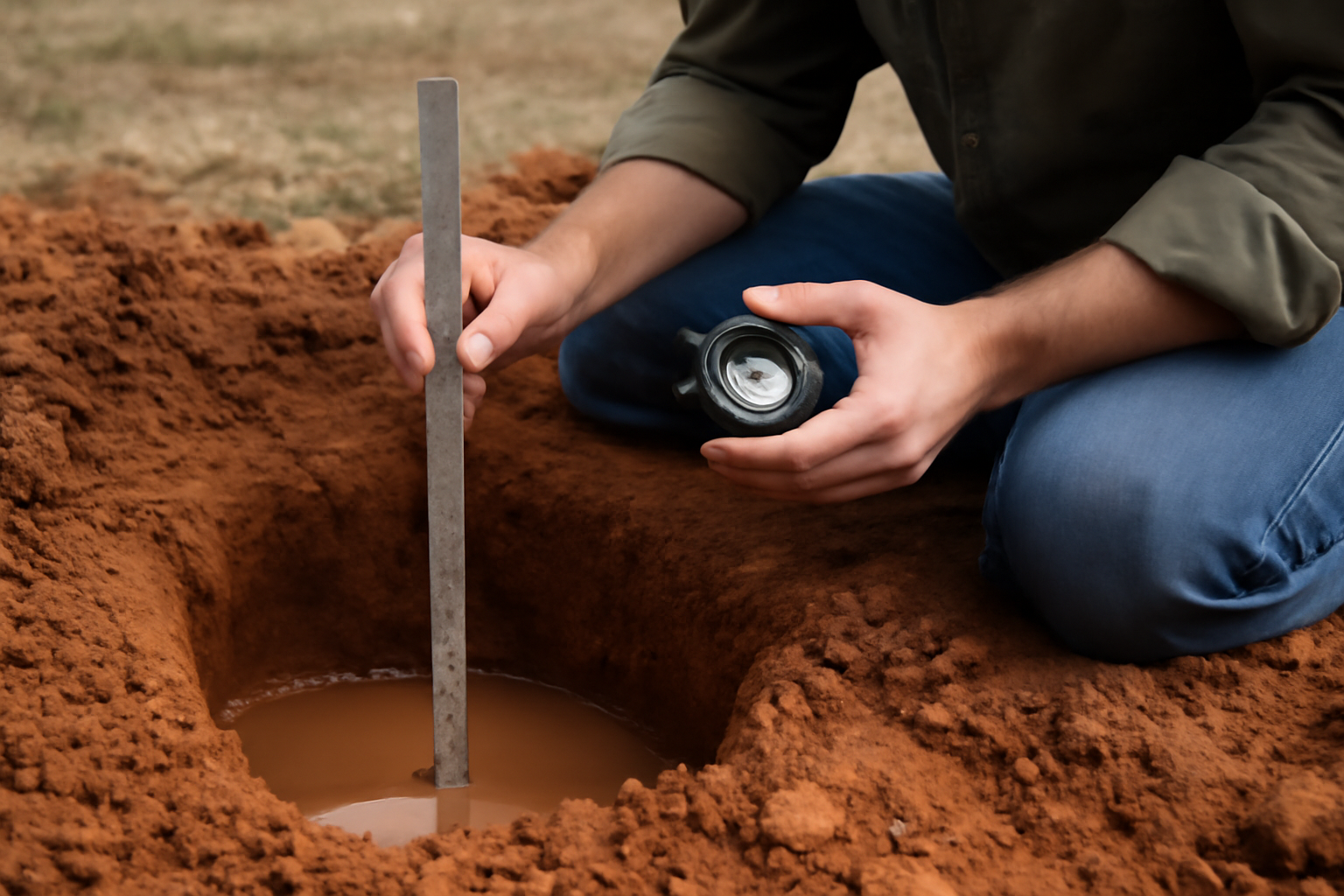
The presoaking step is critical. I learned this the hard way early in my career. On one of my first independent tests in Cherokee County, Georgia, I skipped a full presoak because the client was in a hurry and the soil looked wet enough from recent rain. The test showed a beautiful 12 MPI rate. We submitted, got permitted, installed the system — and within two years that drain field was saturated and backing up. Seasonal clay swelling had changed everything. The presoak exists to simulate worst-case soil conditions, and cutting that corner is a mistake I’ve never made again.
Why Perc Tests Fail: The Real Reasons Your Land Didn’t Pass
Most people assume a failed perc test means the land is worthless. That’s rarely true. In my experience, there are four main reasons a site fails — and two of them are fixable.
1. Restrictive Soil Layers (Hardpan or Clay)
This is the most common failure reason I see in the red clay regions of Georgia and Alabama. A dense clay layer — sometimes called a fragipan or hardpan — sits below the topsoil and acts like a bowl. Water hits it and stops moving. Percolation rates in these soils routinely test above 90 MPI, which disqualifies them for conventional systems under most state codes. However, an alternative system like a mound system or drip irrigation system may still be permitted on that same site.
2. High Seasonal Water Table
If your water table sits within 18 to 24 inches of the surface — which is common in low-lying areas near creeks and bottomlands — you can’t install a conventional gravity drain field. State regulations require a specific separation distance between the bottom of the trench and the seasonal high-water table. In Georgia, that’s typically 18 inches minimum. In North Carolina, it’s often 12 inches for certain soil types. The perc test itself may show a fine rate, but the soil profile evaluation will catch that high water table and trigger a failure.
3. Insufficient Usable Lot Area
Sometimes the soil is perfectly fine, but there simply isn’t enough space. Most county codes require specific setbacks — 50 to 100 feet from wells, 10 to 25 feet from property lines, and safe distances from streams or wetlands. I worked with a client last fall in Pickens County who had beautiful loamy soil testing at 22 MPI. However, after applying all required setbacks, the usable drain field area dropped below the minimum square footage required for a 3-bedroom home. That’s a failure with great soil. Proper site planning before purchase could have flagged this issue.
4. Testing During the Wrong Conditions
This one surprises people. Soil that has been abnormally dry — during a drought, for example — can test faster than its true year-round capacity. Some state programs require testing during certain seasons or after prescribed rainfall amounts for exactly this reason. As a result, a test conducted in August after a dry summer may produce an optimistic rate that doesn’t reflect February conditions when the ground is saturated. Always ask your county health department about seasonal testing requirements before scheduling.
The Probe That Made Me Stop Guessing on Soil Depth
A perc test is only as good as the holes you dig and the samples you pull from the right depths. Without a proper soil probe, you’re eyeballing it—and that’s exactly how I almost failed a permit in Cherokee County.
What works
- The foot pedal design lets you drive it straight down to consistent depths without twisting or binding, so you get reliable measurements every time instead of guessing where your test hole actually bottoms out.
- Stainless steel resists rust and soil corrosion between tests, meaning you’re not scrubbing it clean for an hour after every job or replacing it every season.
- The reusable sample bags let you pull undisturbed soil from multiple depths in the same hole, so you can actually see soil layer transitions that affect percolation rates.
What doesn’t
- In clay-heavy soils, the probe can stick hard enough that even the foot pedal takes real effort to retract—you’re doing a leg workout on rocky or compacted sites.
- At 36 inches, it won’t reach deeper hardpan or seasonally perched water tables, so you may still need a hand auger for full profile assessment.
I almost trusted that “wet from rain” visual assessment on my second job until I dug deeper and realized the soil was still dry six inches down—the surface was just deceiving me. That’s when I knew I needed a repeatable way to pull honest samples from consistent depths, and that’s what the 36″ Soil Probe, Stainless Steel Soil Sampler Probe with Foot Pedal and Reusable Sample Bags does every single time.
This post contains affiliate links. As an Amazon Associate, I earn from qualifying purchases at no extra cost to you.
![Customer photo of [specific item/setup related to perc testing equipment]](https://backyardseptic.com/wp-content/uploads/2026/06/amazon-review-B09KXMNT2Z-2.webp)