This post contains affiliate links. As an Amazon Associate, I earn from qualifying purchases at no extra cost to you.
A few years back, I got a call from a family out in Wilkes County, Georgia. They’d been drinking their well water for two years without a single concern — until their neighbor mentioned the well and septic tank looked awful close together. They were right to worry. When I walked the property, their well casing sat about 40 feet from the septic tank and maybe 30 feet from the drainfield. That’s a serious problem. Understanding well water septic safe distance isn’t just a regulatory checkbox — it’s the difference between clean drinking water and a contamination event that can make your family genuinely sick.
In 18 years of installing and inspecting septic systems across rural Georgia, North Carolina, South Carolina, and Alabama, I’ve seen this combination — private well plus onsite septic — on hundreds of properties. Most people buying rural land assume someone smarter already figured out the spacing. Sometimes that’s true. Often it isn’t. And the scary part is you won’t know there’s a problem until a water test comes back positive for coliform bacteria or nitrates.
This post is going to walk you through the actual safe distance requirements, what drives those numbers, the most common mistakes I see in the field, and how to protect your family’s drinking water. I’ll be direct about when you need a professional and when a careful homeowner can handle things themselves.
Well Water Septic Safe Distance: What the Rules Actually Say
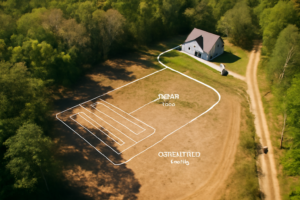
Let me start with the most important thing: there is no single national number. The EPA provides guidance, but actual minimum separation distances are set by your state and enforced by your county health department. That said, the most commonly cited baseline is 50 feet between a well and a septic tank, and 100 feet between a well and a drainfield. Those figures appear in guidelines from states like Georgia (Chapter 511-3-1 under the Georgia DHR rules), North Carolina (15A NCAC 18A .1950), and many others across the Southeast.
However, some counties go stricter. In my experience, rural counties with sandy or highly permeable soils often require 150 feet or more from well to drainfield. That’s because contaminants travel faster through loose, sandy soil than through dense clay. The soil type on your specific lot matters as much as the distance itself. A system sitting 100 feet away on sandy loam can pose more risk than one sitting 75 feet away in heavy red clay.
The EPA’s Onsite Wastewater Treatment Systems Manual (EPA/625/R-00/008) also factors in groundwater depth, topography, and local aquifer conditions. Specifically, if your well draws from a shallow aquifer — under 50 feet — your health department may impose additional setback requirements beyond the standard minimums. Always pull the actual permit records for your property from your county health department. That paperwork will show you the exact setbacks that were approved when the system was installed.
Why the Distance Matters: How Contamination Actually Travels
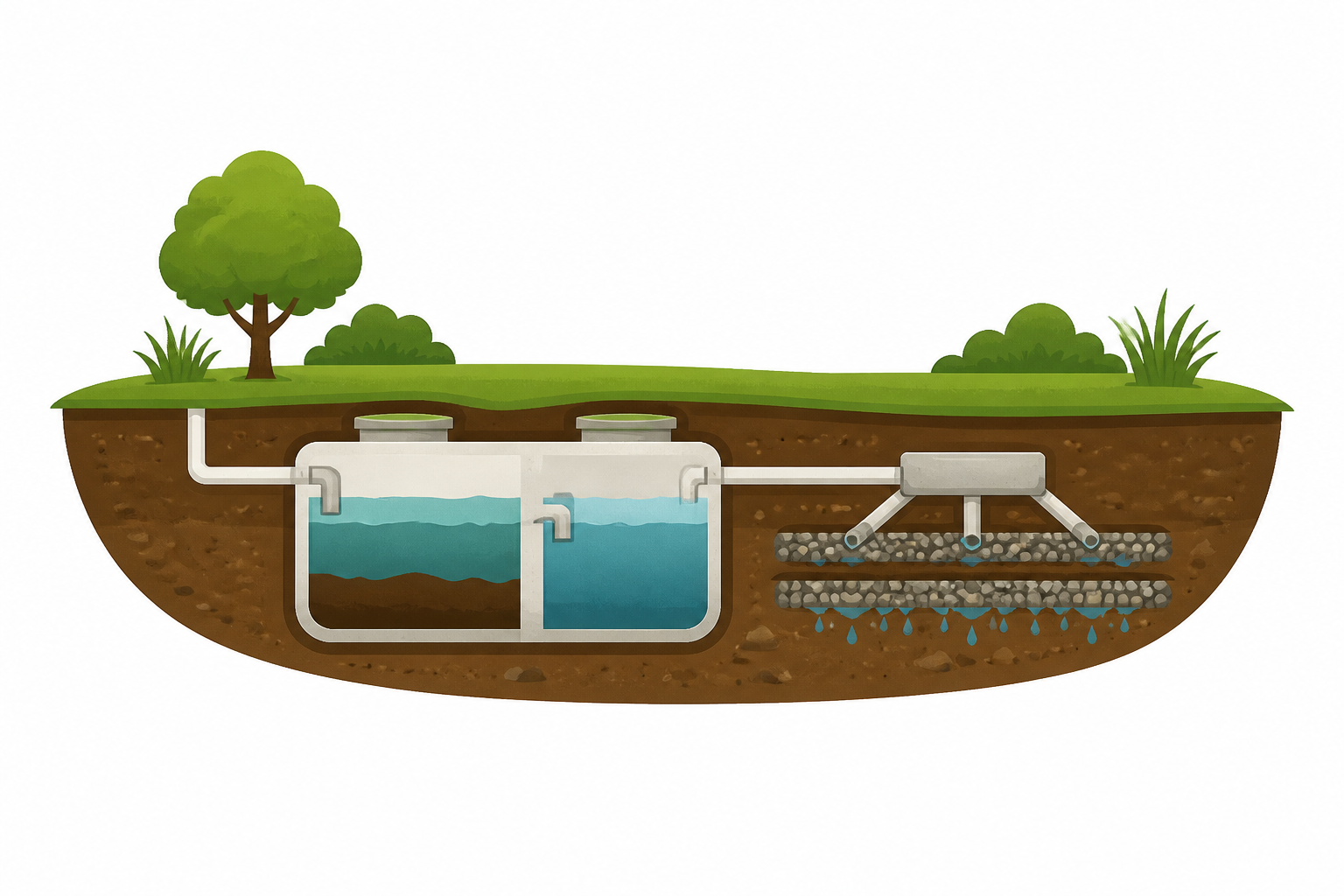
People sometimes ask me why the drainfield setback is larger than the tank setback. The answer is simple once you understand how the system works. The septic tank is a sealed concrete or fiberglass vessel. It holds waste, separates solids from liquids, and sends clarified effluent out to the drainfield. A properly built tank doesn’t leak — the contamination risk from the tank itself is relatively low.
The drainfield is a completely different story. That’s where liquid effluent actively disperses into the soil. Bacteria, viruses, and nitrates move outward and downward through the soil profile from hundreds of linear feet of perforated pipe. Pathogens like E. coli and hepatitis A can survive long enough in soil to travel significant distances, especially after heavy rain events. Nitrates, which are a byproduct of human waste breakdown, are particularly mobile in groundwater.
I learned this the hard way early in my career. I was assisting on a job in rural Oconee County and the installer I was working under approved a drainfield placement that was technically 95 feet from the well — just under the 100-foot state minimum at the time. The health department passed it. Two years later, that homeowner called back with elevated nitrate readings on a water test. We couldn’t prove it came from the drainfield, but there was nothing else nearby. That experience stuck with me. I always push clients to exceed the minimums when the site allows it.
The Most Common Mistakes I See on Rural Properties
After nearly two decades of walking properties, I’ve seen the same errors repeated constantly. Here’s what trips people up most often:
- Assuming old systems were installed correctly. Pre-1980 systems in the rural Southeast were often installed with no permit at all. The farmer dug a hole, buried a tank, and ran some pipe. No health department sign-off, no measured setbacks.
- Not accounting for the whole drainfield. Homeowners measure from the well to the end of the drainfield closest to them. But contaminants spread from the entire field — including the far end of a 300-foot lateral run.
- Ignoring slope and drainage patterns. Groundwater follows topography. A drainfield sitting 120 feet from a well is still dangerous if it sits uphill and upgradient from the well. I’ve seen this exact setup in hilly piedmont terrain more times than I can count.
- Skipping annual water testing. The CDC and EPA both recommend testing private well water at least once per year for coliform bacteria and nitrates. Most rural homeowners I talk to have never tested their water — not even once.
- Adding drainfield capacity without rechecking setbacks. When a drainfield fails and needs expansion, the new field area must also meet setback requirements. I’ve seen expansions get permitted that pushed a new lateral too close to the well because nobody re-measured.
Last fall, I had a client in Habersham County who’d bought a 12-acre property and assumed everything was fine because it had passed a real estate inspection. When I walked it with a measuring wheel, the reserve drainfield area — which the original installer had flagged on the permit — put the expansion zone about 65 feet from the well. That’s not legal under current Georgia rules and it would have been a $15,000 to $20,000 problem if the primary field had failed and they’d tried to use that reserve area.
How to Measure and Verify Your Setbacks
You don’t need to be a licensed professional to do a basic verification of your property’s separation distances. Here’s how I walk homeowners through it:
- Locate your system components. Pull your original septic permit from the county health department. This document shows the approved layout. If your county has digitized records, this may be available online. If not, a visit to the environmental health office usually gets you a copy for $10 to $25.
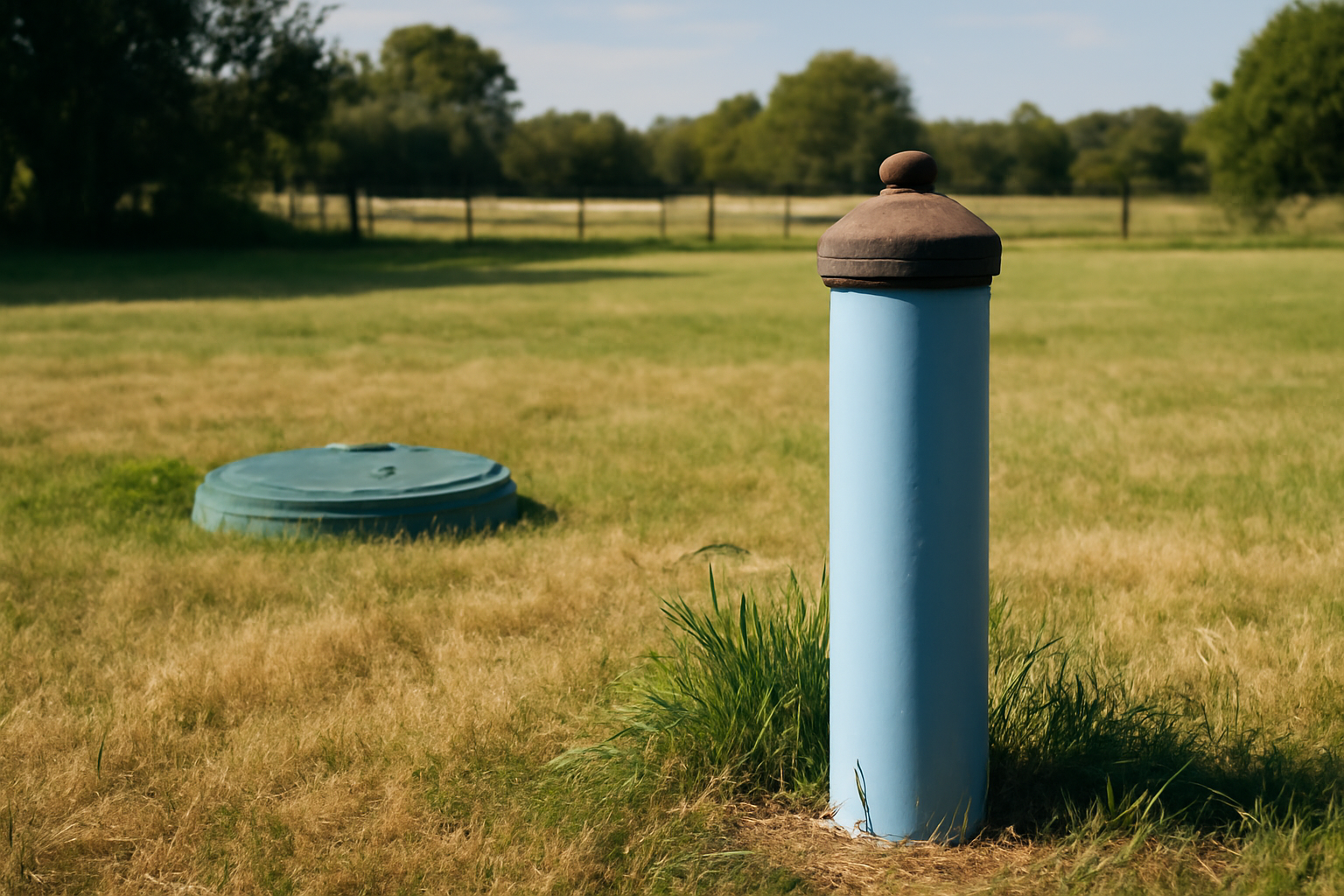
- Find your physical components on the ground. The septic tank lid is usually 6 to 18 inches underground. A metal probe or soil probe can find it. Drainfield lines show as slight linear depressions or slightly greener grass in dry conditions.
- Measure carefully. Use a 100-foot tape measure or a measuring wheel. Measure from the well casing — not the well cap — to the nearest edge of the septic tank, then to the nearest edge of the drainfield, and finally to the farthest edge of the drainfield.
- Check your state’s current minimums. Contact your county environmental health office and confirm the current setback requirements. Rules have changed in many states since older systems were installed.
- Test your water. Regardless of what the measurements show, test your well water annually. A basic coliform and nitrate panel costs $40 to $80 at most state-certified labs. Your county extension office can often provide sample kits.
In my experience, homeowners who do this exercise are always surprised by something. Either the distances are tighter than they thought, or they discover components they didn’t know existed — an old overflow line, an abandoned dry well, or a second tank that a previous owner added without permits.
The Manual That Helped Me Understand Well Setback Distances Before I Made a Costly Mistake
Most DIYers don’t realize that well and septic spacing isn’t just a suggestion — it’s a legal requirement that varies by county and state. Having a reference guide that breaks down these specific distance requirements saved me from giving bad advice to neighbors and helped me spot the Georgia family’s violation immediately.
What works
- Includes specific minimum setback distances for wells, septic tanks, and drain fields — not vague guidelines but actual numbers you can reference when inspecting a property.
- Explains the reasoning behind each distance requirement so you understand why 40 feet from tank to well isn’t enough in most jurisdictions (and why soil type and groundwater flow matter).
- Covers contour-specific challenges like sloped terrain and seasonal water table changes, which is exactly what you need to assess real properties, not just textbook scenarios.
What doesn’t
- County-specific regulations change frequently, so you’ll still need to verify current setback laws with your local health department rather than relying on this as your only source.
- Doesn’t include step-by-step instructions for retrofitting a system that’s already installed too close — it’s diagnostic and preventative, not a remediation guide.
I almost told that Wilkes County family their setup was fine based on a rough estimate, but I grabbed this manual from my truck first and realized I was about to give them dangerous misinformation. The Septic System Owner’s Manual has been the reference I pull out on every property inspection since.
This post contains affiliate links. As an Amazon Associate, I earn from qualifying purchases at no extra cost to you.