
This post contains affiliate links. As an Amazon Associate, I earn from qualifying purchases at no extra cost to you.
A few years back, a homeowner called me in a panic on a Tuesday morning. Her yard was saturated, her toilets were backing up, and she had a houseful of guests arriving that Friday. The emergency pump-out, riser installation, and field line flush ran her just over $2,400 — all because she had never built a septic maintenance budget. She told me she had lived in that house for nine years and spent exactly zero dollars on her system. That story isn’t unusual. In 18 years of installing, inspecting, and repairing systems across rural Georgia, Alabama, and the Carolinas, I’ve watched that exact scenario play out dozens of times.
Here’s the truth most homeowners don’t hear until it’s too late: a septic system is mechanical infrastructure. It wears down, it fills up, and it absolutely will fail if you ignore it. However, it doesn’t have to be a financial gut-punch. With a simple, realistic budget and a few consistent habits, you can own a septic system for 30-plus years without a single surprise bill. That’s what I want to walk you through today — the exact framework I share with my own clients and the one my wife and I use on our property.
Why Most Homeowners Get Their Septic Maintenance Budget Wrong
The biggest mistake I see is treating septic maintenance like an emergency fund instead of a scheduled expense. People set aside nothing, then scramble when something goes wrong. The second-biggest mistake is underestimating what routine service actually costs in today’s market. I learned this the hard way early in my career when I gave a neighbor a rough estimate based on 2007 pump truck rates. By 2012, those numbers were already 30% higher. Fuel costs, disposal fees, and labor have all climbed steadily.
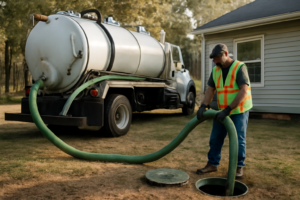
In the rural Southeast specifically, pump-out costs range from $275 to $500 for a standard 1,000-gallon tank, depending on how far your pump truck has to travel. If you’re in a more remote area of rural Alabama or the Georgia foothills, add $50 to $100 for mileage. Inspection fees for a full visual and effluent quality check run $150 to $300 on top of that. Those aren’t optional line items — the EPA’s Homeowner’s Guide to Septic Systems explicitly recommends inspection every 1 to 3 years and pumping every 3 to 5 years for a household of four.
That said, your household size, system age, and tank volume all shift those intervals. A family of five with a 1,000-gallon tank may need pumping every 2 to 3 years. A retired couple with a 1,500-gallon tank might stretch to 5 or 6 years safely. Knowing your specific numbers is the foundation of any honest septic maintenance budget.
The Core Numbers: What to Set Aside Each Year
I recommend a simple tiered savings model. Think of it in three buckets: routine service, minor repairs, and major repairs. Each one gets its own annual contribution, and together they keep you from ever touching your emergency fund for a septic issue.
Routine Service Budget
Divide your pump-out cost by the number of years between pumpings. If you pay $350 every 4 years, that’s $87.50 per year to set aside. Add a biennial inspection at $200, which is $100 per year. Factor in one baffle inspection and risers check every 5 years at around $125, so another $25 annually. In total, most rural Southeast homeowners should budget $200 to $250 per year just for routine service. Put it in a dedicated savings account and don’t touch it.
Minor Repair Budget
Minor repairs include things like replacing a cracked baffle ($150 to $300), fixing a broken distribution box ($200 to $450), or swapping a failed effluent filter ($100 to $250 with labor). These happen every 5 to 10 years on average for a well-maintained system. I budget $150 per year for minor repairs. That gives you $750 to $1,500 saved by the time something minor breaks — which is usually exactly enough to cover it.
Major Repair Reserve
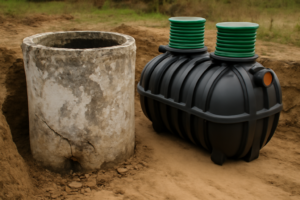
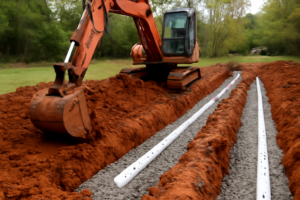
This is the one people skip, and it’s the one that destroys them financially. A full drain field replacement in rural Georgia runs $4,000 to $12,000 depending on soil type, system size, and local health department permit requirements. Tank replacement runs $3,000 to $7,000. I tell every client to save $500 per year toward major repairs. After 10 years, you have $5,000 in reserve — enough to handle most mid-range field failures without financing anything.
Combined, my recommended annual septic maintenance budget is $850 to $900 per year for a typical rural Southeast household. That’s roughly $75 per month. Most people spend more than that on a streaming bundle they barely use.
Monthly Habits That Reduce Your Long-Term Costs
Budgeting money is only half the equation. The other half is keeping your system healthy between service visits so you’re not spending that reserve fund prematurely. In my experience, the homeowners who rarely have septic problems share a handful of consistent habits.
First, they watch their water usage. A leaking toilet flapper can send 200 gallons of extra water per day through your system. That saturates the drain field and accelerates biomat buildup — the layer of organic sludge that eventually clogs your soil. Fix leaks immediately. Second, they never use their septic system as a trash can. Wipes (even “flushable” ones), feminine hygiene products, grease, and coffee grounds are field-killers. I’ve pulled inspection covers and found enough wipes to fill a five-gallon bucket. It’s not pretty.
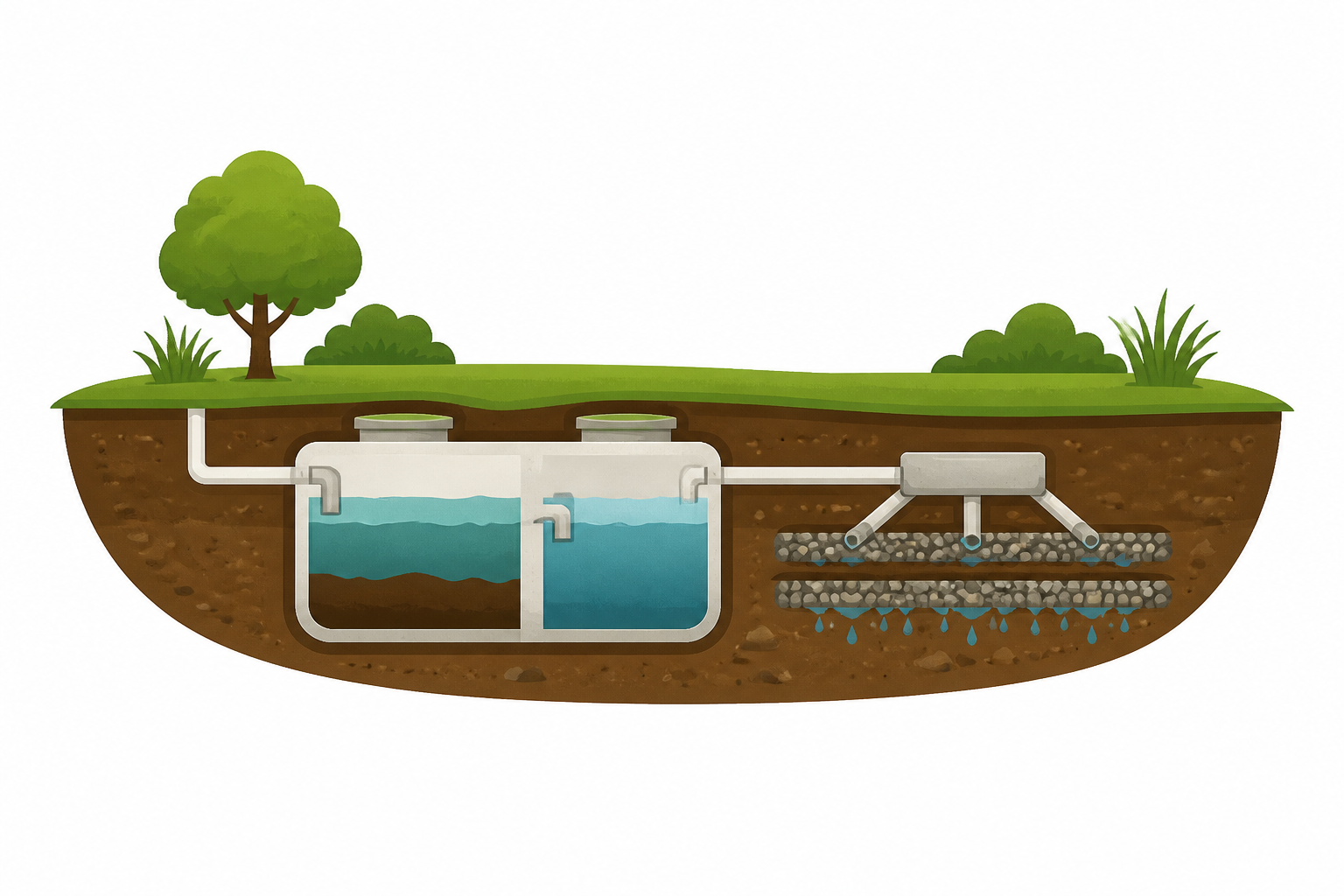
Third — and this is where I want to spend a minute — they use a consistent bacterial treatment. Your septic tank relies on anaerobic bacteria to break down solid waste. Antibacterial soaps, bleach, and even some dishwasher detergents kill those bacteria. Adding a quality bacterial treatment monthly helps maintain that biological balance, especially in households that use more cleaning products than average.
The Monthly Habit That Keeps My Tank From Becoming a $2,400 Problem
When I started budgeting for septic maintenance, I realized I was treating my tank like a black box—adding nothing, expecting it to work forever. Regular enzyme treatment is the cheapest insurance against the kind of emergency that blindsides you on a Tuesday morning.
What works
- Easy to budget: six-month supply means I know exactly what to spend and when, no guessing about tank health between pumps
- Fits into a maintenance routine: dropping a pod down the toilet monthly takes 30 seconds and creates a real habit, not just good intentions
- Gives me peace of mind: I know I’m actively breaking down solids instead of waiting for warning signs that usually mean $1,500+ in emergency calls
What doesn’t
- Won’t fix a tank that’s already failing—this is prevention, not cure, so if you ignore it for years, bacteria treatment alone won’t save you from a pump-out
- Requires discipline: it only works if you actually use it every month, and I’ve definitely forgotten and had to backtrack in my budget notes
I’ll admit, the first time I bought this I wasn’t sure it would make a real difference—enzymes feel almost too simple to prevent the catastrophes I’d heard about. But three years and zero emergency calls later, I’m a believer. RID-X Septic Tank Treatment Pods – 6 Month Supply
This post contains affiliate links. As an Amazon Associate, I earn from qualifying purchases at no extra cost to you.