Affiliate Disclosure: This post contains affiliate links. As an Amazon Associate, I earn from qualifying purchases at no extra cost to you.
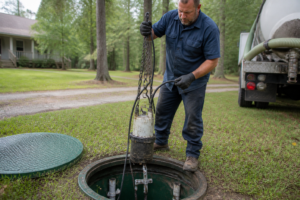
I got called to a property in rural Georgia last spring that made me shake my head. The homeowner had skipped service for three years to save the $350 annual fee. When I opened the aeration chamber, I found the trash tank so full that solids were spilling directly into the treatment zone. The diffuser was completely fouled with a black biofilm. One spray head had plugged solid. The final repair bill? $1,800—more than five years of preventive service contracts combined.
This isn’t a worst-case scenario. It’s the predictable result of treating aerobic treatment unit maintenance like an optional expense. After 18 years installing, pumping, and repairing ATUs across the Southeast, I’ve learned that a structured maintenance schedule is the difference between a system that lasts 20 years and one that fails catastrophically at $2,000+ per repair.
If you own an ATU, you already know it’s more complex than a traditional septic system. The air pump, the diffusers, the spray heads, the chlorinator—they all require attention. But here’s the truth: aerobic treatment unit maintenance doesn’t have to be complicated or expensive if you stick to a simple calendar.
In this guide, I’ll walk you through the exact three-tier maintenance schedule I recommend to every client. Follow this, and your system will work reliably for decades.
Why Aerobic Treatment Unit Maintenance Matters More Than You Think
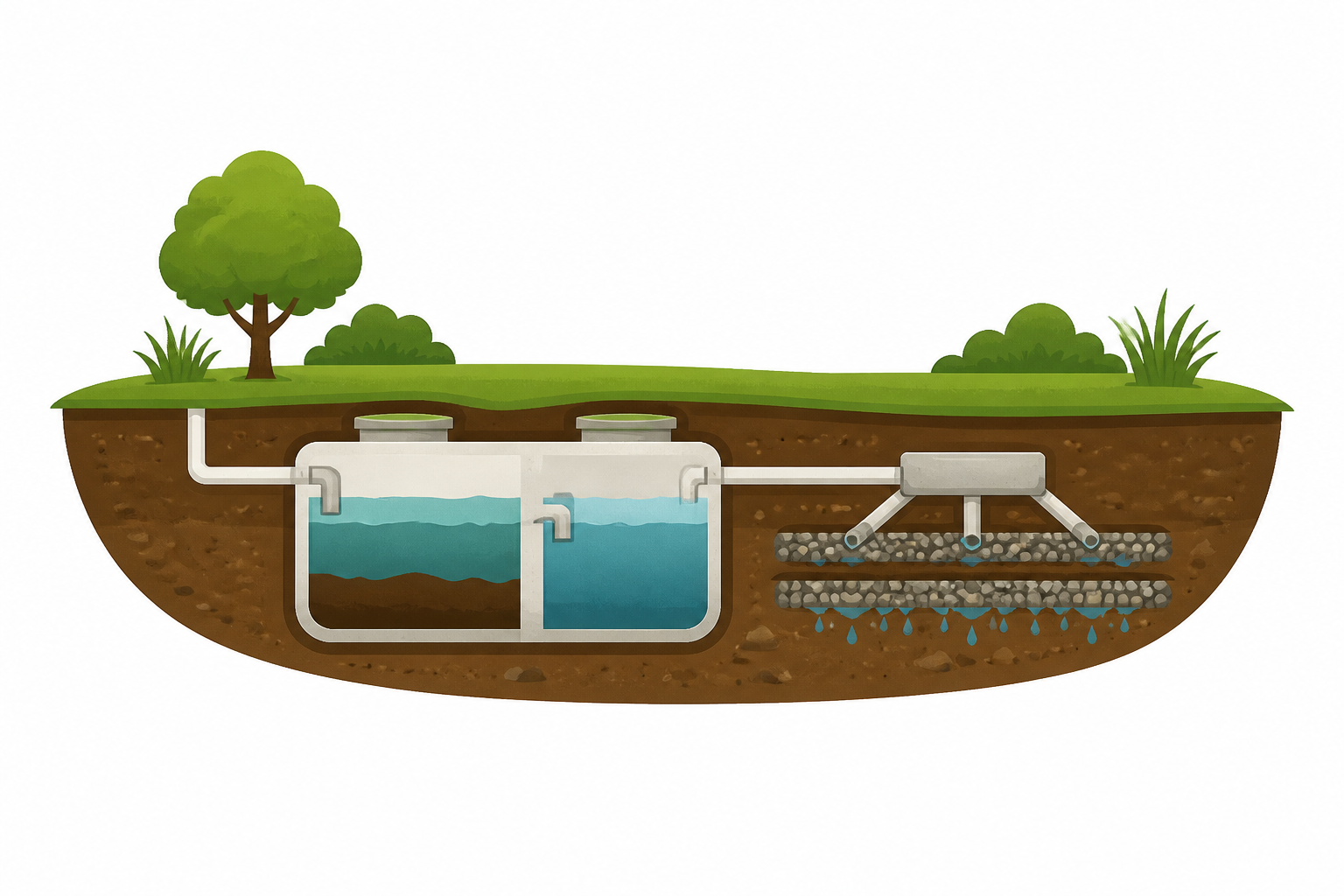
A conventional gravity septic system? Mostly passive. Bacteria do their job, solids settle, you pump every 3–5 years. Done.
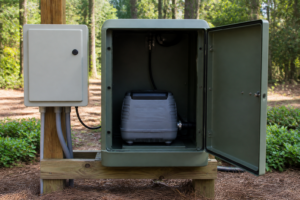
An ATU is different. It’s active. It depends on mechanical equipment running continuously. An air pump that fails silently costs money. A clogged spray head that goes unnoticed for months can plug your drainfield. A chlorinator that runs dry lets pathogens into your soil. These aren’t theoretical risks—I’ve seen every one happen, sometimes within weeks of deferred maintenance.
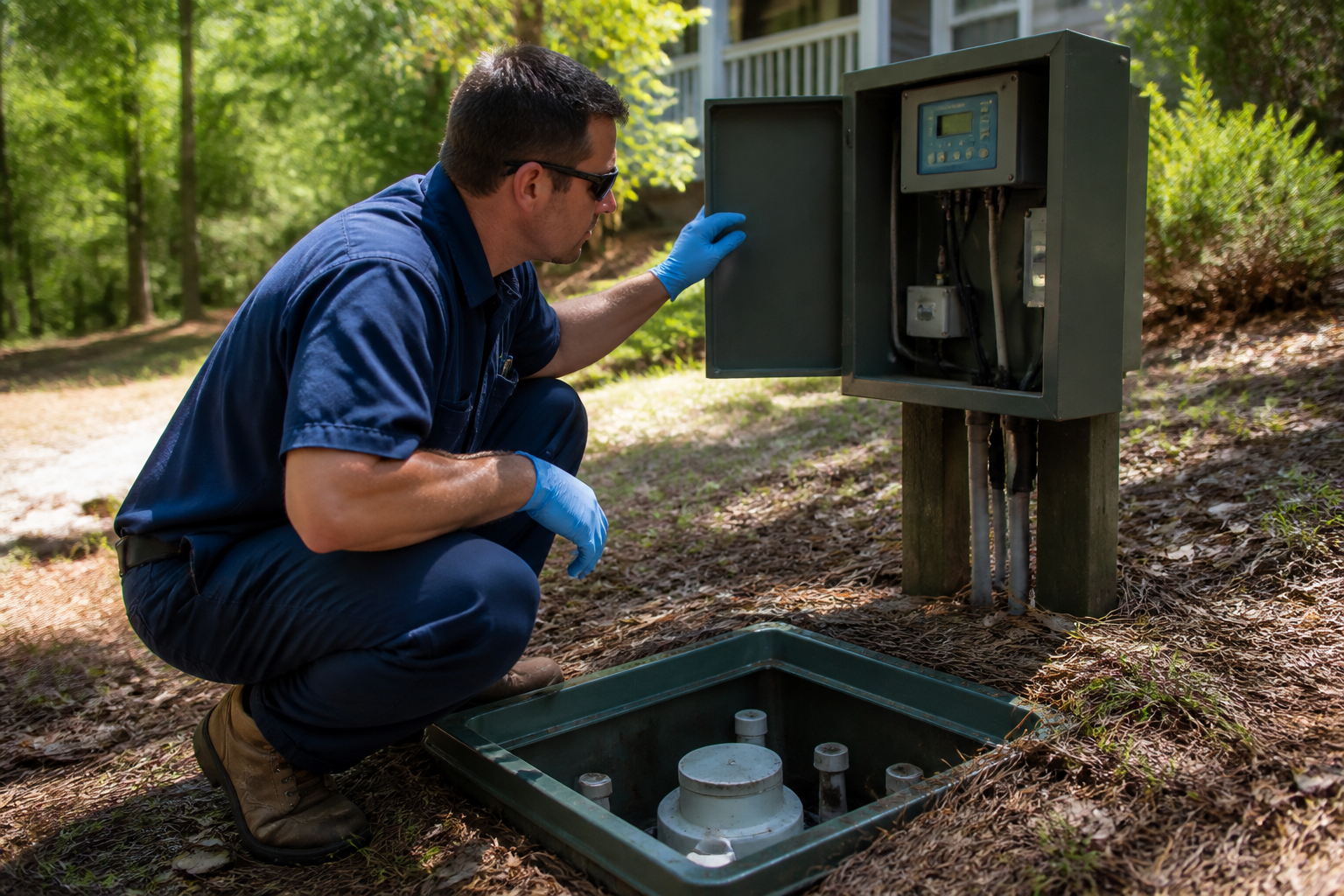
There’s also a legal component most homeowners don’t realize. In Georgia, ATUs require a service contract with a licensed installer by law. The installer submits annual inspection reports to the Environmental Protection Division (EPD). If you cancel the contract and stop maintaining the system, you can face fines and be forced to abandon the ATU and install a conventional system. That’s not fear-mongering—that’s state regulation. Alabama has similar requirements, as do most Southeast jurisdictions.
Beyond compliance, maintenance protects your investment and your property value. Buyers ask for the maintenance log. Lenders inspect it. A system with documented care sells easier and commands better terms.
The Three-Tier Maintenance Calendar: Monthly Tasks for Homeowners
This is where you start. Monthly checks take 15 minutes and cost nothing. I’ve built this list from what actually fails between service visits.
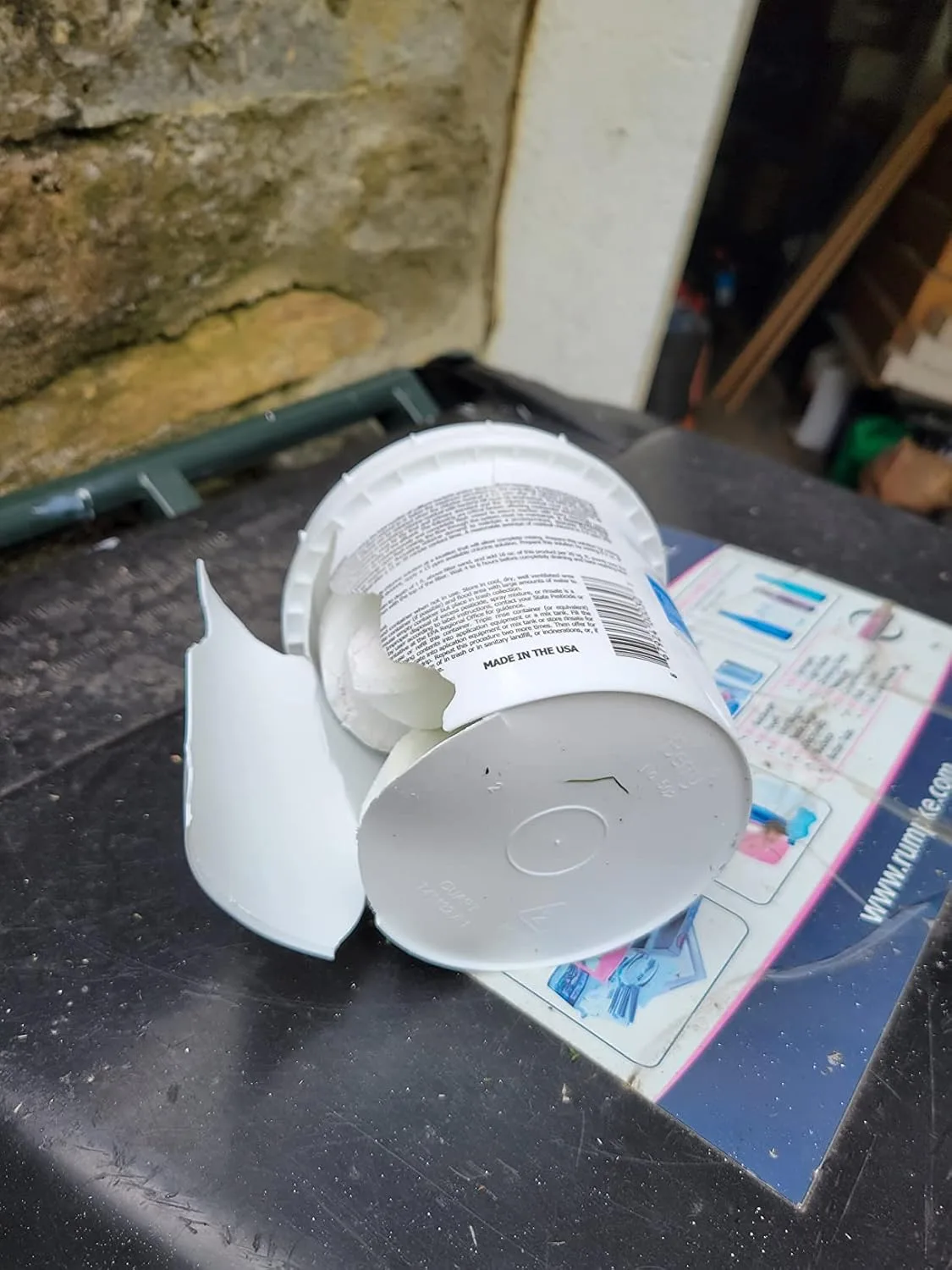
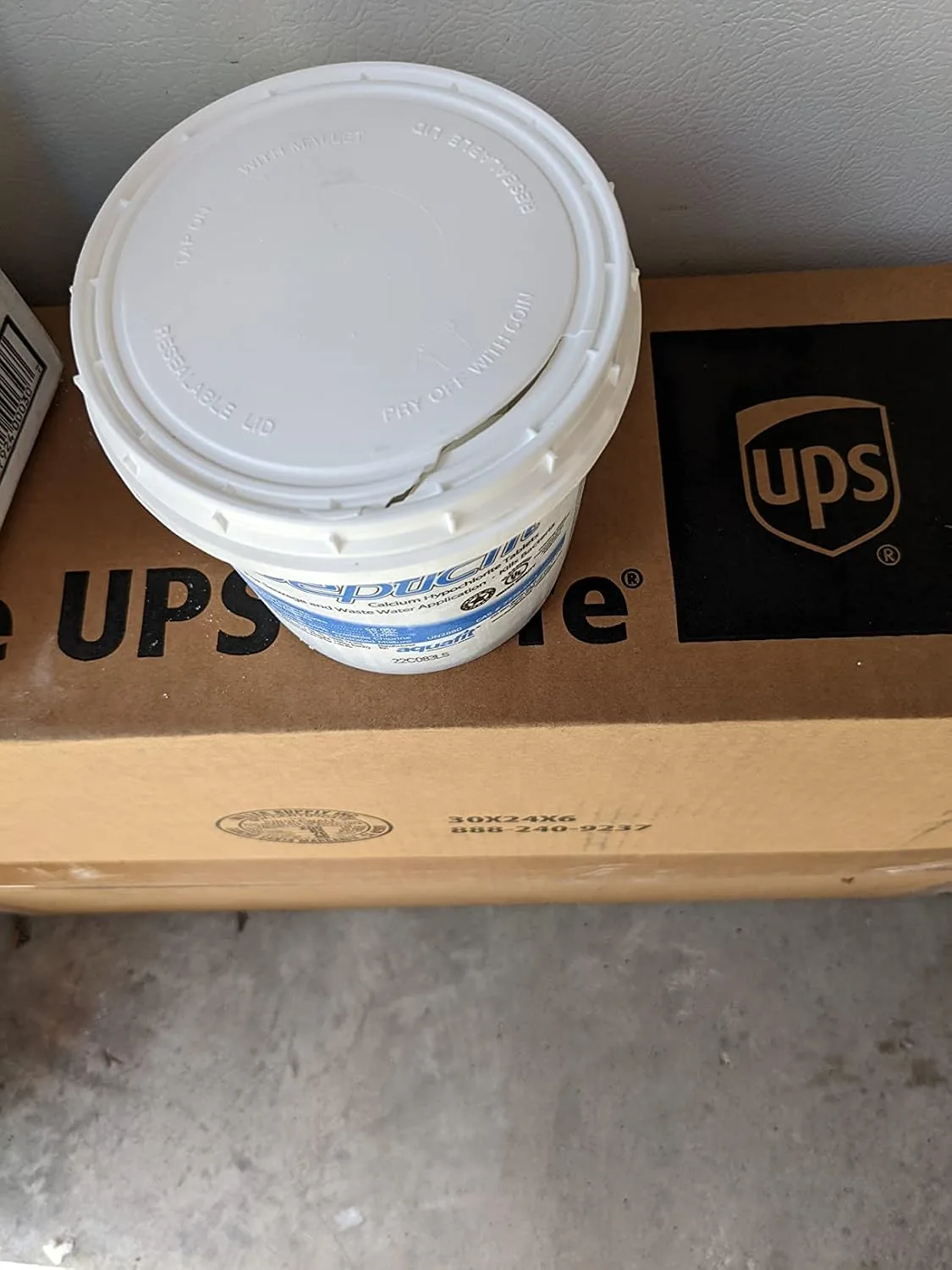
The Chlorine Tablet That Finally Stopped My Diffuser from Fouling Every Season
ATU diffusers clog with biofilm buildup faster than most owners realize — and it happens silently until your treatment zone starts failing. Regular chlorine dosing is the difference between a diffuser that lasts five years and one that needs replacement in two.
What works
- Dissolves slowly and consistently in the aeration chamber, preventing the sudden chemical shock that can kill beneficial biofilm while still controlling the black slime buildup on diffuser heads
- Pre-portioned tablets mean I’m not guessing at dosing rates every month — just drop one in and know you’re within spec for your system size
- Keeps chlorine residual high enough that I’ve gone from pulling and cleaning my diffuser twice a year to once every 18 months
What doesn’t
- Can’t be your entire maintenance plan — chlorine is a stopgap, not a replacement for scheduled professional pump-outs and trash tank cleaning
- Over-dosing is possible if you’re not reading your system’s chlorine demand specs first, and too much residual chlorine can actually damage the soil absorption field over time
I resisted adding chlorine for the first two years because I thought proper aeration design should handle biofilm on its own — I was wrong, and a fouled diffuser replacement taught me that lesson the expensive way. Septicfit Septic Chlorine Tablet
This post contains affiliate links. As an Amazon Associate, I earn from qualifying purchases at no extra cost to you.