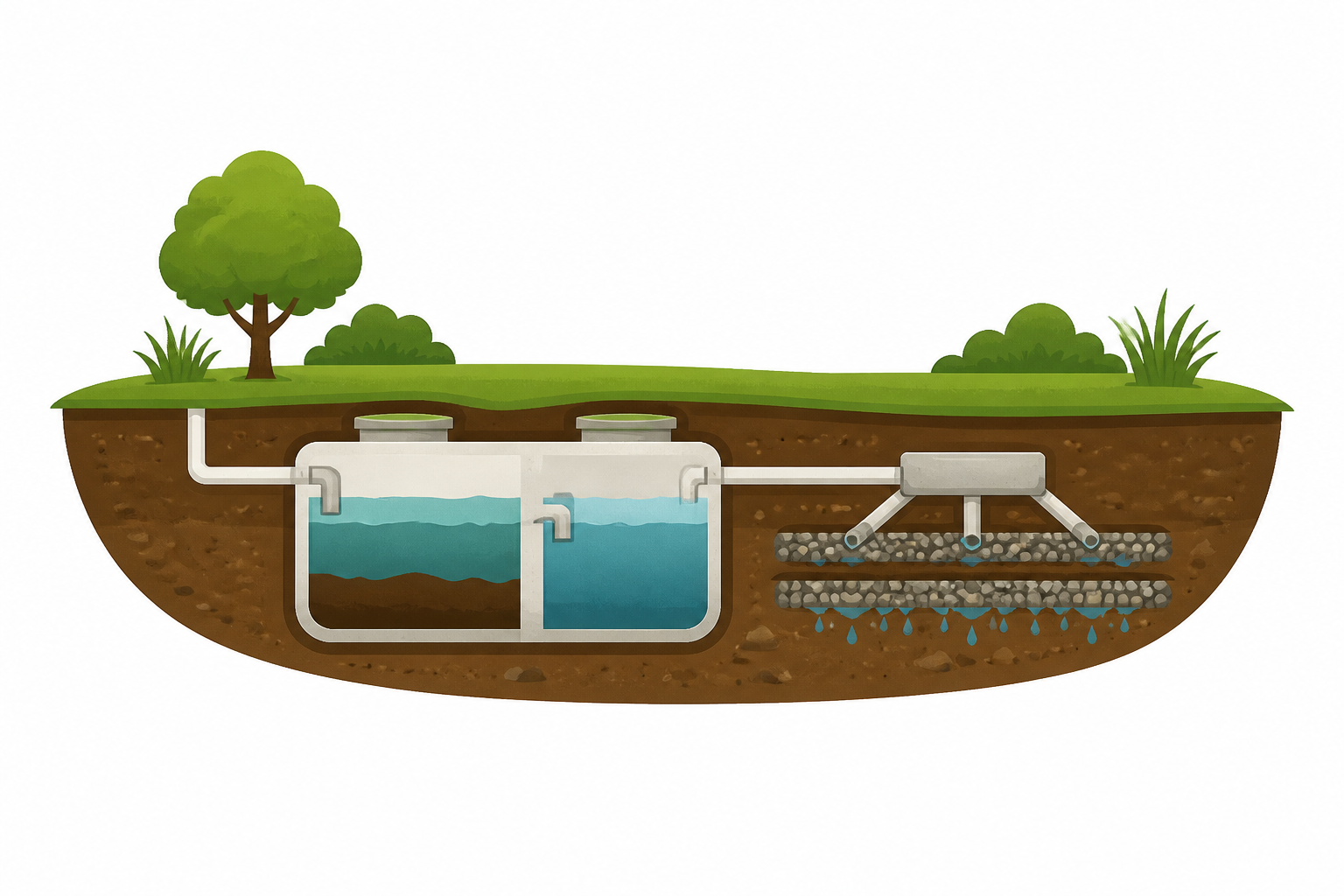
Every few months, a homeowner asks me some version of the same question: “Joel, do septic additives work — or am I just pouring money down the drain?” I get it. Walk into any hardware store and you’ll see shelves lined with bottles, packets, and powders all promising to save your system. After 15 years inspecting septic systems across rural properties in the mid-Atlantic, I’ve tested more of these products than I can count. The honest answer isn’t what most people want to hear. It’s complicated — but I’ll give you the straight truth right here.
I’ve crawled into more than 400 septic tanks. I’ve seen systems fail after homeowners religiously used additives. I’ve also seen modest but real improvements when the right product got used the right way. The difference almost always comes down to understanding what these products actually do — and what they absolutely cannot do. Let me break it all down for you.
What Septic Additives Actually Are (and Aren’t)
There are three main categories of septic additives sold today. First, you have biological additives — live bacteria and enzymes. Second, there are chemical additives, which use acids or solvents. Third, some products combine both approaches. Understanding the difference matters enormously before you spend a single dollar.
Biological additives introduce live bacterial cultures or enzymes into your tank. The idea is simple: supplement the naturally occurring bacteria that break down waste. A healthy septic tank already contains billions of anaerobic bacteria doing exactly this job. However, antibacterial soaps, bleach, and prescription medications can deplete those populations. Biological additives aim to replenish what gets lost.
Chemical additives are a different story entirely. Products using sulfuric acid or organic solvents can actually damage your system. Specifically, they can kill beneficial bacteria, corrode concrete tank walls, and push partially dissolved solids into your drain field. I’ve pulled lids off tanks where the baffles were eaten through by chemical cleaners. That damage costs $300 to $800 to repair — minimum. My firm recommendation: avoid chemical additives completely.
Do Septic Additives Work? Here’s What the Research Says
The EPA evaluated septic additives in a formal study and reached a cautious conclusion: there is no demonstrated need for biological additives in a properly functioning system. However — and this is the part most people miss — that same research acknowledges biological products are unlikely to cause harm. For a system under stress, some evidence supports modest benefit.
The University of Minnesota Extension and several state health departments have echoed similar findings. A well-maintained tank with regular pumping every 3 to 5 years doesn’t necessarily need supplemental bacteria. That said, real-world conditions aren’t always ideal. Households that use significant amounts of antibacterial products, run garbage disposals constantly, or have gone years between pump-outs are operating in a compromised environment.
In my experience, the homeowners who see the most benefit from biological additives fall into specific categories. They’ve recently had the tank pumped and want to re-establish bacterial populations quickly. Alternatively, they’ve been heavy users of bleach or antibacterial cleaning products. For these folks, a quality biological additive isn’t snake oil — it’s a reasonable maintenance tool.
My Field Experience: What I’ve Actually Seen
Last spring, I had a client outside Harrisburg with a 1,200-gallon concrete tank installed in 1987. The system was sluggish — slow drains, occasional gurgling. No signs of drain field failure on inspection. The tank itself was overdue for pumping by about two years. After we pumped it, I recommended a live-bacteria treatment to help re-seed the system. Within six weeks, the homeowner reported normal drain function and no odors. Was it solely the additive? Probably not. But the biological boost after pumping likely shortened the recovery period.
I learned one important lesson the hard way early in my career. A client had a failing drain field and bought every additive on the shelf trying to fix it. I watched them spend over $200 on products over three months. Nothing worked — because additives don’t fix failing drain fields. Only remediation or replacement does. That experience taught me to be very clear with clients: additives are a maintenance tool, not a repair solution.
On the positive side, I’ve monitored six properties over two to three year periods where consistent monthly biological treatments showed measurably lower sludge accumulation compared to similar systems without treatment. The difference wasn’t dramatic — roughly 15 to 20 percent less sludge buildup. For homeowners trying to extend time between pump-outs, that’s meaningful. At $250 to $400 per pump-out, stretching the interval by even six months has real financial value.
The Product I Actually Recommend to My Clients
After years of recommending various products, I’ve settled on one that consistently delivers. The Septic Tank Treatment — 1 Year Supply of Septic Safe Dissolvable Easy Flush Live Bacteria Packets (12 Count) is what I point most of my clients toward first. I’ve been recommending it for about three years now, and the feedback has been consistently positive.
Here’s what I like about it specifically. Each packet contains live bacterial cultures — not just enzymes — which means you’re introducing organisms that will actively colonize and reproduce in your tank. The dissolvable packet format makes dosing foolproof. You flush one packet monthly; that’s it. No measuring, no mess, no guesswork. It’s made in the USA, which matters to me for quality consistency.
The 12-count supply runs roughly $25 to $30 for a full year of treatment. That’s about $2.50 per month. Compared to a single pump-out at $300 to $400, the math makes sense if it meaningfully extends your interval. I tell clients: think of it like a vitamin for your tank. It won’t fix a broken system. However, it helps a healthy system stay healthy — especially if your household habits are hard on bacterial populations.
A Solid Runner-Up Option
If that product is out of stock or you want to compare options, Green Gobbler Septic Tank Treatment Packets are a reasonable alternative. Also a 12-month supply, they use a blend of natural bacteria and enzymes formulated specifically to break down paper, grease, and organic waste. I’ve had several clients use Green Gobbler with good results. In my experience, it performs similarly to the top pick for most standard households. Either product beats the random bottles you’ll find at the big-box store with no clear CFU (colony-forming unit) counts listed on the label.
How to Use Septic Additives Correctly
Even the best additive won’t help if you use it wrong. Timing and consistency matter. Here’s the protocol I walk every new client through:
- Start after a pump-out. Introducing bacteria into a freshly pumped tank gives them the best chance to establish quickly without competing with a massive existing sludge load.
- Flush one packet monthly. Drop it directly in the toilet and flush. It dissolves completely and travels straight to the tank. Don’t use it in a sink drain — too much distance and potential for dilution.
- Reduce antibacterial product use. Triclosan-based soaps and heavy bleach use will kill the bacteria you’re trying to introduce. Switch to regular dish soap and use bleach sparingly — no more than a few ounces per week maximum.
- Don’t flush harsh chemicals. Drain cleaners, paint thinners, and solvents destroy bacterial colonies fast. Not even the best additive can overcome those inputs.
- Keep pumping on schedule. Additives do not replace mechanical pump-outs. Plan on pumping every 3 to 5 years for a family of four with a 1,000-gallon tank — regardless of what product you use.
One detail most people overlook: water temperature affects bacterial activity. In very cold climates, the bacterial metabolism in your tank slows significantly during winter months. That’s actually a good reason to treat in the fall — give the colony time to establish before temperatures drop.
When to Call a Pro Instead
I want to be completely direct here. Septic additives are a maintenance tool — full stop. There are situations where calling a licensed septic professional isn’t optional. Additives will not solve these problems:
- Sewage backing up into the house. This is a plumbing emergency. Call a pro within 24 hours. Sewage backup creates real health hazards, including exposure to pathogens like E. coli and hepatitis A.
- Wet, soggy ground over your drain field. This signals drain field saturation or failure. No additive reverses this. Repair costs range from $3,000 to $15,000 depending on remediation method.
- Sewage odors inside or strong odors at the surface. Persistent odors usually indicate venting issues, a failing system, or damaged baffles — all requiring physical inspection.
- It’s been more than 5 years since your last pump-out. At that point, have the tank inspected and pumped before adding anything.
- Gurgling drains in multiple fixtures simultaneously. This pattern points to a main line blockage or a full tank — neither of which additives will address.
A licensed inspection typically runs $150 to $300 and is worth every cent if you’re seeing warning signs. Under most state regulations — including those aligned with NSF/ANSI Standard 40 and local health department codes — any system showing signs of failure must be evaluated by a certified professional before further use. Don’t gamble on a $25 product when your drain field replacement could cost $10,000.
Final Thoughts: Do Septic Additives Work?
So — do septic additives work? Here’s my honest, field-tested answer. Biological additives with live bacteria can provide real, measurable benefit for systems under stress or recently pumped. They will not fix a failing system. They will not replace regular maintenance. However, used consistently and correctly, they’re a low-cost insurance policy for an expensive piece of infrastructure.
Chemical additives are a different matter — avoid them entirely. The risk-to-reward ratio is terrible, and I’ve seen the damage they cause firsthand.
For most homeowners, I recommend the live bacteria flush packets as part of a complete maintenance routine that includes scheduled pump-outs, mindful water usage, and avoiding harsh chemicals in the drain. That combination — not any single product — is what keeps a septic system running for 25 to 30 years without major failure.
Your septic system handles everything your household produces. Treating it with a little respect and a modest maintenance budget will save you from a very expensive, very unpleasant surprise down the road. Trust me on that one — I’ve seen what happens when homeowners don’t.
This post contains affiliate links. As an Amazon Associate, I earn from qualifying purchases at no extra cost to you.