A few years back, a couple called me in a panic two weeks after closing on their dream rural property. The home inspector had signed off on the septic system with a visual check and a flush of the toilet. That was it. Within ten days, raw sewage was backing up into their basement shower. The tank hadn’t been pumped in over a decade, the distribution box was cracked, and one of the drain field laterals had collapsed. Repair bill: $6,800. If you’re a homeowner or buyer wondering about septic inspection what to expect, this post is exactly what you need before you hand over any money or sign any papers.
I’ve been inspecting septic systems and consulting on rural properties for 15 years. I’ve crawled through pump chambers in January, dug up distribution boxes by hand in 90-degree heat, and written up findings on hundreds of properties across three states. What I’m sharing here isn’t theory. It’s what a real, thorough septic inspection looks like — and the dangerous shortcuts that some inspectors take that can cost you thousands.
Septic Inspection What to Expect: The Full Scope
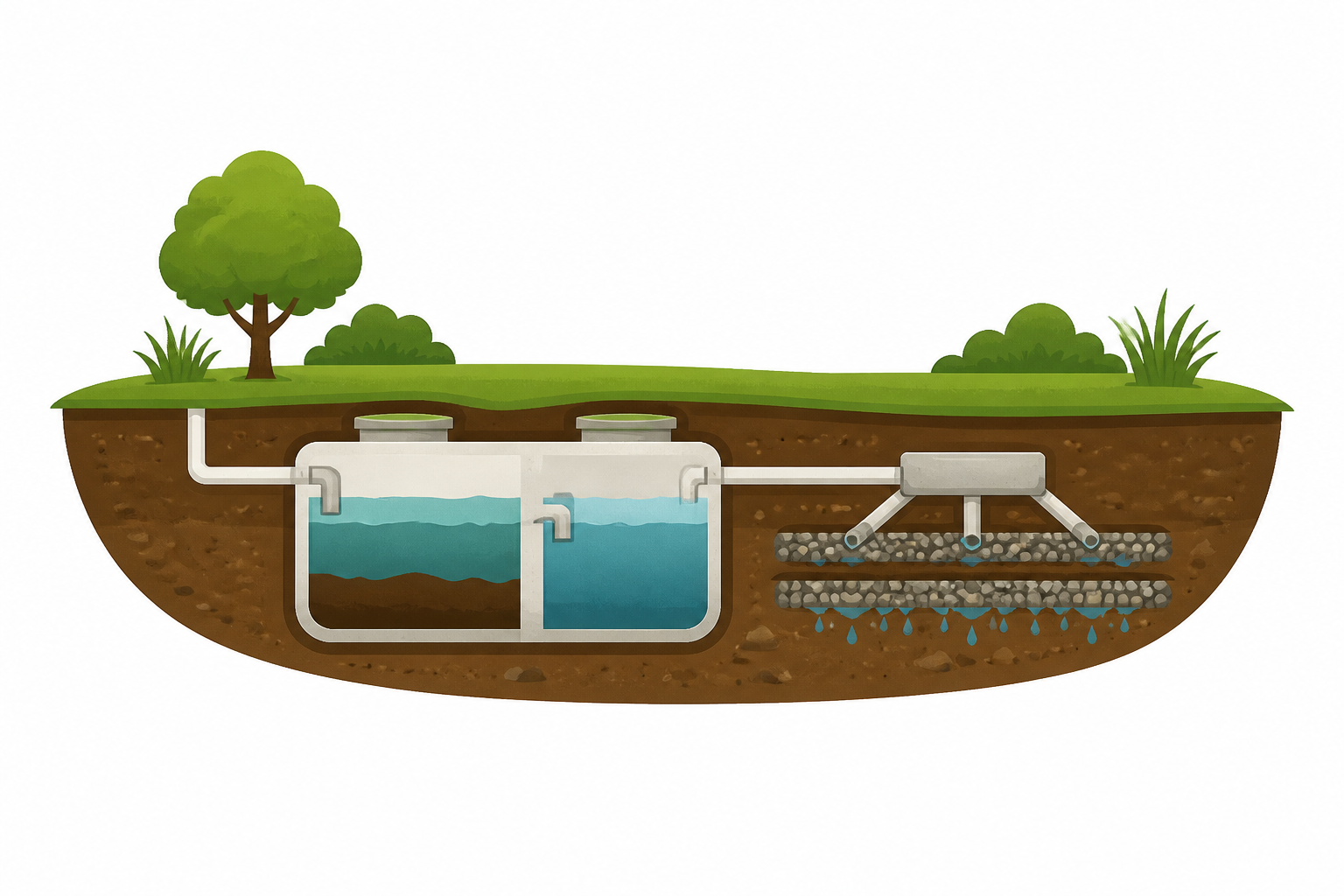
Let me be direct: a real septic inspection is not a visual check and a toilet flush. That’s a walk-around, and it tells you almost nothing. A legitimate inspection involves locating the system components, physically opening the tank, assessing liquid levels and sludge depth, checking the inlet and outlet baffles, and evaluating the drain field for signs of failure. Most of this requires tools, permits knowledge, and hands-on access.
In my experience, a full inspection takes 1.5 to 3 hours depending on system complexity. Conventional gravity systems on the shorter end. Pressure-dosed or mound systems on the longer end. The cost in most regions runs between $300 and $600. If someone quotes you $100 and says they’ll be done in 30 minutes, walk away. That’s not an inspection — it’s a liability waiver in disguise.
You should receive a written report at the end. That report should include tank capacity, estimated sludge and scum layer depths, baffle condition, effluent level, and drain field observations. If the inspector hands you nothing in writing, that’s a red flag every bit as serious as a cracked tank lid.
What Gets Checked Inside the Tank
The septic tank is where the inspection starts. I always locate both lids — the inlet side and the outlet side — and open both. Some inspectors only open one. That’s a shortcut I refuse to take. The outlet baffle is where most early failures begin, and you cannot assess it without opening the outlet lid.
Inside the tank, I’m measuring sludge depth with a sludge judge or a homemade depth stick. The rule of thumb under most state guidelines: if the combined sludge and scum layers occupy more than one-third of the tank’s liquid capacity, it needs pumping before you can complete a meaningful inspection. Specifically, I’m looking at the effluent quality too. Clear-ish liquid in the middle zone is a good sign. Gray, murky, or solid-laden liquid in the outlet chamber signals a tank that’s overloaded or a failing system downstream.
Baffle condition is critical. Concrete baffles deteriorate. Plastic tees and sanitary tees hold up better but can get knocked loose. I check that the outlet baffle extends at least 12 inches below the liquid surface — that’s the standard that keeps solids from exiting into the drain field. A missing or degraded outlet baffle is one of the most common causes of premature drain field failure I see in the field.
Tank Structural Integrity
I also check for cracks, root intrusion, and lid condition. Concrete tanks develop cracks over time — especially at the seams. A hairline crack isn’t always a death sentence, but a crack that allows groundwater infiltration is. Groundwater infiltration overloads the drain field and dilutes treatment capacity. I’ve seen tanks where the water level was 6 inches above the outlet invert — completely flooded with groundwater. That system was functionally useless.
How the Drain Field Gets Evaluated
The drain field is where inspections get tricky — and where shortcuts are most common. A proper drain field evaluation includes a visual surface inspection and a hydraulic load test. The visual check looks for soft or spongy ground, sewage odors, lush green stripes over the lateral lines, and standing water or surfacing effluent. Any of those is a sign of system stress or failure.
The hydraulic load test involves running water into the system — typically 50 to 100 gallons — and monitoring how the tank responds. You’re watching to see if the effluent level rises significantly or if you get backup. This test is not perfect, but it’s far more informative than just looking at the grass. I learned this the hard way early in my career when I passed a system on visual alone, and the buyer’s family of five overloaded it within three months. That failure was partly on me, and I’ve required a load test on every inspection since.
For mound systems and pressure-dosed systems, I also check the pump chamber. The pump, floats, and alarm all need to be functioning. I test the high-water alarm every single time. A failed alarm means a failed pump goes undetected, and that usually means a trashed drain field by the time someone notices.
Distribution Box Inspection
Gravity systems typically have a distribution box — a D-box — that splits effluent flow to the individual laterals. Cracked D-boxes are extremely common. So is uneven flow, where one lateral receives most of the effluent while others stay dry. I always dig to the D-box if it’s accessible. It takes 20 minutes. Most buyers are shocked that their inspector never opened it. In my experience, at least 30% of the D-boxes I examine have some deficiency worth noting.
Keeping Your Inspection Records Organized
Here’s something no one talks about in septic inspection guides: documentation matters as much as the inspection itself. Over the years, I’ve developed a field paperwork system that keeps everything consistent, legally defensible, and easy for clients to understand. That system relies on carbonless inspection forms — the kind that give you an original and a duplicate on the spot, no printer required.
I started using the Detailed Driver’s Vehicle Inspection Report 10-Pack — a 2-ply carbonless form book with 35 sets per book in an 8.5″ x 5.5″ format — as a field notepad base for my site documentation workflow. Before you raise an eyebrow, let me explain. These carbonless duplicate form pads are durable, pocket-sized, and designed for professionals working in rough conditions. The 2-ply carbonless design means I write once and have two copies instantly — one for the client, one for my files. That’s exactly what I need on a muddy job site. The ruled format gives me consistent space for notes, and the compact size fits in a vest pocket without a problem.
I use these pads to capture raw field notes — measurements, observations, timestamps, and component condition ratings — before I transfer everything to my official report software back at the office. The duplicate copy goes home with the client same day. That transparency builds trust, and it protects me legally if findings are ever disputed. If you want a slightly larger format, the J.J. Keller Pickup Truck/Van Vehicle Inspection Report 5-Pack in 5.5″ x 9.25″ with 31 sets is a solid runner-up. More writing space per page — better for detailed punch lists or multi-component systems.
The Shortcuts That Should Make You Walk Away
I’ve seen enough bad inspections to give you a clear shortcut checklist. These are the red flags that tell you the inspector isn’t doing the job properly.
- No tank lid opening. If they don’t open the tank, they haven’t inspected it. Period.
- No written report. Verbal “looks fine” is worthless in a real estate transaction or future dispute.
- No hydraulic test. Walking the yard and sniffing is not a drain field evaluation.
- No pump chamber check on advanced systems. Mound systems, aerobic systems, and drip systems all require pump verification.
- Inspection completed in under 45 minutes. On a simple gravity system, that’s borderline. On anything else, it’s impossible.
- No record of tank size, year installed, or permit history. These details matter for evaluating remaining system life.
- Inspector discourages pumping before inspection. A good inspector wants the tank pumped so they can see the walls, floor, and baffles clearly.
That last one surprises people. However, some sellers push back on pumping because it costs $300 to $500 and they think the system will “pass” without it. A legitimate inspector should require pumping for any tank that hasn’t been serviced in three or more years. I won’t sign off on a system I can’t fully see inside.
When to Call a Pro — And When Buyers Are Most Vulnerable
I want to be honest with you here. There is no DIY version of a full septic inspection for a real estate transaction. Most states require that the inspector hold a license — either as a sanitarian, licensed inspector, or registered engineer. In many jurisdictions, findings must be submitted to the local health department. Attempting this yourself as a buyer doesn’t produce a document that protects you legally or satisfies mortgage lender requirements.
That said, buyers can absolutely do their own preliminary research. Pull the permit history from your county health department before the inspection. Most counties have records showing the original system design, tank size, soil perc test results, and install date. That information tells me more in 10 minutes than a visual inspection ever could. Last spring, I had a client who pulled her county records and discovered the system was designed for a 2-bedroom home. The house had been legally converted to 4 bedrooms. That’s a design capacity problem — and the inspection confirmed it was already showing stress.
For routine maintenance inspections on a home you already own, a knowledgeable homeowner can assist during the inspection and ask detailed questions. Understand your system type. Know your tank location. Keep records of every pump-out. These habits are free and they protect your investment year after year.
Final Thoughts on Septic Inspection What to Expect
A real septic inspection is thorough, hands-on, and documented. It covers the tank interior, baffle condition, effluent quality, hydraulic performance, and drain field health. It takes at least 1.5 hours. It results in a written report. Anything less than that is a shortcut — and shortcuts in septic inspection are how buyers end up with five-figure repair bills two weeks after closing.
Understanding septic inspection what to expect puts you in control. You know what to ask, what to watch for, and when something doesn’t add up. That knowledge is worth far more than the $400 inspection fee. It’s the difference between a confident purchase and a costly surprise.
If you’re working with an inspector you trust, support their process. Let them open the tank. Encourage the hydraulic test. Ask for your written copy on the spot. And if you’re a field professional looking to tighten up your own documentation workflow, don’t overlook the value of a good carbonless duplicate field pad — it’s a simple tool that keeps your records clean and your clients informed from the moment you close the lid.
This post contains affiliate links. As an Amazon Associate, I earn from qualifying purchases at no extra cost to you.